
This research aims to determine the growth of crosses between Swamp and Murrah buffaloes in Humbang Hasundutan Regency, North Sumatra, Indonesia by measurement of body size and body weight. We used 80 buffalo crosses at ≤ 6, 7−12, 13−18, and 19−24 months of age. The research methods used census and survey methods with purposive sampling techniques for determining the research location. We observed variables such as body weight, chest circumference, body length, and shoulder height. Data analysis was carried out descriptively based on arithmetic mean, standard deviation, and coefficient of variance. The result showed that the body weights of male and female buffalo crosses at <6, 7−12, 13−18, and 19−24 months were 210.26 and 196.48, 304.14 and 288.42, 399.46 and 394.12, and 430.85 and 423.16 kg, respectively. The chest circumference of male and female buffalo crosses at ages ≤ 6, 7−12, 13−18, and 19−24 months were 122.57 and 117.44, 152.13 and 147.54, 177.72 and 176.5, and 184.83 and 183.5 cm, respectively. The body lengths of male and female buffalo crosses at ages ≤ 6, 7−12, 13−18, and 19−24 months were 94.14 and 89.64, 108.92 and 101.85, 126.44 and 115.25, and 140 and 135.63 cm, respectively. The Shoulder height of male and female buffalo crosses at ages ≤ 6, 7−12, 13−18, and 19−24 months were 89.64 and 87.81, 113 and 105.42, 125 and 120.5, and 138.83 and 124.25 cm, respectively. The body lengths of male and female buffalo crosses at ages ≤ 6, 7−12, 13−18, and 19−24 months were 94.14 and 89.64, 108.92 and 101.85, 126.44 and 115.25, and 140 and 135.63 cm, respectively. The male and female buffalo crosses from Swamp and Murrah buffaloes have body weight, chest circumference, body length, and shoulder height that increased with age, and the average was higher than Swamp and lower than Murrah buffaloes.
Research Article · Volume 11, Issue 10, 23 October 2023 · Open Access
Growth Traits of Swamp and Murrah Buffalo Croses in North Sumatra, Indonesia
· · ·
Affiliations & Notes ⌄
- 1Faculty of Animal Science, Universitas Andalas, Padang West Sumatera, Indonesia. *Correspondence | Salam N Atitonang, Faculty of Animal Science, Universitas Andalas, Padang West Sumatera, Indonesia
- 2Email: snaritonang@ansci.unand.ac.id
Article Info ⌄
- Journal:
- Advances in Animal and Veterinary Sciences
- Published:
- 23 October 2023

Abstract
INTRODUCTION
Nowadays the continuous demand for eggs are increased, while efficiency is required for produced egg. One policy that can improved egg production is optimizing the feed over laying periods . Waterfowl, in this case are Alabio ducks were still favorable kept non-intensive systems and growth well under low-quality feed ingredients . As consequences of this condition, feed contributed to growth performances approximately 70-80% of total production costs. The used of feed in the Alabio laying ducks are mostly imported and relatively high cost .
Moreover, Indonesia has abundant natural resource potential, both derived from animals and plants, which can be used as a source of food or medicine. One type of plant that can be used as feed ingredients. This type of legume is a type of plant that is rich in nutrients because it contains many vitamins, minerals, and anti-oxidants, respectively. Currently, international world, the cultivation of this type of legume is much encouraged because of the benefits contained in the leaves and stems. Almost all parts of several types of leguminose can be utilized, starting from leaves, fruit, seeds, flowers, bark, to roots .
Leguminous plants (Alfalfa, Moringa, Lamtoro, and Indigofera) are easy-to-obtain feed ingredients, contain high crude protein, making them very profitable for poultry. High crude fiber is not good for poultry because it cannot digest the digestive tract of poultry very slowly . Legumes contain balanced amino acids and are rich in vitamins, carotenoids and xanthophyll’s which give yellow color to poultry carcasses and egg yolks . Legumes also contain 2-3% saponins which are efficacious as hypocholesterolemia (functions as a good cholesterol lowering of total cholesterol and triglycerides in the intestinal of waterfowl. At the end, their excreted through their excreta , anti-carcinogenic (preventing cancer), anti-inflammatory (reducing inflammation and pain), and antioxidants . determined. Therefore, the purposed of this research was to identification effects in the different carotenoid on external and egg yolk quality of Alabio Laying Ducks (Anas plathyrhyncos Borneo)
MATERIALs AND METHODS
Ethical approval
Ethical approval for the study was given by the Animal Care and Use Committee, University of Islam Kalimantan Muhammad Arsyad Al Banjary, No. 5/KEP/UNISKA/PPJ-2023.
Experimental design
A total of 120-day old duck female Alabio duck with an average age 17 weeks were placed in colony-shaped pens, and each pens contained ten ducks. The Alabio duck was rearing from 17-21 weeks. The basal diet was used in this study T0: basal diet, T1: basal diet + 10% lutein, T2: basal diet + 20% lutein, T3 basal diet + 30% lutein, T4 : basal diet + 40% lutein. A completely randomized design was adjusted with five treatments and six replications for each pen, consisting of ten Alabio laying ducks. The diets were given every morning and evening according to the requirement of each maintenance, and were allowed ad-libitum access water through adjustable nipple drinkers. An Alabio laying duck was feed consisted yellow maize, bran, pollard, corn gluten meal, DDGS, soya bean meal, rapeseed meal, bone meal, crude palm oil, limestone, vitamin, mineral, and leguminous plant. About 500 gram of representative samples were taken to identified the metabolizable energy (Kcal/kg); crude protein (CP), crude fat (CF), crude fiber (%), calcium (%), and available phosphorus (Cav) by following method. Afterwards, the composition of formulated feed can be seen in Table 1.
Carotenoid preparation
First, the different of carotenoid was sun-dried for 7 days. A total 0.2 gram of sample powder was weighed and then 1 mL of 100% acetone was added. Then added CaCO3 and sodium ascorbate to taste, then homogenized with a vortex for 1 minute. The pigment extract was separated from the residue by centrifuging at 6000 rpm at room temperature for 1 minute. Then the pigment extract is put into the vial. The residue was extracted in the same way by adding 1 mL of 100% acetone. Subsequently, the process was replicated until supernatant changes color become yellow pale. In the end, the samples were stored in the BioBase refrigerator at -30°C in the dark.
Identification of carotenoid using High Performance Liquid Chromatography (HPLC)
Dry carotenoids, the extract was dissolved in 1 mL of 100% acetone and filtered. Using a PTFE membrane syringe (0.22 µm, Shimadzu), then 20 µL of the extract was injected into the reverse phase (RP) HPLC. Pigment separation was carried out by RP-HPLC using a YMC C30 column (150 × 4.6 mm ID) (YMC, Wilmington, MA, USA), column oven (CTO 20A) at 30 °C, and photo-diode array detector (LC20A). The elution gradient program was set by a mixture of MeOH, MTBE, and HO (81:15:4, v/v/v) at 0 min to (6:90:4, v/v/v) at 70 min at 30 °C with flow rate of 1 mL/minute.
Egg quality assessment
At the end of the week, a total 10% of egg was individually weighed and collected for 9 weeks using scales 0.001 g. The yolk color was identified using Roche egg yolk color fan using 1-15 scales. The thickness of the eggshell is obtained by measuring the thickness of the shell with the egg membrane (mm). Measurement of shell thickness was carried out after the weight of the shell was weighed. The eggshell thickness was measured at the blunt end, the middle (equator), and the sharp end of the egg and then averaged.
Statistical analysis
A general linear model was used in this study using Proc. Mixed with general linear model (GLM) used online software of SAS studio. An error of standard mean was expressed (SEM). Subsequently, the probability test was subjected using Duncan Multiple Range Test by following method from (Adli et al., 2022; Sholikin et al., 2023).
Where Yij was parameters observed, μ was the overall mean, Ti the effect different the effect level of freshwater snail flesh incubated with bromelain enzyme, and eij the amount of error number. T0: basal diet, T1: basal diet + 10% lutein, T2: basal diet + 20% lutein, T3 basal diet + 30% lutein, T4 : basal diet + 40% lutein One-way ANOVA was used to compare the means of apparent digestibility protein, apparent metabolizable energy, feed intake, body weight gain, feed conversion and live weight and the significance threshold was established at p < 0.05 using the was used to compare the means. All analysis was carried out in six replications and significant of difference was defined as the 5% level (P<0.05). Duncan Multiple Range Test was subjected in order to determine the significance and probabilities values.
Table 1: Experimental diet composition
| Proximate composition of composed feed | T0 | T1 | T2 | T3 | T4 |
| Dry matter (%) | 89.7 | 89.69 | 89.69 | 89.68 | 89.68 |
| Crude protein (%) | 18 | 18.19 | 18.38 | 18.56 | 18.75 |
| Crude fibre (%) | 6 | 6.10 | 6.21 | 6.31 | 6.42 |
| Fat (%) | 4 | 4.06 | 4.13 | 4.19 | 4.26 |
| Metabolizable energy (kcal/kg) | 2879.45 | 2885.01 | 2890.77 | 2895.23 | 2892.22 |
| Calcium (%) | 3 | 3.04 | 3.07 | 3.11 | 3.14 |
| Available phosporus (%) | 0.6 | 0.60 | 0.61 | 0.61 | 0.61 |
RESULTS AND DISCUSSION
The concentration of lutein after identification using HPLC
The following Table 2 accounts for the concentration of lutein after identification using HPLC. In Moringa oleifera presented very large majority reached until 237.94 µg/g bb while, Indigofera accounted a very small number at 0.96 µg/g body weight. Afterwards, alfa-alfa leaves presented approximately 60 µg/g bb. Yet along with this the boost of the river tamarind reached 95.84 µg/g bb. However, exposing the xanthophyll commonly found in the leguminous, which presented as energy and photosynthesis processed . Xanthophyll can be found in the cell of the animals including humans as well as animal products, which derivate from the plant as source of pigmentation. Specifically, the color of egg yolk, fat, and others was come from digested xanthophyll’s especially lutein, which is added to chicken feed. Xanthophyll is the main contributor to determine the color of egg yolk . Consumers in South Kalimantan prefer the color of yolk which is reddish yellow rather than pale yellow. Xanthophyll is absorbed from the intestinal tract of chickens and deposited in egg yolk and fatty tissue in the same form as consumed . Xanthophyll not only affects the color of the yolk but also the skin color of the chicken. Therefore, this pigment is not deposited on the white skin of chickens and eggs that have not been released by any birds Xanthophyll are carotenoids containing hydroxyl groups . Xanthophyll are usually monohydroxycarotene (e.g. lutein, rubixanthin), hydroxycarotene (zeaxanthin), or dihydro or dihydroxyepoxyepoxycarotene (violaxanthin) . Xanthophyll Both are insoluble in water, but soluble in alcohol, petroleum ether, acetone and many other organic solvents .
Effects of The Different of the Carotenoid On External and Egg Yolk Quality of Alabio Laying Ducks (Anas plathyrhyncos Borneo)
The following Table 3 accounts for the differences of the carotenoid on external and egg yolk quality of Alabio Lay
Table 2: Concentration of Lutein after identification using HPLC
| Kind of Leguminose | Konsentrasi (µg/g bb) |
| Lutein | |
| Alfalfa (Medicago sativa L.) | 56.61 |
| Moringa (Moringa oleifera) | 237.94 |
| Indigofera (Indigofera zollingeriana) | 0.96 |
| River Tamarind (Leucena leucocephala) | 95.84 |
ing Ducks (Anas plathyrhyncos Borneo) (Table 2). In brief it can be clearly seen that across all the tables in egg quality, the carotenoid effect on external quality present insignificant different (p > 0.05) (Table 2) (Figure 1). However, the pace of the egg weight begins to rise at the T1 (73.83) then slightly dropped down until rest of the treatments (Table 2) (Figure 2). Yet along with this both of yolk color and yolk height remain same at the moment (Figure 3). Afterwards, shell thickness present at very small number across the dataset. To do so, the ducks that are reared intensively require food completely from feeding by breeders. If ducks have good genetics and provide quality feed and according to standard requirements with good management, it will provide benefits. Duck productivity is determined by two main factors, namely genetics and the environment . Genetic factors are determined by the arrangement of genes and chromosomes possessed by an individual and are hereditary as long as no mutations occur in the genes that compose them, while environmental factors do not always change and cannot be passed on to their offspring . Therefore, improving the quality of seeds, feed and maintenance procedures will increase the productivity of these ducks. Rostini et al. (2021) stated that the average egg production of Alabio ducks in the battery cage system was higher and more stable than the litter cage system.
The quantity and quality of the feed given determines the production and quality of eggs both physically/externally and chemically/internally. The egg production would have achieved at peak production depend on the feed, management, and economical value . Egg pro
Table 3: The effect of the different carotenoid on the egg quality of the Alabio Laying ducks
| Parameters | T0 | T1 | T2 | T3 | T4 | SEM | R2 |
| Egg Length (cm) | 5.67 | 5.65 | 5.61 | 5.48 | 5.61 | 0.03 | 0.177 |
| Egg width (cm) | 4.61 | 4.83 | 4.36 | 4.34 | 4.36 | 0.01 | 0.80 |
| Egg Weight (g) | 71.90ab | 73.83b | 67.11a | 67.09a | 67.06a | 3.00 | 0.55 |
| Diameter of Albumin (cm) | 14.55 | 15.13 | 15.13 | 14.98 | 15.14 | 0.36 | 0.34 |
| Diameter of Yolk (cm) | 4.80 | 4.43 | 4.40 | 4.50 | 4.17 | 0.27 | 0.41 |
| Shell Thickness (mm) | 0.36b | 0.41b | 0.20a | 0.23a | 0.15a | 0.004 | 0.75 |
| Albumin height (cm) | 0.46 | 0.54 | 0.35 | 0.50 | 0.46 | 0.001 | 0.28 |
| Yolk Color (cm) | 16.00 | 17.00 | 16.25 | 16.00 | 15.75 | 0.31 | 0.71 |
| Yolk Height (cm) | 1.58 | 1.72 | 1.77 | 1.63 | 1.75 | 0.17 | 0.18 |
duction is one of the important quantitative characteristics that have high economic value from the performance of laying hens. Egg production in various regions of South Kalimantan is relatively different. The differences of the price, quality may depend on the various factors.
Age at first laying indicates that the duck is sexually mature, although ovulation may have occurred . Mass production as a very important variable is related to the selling price of duck eggs at the market level. The quality of Alabio duck were evaluated based on the (1)
egg size; (2) egg weight; (3) and egg yolk color. This means that not only is the level of production being sought to increase, but the size or size of the eggs is sought to be large enough to be sold at an optimal selling price . Thus the profit from selling eggs will be higher when these two parameters are taken into account in the Alabio duck farming business, while the average egg mass of Alabio duck eggs is 39.50 ± 2.60 g/head/day.
The yolk color score (yolk) was obtained by comparing the yolk color with the yellow color on the yolk color fan which is done every two weeks during the study. The yolk index is the ratio between the height of the yolk and the diameter of the yolk. Fresh egg yolk index ranged from 0.33-0.50. According to Yang et al. (2023) that the more Moringa leaf powder in the ration, the better the intensity of the egg yolk color. Riley et al. (2023) stated that feed affects the color of egg yolks, feed ingredients containing carotenoid pigments, especially beta-carotene and xanthophyll pigments. Karwanti et al. (2023) states that the egg yolk index is an index of freshness quality as measured by the height and diameter of the yolk. Furthermore, Chen et al. (2023) stated that the yolk index value is used to determine egg freshness. The yolk index indicates a progressive decline in the function of the vitelline membrane in eggs, the smaller the yolk index, the lower the egg quality. Cholesterol is a product of animal metabolism and is therefore present in foods of animal origin such as meat, liver, brains and egg yolks .
According to Ma et al. (2023) that there was a decrease in egg yolk cholesterol levels in laying hens given Cellulolytic penicillin of Bacillus Anthracis and Ochrobactrum Anthropic (YZ-1). Patel et al. (2023) stated that this probiotic can suppress the activity of the enzyme 3-hydroxy-3-methylglutaryl Co-A which functions for cholesterol synthesis in the liver and cellulolytic bacteria are able to grow and assimilate cholesterol in the small intestine. Ouyang et al. (2023) which stated that giving probiotics could increase growth and reduce serum cholesterol in ducks. The same thing was reported by Yao et al. (2023) who said that probiotic supplementation in rations can significantly reduce blood serum cholesterol levels.
CONCLUSIONS
In summary, using different carotenoid source can be used as pigmentation on Alabio laying ducks without any adverse effects. It’s envisaged the different carotenoid on the egg quality help to increasing the egg weight of Alabio laying duck.
ACKNOWLEDGeMENTS
We would like to thank the Ministry of Education, Culture, Research and Technology, Indonesia Endowment Fund for Education (Lembaga Pengelola Dana Pendidikan). Universitas Brawijaya for research funding support for the Doctoral Student. Last, appreciated much for University of Islam Kalimantan Muhammad Arsyad Al Banjary.
CONFLICT OF INTEREST
The remain article does not report any conflict of interest.
NOVELTY STATEMENT
The novelty of this research is the use of different source of carotenoid to enhance the egg yolk quality. There is limited information related to the used of the carotenoid on the local waterfowl in this case was Alabio laying ducks.
AUTHOR’S CONTRIBUTION
MSD contributed to data collection, in-vivo and in-vitro, software and writing original manuscript. HH, OS, ID conducted the conceptualization, supervision, validation, and writing revised draft. All authors read and approved the final version of the manuscript in the present journal.
Figures

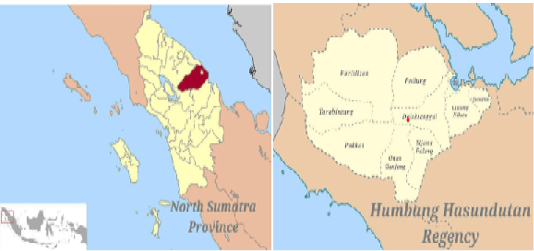
The location of Humbang Hasundutan Regency
References
- Adli D. N., Sadarman S., Irawan A., Jayanegara A., Wardiny T. M., Priambodo T. R., Nayohan S., Permata D., Sholikin M.M., Yekti A. P. A. (2023). Effects of oligosaccharides on performance, egg quality, nutrient digestibility, antioxidant status, and immunity of laying hens: a meta-analysis. Ital. J. Anim. Sci., 22(1): 594-604. https://doi.org/10.1080/1828051X.2023.2223211[CrossRef]
- Adli D.N., Sjofjan O., Sholikin M.M., Hidayat C., Utama D.T., Jayanegara A., Natsir M.H., Nuningtyas Y.F., Pramujo M., Puspita P.S. (2023). The effects of lactic acid bacteria and yeast as probiotics on the performance, blood parameters, nutrient digestibility, and carcase quality of rabbits: a meta-analysis. Ital. J. Anim. Sci., 22(1): 157-168. https://doi.org/10.1080/1828051X.2023.2172467[CrossRef]
- AOAC. (2000). AOAC: Official Methods of Analysis. USA.
- Chen B., Miao J., Ye H., Xia Z., Huang W., Guo J., Cao Y. (2023). Purification, Identification, and Mechanistic Investigation of Novel Selenium-Enriched Antioxidant Peptides from Moringa oleifera Seeds. J. Agr. Food Chem. 71(11): 4625-4637. https://doi.org/10.1021/acs.jafc.2c08965[CrossRef]
- Chowdhury S. D., Hassin B. M., Das S. C., Rashid M. H., Ferdaus A. J. (2008). Evaluation of marigold flower and orange skin as sources of xanthophyll pigment for the improvement of egg yolk color. J. Poult. Sci. 45(4): 265-272. https://doi.org/10.2141/jpsa.45.265[CrossRef]
- Karwanti N. W., Arumdani D. F., Yulianto A. B., Marbun T. D., Sherasiya A., Al Arif M. A., Lokapirnasari W. P. (2023). Efficacy of Moringa oleifera Lam. extracts and Pediococcus pentosaceus, Lactobacillus acidophilus, Lactobacillus plantarum probiotic during starter period on growth performance of male broiler chicken. F1000Res. 12(215: 215. https://doi.org/10.12688/f1000research.130072.3[CrossRef]
- Kowalska E., Kucharska-Gaca J., Kuźniacka J., Biesek J., Banaszak M., Adamski M. (2020). Effects of legume-diet and sex of ducks on the growth performance, physicochemical traits of meat and fatty acid composition in fat. Sci/ Rep. 10(1): 13465. https://doi.org/10.1038/s41598-020-70508-x[CrossRef]
- Kuźniacka J., Biesek J., Banaszak M., Rutkowski A., Kaczmarek S., Adamski M., Hejdysz M. (2020). Effect of dietary protein sources substituting soybean meal on growth performance and meat quality in ducks. Anim. 10(1): 133. https://doi.org/10.3390/ani10010133[CrossRef]
- Liu G. Y., Shi L., Chen Y. F., Chen H., Zhang C., Wang Y. T., Wang D. H. (2023). Estimation of genetic parameters of eggshell translucency and production traits in different genotypes of laying hens. Poult. Sci. 102(5): 102616. https://doi.org/10.1016/j.psj.2023.102616[CrossRef]
- Ma W., Liang Y., Lin H., Chen Y., Xie J., Ai F., Yu Q. (2023). Fermentation of grapefruit peel by an efficient cellulose-degrading strain,(Penicillium YZ-1): Modification, structure and functional properties of soluble dietary fiber. Food Chem. 420: 136123.
- Maharani D., Hariyono D. N., Putra D. D., Lee J. H., Sidadolog J. H. (2019). Phenotypic characterization of local female duck populations in Indonesia. J. Asia-Pacific Biodiv., 12(4): 508-514. https://doi.org/10.1016/j.japb.2019.07.004[CrossRef]
- Mamatha B. S., Sangeetha R. K., Baskaran V. (2011). Provitamin‐A and xanthophyll carotenoids in vegetables and food grains of nutritional and medicinal importance. Int. J. Food Sci. Tech. 46(2): 315-323. https://doi.org/10.1111/j.1365-2621.2010.02481.x[CrossRef]
- Miao Q., Yang Y., Du L., Tang C., Zhao Q., Li F., Zhang J. (2023). Development and application of a SFC–DAD–MS/MS method to determine carotenoids and vitamin A in egg yolks from laying hens supplemented with β-carotene. Food Chem. 414: 135376. https://doi.org/10.1016/j.foodchem.2022.135376[CrossRef]
- Patel N., Borase H., Belewu M. A., Krishnamurthy R. (2023). Production, Cost Analysis, and Marketing of Livestock and Poultry Probiotic. In Food Microbiol. Based Entre Making Money From Micro. 233-251. https://doi.org/10.1007/978-981-19-5041-4_13[CrossRef]
- Perry A., Rasmussen H., Johnson E. J. (2009). Xanthophyll (lutein, zeaxanthin) content in fruits, vegetables and corn and egg products. J. Food Compos. Anal. 22(1): 9-15. https://doi.org/10.1016/j.jfca.2008.07.006[CrossRef]
- Ortiz D., Lawson T., Jarrett R., Ring A., Scoles K. L., Hoverman L., Rocheford T. (2021). Biofortified orange corn increases xanthophyll density and yolk pigmentation in egg yolks from laying hens. Poult. Sci. 100(7): 101117. https://doi.org/10.1016/j.psj.2021.101117[CrossRef]
- Ouyang J., Li Y., Wu Y., Tang H., Zheng S., Xiong Y., Chen H. (2023). Microbial diversity and community composition of fecal microbiota in dual-purpose and egg type ducks. Front. Microbiol. 14: 1092100. https://doi.org/10.3389/fmicb.2023.1092100[CrossRef]
- Riley W. W., Nickerson J. G., Mogg T. J., Burton G. W. (2023). Oxidized β-Carotene Is a Novel Phytochemical Immune Modulator That Supports Animal Health and Performance for Antibiotic-Free Production. Anim. 13(2): 289. https://doi.org/10.3390/ani13020289[CrossRef]
- Rostini T., Biyatmoko D., Wahdi A. (2021). Productivity of laying alabio duck and its eggs quality under exposure of different intensity and color of led light. Trop. Anim. Sci. J. 44(2): 205-212. https://doi.org/10.5398/tasj.2021.44.2.205[CrossRef]
- Schlatterer J., Breithaupt D. E. (2006). Xanthophylls in commercial egg yolks: quantification and identification by HPLC and LC-(APCI) MS using a C30 phase. J. Agr. Food Chem. 54(6): 2267-2273. https://doi.org/10.1021/jf053204d[CrossRef]
- Sholikin M.M., Irawan A., Sofyan A., Jayanegara A., Rumhayati, B., Hidayat, C., Adli, D.N., Julendra, H., Herdian, H., Manzila, I., Hudaya, M.H., Harahap, M.A., Qomariyah, N., Budiarto, R., Krisnan, R., Asmarasari, S.A., Hayanti, S.Y., Wahyono, T., Priyatno, T.P., Ujilestari, T., Negara, W., Wulandari, W., Nahrowi, N. (2022). A meta-analysis of the effects of clay mineral supplementation on alkaline phosphatase, broiler health, and performance. Poult. Sci., 102(3): 102456. https://doi.org/10.1016/j.psj.2022.102456[CrossRef]
- Siddiqui S.A., Alvi T., Sameen A., Khan S., Blinov A.V., Nagdalian A.A., Mehdizadeh M., Adli D.N., Onwezen M. (2022). Consumer Acceptance of Alternative Proteins: A Systematic Review of Current Alternative Protein Sources and Interventions Adapted to Increase Their Acceptability. Sustain. 14(22):15370. https://doi.org/10.3390/su142215370[CrossRef]
- Sulaiman A., Rahmatullah S., Effendi H., Simanungkalit G. (2022). Production performance of Alabio ducks (Anas platyrhynchos Borneo) under different levels of drinking water salinity. J. Adv. Vet. Anim. Res. 9(2): 241. https://doi.org/10.5455%2Fjavar.2022.i589
- Suwignyo B., Rini E. A., Wahyudi U., Suryanto E., Suhartanto B. (2022). Tropical alfalfa (Medicago sativa cv. Kacang Ratu BW) supplementation for reducing cholesterol and improving quality of carcass and meat of hybrid duck. Anim. Prod. Sci. 63(5): 471-479. https://doi.org/10.1071/AN22018[CrossRef]
- Tawalbeh D., Al-U’datt M. H., Wan Ahmad W. A. N., Ahmad F., Sarbon N. M. (2023). Recent advances in in vitro and in vivo studies of antioxidant, ace-inhibitory and anti-inflammatory peptides from legume protein hydrolysates. Mol. 28(6): 2423. https://doi.org/10.3390/molecules28062423[CrossRef]
- Titcomb T. J., Kaeppler M. S., Cook M. E., Simon P. W., Tanumihardjo S. A. (2019). Carrot leaves improve color and xanthophyll content of egg yolk in laying hens but are not as effective as commercially available marigold fortificant. Poult. Sci. 98(10): 5208-5213. https://doi.org/10.3382/ps/pez257[CrossRef]
- Yang S. L., Yang R. C., Zhou X., Yang S. H., Liao F. Y., Yao B. N., Pongchan N. L. (2023). Effects of dietary supplementation of flavonoids from Moringa leaves on growth and laying performance, immunological and antioxidant activities in laying ducks. J. Appl. Poult. Res. 32(1): 100318. https://doi.org/10.1016/j.japr.2022.100318[CrossRef]
- Yao Y., Liu Y., Li C., Huang X., Zhang X., Deng P., Dai Q. (2023). Effects of rosemary extract supplementation in feed on growth performance, meat quality, serum biochemistry, antioxidant capacity, and immune function of meat ducks. Poult. Sci. 102(2): 102357. https://doi.org/10.1016/j.psj.2022.102357[CrossRef]
- Yenilmez F., Atay A. (2023). Changes in Egg Production, Egg Quality, Blood and Egg Cholesterol Levels with Age in Layer Hen. Europ. J. Vet. Med. 3(2): 6-11. https://doi.org/10.24018/ejvetmed.2023.3.2.73[CrossRef]
- Zarghi H., Hassanabadi A., Barzegar N. (2023). Effect of organic and inorganic manganese supplementation on performance and eggshell quality in aged laying hens. Vet. Med. Sci. 9(3): 1256-1268. https://doi.org/10.1002/vms3.1116[CrossRef]
Services
Article usage statistics
Loading…