
The objective of present study was to evaluate the therapeutic effectiveness of combined ribavirin (RBV) and interferon (IFN) therapy in hepatitis C virus (HCV) patients. Overall, 590 HCV patients were evaluated pre and post combined drug therapy during the period 2015-2017. Distribution of HCV genotypes, age groups, viral load and alanine aminotransferase (ALT) values were recorded and analyzed for rapid virologic response (RVR), non-rapid virologic response (NRVR), sustained virologic response (SVR) and non-sustained virologic response (NSVR). Among the evaluated patients RVR was found among 81.5% and NRVR among 18.5%. Out of RVR patients, SVR was found in majority (80.2%). However, among NRVR equal percentage of SVR and NSVR was found. An inverse association of SVR was found against the patient age and viral load in the plasma. The plasma values of ALT have shown no specific relation with SVR and NSVR. Genotype 3a was the most prevalent (69.7%) followed by 3b (13.6%), mixed genotypes (10.5%), 1b (3.2%), 1a (3.1%) among the investigated patients. We found highest SVR against genotype 3a (79.4%), followed by 3b (56%), 1a (33%), 1b (37.3%), 3a+3b mixed infection (29%), and 1a+1b mixed infection 24.9%. In summary, we found a genotype specific response of drug therapy against HCV. Our findings can guide the local clinicians to inform the patients about the possible effectiveness of drug therapy and to manage the disease with more efficient plan.
Research Article · Volume 51, Issue 2, 9 February 2019 · Open Access
Genotype Specific SVR and NSVR Response of Hepatitis C to the Combined Interferon and Ribavirin Therapy
· · · · · ·
Affiliations & Notes ⌄
- 1Faculty of Life Sciences, University of the Central Punjab, Johar Town, Lahore 54000, Pakistan 2Institute of Molecular Biology and Biotechnology, University of Lahore, Lahore, Pakistan 3Department of Dentistry, Punjab Medical College, Faisalabad, Pakistan 4Department of Biochemistry, King Abdulaziz University, Jeddah 21589, Saudi Arabia 5Department of Surgery, Government Kot Khawaja Saeed Teaching Hospital, Lahore 54000, Pakistan , * Corresponding author: draminaarif@gmail.com
Article Info ⌄
- Journal:
- Pakistan Journal of Zoology
- Published:
- 9 February 2019

From the article
- Due to a diversity of HCV genotypes found in the investigated patients, we calculated the proportion of SVR and NSVR patients infected with a particular genotype.
- The present study was an attempt to evaluate the effect of age, blood viral load, plasma ALT vales and genotypes on the efficacy of PEG-INF and ribavirin therapy of HCV patients.
- The SVR was considered as the criterion for cure of HCV infection.
- Genotype 1 and mixed genotypes exhibited a poor response to the drug therapy.
Selected from the article's own text.
Abstract
Introduction
Pakistani hepatitis C virus (HCV) is the most common causative agent of hepatitis worldwide which may exhibit no symptoms for long time. However, it can lead to liver cirrhosis that involves the complication of liver disease resulting in loss of liver cells or hepatic carcinoma and ultimately liver failure . HCV is a single-strand RNA belonging to the family Flaviviridae and the genus Hepacivirus ; . Approximately 170 to 200 million people are infected with HCV around the world . The primary routes of HCV transmission include blood transfusion, use of contaminated equipment such as non-sterile needles for ear and nose piercing, non-sterile dental or surgical instruments, used syringes, razors, dangerous tattoos and sexual contact ; . Nearly 20 million Pakistanis population is suffering from hepatitis as 1 out of every 10 Pakistanis has contracted hepatitis .
In 2012, WHO rated Pakistan as a country with the second highest prevalence of chronic infections worldwide ; . HCV exhibits extraordinary genetic diversity . Six genotypes have been identified which have variable prevalence in different geographic regions. As for example, in Europe, genotype 1 is more common whereas genotype 3 is more common in South Asian countries ; ; . The knowledge about HCV genotype and viral load is the baseline in clinical management and is considered as the strongest predictive parameter for virological response towards Pegylated interferon (PEG-IFN) therapy . Generally, hepatitis victims having a high viral load show slow response to the treatment while those having low viral load are more responsive the interferon therapy (de Mattos and de Mattos, 2010; . Ribavirin (RBV) and PEG-IFN are common treatments in Pakistan and the treatment time depends on the viral genotype ; ; ; . HCV infection itself may induce signaling pathways in the host which may lead to IFN secretion as the cellular pattern recognition receptor recognizes the double-stranded RNA ; ; . Inside the liver, in response to the PEG-IFN plus RBV combination therapy, production of mRNA from interferon-stimulated genes (ISG) is enhanced, which is highly variable. The treatment of HCV is not very predictable in 50% of patients who have a combination of IFN and RBV therapy . Lack of response to IFN in particular patients, can be dependent on different factors including viral factors, host factors and enhancement of host cell gene expression in response to the HCV proteins that regulate the IFN pathways. In Pakistan variety of genotypes are found including Ia, Ib, Ic, 2a, 2b, 3a, 3b and 6a . Many reports have confirmed that the rate of sustained virological response (SVR) is reasonably high in patients with particular viral genotypes is better as compared to those with other genotypes ; . The present study describes the relation of HCV genotypes to the clinical outcome of IFN and RBV-based drugs on the basis of SVR and NSVR.
Materials and Methods
Study design
Overall, 650 patients were assessed for eligibility to study the response to antiviral treatment. Out of the selected patients, 600 were treated with a combination of interferon α and ribavirin. Patients who failed to meet inclusion criteria were excluded. The study was conducted according to 1975 Helsinki Declaration. Overall, 590 patients (307 males and 283 females) were registered at Pakistan Institute of Medical Sciences (PIMS) hospital Islamabad and Maroof international hospital Islamabad, as outdoor patients. Diagnostic criteria included serological assays for anti-HCV antibody detection, HCV RNA quantification and HCV genotype determination. Test for positive antibody to HCV (anti-HCV) was done by ELISA. Detection of HCV-RNA in serum was carried out by qualitative RT-PCR with a lower limit of detection of 50 IU/ml.
Patient age groups
The participants were divided into different age groups to evaluate the effect of age on SVR response to interferon and ribavirin treatment. The first group comprised of patients younger than and equal to 40 years included 54.2% of patients. The second group including 40 to 50 years of age was 23.7%, 50 to 60 years of age were 17.5% and those above 60 years of age were 4.6% (Fig. 2).
Table I.- Sequence of the primers used for the determination of HCV genotypes (adopted from Ohno et al., 1997).
| Oligo ID | Sequence (5’ → 3’) | Length |
| SC2 | GGGAGGTCTCGTAGACCGTGCACCATG | 27 |
| Ac2 | GAGMGGKATRTACCCCATGAGRTCGGC | 27 |
| S7 | AGACCGTGCACCATGAGCAC | 20 |
| S2a | AACACTAACCGTCGCCCACAA | 21 |
| G1b | CCTGCCCTCGGGTTGGCTAR | 20 |
| G2a | CACGTGGCTGGGATCGCTCC | 20 |
| G2b | GGCCCCAATTAGGACGAGAC | 20 |
| G3b | CGCTCGGAAGTCTT ACGTAC | 20 |
| S7 | AGACCGTGCACCATGAGCAC | 20 |
| G1a | GGATAGGCTGACGTCTACCT | 20 |
| G3a | GCCCAGGACCGGCCTTCGCT | 20 |
| G4 | CCCGGG AACTT AACGT CC AT | 20 |
| G5a | GAACCTCGGGGGGAGAGCAA | 20 |
| G6a | GGTCATTGGGGCCCCAATGT | 20 |
| A5 | TACGCCGGGGGTCAKTRGGGCCCCA | 27 |
| AS2 | GAGACGGGTAAGTACCCCATGAGAGT-CGGC | 30 |
Patient’s information and sample collection
Informed consent form and publication permission form were signed by each participant. Blood samples were collected from patients before, during and post PEG-IFN and RBV treatment for 6 months. Patients included in the present study received standard interferon therapy (SIT) thrice a week, with overall 3 million units of recombinant α-IFN (84 injections) alone or in combination with 600 mg ribavirin two times a day for six months. Patients non-responders or relapsers to SIT were treated once weekly with 180 µg with PEGylated IFN alone or in combination with Cap ribazole 500 mg x 24 injections for 6 months. Venous blood was collected and immediately transferred into EDTA containing vacutainer. The sample was then centrifuged at 15000 x g for 15 min to separate plasma for RNA extraction.
Screening and genotyping
Invitrogen RNA purification kit was utilized for the extraction of the viral RNA from blood plasma following the manufacturer’s instruction. HCV RNA viral quantity was determined by using RoboGene HCV RNA quantification kit on real time PCR instrument Rotor Gene 3000 (Corbett Research, Sydney, Australia). Post treatment HCV viral quantity was determined by real time PCR to determine the SVR and NSVR conditions after IFN therapy . The results were expressed as U/L.
Table II.- Baseline characteristics of patients (n=590 (M=307, F=283)) including variables like age, plasma ALT, Hb, WBCs, platelets, incidence of co-infection.
| Variables | Mean frequencies (%) |
| Age (Years) | 39.59 ±12 |
| ALT (IU/ Liter) | 112 ± 59.6 |
| Hb (g/dl) | 11.4 ± 2 |
| WBC (Cells/Liter) | 4.43 ±1.46 |
| Platelets (Cells/Liter) | 182.67 ± 6 |
| Co-infection | |
| HBV | 23 (3.9%) |
| Hepatitis A | 12 (2.0%) |
| None | 555 (94.1%) |
Confirmation/determination of HCV genotypes
A modified version of procedure reported in literature for the determination of HCV genotypes was followed . A set of genotype specific primers was used (Table I). Antisense primer (Ac2) of the core region along with the reverse transcriptase were applied for the synthesis of cDNA. 10 µl of a master mix containing 4 µl of 5X reaction buffer was added to the 10 µl of extracted RNA , 25 pM of antisense external primer (Ac2), 2 µl of dNTPs mix (10 mm each), 40 U of RNAse inhibitor and 200 U of M-MLV RT both purchased from Fermentas, USA. Amplification conditions were as follows: 42oC for 60 min and 92oC for 2 min. The genotypes were identified according to standard protocol including cDNA synthesis, regular PCR followed by nested PCR. Amplified DNA fragments were visualized and analyzed for genotyping by agarose gel electrophoresis. For studying RVR, extended virological response (EVR) and SVR in patients after IFN therapy, HCV viral load was determined by real time PCR .
Biochemical analysis
Serum alanine aminotransferase (ALT) was also measured using commercial kit (Ecoline).
Results
Patients under study
Out of 590 selected patients, 307 were males and 283 were females. On the whole 39.59±12.06 years was the mean age of the participants. The participants had measureable HCV-RNA in the serum and were positive for HCV antibodies (by ELISA). The non-responder to interferon and ribavirin had WBC count < 4,500/mm3 with the mean value 4.43±1.47, platelet count <180×103/µL with the mean value 182.67±60.56, hemoglobin (Hb) <12 g/dL with the mean value 11.4±2.093 were also counted in the present investigation (Table II). All the patients were treated with PEGylated interferon and ribavirin.
Response to virological treatment
Out of 590 patients participating in the present study, 481 (81.5%) patients achieved RVR, whereas 109 (18.5%) exhibited NRVR. SVR and NSVR were evaluated in RVR and NRVR patients (Fig. 1A). This classification was on the basis of treatment through PEG-IFN and RBV, and the HCV RNA which was detected/absent 6 months post treatment. It was found that 386 (80.2%) patients exhibited SVR and 95 (19.8 %) were NSVR. Out of NRVR, the incidence of SVR and NSVR was in 54 (49.5%) and 55 (50.5%) patients, respectively (Fig. 1B).
Effect of age and viral load on SVR and NSVR
The percentage of SVR in the 1st age group was 58% and the NSVR was 43.3%. In the 2nd age group SVR and NSVR 23.4% and 24.7%, respectively. In the 3rd age group SVR and NSVR 16.1% and 21.3% respectively and in the 4th age group SVR and NSVR were 2.5% and 10.7%, respectively (Fig. 2).
We have found an inverse relation of viral load and SVR among the patients. Among the patients with viral load <200,000 IU/mL the SVR rate was 45% and NSVR was 34.7%. The SVR and NSVR percentages became almost equal at the viral load between 200000 to 500000 IU/mL, with the SVR value 23.4% and NSVR value of 19.3% patients. After that, the increase in viral load resulted in a decrease in the SVR and increase in NSVR values (Fig. 3).
Association of plasma ALT with SVR
The participating patients were divided into five groups on the basis of plasma ALT values of HCV patients in response to the treatment. The patients with ≥ 40 - 80 U/L of ALT had shown 33.2% SVR and 32 % NSVR. Apparently, there was no correlation of ALT values with the patient response to the drug therapy (Fig. 4).
HCV genotypes and response to therapy
The 3a genotype was the most prevalent, found in 69.7% patients, genotype 3b was found in 13.6%, and 1b was found in 3.2 % while mixed genotypes were found in 10.5% patients. Therapeutic response to antiviral drugs is affected by the variation in the genome of the invading virus. Due to a diversity of HCV genotypes found in the investigated patients, we calculated the proportion of SVR and NSVR patients infected with a particular genotype. Our results have shown different SVR values for particular genotypes which was as follows: 3a in 79.4%, 3b in 56%, 3a+3b mixed infection 29%, 1a 33%, 1b in 37.3% and 1a+1b mixed infection 24.9% patients (Fig. 5).
Discussion
Pakistan is one of the developing countries with highest rate of viral hepatitis infections. Hepititis C virus is one of the major health threats and leading causes of death in Pakistan ; . The genetic heterogeneity of HCV is a big hurdle in the development of vaccine. In the present study we have evaluated 590 patients diagnosed as HCV-positive, 307 were male and 283 were females, all of them were subjected to treatment with RBV and PEG-IFN. The mean age of the patients was 39.59±12 years. They were confirmed for viral RNA and HCV antibodies in their blood. Several parameters including patient age, viral load, genotype etc. (Table II) were studied which have been reportedly involved to regulate the viral infection ; . In the present study, 81.5% patients achieved RVR, whereas 18.5% exhibited NRVR (Fig. 1A). It was also found that 80.2% participants were SVR and 19.8 % were NSVR among total RVRs. Out of a NRVR the percentage of SVR and NSVR were almost equal (Fig. 1B). The HCV treatment reports from Pakistan have shown 62% to 69.9% SVR in Pushtoon and Punjabi patients, subjected to drug therapy ; ; . The effect of age on SVR and NSVR was also demonstrated. The major proportion (58%) of SVR was present in less than 40 years age group while least proportion (2.5%) of old age patients (>60years age) showed SVR (Fig. 2). Age dependent damage of HCV infection has been reported in the literature . The study has found that viral load affects SVR, at less than 200000 the SVR rate was found higher and decreased with increase in viral load (Fig. 3). The plasma ALT values of the patients were also considered and we found no association of ALT concentration with virologic response (Fig. 4). The plasma level of ALT can increase because of liver damage, use of antibiotics etc. .
We found 69.7% infection by 3a genotype, 13.6% by 3b, 3.2 % by 1b, and 10.5% by mixed genotypes. Many reports from Pakistan have been combined in literature which indicates that the most prevalent genotype in Pakistan is 3 . Though there are several reports about the prevalence of HCV genotypes yet a paucity of precise data on the factors affecting the patient response in HCV treatment prevails. The treatment of chronic HCV infection has increased intensely in recent years and mostly it involves the administration of PEG-IFN and RBV in combination ; ; . Due to a diversity of HCV genotypes found in the investigated patients, we calculated the proportion of SVR and NSVR patients infected with a particular genotype. Our results have shown different SVR values for particular genotypes which was as follows: 3a in 79.4%, 3b in 56%, 3a+3b mixed infection 29%, 1a 33%, 1b in 37.3% and 1a+1b mixed infection 24.9% patients (Fig. 5). The results indicate that the therapeutic response to antiviral drugs is affected by the variation in the genome of the invading virus. The genotype specific response of interferon and ribavirin therapy has been reported in the recent reports from different areas ; . Klevens et al. (2012) also reported this evolving epidemiology of hepatitis C virus in the United States.
Conclusions
The present study was an attempt to evaluate the effect of age, blood viral load, plasma ALT vales and genotypes on the efficacy of PEG-INF and ribavirin therapy of HCV patients. The SVR was considered as the criterion for cure of HCV infection. We have found that the patients infected by genotype 3a had better response against PEG-INF and ribavirin therapy. Genotype 1 and mixed genotypes exhibited a poor response to the drug therapy. The data can guide the clinicians to inform the possible response of drug therapy and to adopt more reliable treatment plan.
Acknowledgments
The authors are grateful to the HCV patients who made this study possible by sparing their valuable time and for providing the blood samples. We also acknowledge the administration, doctors and nurses working at PIMS and the University of Lahore, Pakistan.
Statement of conflict of interest
Authors have no conflict of financial interest etc.
Figures
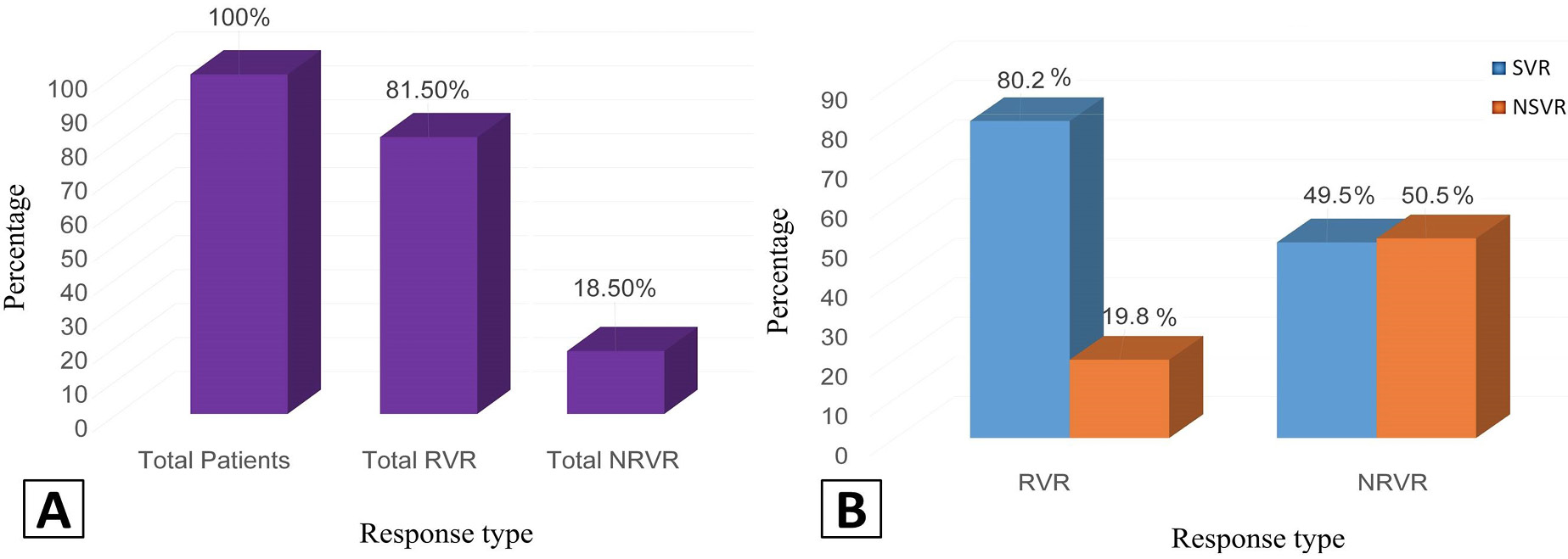
A, the total number of enrolled patients and percentage of RVR and NRVR. B, the incidence of SVR and NSVR among the RVR and NRVR cases.
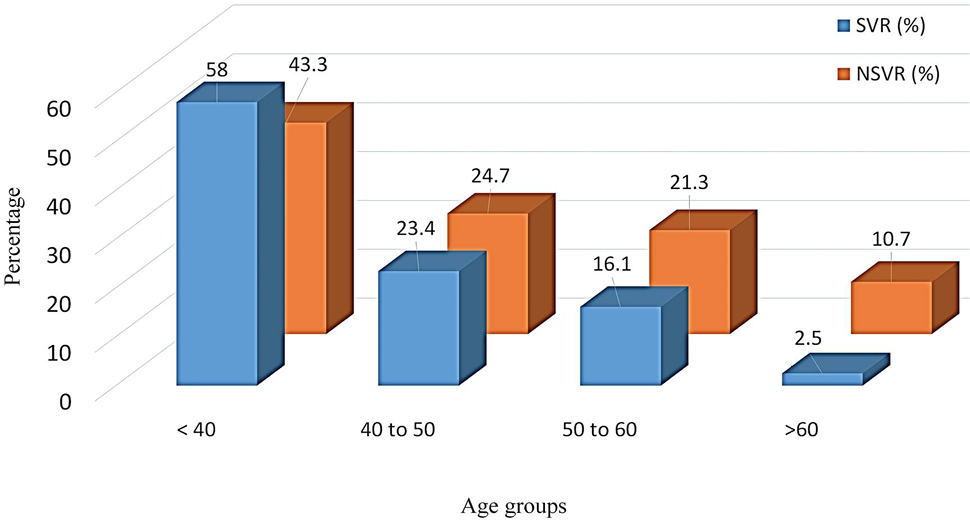
Incidence of SVR and NSVR among different age groups of patients.
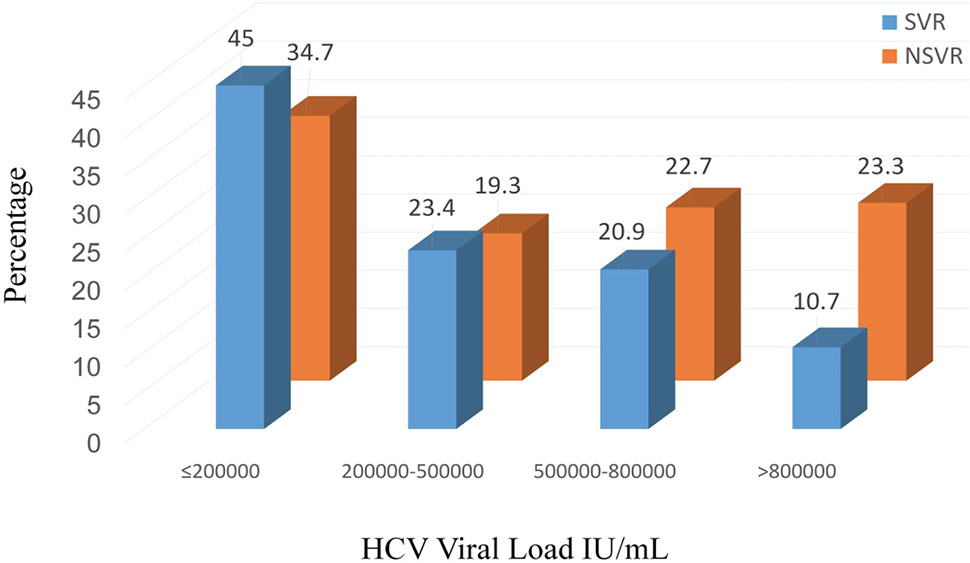
The effect of HCV viral load on SVR. Patients were categorized according to viral load into four groups. In first group patient had viral load ≤ 200000, second group >200000 to 500000, third group >500000 to 800000 and fourth group with >800000 viral load.
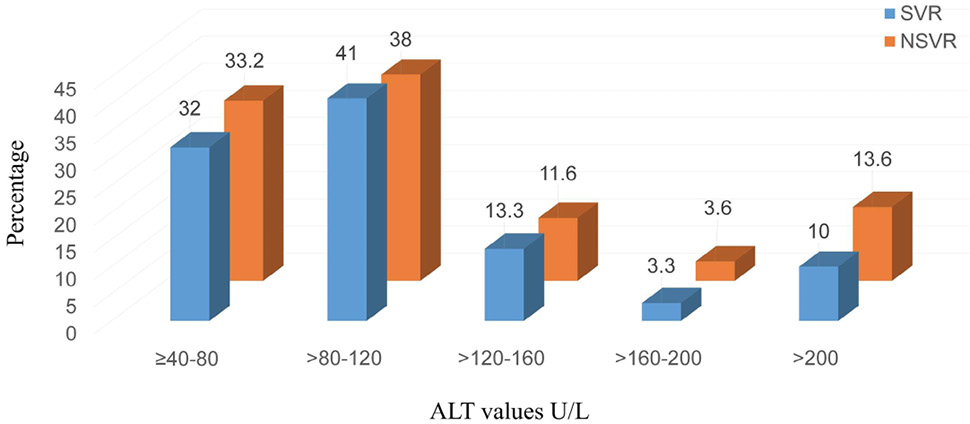
The patients were divided into five groups on the basis of plasma ALT values and SVR for each group was determined.
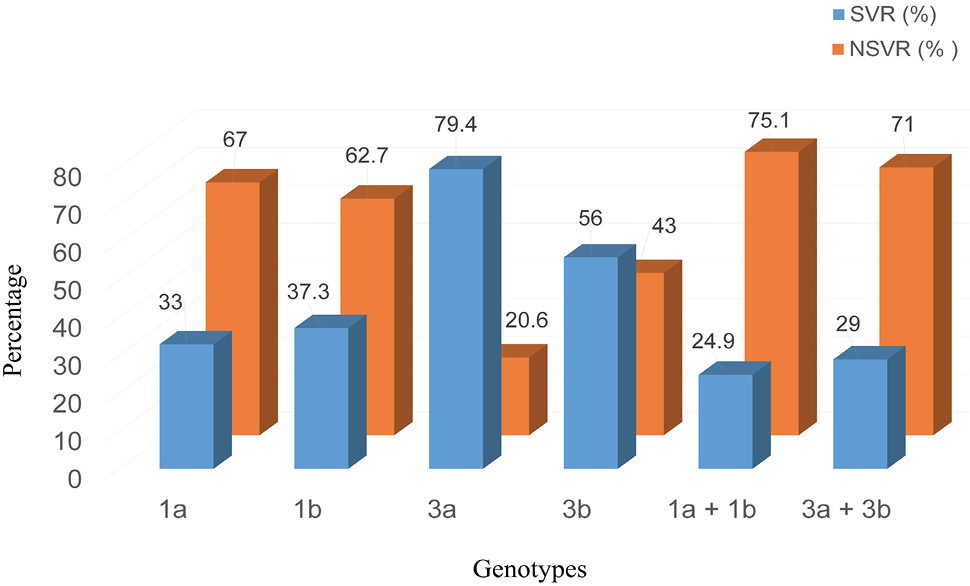
The HCV genotypes were determined among all the investigated patients. The response to drug therapy was evaluated against all HCV genotypes. The results indicate a better response of drug therapy against genotype 3 as compared to the other genotypes.
References
- Alexopoulou, A. and Karayiannis, P., 2015. Interferon-based combination treatment for chronic hepatitis C in the era of direct acting antivirals. Annls. Gastroenterol., 28: 55.
- Asahina, Y., Tsuchiya, K., Tamaki, N., Hirayama, I., Tanaka, T., Sato, M., Yasui, Y., Hosokawa, T., Ueda, K. and Kuzuya, T., 2010. Effect of aging on risk for hepatocellular carcinoma in chronic hepatitis C virus infection. Hepatology, 52: 518-527. https://doi.org/10.1002/hep.23691[CrossRef]
- Attaullah, S., Khan, S. and Ali, I., 2011. Hepatitis C virus genotypes in Pakistan: A systemic review. Virol. J., 8: 433. https://doi.org/10.1186/1743-422X-8-433[CrossRef]
- Aziz, H., Amin Athar, M., Murtaza, S., Irfan, J., Waheed, Y. and Bilal, I., 2011. Predictors of response to antiviral therapy in patients with chronic hepatitis C from Pakistani population. Chinese med. J., 124: 1333.
- Borroni, G., Andreoletti, M., Casiraghi, M., Ceriani, R., Guerzoni, P., Omazzi, B., TERRENI, N. and Salerno, F., 2008. Effectiveness of pegylated interferon/ribavirin combination in ‘real world’patients with chronic hepatitis C virus infection. Aliment. Pharmacol. Therapeut., 27: 790-797. https://doi.org/10.1111/j.1365-2036.2008.03657.x[CrossRef]
- Brown, Jr. R.S., 2005. Hepatitis C and liver transplantation. Nature, 436: 973. https://doi.org/10.1038/nature04083[CrossRef]
- Chen, A.Y., Zeremski, M., Chauhan, R., Jacobson, I.M., Talal, A.H. and Michalak, T.I., 2013. Persistence of hepatitis C virus during and after otherwise clinically successful treatment of chronic hepatitis C with standard pegylated interferon α-2b and ribavirin therapy. PLoS One, 8: e80078. https://doi.org/10.1371/journal.pone.0080078[CrossRef]
- Chou, R., Hartung, D., Rahman, B., Wasson, N., Cottrell, E. and Fu, R., 2012. Treatment for hepatitis C virus infection in adults. Comparative effectiveness review No. 76. Agency for Healthcare Research and Quality. AHRQ Publication No. 12(13)-EHC113-EF, Rockville, MD. Available at: https://effectivehealthcare.ahrq.gov/topics/hepatitis-c/research (accessed on 09 September, 2018).
- de Mattos, A.A. and de Mattos, Â.Z., 2010. Treatment of HCV infection in patients with cirrhosis. Annls. Hepatol., 9: 80-83.
- Dogan, U.B., Akin, M.S. and Yalaki, S., 2013. Sustained virological response based on the week 4 response in hepatitis C virus genotype 1 patients treated with peginterferons α-2a and α-2b, plus ribavirin. Eur. J. Gastroenterol. Hepatol., 25: 1317-1320. https://doi.org/10.1097/MEG.0b013e328362797b[CrossRef]
- Dou, Z., Chen, R.Y., Xu, J., Ma, Y., Jiao, J.H., Durako, S., Zhao, Y., Zhao, D., Fang, H. and Zhang, F., 2010. Changing baseline characteristics among patients in the China national free antiretroviral treatment program, 2002–09. Int. J. Epidemiol., 39: 56-64. https://doi.org/10.1093/ije/dyq215[CrossRef]
- Duffy, S., Shackelton, L.A. and Holmes, E.C., 2008. Rates of evolutionary change in viruses: Patterns and determinants. Nat. Rev. Genet., 9: 267. https://doi.org/10.1038/nrg2323[CrossRef]
- Ekstrom, V., Kumar, R., Zhao, Y., Yee, M.L., Sung, C., Toh, D., Loh, P.Y., Tan, J., Teo, E. K. and Chow, W.C., 2016. Real world experience with pegylated interferon and ribavirin in hepatitis C genotype 1 population with favourable IL28B polymorphism. Gastroenterol. Rep., 5: 208-212.
- Feld, J.J. and Hoofnagle, J.H., 2005. Mechanism of action of interferon and ribavirin in treatment of hepatitis C. Nature, 436: 967. https://doi.org/10.1038/nature04082[CrossRef]
- Ferenci, P., Fried, M.W., Shiffman, M.L., Smith, C.I., Marinos, G., Gonçales, F.L., Häussinger, D., Diago, M., Carosi, G. and Dhumeaux, D., 2005. Predicting sustained virological responses in chronic hepatitis C patients treated with peginterferon alfa-2a (40 KD)/ribavirin. J. Hepatol., 43: 425-433. https://doi.org/10.1016/j.jhep.2005.04.009[CrossRef]
- Gale, Jr. M. and Foy, E.M., 2005. Evasion of intracellular host defence by hepatitis C virus. Nature, 436: 939. https://doi.org/10.1038/nature04078[CrossRef]
- Higgins, J.A., Nasarabadi, S., Karns, J.S., Shelton, D.R., Cooper, M., Gbakima, A. and Koopman, R.P., 2003. A handheld real time thermal cycler for bacterial pathogen detection. Biosens. Bioelectr., 18: 1115-1123. https://doi.org/10.1016/S0956-5663(02)00252-X[CrossRef]
- Hou, J., van Oord, G., Groothuismink, Z.M., Claassen, M.A., Kreefft, K., Zaaraoui-Boutahar, F., van Ijcken, W.F., Osterhaus, A.D., Janssen, H.L. and Andeweg, A.C., 2014. Gene expression profiling to predict and assess the consequences of therapy-induced virus eradication in chronic hepatitis C virus infection. J. Virol., 88: 12254-12264. https://doi.org/10.1128/JVI.00775-14[CrossRef]
- Idrees, M. and Riazuddin, S., 2008. Frequency distribution of hepatitis C virus genotypes in different geographical regions of Pakistan and their possible routes of transmission. BMC Infect. Dis., 8: 69. https://doi.org/10.1186/1471-2334-8-69[CrossRef]
- Jacobson, I.M., 2009. Treatment options for patients with chronic hepatitis C not responding to initial antiviral therapy. Clin. Gastroenterol. Hepatol., 7: 921-930. https://doi.org/10.1016/j.cgh.2009.03.033[CrossRef]
- Jehangir, K., Khan, B., Ayaz, A., Muhammad, S. and Khalid, K., 2018. Hepatitis-C virus prevalence in district Shangla and evaluation of screening tests for anti-HCV. Pakistan J. Zool., 50: 1299-1305.
- Khan, N., Akmal, M., Hayat, M., Umar, M., Ullah, A., Ahmed, I., Rahim, K., Ali, S., Bahadar, S. and Saleha, S., 2014. Geographic distribution of hepatitis C virus genotypes in pakistan. Hepatitis Monthly, 14: e20299. https://doi.org/10.5812/hepatmon.20299[CrossRef]
- Kim, W.R., Flamm, S.L., di Bisceglie, A.M. and Bodenheimer, H.C., 2008. Serum activity of alanine aminotransferase (ALT) as an indicator of health and disease. Hepatology, 47: 1363-1370. https://doi.org/10.1002/hep.22109[CrossRef]
- Klevens, R.M., Hu, D.J., Jiles, R. and Holmberg, S.D., 2012. Evolving epidemiology of hepatitis C virus in the United States. Clin. Infect. Dis., 55: S3-S9. https://doi.org/10.1093/cid/cis393[CrossRef]
- Malik, A., 2016. Over 13 million hepatitis patients in Pakistan. The News. Available at: https://www.thenews.com.pk/print/138142-Over-13-million-hepatitis-patients-in-Pakistan
- Marinho, R.T. and Barreira, D.P., 2013. Hepatitis C, stigma and cure. World J. Gastroenterol., 19: 6703. https://doi.org/10.3748/wjg.v19.i40.6703[CrossRef]
- Messina, J.P., Humphreys, I., Flaxman, A., Brown, A., Cooke, G.S., Pybus, O.G. and Barnes, E., 2015. Global distribution and prevalence of hepatitis C virus genotypes. Hepatology, 61: 77-87. https://doi.org/10.1002/hep.27259[CrossRef]
- Ohno, O., Mizokami, M., Wu, R.R., Saleh, M.G., Ohba, K.I., Orito, E., Mukaide, M., Williams, R. and Lau, J., 1997. New hepatitis C virus (HCV) genotyping system that allows for identification of HCV genotypes 1a, 1b, 2a, 2b, 3a, 3b, 4, 5a, and 6a. J. clin. Microbiol., 35: 201-207.
- Pearlman, B.L. and Traub, N., 2011. Sustained virologic response to antiviral therapy for chronic hepatitis C virus infection: A cure and so much more. Clin. Infect. Dis., 52: 889-900. https://doi.org/10.1093/cid/cir076[CrossRef]
- Rosen, H.R., 2011. Chronic hepatitis C infection. New England J. Med., 364: 2429-2438. https://doi.org/10.1056/NEJMcp1006613[CrossRef]
- Safi, S., Badshah, Y., Waheed, Y., Fatima, K., Tahir, S., Shinwari, A. and Qadri, I., 2010. Distribution of hepatitis C virus genotypes, hepatic steatosis and their correlation with clinical and virological factors in Pakistan. Asian Biomed., 4: 253-262. https://doi.org/10.2478/abm-2010-0032[CrossRef]
- Shah, H.A., Jafri, W., Malik, I., Prescott, L. and Simmonds, P., 1997. Hepatitis C virus (HCV) genotypes and chronic liver disease in Pakistan. J. Gastroenterol. Hepatol., 12: 758-761. https://doi.org/10.1111/j.1440-1746.1997.tb00366.x[CrossRef]
- Simmonds, P., Bukh, J., Combet, C., Deléage, G., Enomoto, N., Feinstone, S., Halfon, P., Inchauspé, G., Kuiken, C. and Maertens, G., 2005. Consensus proposals for a unified system of nomenclature of hepatitis C virus genotypes. Hepatology, 42: 962-973. https://doi.org/10.1002/hep.20819[CrossRef]
- Stoddard, M.B., Li, H., Wang, S., Saeed, M., Andrus, L., Ding, W., Jiang, X., Learn, G. H., Von Schaewen, M. and Wen, J., 2015. Identification, molecular cloning, and analysis of full-length hepatitis C virus transmitted/founder genotypes 1, 3, and 4. MBio, 6: e02518. https://doi.org/10.1128/mBio.02518-14[CrossRef]
- Stuyver, L.J., Mcbrayer, T.R., Whitaker, T., Tharnish, P.M., Ramesh, M., Lostia, S., Cartee, L., Shi, J., Hobbs, A. and Schinazi, R.F., 2004. Inhibition of the subgenomic hepatitis C virus replicon in huh-7 cells by 2′-deoxy-2′-fluorocytidine. Antimicrob. Agents Chemother., 48: 651-654. https://doi.org/10.1128/AAC.48.2.651-654.2004[CrossRef]
- Ticehurst, J.R., Hamzeh, F.M. and Thomas, D.L., 2007. Factors affecting serum concentrations of hepatitis C virus (HCV) RNA in HCV genotype 1-infected patients with chronic hepatitis. J. clin. Microbiol., 45: 2426-2433. https://doi.org/10.1128/JCM.02448-06[CrossRef]
- Tohme, R.A. and Holmberg, S.D., 2012. Transmission of hepatitis C virus infection through tattooing and piercing: a critical review. Clin. Infect. Dis., 54: 1167-1178. https://doi.org/10.1093/cid/cir991[CrossRef]
- Veldt, B.J., Heathcote, E.J., Wedemeyer, H., Reichen, J., Hofmann, W.P., Zeuzem, S., Manns, M.P., Hansen, B.E., Schalm, S.W. and Janssen, H.L. 2007. Sustained virologic response and clinical outcomes in patients with chronic hepatitis C and advanced fibrosis. Annls. Intern. Med., 147: 677-684. https://doi.org/10.7326/0003-4819-147-10-200711200-00003[CrossRef]
- Waheed, Y., Bhatti, A. and Ashraf, M., 2013. RNA dependent RNA polymerase of HCV: A potential target for the development of antiviral drugs. Infect. Genet. Evolut., 14: 247-257. https://doi.org/10.1016/j.meegid.2012.12.004[CrossRef]
- Zhang, C.H., Xu, G.L., Jia, W.D., Li, J.S., Ma, J.L. and Ge, Y.S., 2011. Effects of interferon treatment on development and progression of hepatocellular carcinoma in patients with chronic virus infection: A meta-analysis of randomized controlled trials. Int. J. Cancer, 129: 1254-1264. https://doi.org/10.1002/ijc.25767[CrossRef]
Services
Article usage statistics
Loading…