Research Article · Volume 14, Issue 2, 25 January 2026 · Open Access
Gastrointestinal Parasite Diversity in Native Timor Deer (Cervus timorensis) from Three National Parks in Indonesia: A First Step Toward Health-Based Conservation
· ·
Affiliations & Notes ⌄
1Doctoral Study Program of Biotechnology, Postgraduate School, Universitas Gadjah Mada, Jl. Teknika Utara, Sleman, Yogyakarta, 55281, Indonesia
2Department of Animal Health, Faculty of Animal Husbandry, Universitas Jenderal Soedirman, Jl. Dr. Soeparno No.60, Purwokerto, Central Java, 53122, Indonesia
3Faculty of Forestry, Universitas Gadjah Mada, Jl. Agro Bulaksumur No.1, Yogyakarta, 55281, Indonesia. *Correspondence | Wayan Tunas Artama, Department of Animal Health, Faculty of Animal Husbandry, Universitas Jenderal Soedirman, Jl. Dr. Soeparno No.60, Purwokerto, Central Java, 53122. Indonesia
This study shows significant differences in the diversity and prevalence of gastrointestinal parasites in wild Timor deer across three national parks.
Alas Purwo National Park (NP) had the highest parasite diversity (11 species) with a prevalence of 66.67%, while Baluran and West Bali showed lower prevalences, at 20.99% and 27.91%, respectively.
The chi-square test findings support the hypothesis that interactions between Timor deer and domestic cattle play a significant role in increasing the diversity and prevalence of gastrointestinal parasites.
From a conservation perspective, national park management policies, especially in Baluran, should consider regulating or restricting livestock grazing within wildlife habitats to reduce the risk of cross-species disease transmission and support sustainable ecosystem health.
Selected from the article's own text.
Abstract
Parasitism is a disease that commonly occurs in ruminants, including wild native Timor deer (Rusa deer). Variation of parasite types in wild Timor deer in three national parks (NP) in Indonesia, namely Baluran NP, Alas Purwo NP, and West Bali NP, has never been done. This research aimed to detect the types, number, prevalence, and diversity of gastrointestinal parasites in wild Timor deer (Cervus timorensis) in the three national parks. The research used a survey method with a non-invasive sampling technique. The samples taken were feces (n=293) from wild Timor deer using the transect method. Fecal examination methods were carried out using the floating and sedimentation methods. Data were analyzed using qualitative descriptive and chi-square analysis. The results obtained were single infections of 81.13% and multiple infections of 18.87%, with the highest diversity in Alas Purwo NP of 11 species. The prevalence in Baluran, Alas Purwo, and West Bali NP was 20.99%, 66.67% and 27.91%, respectively. The eggs of parasites that were found were Coccidia (Eimeria spp.), Strongyle and eggs of Paramphistomum spp., Ostertagia spp., Moniezia spp., Strongyloides spp., Fasciola spp., Trichostrongylus spp., Cooperia spp., Toxocara spp., Metastrongylus spp., and Trichuris spp. Chi-square analysis of the influence of the presence of other ruminants than wild Timor deer on the parasite types showed significant results (p=0.02). This study indicates that interspecies interactions between wild Timor deer and domestic cattle in Baluran and Alas Purwo National Parks play an important role in increasing the diversity and prevalence of gastrointestinal parasites. The high prevalence and number of parasite species in areas with intense contact highlight the potential for cross-species transmission. This condition implies that repeated interactions with domestic ruminants could be a key factor in maintaining or increasing infection burdens, underscoring the need for careful habitat management and grazing policy in conservation areas.
Keywords | Timor deer, Gastrointestinal parasitism, Indonesian National Parks, Conservation health, Interaction, Potential transmission
Introduction
Gastrointestinal parasites are one of the major problems affecting wildlife in various ecosystems, including wild Timor deer (Cervus timorensis). Parasites are often overlooked in wildlife studies, despite their important role in ecosystems and their ability to serve as indicators of population health ; . This is because their effects are not directly visible and because it is difficult to detect and identify parasites in free-ranging wildlife. Parasitic infections in animals can disrupt health, inhibit growth, and cause low birth weight, reproductive problems, and death ; . The cause of death in deer was infectious diseases (67%), with the highest infections being parasitic infections at 48%, bacterial infections at 14.8%, trauma at 12.5%, and metabolic disorders at 9.8% . Worm infestations can lead to poor nutrient absorption, weaken overall physical health, impair reproductive abilities, and suppress immune function. They can also cause anemia, damage organs and tissues, and increase susceptibility to secondary infections ; . Thus, parasites have a significant impact on host health and population dynamics directly. Parasites can reduce host density and weaken population resilience by impairing reproduction and survival, especially when combined with other ecological or anthropogenic stressors ; . Although wildlife are able to adapt to their natural environment, parasitic infections remain a significant threat, especially when the ecosystem is disturbed . In some cases, parasites that initially only infect wildlife, even without showing clinical symptoms (subclinical), can become a source of transmission to domestic animals and even humans (zoonotic parasitic diseases) ; . Research by Dashe and Berhanu (2020) shows that most gastrointestinal parasites in wild animals are zoonotic and require research to determine the risk of cross-transmission. In-depth research on parasites in wildlife can provide insights into disease ecology, wildlife health, and wildlife management. It can be used to formulate conservation policies based on wildlife health and the sustainability of the ecosystem as a whole. Identification of parasites in wildlife (in this case deer) is useful for reducing the risk of extinction and assisting conservation efforts . A thorough understanding of parasite epidemiology is crucial for controlling endoparasitic infections in wildlife, as these animals typically do not receive regular veterinary care or anthelmintic treatment .
Deer are protected species in Indonesia that natively inhabit the islands of Java and Bali. At this location, deer are distributed unevenly in several conservation areas, including the savanna in Baluran National Park, Alas Purwo and West Bali NP. Deer populations in native areas continue to decline due to habitat degradation, fragmentation and illegal hunting in these conservation areas . The current population of introduced deer is estimated at no more than 10,000 individuals and is spread over no more than ten populations in Java and Bali . Baluran National Park, located in Situbondo, East Java, is known for its unique ecosystem. Its vast savanna provides an ideal habitat for large herbivores, including deer and buffalo . Alas Purwo NP is a national park located in Banyuwangi while West Bali NP is a national park located in Jembrana Regency, West Bali. These national parks have similarities in ruminant animals, especially Timor deer (Cervus timorensis) found in Baluran NP. Baluran, Alas Purwo, and West Bali National Parks were selected because they represent contrasting ecological conditions within the same biogeographic region. Baluran NP is a dry savanna ecosystem with low rainfall, which supports the survival of helminth species tolerant to heat and arid conditions. Alas Purwo NP consists of lowland forest with high humidity, providing favorable conditions for the survival and transmission of soil-transmitted nematodes. West Bali NP features a mixed ecosystem, encompassing both dry and humid zones. These three national parks also differ in management pressure and human interaction: Baluran has a high degree of overlap with feral cattle, Alas Purwo remains relatively natural but includes areas used for tourism, while West Bali faces habitat fragmentation and ecotourism pressure. This ecological variation allows for comparisons of how environmental factors and human activities influence the diversity of gastrointestinal parasites in wild Timor deer.
Parasite variations in the deer’s gastrointestinal tract in Baluran NP, Alas Purwo NP and West Bali NP have never been studied. The results of this research will complement the results of previous research in this area namely basic data on genetic variation of deer and microbiome using feces samples from Timor deer in national parks, however, parasite identification data in the three national parks has never been carried out. So, the aim of this research were to identify the types and number of gastrointestinal parasites, determine the prevalence of infection and understand the diversity of gastrointestinal parasite because of the influence of the deer’s living environment in three national parks, namely Baluran, Alas Purwo and West Bali National Parks, Indonesia. Knowledge of species diversity can maintain wildlife in their natural habitat, especially wild deer that are healthy and free from parasitic diseases, so that the balance of the ecosystem is maintained. Parasites (especially zoonotic ones) can affect population dynamics, individual health, and communities of Timor deer in a national park. This is especially related to the survival of their hosts, namely Timor deer, and the risk of parasite transmission through interactions with other animal species and humans (Morchón et al., 2025).
Materials and Methods
Study area
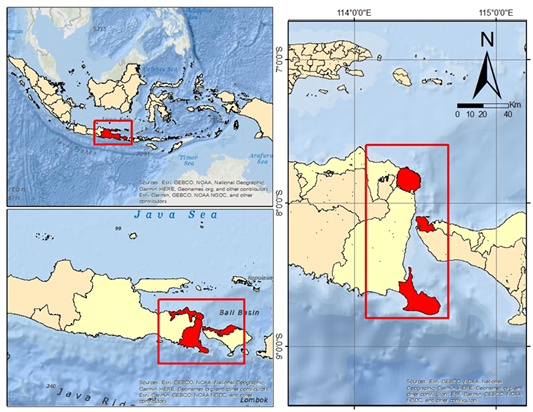
The research locations were in three National Parks in Indonesia, namely Baluran and Alas Purwo National Parks in East Java Province, and West Bali National Park in Bali Province (Figure 1). The selection of feces sampling areas was due to the presence of wild deer populations in these locations.
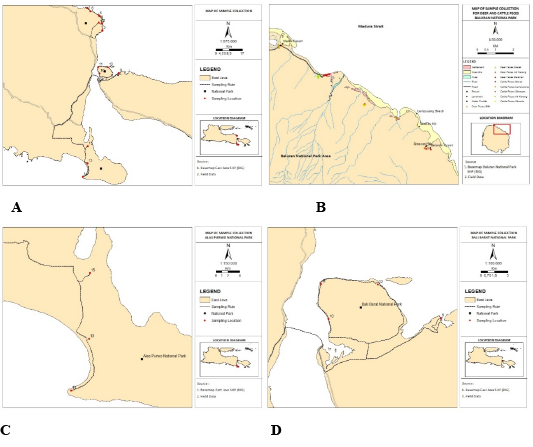
The research took place in Baluran NP, namely Kakapa, Merak, Bilik, Bilik Sijile, Bekol, Bama, and Datuk. Research location in Alas Purwo NP, namely Sadengan, Plengkung, and Jatipapak and West Bali NP, namely Prapat Agung, Pura Segara and Brumbun (Figure 2).
Procedures
Research permit
This research has obtained permission from the Ministry of Environment and Forestry (KLHK) of the Republic of Indonesia through the Decree of the Director General of Natural Resources and Ecosystem Conservation with No. SK.187/KSDAE/SET.3/KSA.2/9/2022.
Feces examination methods
The samples used were Timor deer feces (Cervus timorensis) taken using the transect method. Collection of fecal samples was carried out using the transect method. In each national park, three transect lines were established, each measuring 1 km in length and 10 m in width (5 m on each side of the line). Transect was placed in areas known to be frequently used by deer for their activities, based on field observations and information from park rangers. Sample collection was conducted using the line transect method. Each transect was 100–150 m long with a 5 m observation width on the left and right sides of the path. Feces found along transect was collected at a minimum distance of 10 meters between collection points to reduce the possibility of samples coming from the same individual. Each collection point was recorded using GPS to ensure samples came from different locations. Average target number of deer fecal samples collected per location was 30–40.
Identification of Timor deer feces was conducted through their distinctive size, shape, and texture. Only fresh fecal samples, characterized by their dark color, moist surface, and lack of degradation, were used for parasite analysis. Each sample was labeled according to its location and GPS coordinates at the collection point. The total number of fecal samples collected was 293, consisting of 162 samples from Baluran National Park, 45 samples from Alas Purwo National Park, and 86 samples from West Bali National Park, approximately 60 g in each sample. Approximately 10 drops of formalin were added to the feces samples for gastrointestinal parasite detection for preservation. Coordinate marking was carried out at each research location using GPS (Global Positioning System), and then the map was made using the ArcGIS version 10.8 application. The feces sample examination was conducted at the Animal Health Laboratory, Jenderal Soedirman University and Animal Health Type B, Purwokerto, Central Java, Indonesia.
It is essential to conduct enumeration and identification of gastrointestinal parasites in wild deer (Cervus timorensis) fecal samples to determine the presence and types of worm eggs and oocysts (qualitative), as well as to quantify the number of eggs and oocysts in the samples (quantitative). Examination of nematode, cestode and oocyst eggs was conducted using a float test using Sheather’s sugar solution, speed 1,500 rpm using duration 5 minutes. After centrifugation, fill the tube with flotation solution until a meniscus forms at the top. Place a cover slip on the tube for 5 minutes, then remove it and examine the sample under a microscope. Examination of trematode worm eggs was conducted using a sedimentation test. Centrifuge the sediment at 500–1,000 × g for 3–5 min, discard the supernatant, examine the sediment. Counting the number of worm eggs and oocysts was conducted using a Whitlock counting chamber The number of eggs and oocysts is calculated using a Whitlock counting chamber. Weigh 3 g of feces and suspend them in a 60 ml diluent. Filter the suspension to remove coarse particles, fill the Whitlock chamber, wait 5 minutes for the eggs to rise/distribute, and then count all eggs/oocysts in both chambers using microscope 400x. Number of eggs/oocysts in 4 chambers count x 10. The standard manual feces test is from Manual Diagnostic Methods of the Animal Health Laboratory of Central Java Province, Indonesia.
Data analysis
Parasites were identified using qualitative descriptive analysis which included parasite morphology by observing their shape and size based on manuals and references . The results of calculating worm eggs and oocysts (EPG and OPG), prevalence (expressed as percentage). Statistical analysis was conducted using two main approaches. Differences in the number of parasite species between the three national parks (Baluran, Alas Purwo, and West Bali) were analyzed using the Kruskal–Wallis test, as the data were counts, not normally distributed, and the number of sampling points per location was unequal. This test was used to determine whether there were significant differences in parasite species diversity between the study areas.
Furthermore, to analyze the relationship between the presence of domestic ruminants (cattle) and the number of parasite species, the Chi-square (x²) test was used. The presence of domestic ruminants was classified as having an interaction (Baluran and Alas Purwo) or not having an interaction (West Bali), while the number of parasite species was grouped into low (1–3 species), medium (4–6 species), and high (≥7 species). The statistical significance level was set at p < 0.05.Statistical analysis was conducted using JASP (Jeffrey’s Amazing Statistics Program) version 0.19.1. Statistical significance was set at P < 0.05 with a 95% confidence level. Morphological identification of worm eggs and oocysts can be made by looking at the size and shape, cell wall structure, color, scientific references and guidelines, examination and coloring methods .
Results and Discussion
Results
This study shows significant differences in the diversity and prevalence of gastrointestinal parasites in wild Timor deer across three national parks. Alas Purwo National Park (NP) had the highest parasite diversity (11 species) with a prevalence of 66.67%, while Baluran and West Bali showed lower prevalences, at 20.99% and 27.91%, respectively. Furthermore, there are indications of potential parasite transmission through interspecies interactions, particularly in Baluran and Alas Purwo National Parks.
Prevalence of gastrointestinal parasite infections of deer in Baluran, Alas Purwo and West Bali National Parks
Fecal samples were collected from several locations in 3 national parks in Indonesia, namely Baluran, Alas Purwo and West Bali National Parks. The selection of locations was based on the presence of deer populations in the national parks. The prevalence in Baluran, Alas Purwo and West Bali National Parks was 20.99%, 66.67% and 27.91%, respectively. The prevalence of gastrointestinal parasite infections at the study sites in the three national parks can be seen in Table 1.
Table 1: Prevalence of gastrointestinal parasite infections at research locations in Baluran National Park, Alas Purwo and West Bali.
National parks
Research area
Number of samples
Not infected
Infected
Prevalence
Baluran
Kakapa
16
9
7
20.99%
Merak
28
20
8
Bilik Sijile
21
20
1
Bilik
5
3
2
Sirondo
9
8
1
Bekol
31
28
3
Bama
26
24
2
Datuk
26
16
10
Total sample
162
128
34
Alas Purwo
Sadengan
20
5
15
66.67%
Plengkung
23
10
13
Jatipapak
2
0
2
Total sample
45
15
30
West Bali
Octagon
24
18
6
27.91%
Prapat Agung
20
17
3
Puri Segara
20
15
5
Brumbun
22
12
10
Total sample
86
62
24
Diversity of gastrointestinal parasite species of deer in Baluran, Alas Purwo and West Bali National Parks
The types of gastrointestinal parasites that attack deer consist of single infections of 81.13% and multiple infections of 18.87%. Dominance of single infections (81.13%) in Timor deer suggests that while the species may possess relatively effective immune responses against concurrent infections, exposure to diverse parasite species remains limited or uneven. This pattern may also indicate parasite competition or host immunity that is specific but not yet broadly protective across multiple parasite taxa.
Table 2: Number of parasite species in Baluran, Alas Purwo and West Bali National Park.
National parks (NP)
Research area
Types of parasite
Average number of parasite per sample (egg or oocysts per gram feces/ E or OPG)
Baluran
Kakapa
Eimeria spp.
57
Strongyle
110
Merak
Paramphistomum spp.
11
Strongyle
20
Toxocara spp.
35
Metastrongylus spp.
20
Ostertagia spp.
33
Moniezia spp.
20
Strongyloides spp.
20
Oesophagostomum spp.
20
Bilik Sijile
Strongyle
20
Bilik
Strongyle
40
Eimeria spp.
3280
Sirondo
Toxocara spp.
40
Bekol
Ascarid
20
Strongyle
20
Eimeria spp.
36
Bama
Strongyle
20
Datuk
Eimeria spp.
65
Toxocara spp.
30
Paramphistomum spp.
40
Alas Purwo
Sadengan
Paramphistomum spp.
9
Fasciola spp.
3
Strongyloides spp.
20
Eimeria spp.
80
Trichostrongylus spp.
40
Moniezia spp.
20
Ostertagia spp.
20
Table contibues on next column.........
National parks (NP)
Research area
Types of parasite
Average number of parasite per sample (egg or oocysts per gram feces/ E or OPG)
Strongyle
30
Trichuris spp.
100
Trichostrongylus spp.
80
Ostertagia spp.
20
Cooperia spp.
20
Plengkung
Paramphistomum spp.
87
Eimeria spp.
80
Jatipapak
Paramphistomum spp.
1
Eimeria spp.
140
West Bali
Octagon
Paramphistomum spp.
1
Eimeria spp.
2
Strongyle
1
Moniezia spp.
1
Ostertagia spp.
1
Prapat Agung
Toxocara spp.
80
Moniezia spp.
20
Pura Segara
Strongyle
30
Trichuris spp.
20
Eimeria spp.
67
Brumbun
Paramphistomum spp.
2
Eimeria spp.
60
Strongyle
20
Trichuris spp.
20
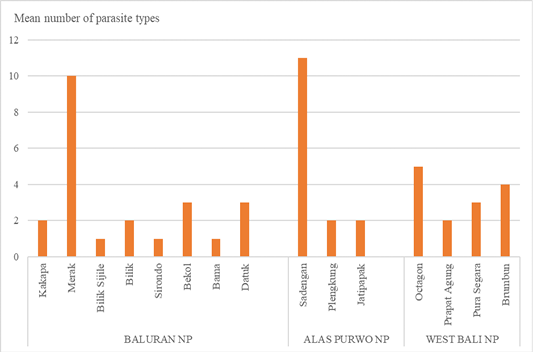
The highest parasite species diversity is in Alas Purwo National Park (Table 2) with 11 species. The diversity of species in each research location can be seen in Figure 3. Figure 3 shows that some research locations have higher diversity than other locations. This is an example of Merak, Sadengan and Octagon. The Kruskal-Wallis test showed that the difference in the number of parasite types between the three national parks was not statistically significant (H = 2.17; p= 0.34), indicating that the variation in parasite diversity between locations was not statistically strong enough to indicate a significant difference. Conversely, a Chi-square test showed a significant relationship between the presence of domestic ruminants and the number of parasite types (x² = 5.74; df = 2; p = 0.02). Locations with intense interactions between Timor deer and cattle (Baluran and Alas Purwo) had a higher proportion of parasite diversity categories than West Bali, which is free from livestock interactions.
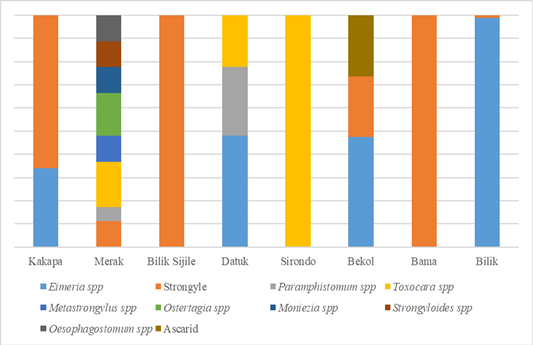
Parasites found in deer in Baluran NP can be seen in Figure 4. The research area in Baluran NP can be divided into two locations, namely locations close to residential areas (interface area) and locations that are far away and not connected to residents (non-interface area). In the interface area, 24% of the deer were infected with gastrointestinal parasites, showing a high diversity of nine parasite species, particularly in the Merak area. On deer in the non-interface area: 18% infected gastrointestinal parasite with 5 types of parasites, consist of: nematode (3 types), trematode (1 type) and oocysts. Numbers of parasites per samples ranged from 11-3280 parasites. On deer parasite: Nematode: 5 types, Trematode: 1 type, Cestode: 1 type, and oocysts of coccidia (Eimeria spp.) (Figure 4).
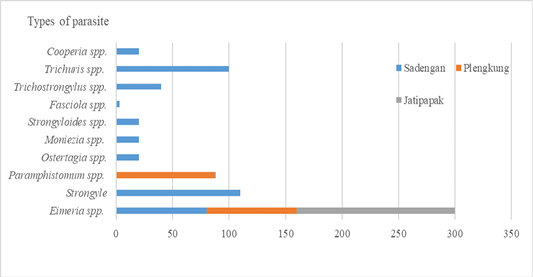
The number of parasites in the research location in Alas Purwo NP and Bali Barat NP can be seen in Figures 6 and 7. On deer in Alas Purwo: 66% of gastrointestinal tract parasites were infected. Variety of parasites, namely 5 types of parasites and the average number of parasites ranged from 1-140. Parasites consist of 3 types of nematodes, 2 types of trematodes and oocysts of coccidia (Eimeria spp.) (Figure 5).
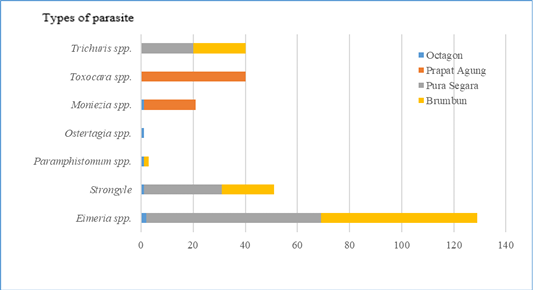
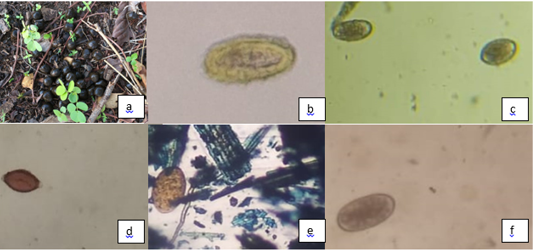
On deer in West Bali: 27.9% of gastrointestinal tract parasites were infected. Variety of parasites, namely 7 types of parasites and the average number of parasites ranged from 1-67. Parasits consist of 4 types of nematodes, 1 types of trematode, 1 types of cestode and oocysts (Figure 6). The types of worm eggs obtained from the examination results can be seen in Figure 6.
Discussion
Nematode and coccidia infections are the most common parasitic infections. The increasing observation of parasites (54.46%) may be due to their direct life cycle, which allows rapid transmission through contaminated food and soil without the need for an intermediate host. In national park ecosystems, parasitic worms with a direct life cycle can easily circulate between cattle and deer. These parasites do not require an intermediate host, so their eggs or larvae shed through the feces of infected animals quickly contaminate soil, grass, and surrounding feeding areas. When deer or cattle graze in the same locations, they may accidentally ingest these eggs or larvae, leading to new infections. The overlapping use of habitat, such as grazing fields, watering sites, and forest edges further increases the chances of cross-transmission. Moist environmental conditions and high animal density can also accelerate the development of eggs into infective larvae in the environment. As a result, direct life cycles enable parasitic worms to spread rapidly and efficiently between cattle and deer within a conservation landscape.
The use of fecal samples is an easy and inexpensive method. However, it can provide important information on the identity, diversity, ecology, and epidemiology of parasites, as well as the intensity, dynamics, and distribution of infections . In addition, it can evaluate the impact of parasitism on population dynamics, animal diet, and disease risk factors. Collection, preservation, and identification of fecal samples have advantages and disadvantages in terms of cost, risk of transmitting pathogens to researchers, and avoiding the bias of sampling the same individual twice or more. Non-invasive approaches are most feasible, without the need to capture wildlife .
The high rate of gastrointestinal parasite infections observed in Alas Purwo National Park (66.67%) may be attributed to several ecological and environmental factors. One possible explanation is the frequent spatial and temporal overlap between Timor deer and banteng (Bos javanicus) in the Sadengan savanna area. These animals often share feeding grounds, resting sites, and water sources, which may facilitate indirect transmission of fecal–oral parasites such as nematodes and coccidia. This pattern of interspecies interaction has been reported previously and was still observed during the present study. However, the role of domestic livestock in this transmission should be interpreted cautiously, as this study did not directly test for cross-species transmission; thus, the association may be influenced by, rather than definitively caused by, the presence of cattle and goats grazing near the park ; . Merak, Sadengan and Octagon are locations that have many interactions between deer and other wild ruminants, even with humans. Merak is the border of the forest ecosystem and the coastal ecosystem (interface area) where residents work as livestock breeders. The livestock in the area are herded into the Baluran National Park every day. Interaction and competition for food between livestock and deer are very likely to occur during grazing, including the transfer of parasites in feces. This also occurs in elephants in the buffer village in Way Kambas NP, where overlapping or overlapping habitats of these two groups cause the transfer of diseases including parasites to occur in both directions. Interactions also occur in deer and bulls in Sadengan. Merak, Sadengan and Octagon are areas that are often visited by humans and become tourist attractions. Figure 3 shows that the presence of other ruminants influence the diversity of types of gastrointestinal parasites found in deer. In Baluran National Park, Merak has the highest species diversity with 10 species. In Alas Purwo National Park, Sadengan has the highest species diversity with 11 species, while in West Bali National Park, Octagon has the highest species diversity with 5 species of gastrointestinal parasites. Transmission patterns can be very complex because they involve multi-host systems that can involve domestic and wild mammals. Transmission by wildlife can be primary or secondary, as a result of spillback from domestic animals ; .
Several factors that contribution of gastrointestinal parasite infections include differences in season, age, management status of animals, as well as the climate, agro ecology of the area, annual rainfall variations, temperature, humidity and landscape diversity variations significantly affect the development, transmission and infection rate of the parasite ; ; . In contrast, the lower prevalence in West Bali National Park (27.91%) may reflect lower deer density, reduced overlap with domestic animals, and differences in habitat structure and microclimate. West Bali NP is characterized by more fragmented forest patches and drier microhabitats, which may limit the survival and development of free-living larval stages of gastrointestinal nematodes. According to Xu et al. (2021), temperature and humidity are critical for larval development; environments with lower humidity or higher temperatures can reduce egg viability and larval survival. Moreover, the lower density of deer populations in West Bali may reduce the probability of fecal contamination of feeding areas and, consequently, the transmission rate of parasites. This is similar to the conditions in the three national parks, which have a savanna climate with low rainfall. Age, sex, grazing and management practices were found to be determining factors for the occurrence of gastrointestinal parasite infections in small ruminants .
In Baluran National Park, the parasite eggs identified consisted mainly of coccidia Eimeria spp., which emerged as the most dominant and abundant parasite in the study area, followed by Strongyle, Toxocara spp., and Paramphistomum spp. (Figure 4). Similarly, in Alas Purwo National Park, coccidia Eimeria spp. were also the most dominant and abundant, with Strongyle, Trichuris spp., and Paramphistomum spp. appearing in lower proportions (Figure 5). In West Bali, coccidia Eimeria spp. the most dominant parasite and is most commonly found in the research location, next are Strongyle, Trichuris spp. and Toxocara spp. (Figure 5). The types of parasites found in Timor deer are not much different from previous studies . The dominant parasites found in the three national parks are Coccidia Eimeria spp. is the most dominant parasite and is most commonly found in the research location, further are nematode Strongyle, Trichuris spp., Toxocara spp. and trematode Paramphistomum spp.
The result of the research is different from that of Jovanovic et al. (2024), who showed that mixed infections, especially triple infections, were more common than single infections. However, in this study, single infections were much more common than multiple infections. Multi-parasitism (co-infections) infections can occur when an animal is infected by different parasites simultaneously or when interactions between parasite species encourage co-infection. These interactions can have important impacts on human or animal health because they can alter human susceptibility, duration of infection, risk of transmission, and clinical symptoms. The interaction produces diverse effects in humans and infected animals . The interaction between deer and other ruminants in the same ecosystem in Baluran and Alas Purwo NP, if it continues continuously, could be one of the causes of the development of multi-parasitism with impacts that cannot yet be predicted, according to Zilio and Koella (2020). Infections by several parasites often occur in natural populations caused by infections that occur sequentially or simultaneously. Co-infections can influence parasite competitive interactions, thereby influencing parasite success and their impact on the host. This may play an important role in epidemiological and eco-evolutionary dynamics.
The type of parasitic infection caused by Eimeria spp. (causes coccidiosis) in deer was mild, except for deer in Bilik, Baluran NP, which has a moderate type of infection. The severity of coccidiosis is categorized into three levels: mild infection (1–500 OPG), moderate infection (500–5,000 OPG), and severe infection (>5,000 OPG) ; ; . The presence of parasites in wildlife can threaten the conservation goals of a national park. Parasites can reduce immunity, making animals susceptible to other diseases (secondary infections), cause reproductive disorders, cause organ damage and blood composition disorders, such as anemia, which can increase mortality rates. Parasites in wildlife can become more uncontrollable because control efforts are more difficult to do due to handling problems, wildlife behavior that tends to be afraid of human presence and erratic movements. Controlling parasites in wildlife can be done by the development of sufficient immunity, developing resistance and reducing stress as it can result in the massive proliferation of nematodes . Parasitic infections are a global phenomenon, representing an ongoing risk of serious disease for animals and humans. Effective treatment and prevention of infections are key to the welfare of pets, livestock and humans, including reducing the risk of zoonotic infections . Controlling disease infections in wildlife is a particular challenge, especially in wildlife that live in close proximity to livestock and humans.
In Baluran National Park there are residential areas where the majority of their livelihood is raising beef cattle. The interaction of beef cattle and deer is very likely to occur at the interface area of Baluran National Park. At the interface area of Baluran National Park, the life of deer in this area is very close to the population, especially with livestock which are grazed almost every day on the outskirts of the forest to look for forage. Although cattle were suspected as potential sources of gastrointestinal parasites may be due to their overlapping grazing areas with deer, this study did not include sampling from cattle. Therefore, the assumption is based on habitat overlap and previous records of similar parasites in domestic ruminants. Further studies comparing parasite composition between deer and sympatric cattle are needed to confirm cross-species transmission.
The Kruskal–Wallis test results indicate that although Alas Purwo exhibits the highest number of parasite species descriptively, the difference is not statistically significant compared to Baluran and West Bali. This suggests that parasite diversity is influenced not only by geographic location but also by ecological factors such as interspecific interactions. The chi-square test findings support the hypothesis that interactions between Timor deer and domestic cattle play a significant role in increasing the diversity and prevalence of gastrointestinal parasites. These results suggest a higher potential for parasite spillover in areas where cattle grazing and deer habitat overlap. The predominance of single infections (81.13%) suggests that Timor deer possess a relatively strong immune response to most parasites, but lack broad immunity to a wide range of parasites. Therefore, repeated exposure to domestic cattle could maintain or increase the risk of infection.
Livestock can be a source of parasite transmission in wild deer, it has been reported by Bhat et al. (2022); Brown et al. (2024) that almost all parasite species reported to occur in wild ungulate species have been seen in domestic livestock. The settlement, management system, anthelmintic treatment, and body condition score were significantly associated with the occurrence of gastrointestinal parasites in feces ; . This study provides important baseline information that opens opportunities for further research on microbial diversity in livestock living in the interface areas of Baluran National Park. Such investigations are essential to determine whether there is potential disease transmission between ruminant species, as this could pose risks not only to the livestock themselves but also to wildlife and humans ; . Analyzing feces and mapping parasites plays a vital role in understanding the diversity, distribution and dynamics of parasites in the farm and enables effective control measures to be taken to reduce the risk of infection . Parasite can disrupt the preservation of wildlife. This research can be a stepping stone for appropriate conservation measures for wildlife, especially deer, related to infestation and infection of parasitic species, especially those that are zoonotic in the interface area of National Parks in Indonesia. Health promotion strategies in controlling parasitic diseases must be designed contextually, based on an in-depth analysis of the parasite’s life cycle, its ecological dynamics, and its reciprocal relationships with other organisms in the ecosystem in which it thrives . Conservation policies related to parasites in wildlife can be implemented, including through the one health approach involving many sectors, regular monitoring of wildlife health, improving management of national park management and public education ; ; Ng’etich et al., 2023; Sanhuezo et al., 2025).
Conclusion
Timor deer (Cervus timorensis) and other wild ruminants in national parks can act as reservoirs for various infectious agents, particularly gastrointestinal parasites. Continuous surveillance and monitoring of wildlife health are essential for the welfare of wildlife, domestic livestock, and humans, given the potential risk of zoonotic transmission. This study, conducted for the first time across three national parks in Indonesia, provides important baseline data highlighting the need to integrate wildlife health into conservation management. From a conservation perspective, national park management policies, especially in Baluran, should consider regulating or restricting livestock grazing within wildlife habitats to reduce the risk of cross-species disease transmission and support sustainable ecosystem health.
Acknowledgements
We would like to extend our gratitude to the Gadjah Mada University for the financial support through Final Project Recognition (Rekognisi Tugas Akhir; RTA) research 2023 decree number 5075/un1.p.ii/dit-lit/pt.01.01/2023.
Novelty Statement
The diversity of gastrointestinal parasites in wild native Timor deer (Cervus timorensis) in Baluran, Alas Purwo, and West Bali National Parks has never been documented. Understanding this diversity is essential for supporting the conservation of Timor deer in their natural habitat. It is particularly important because parasite transmission may occur through interactions with other ruminants and humans in the interface areas of these national parks in Indonesia, potentially affecting the health and survival of the species
Author’s Contribution
Wayan T Artama and Sena Adi Subrata designed the study and performed data analysis and interpretation. Diana Indrasanti and Sena Adi Subrata conducted field sampling. Diana Indrasanti checked the samples and wrote the manuscript. All authors have read and approved the final version of the manuscript.
Generative AI and AI-assisted technology statement
During the preparation of this manuscript, the authors used AI-assisted tools solely for language editing and grammar checking. The authors reviewed and edited the content as needed and take full responsibility for the content of the publication.
Conflict of interest
The authors have declared no conflict of interest.
Figures
Figure 1:.
The research locations were in three National Parks in Indonesia, namely Baluran (114°22’30.0”E; 7°50’0.0” S) and Alas Purwo National Parks (114°22’30.0”E; 8°40’0.0” S) in East Java Province, and West Bali National Park (114°25’0.0”E; 8°8’30.0” S) in Bali Province. Map created using ArcGIS version 10.8 application.
Figure 2:.
Location of deer feces sampling in three National Parks in Indonesia. A: Location of three National Park, B: Baluran National Park, C: Alas Purwo National Park, and D: West Bali National Park. Determining the coordinates of the sampling location using GPS. The map was created using the ArcGIS version 10.8 application.
Figure 3:.
Mean number of parasite species at research locations in Baluran, Alas Purwo and West Bali National Parks.
Figure 4:.
Diversity of eggs parasites (egg or oocysts/gram feces) in research location in Baluran National Park.
Figure 5..
Mean number of eggs parasites (egg or oocysts/gram feces) in research location in Alas Purwo National Park. Mean number of parasite types.
Figure 6:.
Mean number of eggs parasite (egg or oocysts/ gram feces) in research location in West Bali National Park. Mean number of parasite types.
Figure 7:.
Some eggs of parasites found in deer in three national parks. a. Deer feces samples, b. Ascarid c. Trichostrongylus spp., d. Trichuris spp., e. Fasciola spp., f. Cooperia spp.
References
Ahmad K, Ullah W, Ali Q, Adeel M, Fahad S (2024). A Cross-sectional study of prevalence of gastrointestinal parasites in captive wild animals in Pakistan Zoological Gardens. World’s Vet. J., 14: 234–241. https://doi.org/10.54203/scil.2024.wvj29[CrossRef]
Altizer S, Harvell D, Friedle E (2003). Rapid evolutionary dynamics and disease threats to biodiversity. Trends Ecol. Evol., 18: 589–596. https://doi.org/10.1016/j.tree.2003.08.013[CrossRef]
Anderson RM, May RM (1978). Regulation and stability of host–parasite population interactions: I. Regulatory processes. J. Anim. Ecol., 47: 219–247. https://doi.org/10.2307/3933[CrossRef]
Banda A, Moyo DZ, Ncube N, Utete E, Machingura J, Gumbo T, Gandiwa E (2024). Gastrointestinal parasite prevalence, diversity and association in free-ranging Chacma baboon troops in a semi-arid savanna ecosystem of Zimbabwe. Int. J. Parasitol. Parasites Wildl., 25: 101012. https://doi.org/10.1016/j.ijppaw.2024.101012[CrossRef]
Belay S, Alemu G, Hailu T (2023). Performance evaluation of three diagnostic methods for soil transmitted helminth infections among schoolchildren in Amhara Region, Northwest Ethiopia. J. Trop. Med., 2023: 1-7. https://doi.org/10.1155/2023/9697165[CrossRef]
Bhat RA, Tak H, Bhat BA, Dar JA, Ahmad R (2022). Gastrointestinal helminth parasites of wild ungulates in Hirpora Wildlife Sanctuary, Kashmir, India. J. Parasit. Dis., 46: 804–810. https://doi.org/10.1007/s12639-022-01493-3[CrossRef]
Brahmananda WGA, Putra IPC, Kardena IM, Mahatmi H, Astawa INM (2024). Coccidiosis in broiler chicken raised in closed house in Patas Village, Gerokgak, Buleleng. Bul. Vet. Udayana, 16: 1079-1092. https://doi.org/10.24843/bulvet.2024.v16.i04.p14[CrossRef]
Brown K, Jenkins DJ, Gofton AW, Smith I, Francis N, Shamsi S, Barton DP (2024). The first finding of Dictyocaulus cervi and Dictyocaulus skrjabini (nematoda) in feral fallow deer (Dama dama) in Australia. Int. J. Parasitol. Parasit. Wildl. 24: 100953. https://doi.org/10.1016/j.ijppaw.2024.100953[CrossRef]
Brown T, Morgan ER (2024). Helminth prevalence in European Deer with a focus on abomasal nematodes and the influence of livestock pasture contact: A Meta-analysis. Pathogens, 13: 378. https://doi.org/10.3390/pathogens13050378[CrossRef]
Buet AFNR, Bujanić M, Krapinec K, Bošković I, Gašpar A, Konjević D (2025). Development of the roe deer–Fascioloides magna association over time. Pathogens, 14: 516. https://doi.org/10.3390/pathogens14060516[CrossRef]
Cai W, Zhu Y, Wang F, Feng Q, Zhang Z, Xue N, Xu X, Hou Z, Liu D, Xu J, Tao J (2024). Prevalence of gastrointestinal parasites in zoo animals and phylogenetic characterization of Toxascaris leonina (Linstow, 1902) and Baylisascaris transfuga (Rudolphi, 1819) in Jiangsu Province, Eastern China. Animals, 14: 375. https://doi.org/10.3390/ani14030375[CrossRef]
Chantip D, Chooruang N, Sakuna K, Sukmak W, Bohman W (2024). Gastrointestinal parasite infections and associated factors in fighting bulls over 7 years of monitoring in Southern Thailand. Vet. World, pp. 895–902. https://doi.org/10.14202/vetworld.2024.895-902[CrossRef]
Dashe D, Berhanu A (2020). Study on gastrointestinal parasitism of wild animals in captivity at the Zoological Garden of Haramaya University, Ethiopia. Open J. Vet. Med., 10: 173–184. https://doi.org/10.4236/ojvm.2020.109015[CrossRef]
Eggert M, Stüber E, Heurich M, Fredriksson-Ahomaa M, Burgos Y, Beutin, L, Märtlbauer E (2013). Detection and characterization of Shiga toxin-producing Escherichia coli in faeces and lymphatic tissue of free-ranging deer. Epidemiol. Infect., 141: 251–259. https://doi.org/10.1017/S0950268812000246[CrossRef]
Gebeyehu A, Dinka A, Guta W, Tesfaye F (2024). Helminth parasites transmission between species of ruminants in urban and peri-urban areas of Adaa district of Central Ethiopia. J. Vet. Med. Anim. Hlth., 16: 1–11. https://doi.org/10.5897/JVMAH2023.1046[CrossRef]
Glamazdin IG, Medvedev IN, Kutuzov DD, Fayzullina II, Nazarova SV, Sysoeva NY, Komarov NE, Bannikova OA, Gubanova MI, Bakaeva KV, Tarasova V (2024). Main parasitic infestations of wild ungulates used for food. J. Biochem. Tech., 15: 59–63. https://doi.org/10.51847/iKmPtRdbFp[CrossRef]
Haider A, Husain K, Mares MM, Abbas A (2024). In vitro and in vivo anthelmintic activity of Nicotiana tabacum against Haemonchus placei in cattle. Pak. Vet. J., 44: 745-750.
Hudson PJ, Dobson AP, Newborn D (1998). Prevention of population cycles by parasite removal. Science, 282: 2256–2258. https://doi.org/10.1126/science.282.5397.2256[CrossRef]
Hudson PJ, Rizzoli A, Grenfell BT, Heesterbeek H, Dobson AP (2006). The ecology of wildlife diseases. Oxford University Press.
Iman MH, Kuswandi PC, Subrata SA (2024). Genetic variation of the native Rusa deer (Rusa timorensis) in Java and Bali (Indonesia) as revealed using non-invasive sampling. Biodivers. J. Biol. Divers., 25: 355-360. https://doi.org/10.13057/biodiv/d250141[CrossRef]
Jenkins EJ, Simon A, Bachand N, Stephen C (2015). Wildlife parasites in a one health world. Trends Parasitol., 31: 174–180. https://doi.org/10.1016/j.pt.2015.01.002[CrossRef]
Jovanovic NM, Petrović T, Katarina N, Bugarski D, Stanimirovic Z, Rajkovic M, Ristic M, Mirceta J, Ilic T (2024). Endoparasites of Red Deer (Cervus elaphus L.) and Roe Deer (Capreolus capreolus L.) in Serbian Hunting Grounds. Animals, 14: 3120. https://doi.org/10.3390/ani14213120[CrossRef]
Kaminsky R, Mäser P (2025). Global impact of parasitic infections and the importance of parasite control. Front Parasitol., 4: 1546195. https://doi.org/10.3389/fpara.2025.1546195[CrossRef]
Khan T, Khan W, Iqbal R, Maqbool A, Fadladdin YAJ, Sabtain T (2023). Prevalence of gastrointestinal parasitic infection in cows and buffaloes in lower Dir, Khyber Pakhtunkhwa, Pakistan. Braz. J. Biol., 83: e242677. https://doi.org/10.1590/1519-6984.242677[CrossRef]
Khattak I, Akhtar A, Shams S, Usman T, Haider J, Nasreen N, Khan A, Said MB (2023). Diversity, prevalence and risk factors associated to gastrointestinal tract parasites in wild and domestic animals from Pakistan. Parasitol. Int.., 97. https://doi.org/10.1016/j.parint.2023.102777.[CrossRef]
Lahat L, Ortiz JM, Tizzani P, Ibáñez B, Valera F, Moreno E, Espeso G, Ruiz De Ybáñez R (2021). Are anthelminthic treatments of captive ruminants necessary? Vet. Sci., 8: 240. https://doi.org/10.3390/vetsci8100240[CrossRef]
Libriani R, Prasanjaya PNK, Mando LOAS, Sutopo D, Sulfitrana A, Aku AS, Isnaeni PD (2022). Prevalence of endoparasites in Timor Deer in-situ breeding at Tinanggea Sub-District using SAF (Sodium Acetic Formaldehyde) method. Proc Int Conf Improv Tropical Anim Prod Food Sec (ITAPS 2021), Kendari, Indonesia, 29 March, 2022, pp. 506-510. https://doi.org/10.2991/absr.k.220309.097[CrossRef]
Loginova O, Efeykin B, Krutikova A, Mizin I, Spiridonov S (2024). Fasciola hepatica: Updates on egg morphology, host range, and distribution. Food Waterb. Parasitol., 36: e00237. https://doi.org/10.1016/j.fawpar.2024.e00237.[CrossRef]
Lymbery AJ, Smit NJ (2023). Conservation of parasites: A primer. Int. J. Parasitol. Parasites Wildl., 21: 255–263. https://doi.org/10.1016/j.ijppaw.2023.07.001[CrossRef]
Maganga GD, Makouloutou-Nzassi P, Boundenga L, Landjekpo, MHN, Bangueboussa F, Mebaley NT, Mounioko F, Gbati OB (2023). Gastrointestinal polyparasitism in bushmeat in Zadie Department in Northeast Gabon. Vet. Sci., 10: 229. https://doi.org/10.3390/vetsci10030229[CrossRef]
Maharjan B, Jain P, Koju NP (2025). Zoonotic risks and conservation challenges: Gastrointestinal parasites in wild mammals of Chitwan National Park, Nepal. Int. J. Parasitol. Parasit. Wildl., 26: 101041. https://doi.org/10.1016/j.ijppaw.2025.101041[CrossRef]
Muhamad N, Awaludin A, Nugraheni YR (2021). Koksidiosis pada sapi perah di Kabupaten Jember, Jawa Timur-Indonesia (Coccidiosis in dairy cattle in Jember Regency, East Java-Indonesia). J. Ilmu Pet. Ter., 4: 60-65. https://doi.org/10.25047/jipt.v4i2.2501[CrossRef]
Palomino-Guerrera W, Huaman MR, Flores-Prado V, Padilla DG, Zárate-Rendón DA (2024). Gastrointestinal parasites in free grazing goats from Ayacucho, Peru: Prevalence and risk factors associated with infection in herds. Trop. Anim. Hlth. Prod., 56: 365. https://doi.org/10.1007/s11250-024-04192-8[CrossRef]
Perroux TA, Lie SSY, McElligott AG, Yang DA, Hill FI, Hodgson GMW, Wong WS, Flay KJ (2025). Epidemiology and risk factors for endoparasite infection in subtropical feral cattle in Hong Kong. Int. J. Parasitol. Parasites Wildl., 27: 101082. https://doi.org/10.1016/j.ijppaw.2025.101082[CrossRef]
Poulin R (2007). Evolutionary ecology of parasites (2nd ed.). Princeton University Press. https://doi.org/10.1515/9781400840809[CrossRef]
Pudyatmoko S (2019). Habitat dan interaksi spatio-temporal merak hijau dengan sapi dan herbivora besar di Taman Nasional Baluran (Habitat and spatio-temporal interactions of green peafowl with cattle and large herbivores in Baluran National Park). J. Ilmu Kehutanan, 13: 28. https://doi.org/10.22146/jik.46142[CrossRef]
Rizwan HM, Zohaib HM, Sajid MS, Tahir UB, Kausar R, Nazish N, Said BM, Anwar N, Maqbool M, Fouad D, Ataya FS (2024). Unveiling the hidden threat: Investigating gastrointestinal parasites and their costly impact on slaughtered livestock. Rev. Bras. Parasitol. Vet., 33: e007224. https://doi.org/10.1590/s1984-29612024061[CrossRef]
Rojas A, Germitsch N, Oren S, Sazmand A, Deak G (2024). Wildlife parasitology: Sample collection and processing, diagnostic constraints, and methodological challenges in terrestrial carnivores. Parasit. Vectors, 17: 127. https://doi.org/10.1186/s13071-024-06226-4[CrossRef]
Rumakant, Sarkar TK, Verma AK, Maurya PS, Thakur V, Singh A, Rawat S, Chandra G, Maurya PK, Gautam S (2024). Prevalence of gastrointestinal parasitic infections in goats in Western Uttar Pradesh, India. Acta Sci. Vet. Sci., pp. 17–27. https://doi.org/10.31080/ASVS.2024.06.0881[CrossRef]
Sander C, Balkenhol N, Neumann S (2024). Exploring animal enclosures and parasite interactions in Germany. Int. J. Parasitol. Parasit. Wildl., 25: 101009. https://doi.org/10.1016/j.ijppaw.2024.101009[CrossRef]
Sangpeng J, Eamudomkarn C, Hongsrichan N, Artchayasawat A, Chaisongkram C, Ponsrila K, Kimkamkaew S, Laoprom N, Boonmars T, Sithithaworn P, Pitaksakulrat O (2023). Prevalence of gastrointestinal parasites in captive mammals at Khon Kaen Zoo, Thailand. Vet. World, pp. 2416–2424. https://doi.org/10.14202/vetworld.2023.2416-2424[CrossRef]
Sanhueza Teneo D, Cerna O, Chesnais CB, Cárdenas D, Camus P (2025). High parasite prevalence driven by the human-animal-environment interface: A One Health study in an urban area in Southern of Chile. Front. Vet. Sci., 12: 1536861. https://doi.org/10.3389/fvets.2025.1536861[CrossRef]
Siagian FE (2025). Strengthening parasitic infection prevention and control practices: An aspect of health promotion. Int. J. Pathogen Res., 14: 94–105. https://doi.org/10.9734/ijpr/2025/v14i1344[CrossRef]
Soulsby EJL (1982). Helminths, Arthropods and Protozoa of Domesticated Animals (7th ed.). Baillière Tindall.
Srinivasarao K, Ramadevi P, Tejaswani V, Kumar BR (2024). Prevalence of gastrointestinal parasitic infections of small ruminants in and around Vizianagaram District, Andhra Pradesh, India. Explor. Anim. Med. Res., 14: 51–57. https://doi.org/10.52635/eamr/14(S1)51-57[CrossRef]
Subeno (2007). Pola aktivitas dan interaksi harian banteng dan rusa dalam pemanfaatan kawasan rumput Sadengan di Taman Nasional Alas Purwo, Banyuwangi, Jawa Timur (Patterns of daily activity and interaction of banteng and deer in the utilization of Sadengan grassen area in Alas Purwo, National Park, Banyuwangi, Jawa Timur). J. Ilmu Pet., I: 1-9. https://doi.org/10.22146/jik.1550[CrossRef]
Subrata SA, Yuda P, Artama WT, Wichatitsky MD, André A, Michaux J (2024). Rusa deer microbiota: The importance of preliminary data analysis for meaningful diversity comparisons. Int. Microbiol., https://doi.org/10.1007/s10123-024-00521-x[CrossRef]
Van Wyk JA, Mayhew E (2013). Morphological identification of parasitic nematode infective larvae of small ruminants and cattle: A practical lab guide. Onderstepoort J. Vet. Res., 80: 14. https://doi.org/10.4102/ojvr.v80i1.539[CrossRef]
Vaumourin E, Vourc’h G, Gasqui P, Vayssier-Taussat M (2015). The importance of multiparasitism: Examining the consequences of co-infections for human and animal health. Parasit. Vect., 8: 545. https://doi.org/10.1186/s13071-015-1167-9[CrossRef]
Verheyden H, Richomme C, Sevila J, Merlet J, Bourtet B, Chaval Y, Hoste H (2020). Relationship between the excretion of eggs of parasitic helminths in Roe Deer and local livestock density. J. Helminth, 94: e159. https://doi.org/10.1017/S0022149X20000449[CrossRef]
Xu S, Zhang S, Hu X, Zhang B, Yang S, Hu X, Liu S, Hu D, Bai J (2021). Temporal and spatial dynamics of gastrointestinal parasite infection in Père David’s deer. PeerJ, 9: e11335. https://doi.org/10.7717/peerj.11335[CrossRef]
Yasobant S, Saxena D (2019). Global applications of one health practice and care. IGI Global. https://doi.org/10.4018/978-1-5225-6304-4[CrossRef]
Žele Vengušt D, Kuhar U, Jerina K, Vengušt G (2021). Twenty years of passive disease surveillance of Roe Deer (Capreolus capreolus) in Slovenia. Animals, 11: 407. https://doi.org/10.3390/ani11020407[CrossRef]
Zilio G, Koella JC (2020). Sequential co-infections drive parasite competition and the outcome of infection. J. Anim. Ecol., 89: 2367–2377. https://doi.org/10.1111/1365-2656.13302[CrossRef]
Gastrointestinal Parasite Diversity in Native Timor Deer (Cervus timorensis) from Three National Parks in Indonesia: A First Step Toward Health-Based Conservation · ResearchersLinks