Hafiz Muhammad Wariss, Saeed Ahmad, Khurshid Alam, Naila Sarwer, Shazia Anjum
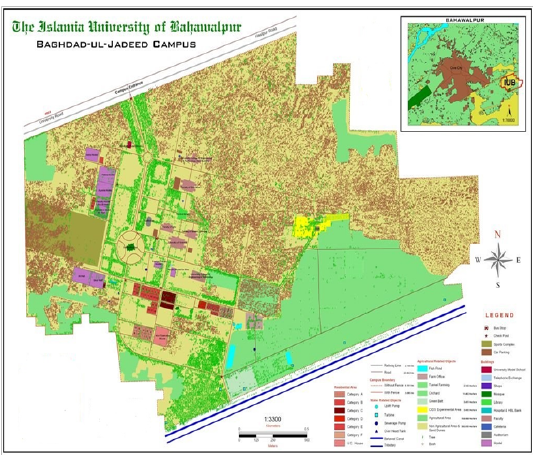
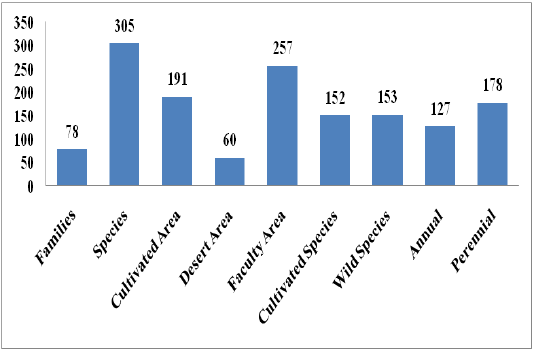
1Key Laboratory for Plant Diversity and Biogeography of East Asia, Kunming Institute of Botany, Chinese Academy of Sciences, Kunming, Yunnan 650204, China; 2Plant Germplasm and Genomics Center, The Germplasm Bank of Wild Species, Kunming Institute of Botany, Chinese Academy of Sciences, Kunming, Yunnan 650204, China; 3Cholistan Institute of Desert Studies, The Islamia University of Bahawalpur, Pakistan; 4University College of Agriculture, University of Sargodha, Sargodha, Pakistan; 5Department of Forestry, Rang & Wildlife Management, The Islamia University of Bahawalpur, Pakistan; 6Department of Botany, Bahawalnagar Campus, The Islamia University of Bahawalpur, Pakistan.Abstract | The aim of the present study was to record the floristic composition and to make an account of plant diversity of Baghdad-ul-Jadeed Campus, The Islamia University of Bahawalpur covering an area of 1250 Acres. The area was divided into three categories as cultivated area, desert area and faculty area. The area was systematically explored and 305 plant species belonging to 235 genera and 78 families were recorded. Poaceae was found to be the largest family with 45 species followed by Papilionaceae (23 species), Asteraceae (18 species), Euphorbiaceae (12 species), Solanaceae (12 species), Mimosaceae (11 species), Cucurbitaceae (10 species), Moraceae (8 species), Apocynaceae (7 species), Aizoaceae (6 species), Boraginaceae (6 species) and Brassicaceae (6 species). The faculty area had thehighest number of plant species (257) species followed by the cultivated area (191)then the desert area (60). The findings of this study will guide strategies aimed at better management of plant resources in the area.
Keywords | Baghdad-ul-jadeed campus, Natural vegetation, Cultivated plants, Life form, Floristic diversity.