
Mushrooms are well-known for their richness of health-beneficial bioactive metabolites. In recent years, consumers interested regarding fatty acid composition of different food are increasing. This work assessed the nutritional value of two different verities of mushrooms including Button mushroom (BM) and Oyster mushroom (OM), and determined the composition and contents of fatty acids. Mushrooms dried in cabinet dehydrator at 55°C for 16 hrs, the obtained mushroom powder packed in an airtight jar. All mushroom-based food products (MBFPs) i.e., biscuits, noodles, nuggets and soup mix were developed using mushroom powder. Results regarding the fatty acids profile showed that, Saturated fatty acid (SFA) followed by (palmitic acid 13.20g/100) BMP, (stearic acid 3.97g/100) OMP, (margaric acid 3.43g/100) BMP, (behenic acid 1.15g/100) BMP, (arachidic acid 0.37g/100) BMP and (lignoseric acid 0.34g/100) BMP. Unsaturated fatty acid (USFA) followed by (trans linoleic acid 66.49g/100 BMP, (cis oleic acid 34.26g/100) OMB, (gamma 6.24g/100) BMP, (eicosenoic acid 2.64g/100) BMP, (linolenic acid 1.60g/100 BMP, (erucic acid 1.07g/100) BPM, (nervonic acid 0.89g/100) BMP, (eicosadienoic acid 1.99g/100) BMP, (trans oleic acid 0.26g/100) BMP and (palmitoleic acid 0.21g/100) OMP. Value added food products followed by SFA nugget (palmitic acid 1.30g/100), biscuit (palmitic acid 3.69g/100), soup mix (palmitic acid 0.25g/100) and noodles (palmitic acid 0.16g/100). Value added food products followed by UNFA nugget (cis oleic acid 10.05g/100), biscuits (cis oleic acid 34.26g/100), soup mix (trans linoleic acid 1.80g/100) and noodles (gamma 0.53g/100). Total fatty acid (TFA) (Poly unsaturated fatty acid =PUSFA, Monounsaturated fatty acid = MUSFA and Total saturated fatty acid= TSFA) followed by (TFA 81.57g/100) BMP, (PUSFA76.33g/100) BMP, (MUSFA 35.15g/100) OMB, (TSFA 21.84g/100) BMP. The findings from present study conclude that BM and OM can be effectively utilized for the development of MBFPs while their fatty acid profiling exhibited the presence of 16 FAs (06 SFAs and 10 USFA) which indicates that MBFPs possess considerable proportion of essential fatty acids rather than SFAs. It is concluded that mushrooms are high-quality and can be used as a source for meat analog required by vegetarians. This study provides a scientific source for the additional consumption of mushrooms.
Research Article · Volume 40, Issue 3, 10 July 2024 · Open Access
Fatty Acid Composition of Value-Added Mushroom Based Food Products
· · ·
Affiliations & Notes ⌄
- 1Institute of Food Sciences and Technology, Faculty of Crop Production, Sindh Agriculture University, Tandojam, Sindh, 70060-Pakistan
- 2Food Technology and Nutrition Section Food and Marine Resources Center PCSIR Labs, Complex. *Correspondence | Aijaz Hussain Soomro, Institute of Food Sciences and Technology, Faculty of Crop Production, Sindh Agriculture University, Tandojam, Sindh, 70060-Pakistan
- 3Email: ahsoomro@sau.edu.pk
Article Info ⌄
- Journal:
- Sarhad Journal of Agriculture
- Published:
- 10 July 2024
From the article
- The results showed BMP to contain higher levels of saturated fatty acids than OMP.
- The button mushroom powder incorporated biscuits showed higher levels of saturated fatty acid as compared to oyster mushroom incorporated biscuits.
- BMP incorporated nuggets showed significantly higher levels of palmitic acid (i.e., 1.30 g/100), stearic acid (0.46 g/100), and behenic acid (0.14 g/100) than OMP incorporated nuggets.
- The results of present study showed button mushroom based noodles (Table 2) to contain significantly higher levels of palmitic acid (0.16 g/100), and stearic acid (0.11 g/100) than oyster mushroom-based noodles.
Selected from the article's own text.
Abstract
Introduction
Edible mushrooms (EMs) are becoming a more prominent part of the human diet. EMs are believed to be the nutritious, safest, and therapeutic diet therefore are suitable for the people of all age groups. The nutrient dense mushrooms may be taken as a substitute of fish, fruits, vegetables, and meat etc. . Numerous Ems are consumed as food and are also associated with exerting tremendous health related benefits . On dry weight basis mushroom fruiting bodies consisting of carbohydrate, protein, fats, minerals and vitamins . They have a wide variety of antioxidants and phytochemicals with broad spectrum nutraceutical properties . Despite of having immense nutritional value, EMs are highly anticipated for their delicacy (De Román and Boa, 2006), medicinal properties , range of texture and aroma i.e., nutty, fruity, seafood etc., (Aisala et al., 2018). However, fruiting bodies from Agaricus, Lentinula, and Pleurotus genera are among the most cultivated and commercialized mushroom types .
EMs cultivation and their utilization are still underdeveloped due to their highly perishable nature . They are often consumed as raw or processed state and may be incorporated in foods products for adding value for increasing their consumption , enhancing storability, and for upgrading their marketability. Many forms of mushroom-based food products i.e., canned, pickled, and dried mushrooms etc. are commercially available in markets . EMs are also commercially available as health promoting tonics, concentrates, extracts, fermented beverages, teas, and powders . Since EMs exert therapeutic effects, they may be utilized for developing mushroom-based value-added functional foods. Several studies have reported developed mushroom-based value-added functional foods, utilized Agaricus bisporus and Pleurotus ostreatus powder for developing novel snacks and meat balls. Pleurotus sajor-caju were used to develop rice porridge, flat bread, and conventional cake . Farooq et al. (2021) utilized oyster mushroom for muffin development, prepared biscuits from Terfeziaclaveryi while developed noodles from Pleorotus ostreatus. Alongside carbohydrate and protein, the fat exerts prominent role in maintaining human health. An adequate supply of fats or fatty acids (FAs) is related with development of physical and mental health and maintenance of bodily functions therefore a healthy diet must have reasonable proportion of FAs . Although, despite having minimal lipid proportion in mushroom, a substantial number of essential and non-essential FAs have been characterized by many researchers in various edible mushrooms ; ; ; ; ; . Present study was therefore conducted to develop mushroom-based value-added functional foods from white button (Agaricus bisporus) and oyster (Pleurotus ostreatus) mushrooms and to analyze their FAs profile.
Materials and Methods
Raw materials
Fine wheat flour, butter, corn starch, salt, sugar, spices (black pepper powder, garlic and ginger powder), bread slices, breadcrumbs, egg etc. Were procured from the local market of Hyderabad city. All the reagents used in this study were of analytical grade and were purchased from Sinopharm Chemical Reagent Co., Ltd.
Mushroom procurement and processing
Fresh Agaricus bisporus (Button mushroom=BM) and Pleurotus ostreatus (Oyster mushrooms=OM) were purchased from supermarket, Karachi city and immediately brought to the Institute of Food Sciences and Technology, Sindh Agriculture University, Tandojam, Sindh, Pakistan. Instantly, mushrooms were initially processed to remove non-edible/ bruised/ unnecessary parts, washed thrice using distilled water and air dried at ambient temperature.
Preparation of mushroom powder
Mushroom powder (MP) was prepared as per method described by with minor modifications. For preparing MP, the basidiocarp (fruiting body) of BM and OM were separated, sliced (approx. 0.5cm), blanched at 100°C for 3 minutes in 3%salt and 0.01% citric acid solution, dehydrated in cabinet dehydrator at 55°C for 16 hrs. The Blanching method was used to retain the color of the final products prepared from mushrooms. For the preparation of mushroom powder fresh mushrooms were cleaned, sliced and blanched in boiling water for short period of time (3 minutes) followed by air drying and kept them at dehydrator for drying. The Blanching method also inactivates common bacteria which improves the safety of the mushrooms prior to product development (with final moisture up to 4%). The dried mushroom slices were milled to obtain MP, which was sieved, packed in an airtight jar, labeled, and kept under refrigeration till further use.
Development of mushroom-based food products
All mushroom-based food products (MBFPs) i.e., biscuits, noodles, nuggets and soup mix were developed using MP as per procedures described by ; ; ; , respectively. The information regarding ingredients used in MBFPs prepared from BM and OM is given in Table 1 and Figure 1 shows the processing flow chart for MBFPs while Supplementary Figures shows MBFPs developed in the present study.
Recipe of the development of mushroom-based biscuits.
| Ingredients (g/ml) | Quantity |
| Fine wheat flour | 50 |
| Mushroom powder | 5 |
| Icing sugar | 15 |
| Butter | 15 |
| Milk powder | 4 |
| Baking powder | 1 |
| Egg | 10 |
Recipe of the development of mushroom-based Nuggets
| Ingredients (g/ml) | Quantity |
| Boneless chicken | 75 |
| Mushroom powder | 5 |
| Bread slices | 10 |
| Fresh liquid milk | 5 |
| Black paper powder | 3 |
| Salt | 1 |
Recipe of the development of mushroom-based Soup mix
| Ingredients (g/ml) | Quantity |
| Corn flour | 90 |
| Mushroom powder | 5 |
| Dried mushroom chunks | 3 |
| Black paper powder | 1 |
| Salt | 1 |
Recipe of the development of mushroom-based Noodles
| Ingredients (g/ml) | Quantity |
| Fine wheat flour | 75 |
| Mushroom powder | 5 |
| Corn flour | 4 |
| Salt | 1 |
| Water | 15 |
Determination of fatty acid profile of MBFPs
MPs and MBFPs were determined for FA profile as per method described by method number 996.06. At initial, the fat portion from the sample was separated and utilized for analyzing FA
Table 1: Different ingredient used for developing mushroom by products.
| Biscuits | Nuggets | ||
| Ingredients (g/ml) | Quantity | Ingredients (g/ml) | Quantity |
| Fine wheat flour | 50 | Boneless chicken | 75 |
| Mushroom powder | 5 | Mushroom powder | 5 |
| Icing sugar | 15 | Bread slices | 10 |
| Butter | 15 | Fresh liquid milk | 5 |
| Milk powder | 4 | Black paper powder | 3 |
| Baking powder | 1 | Salt | 1 |
| Egg | 10 | ||
| Noodles | Soup mix | ||
| Fine wheat flour | 75 | Corn flour | 90 |
| Mushroom powder | 5 | Mushroom powder | 5 |
| Corn flour | 4 | Dried mushroom chunks | 3 |
| Salt | 1 | Black paper powder | 1 |
| Water | 15 | Salt | 1 |
profile by gas chromatography method. The FA in the samples were hydrolyzed and derivatized from total lipids while, 50µl of fat or oil was taken in a Pyrex screw cap tube. 01 ml of internal standard, 0.7 ml potassium hydroxide solution and about 5.3 ml of methanol was added and mixed. The tubes were capped and then placed onto a preheated water bath at 55°C for one and half hours. The tubes were removed and then cooled under running tap water followed by addition of 0.58 ml of sulphuric acid into sample. The tubes were again immersed in water bath at 55°C for one and half hours. The tubes were then removed and cooled followed by adding 3 ml hexane and then were placed on a vortex mixer for about five minutes. The upper layer (hexane layer) containing fatty acid methyl esterase (FAMEs) was separated, filtered, and analyzed. The gas chromatography was performed in GC-2010, Shimadzu Corporation 07947 equipped with FID detector, split injector, and SP-2560 silica fused capillary column (100m x 0.25mm x 0.2µm, Supelco) with the following operating program: injection volume 1 µL with temperature 250°C, detector temperature 260°C, column temperature 140°C for 5 minutes and then ramped to 240°C with 4°C per minute, remained stable for 15 minutes; helium was used as carrier gas with flow rate of 1.12mL/min and linear velocity of 20 cm/s; split ratio 1:100. Results were expressed as FID response area relative percentages. The results were generated for different saturated fatty acids, unsaturated fatty acids, and polyunsaturated fatty acids. While, percent of total USFAs, total SFAs, total MUSFAs and total PUSFAs were determined using percent formula.
Statistical analysis
The fatty acid profiling was performed in triplicate. The differences in fatty acid concentrations in MBFPs from Agaricus bisporus and Pleurotus ostreatus mushrooms were obtained by using statistical procedures described by using SPSS-21.
Results and Discussion
The average results for saturated fatty acid composition of button mushroom powder, oyster mushroom powder and mushroom powder-based food products are presented in Table 2. The results showed button mushroom powder have higher levels of saturated fatty acids than oyster mushroom powder. The major SFA found in mushroom powder was palmitic acid with
Table 2: Average saturated fatty acids composition of Mushroom by products (g/100).
| MBFPs | Palmitic acid (C16:0) | Margaric acid (C17:0) | Stearic acid (C18:0) | Arachidic acid (C20:0) | Behenic acid (C22:0) | Lignoseric acid (C24:0) |
| Dried mushroom powder | ||||||
| BMP | 13.20 a | 3.43 a | 2.91 a | 0.37 a | 1.15 a | 0.34 a |
| OMP | 11.81 a | 0.28 b | 3.97a | 0.22 b | 0.30 b | 0.18 b |
| SE | 0.35 | 0.33 | 0.48 | 0.09 | 0.18 | 0.02 |
| LSD (0.05) | 1.51 | 1.42 | 2.08 | 0.38 | 0.78 | 0.11 |
| Biscuit | ||||||
| BMB | 3.69 a | 0.14 a | 1.10 a | 0.37 a | 0.30 a | 0.18 a |
| OMB | 3.16 b | 0.02 b | 1.45 a | 0.22 b | 0.15 b | 0.06 b |
| SE | 0.08 | 0.01 | 0.12 | 0.03 | 0.01 | 0.01 |
| LSD (0.05) | 0.36 | 0.07 | 0.53 | 0.13 | 0.04 | 0.05 |
| Noodle | ||||||
| BMNo | 0.16 a | NF | 0.11 a | NF | NF | NF |
| OMNo | 0.03 b | NF | 0.01 b | NF | NF | NF |
| SE | 0.003 | NF | 0.003 | NF | NF | NF |
| LSD (0.05) | 0.01 | NF | 0.01 | NF | NF | NF |
| Nugget | ||||||
| BMNu | 1.30 a | 0.10 a | 0.46 a | 0.03 b | 0.14 a | 0.13 a |
| OMNu | 0.88 b | 0.02 b | 0.14 b | 0.19 a | 0.02 b | 0.02 b |
| SE | 0.06 | 0.003 | 0.05 | 0.006 | 0.01 | 0.005 |
| LSD (0.05) | 0.29 | 0.01 | 0.22 | 0.02 | 0.05 | 0.02 |
| Soup mix | ||||||
| BMSM | 0.25 a | NF | 0.06 b | NF | NF | NF |
| OMSM | 0.14 a | NF | 0.18 a | 0.01 a | 0.01 a | NF |
| SE | 0.03 | NF | 0.02 | 0.003 | 0.003 | NF |
| LSD (0.05) | 0.14 | NF | 0.09 | 0.01 | 0.01 | NF |
Results are expressed as means with standard deviation. Mean values in the same column followed by different letters are significantly different (P < 0.05).
BMP having 13.20 g/100 and OMP having 11.81 g/100 of palmitic acid. The next most abundant SFA in both BMP and OMP was stearic acid. The average amount of stearic acid observed in BMP was 2.91 g/100, while in OMP it was 3.97 g/100. The results showed BMP to contain higher levels of saturated fatty acids than OMP. Generally, mushrooms are considered to contain low levels of SFA, but they may contain minute quantities of SFA. In the present study palmitic acid was observed to be the major SFA present in BMP and OMP followed by stearic acid. Lipid is one of the confined components in edible mushrooms with an overall content in different species is ranged from 1.75–15.5% on dry weight basis (Ergonul et al., 2013), however, lower lipid content of mushrooms is one of the advantageous aspects for people with compromised cardiac health. Currently, studies on lipids are focused mainly on FAs composition which are the main structural component of lipids. The knowledge of fatty acid composition of edible mushrooms is a matter of interest for understanding their general nutritional effectiveness. Identifying the qualitative and quantitative proportions of FAs provides important information regarding nutritional and functional characteristics of edible mushrooms. The characterization of FAs is currently receiving increased attention since the FAs profiling is used for chemotaxonomic, physiological and intrageneric differentiation studies of mushrooms . However, health-conscious consumers are interested in knowing FAs compositions of different foods such as long-chain PUFAs etc. .
Furthermore, the average results for saturated fatty acid composition of button mushroom and oyster mushroom incorporated biscuits are presented in Table 2. The button mushroom powder incorporated biscuits showed higher levels of saturated fatty acid as compared to oyster mushroom incorporated biscuits. The button mushroom based biscuits showed an average of 3.69 g/100 of saturated fatty acid, while oyster mushroom-based biscuits had an average of 3.16 g/100 of saturated fatty acids. Button mushroom based biscuits showed a higher average amount of palmitic acid (i.e., 3.69), arachidic acid (0.37), behenic acid (0.30), and lignoseric acid (0.18) than oyster mushroom-based biscuits. Oyster mushroom-based biscuits showed a higher average amount of stearic acid (i.e., 1.45) than button mushroom based biscuits. Overall, button mushroom based biscuits showed higher amounts of saturated fatty acids than oyster mushroom-based biscuits. Essential fatty acids are important constituents of human nutrition. Fatty acids are the main building blocks of lipids, but essential fatty acids are also vital parts of living things. We need to examine the fatty acids found in mushrooms, which are categorized as saturated and unsaturated fatty acids. Numerous studies have shown the benefits of consuming unsaturated fatty acids, especially long-chain polyunsaturated fatty acids, for lowering blood cholesterol and controlling cell physiology .
The button and oyster mushroom-based nuggets (Table 2) showed significantly low levels of SFA ranging from 1.30 to 0.02 g/100. BMP incorporated nuggets showed significantly higher levels of palmitic acid (i.e., 1.30 g/100), stearic acid (0.46 g/100), and behenic acid (0.14 g/100) than OMP incorporated nuggets. Button mushroom based nuggets also had slightly higher levels of lignoseric acid (0.13 g/100) and margaric acid (0.10 g/100) than oyster mushroom-based nuggets. The oyster mushroom-based nuggets showed palmitic acid in the range of 0.88 g/100, arachidic acid 0.19 g/100, and stearic acid 0.14 g/100. Based on the observed results, it was noted that button mushroom based nuggets had higher levels of saturated fatty acids than oyster mushroom-based nuggets. This difference is most pronounced for palmitic acid, stearic acid, behenic acid, and lignoseric acid. The EMs have a highly variable FA profiles however oleic, linoleic, and palmitic acids are among the principal FAs ; . Among different EMs, the Agaricus bisporus or BM is the most cultivated mushroom worldwide and exhibits a high proportion of FAs. Literature review shows that palmitic, stearic, oleic, and linoleic acids are the most abundant FAs found in Agaricus species ; ; . The Pleurotus ostreatus or OM is low in lipid and considered as next generation healthy food owing to its valuable nutritional characteristics .
The results showed button mushroom based soup powder (Table 2) to contain higher levels of palmitic acid (0.25 g/100) and stearic acid (0.06 g/100) than oyster mushroom-based soup powder. Button mushroom based soup powder did not show any amount of arachidic acid, and behenic acid while margaric acid, and lignoseric acid were not founded in both button and oyster based mushroom soup powders. The results also showed that the levels of saturated fatty acids in the soup powders vary significantly. The results of present study showed button mushroom based noodles (Table 2) to contain significantly higher levels of palmitic acid (0.16 g/100), and stearic acid (0.11 g/100) than oyster mushroom-based noodles. However, the difference in levels of these fatty acids between button and oyster mushroom-based noodles were not statistically significant. Both samples were observed to be deficient in margaric acid, arachidic acid, behenic acid, and lignoseric acid. Overall, the results of present study suggest that button mushroom based noodles may be a healthier choice than oyster mushroom-based noodles because they contain higher levels of fatty acids that have been linked to health benefits.
The results regarding SFAs and USFAs remained significantly different (p<0.05) in MBFPs and are presented in Tables 2 and 3, respectively. A total of 16 fatty acids (i.e., 06 SFAs and 10 USFAs) were identified in MBFPs. All 16 fatty acids were found in BMP, OMP, BMB, OMB, BMNu and OMNu. However, mushroom based soup mixes (i.e., OMSM and BMSM) and noodles (i.e., BMNo and OMNo) showed to have merely 09 and 07 fatty acids, respectively. In the present study, a total of 16 saturated and unsaturated FAs were recovered from BMP, OMP and their food products. According to mushrooms have an acceptable composition of FAs while some researchers also reported new FAs ; . In Pakistan, reported some essential FAs (linoleic acid, linolenic acid, and oleic acid) in reasonable proportion in BM.
Table 3: Average unsaturated fatty acids composition of Mushroom by products (g/100).
| MBFPs | Palmitoleic acid (C16:1) | Trans-oleic acid (C18: 1) | Cis-oleic acid (C18: 1) | Trans-linoleic acid (C18 :2) | Linolenic acid (C18: 3) | Gamma Linolenic acid (C18: 3) | Eico-senoic acid (C20: 1) | Eico-sadienoic (C20: 2) | Erucic acid (C22:1) | Nervonic acid (C24:1) |
| Dried mushroom powder | ||||||||||
| BMP | 0.11 b | 0.26 a | 0.25 a | 66.49 a | 1.60 a | 6.24 a | 2.64 a | 1.99 a | 1.07 a | 0.89 a |
| OMP | 0.21 a | 0.10 b | 0.10 b | 0.07 b | 0.49 b | 4.13 b | 0.12 b | 0.16 b | 0.26 b | 0.32 b |
| SE | 0.003 | 0.02 | 0.005 | 2.49 | 0.16 | 0.31 | 0.12 | 0.04 | 0.09 | 0.08 |
| LSD (0.05) | 0.01 | 0.10 | 0.02 | 10.74 | 0.70 | 1.34 | 0.55 | 0.19 | 0.42 | 0.37 |
| Biscuits | ||||||||||
| BMB | 0.19 a | 0.14 a | 31.85 b | 15.98 b | 0.56 a | 4.89 a | 0.47 b | 0.14 a | 0.17 a | 0.19 a |
| OMB | 0.07 b | 0.04 b | 34.26 a | 17.92 a | 0.17 b | 4.29 b | 0.65 a | 0.03 b | 0.05 b | 0.07 b |
| SE | 0.005 | 0.008 | 0.03 | 0.18 | 0.08 | 0.11 | 0.03 | 0.01 | 0.01 | 0.003 |
| LSD (0.05) | 0.02 | 0.03 | 0.16 | 0.81 | 0.37 | 0.49 | 0.15 | 0.07 | 0.05 | 0.01 |
| Noodles | ||||||||||
| BMNo | NF | NF | 0.49 a | 0.31 a | 0.12 a | 0.06 a | 0.11 a | NF | NF | NF |
| OMNo | NF | NF | 0.31 b | 0.16 b | 0.12 a | 0.053 a | 0.01 b | NF | NF | NF |
| SE | NF | NF | 0.03 | 0.03 | 0.003 | 0.005 | 0.003 | NF | NF | NF |
| LSD (0.05) | NF | NF | 0.14 | 0.14 | 0.01 | 0.02 | 0.01 | NF | NF | NF |
| Nuggets | ||||||||||
| BMNu | 0.13 a | 0.01 b | 10.05 a | 4.34 a | 0.25 a | 1.76 a | 0.27 a | NF | 0.07 a | 0.13 a |
| OMNu | 0.02 b | 0.11 a | 8.26 b | 5.73 a | 0.10 b | 1.05 b | 0.14 b | NF | 0.02 b | 0.03 b |
| SE | 0.003 | 0.003 | 0.41 | 1.05 | 0.01 | 0.13 | 0.01 | NF | 0.01 | 0.008 |
| LSD (0.05) | 0.01 | 0.01 | 1.79 | 4.53 | 0.06 | 0.58 | 0.04 | NF | 0.04 | 0.03 |
| Soup mix | ||||||||||
| BMSM | NF | NF | 1.43 a | 0.70 b | 0.02 b | 0.27 a | 0.11 a | NF | NF | NF |
| OMSM | NF | NF | 0.88 a | 1.80 a | 0.13 a | 0.15 b | 0.03 b | NF | NF | NF |
| SE | NF | NF | 0.20 | 0.16 | 0.003 | 0.07 | 0.005 | NF | NF | NF |
| LSD (0.05) | NF | NF | 0.88 | 0.69 | 0.01 | 0.01 | 0.02 | NF | NF | NF |
Results are expressed as means with standard deviation. Mean values in the same column followed by different letters are significantly different (P < 0.05).
The OM has also shown reasonable concentration of essential FAs . In present study, the BMP, OMP and food products prepared from them were assessed for FAs profiling. Among SFAs, the palmitic acid remained prominent followed by stearic acid, margaric acid, behenic acid, arachidic acid and lignoceric acid. The palmitic acid is one of the most common SFA in the human body as well as in the diet that serves as potent source of energy and building block for the lipid metabolism . Present results are in accordance with the findings of (Stojkovic et al., 2014) palmitic and stearic acid (14.02 and 6.54g/100g) remained leading SFAs in BM.
Average unsaturated fatty acids (g/100) in MBFPs
The study results for unsaturated fatty acid composition of button mushroom powder, oyster mushroom powder and mushroom powder-based food products are shown in Table 3. The observed results showed BMP to contain higher levels of trans-oleic acid (0.26 g/100), cis-oleic acid (0.25 g/100), trans-linoleic acid (66.49 g/100), linolenic acid (1.60 g/100), gamma (6.24 g/100), eicosenoic (2.64 g/100), eicosadienoic (1.07 g/100), erucic (1.07 g/100), and nervonic (0.89 g/100) acids than OMP. OMP only showed higher levels of palmitoleic acid (0.21 g/100) than BMP. The observed results of the present study suggest that BMP may have a more beneficial fatty acid profile than OMP. The results for button and oyster mushroom powder incorporated nuggets showed BMN nuggets to have significantly higher levels of palmitoleic acid (0.13 g/100), cis-oleic acid (10.05 g/100), linolenic acid (0.25 g/100), and gamma-linolenic acid (1.76 g/100) than OMN nuggets. Eicosadienoic acid was not found in both mushroom based nuggets. There were no significant differences in the levels of trans-linoleic acid between the two types of nuggets. The observed results suggest BMN nuggets to have a different fatty acid composition than OMN nuggets. This difference may be due to the different sources of nuggets or to the different processing methods used to produce them. The observed results showed button mushroom powder incorporated biscuits to have significantly higher levels of palmitoleic acid (0.19 g/100), trans-oleic acid (0.14 g/100), and gamma-linolenic (4.89 g/100) than oyster mushroom powder-based biscuits. OMB biscuits showed higher levels of cis-oleic acid (34.26 g/100) and trans-linoleic acid (17.92 g/100) than BMB. However, there were no significant differences between the two types of biscuits for linolenic acid, eicosenoic acid, erucic acid, and nervonic acid. Overall, the results of the study suggest that BMB has a slightly higher unsaturated fatty acid content than OMB. The study found that BMSP had significantly higher levels of cis-oleic acid (1.43 g/100), gamma-linolenic acid (0.27 g/100) and eicosenoic acid (0.11 g/100) than OMSP. OMSP showed slightly higher levels of trans-linoleic acid (1.80 g/100) and linolenic acid (0.13 g/100) than BMSP. However, palmitoleic acid, trans-oleic acid, eicosadienoic acid, erucic acid and nervonic acid were not found in both BMSP and OSMP. The study found that BMN had significantly higher levels of cis-oleic acid (0.49 g/100), trans-linoleic acid (0.31 g/100), gamma-linolenic acid (0.06 g/100) and eicosenoic acid (0.11 g/100) than OMN. There was no significant difference in the level of linolenic acid between the two types of noodles. Palmitic acid, trans-oleic acid, eicosadienoic acid, erucic acid, and nervonic acid were not found in both BMN and OMN.
The results regarding SFAs and USFAs remained significantly different (p<0.05) in MBFPs and are presented in (Table 3), respectively. A total of 16 fatty acids (i.e., 06 SFAs and 10 USFAs) were identified in MBFPs. All 16 fatty acids were found in BMP, OMP, BMB, OMB, BMNu and OMNu. However, mushroom based soup mixes (i.e., OMSM and BMSM) and noodles (i.e., BMNo and OMNo) showed to have merely 09 and 07 fatty acids, respectively. Among different SFAs, palmitic acid remained significantly higher (p<0.05) in all MBFPs followed by stearic acid, margaric acid, behenic acid, arachidic acid and lignoceric acid. In MBFPs, the BMP showed to have higher SFAs followed by OMP, BMB, OMB, BMNu, OMNu, OMSM, BMSM, BMNo and OMNo. A significantly higher (p<0.05) proportion of palmitic acid was found in BMP (i.e., 13.20g/100g) whereas, stearic acid, behenic acid, and arachidic acid were remained lower in OMSM, BMNo and OMNo (i.e., 0.01g/100g).
Table 4: Average total fatty acids composition of Mushroom by products (g/100).
| MBFPs | TSFA | TUFA | MUFA | PUFA |
| Dried mushroom powder | ||||
| BMP | 21.84 a | 81.57 a | 5.24 a | 76.33 a |
| OMP | 16.68 b | 5.99 b | 1.14 b | 4.85 b |
| SE | 0.75 | 2.82 | 0.27 | 2.84 |
| LSD (0.05) | 3.24 | 12.15 | 1.19 | 12.22 |
| Biscuit | ||||
| BMB | 5.75 a | 54.61 b | 33.03 b | 21.58 b |
| OMB | 5.07 b | 57.57 a | 35.15 a | 22.42 a |
| SE | 0.04 | 0.16 | 0.06 | 0.17 |
| LSD (0.05) | 0.17 | 0.70 | 0.27 | 0.76 |
| Noodle | ||||
| BMNo | 0.27 a | 1.00 a | 0.61 a | 0.39 a |
| OMNo | 0.04 b | 0.66 b | 0.32 b | 0.33 a |
| SE | 0.005 | 0.05 | 0.03 | 0.03 |
| LSD (0.05) | 0.02 | 0.21 | 0.16 | 0.13 |
| Nugget | ||||
| BMNu | 12.18 a | 16.52 a | 10.66 a | 5.71 a |
| OMNu | 1.27 b | 16.21 a | 8.59 b | 7.62 a |
| SE | 0.10 | 1.23 | 0.24 | 0.96 |
| LSD (0.05) | 0.46 | 5.30 | 1.03 | 4.14 |
| Soup powder | ||||
| BMSP | 0.32 a | 2.54 a | 1.54 a | 0.99 b |
| OMSP | 0.35 a | 3.00 a | 0.90 a | 2.09 a |
| SE | 0.05 | 0.32 | 0.19 | 0.17 |
| LSD (0.05) | 0.24 | 1.40 | 0.83 | 0.77 |
Results are expressed as means with standard deviation. Mean values in the same column followed by different letters are significantly different (P < 0.05).
Average total fatty acids (g/100) in MBFPs
The average results for total fatty acid composition of button mushroom powder, oyster mushroom powder and mushroom powder-based food products are shown in Table 4. The observed results showed BMP to have significantly higher levels of total fatty acids (TSFA), total unsaturated fatty acids (TUFA), monounsaturated fatty acids (MUFA), and polyunsaturated fatty acids (PUFA) than OMP. In comparison, BMP showed 21.84 g/100 of TUFA, while OMP showed only 16.68 g/100. BMP also had 81.57 g/100 of TUFA, 5.24 g/100 of MUFA, and 76.33 g/100 of PUFA, while OMP had only 5.99 g/100 of TUFA, 1.14 g/100 of MUFA, and 4.85 g/100 of PUFA. The high levels of fatty acids in BMP are likely because mushrooms are a good source of healthy fats. The results observed for button and oyster mushrooms-based nuggets showed BMN nuggets to have significantly higher levels of total fatty acids (TSFA), total unsaturated fatty acids (TUFA), monounsaturated fatty acids (MUFA), and polyunsaturated fatty acids (PUFA) than OMN nuggets. In comparison, BMN nuggets showed 12.18 g/100 of TSFA, 16.52 g/100 of TUFA, 10.66 g/100 of MUFA, and 5.71 g/100 of PUFA, while OMN nuggets showed only 1.27 g/100 of TSFA, 16.21 g/100 of TUFA, 8.59 g/100 of MUFA, and 7.62 g/100 of PUFA. The results for button and oyster mushroom-based biscuits showed BMB biscuits to have a higher total fatty acid content (5.75 g/100) than OMB biscuits (5.07 g/100). While OMB biscuits showed higher levels of TUFA (57.57 g/100), MUFA (35.15 g/100), and PUFA (22.42 g/100) than BMB biscuits (i.e., 54.61, 33.03, and 21.58 g/100, respectively). The button and oyster mushrooms-based soup powder showed similar levels of total saturated fatty acids (TSFA), with OMSP having a slightly higher level i.e., 0.35 g/100 than BMSP 0.32 g/100.OMSP also showed significantly higher levels of total unsaturated fatty acids (3.00 g/100), and polyunsaturated fatty acids (2.09 g/100) than BMSP. However, BMSP showed a higher level of monounsaturated fatty acid content (1.54 g/100) than OMSP. The results for button and oyster mushrooms-based noodles showed BMN noodles to contain higher levels of total saturated fatty acids (0.27 g/100), total unsaturated fatty acids (1.00 g/100), monounsaturated fatty acids (0.61 g/100), and polyunsaturated fatty acids (0.39 g/100) than OMN noodles which showed 0.04, 0.66, 0.32, and 0.33 g/100 of TSFA, TUFA, MUFA, and PUFA, respectively. Table 4 shows the average total fatty acid content in MBFPs. The TSFAs, TUSFAs, and TPUSFAs remained significantly higher (p<0.05) in BMP (i.e., 21.84, 81.57, 76.33%, respectively) and significantly lower (p<0.05) in OMNo (i.e., 0.04, 0.66, 0.33%, respectively). The TMUSFAs remained significantly higher (p<0.05) in OMB i.e., 35.15% and significantly lower (p<0.05) in OMNo (i.e., 0.32). The MBFPs developed from button mushroom showed to have higher (40.36%), TUSFAs (156.24%), TMUSFAs (51.08%), and TPUSFAs (105.0%) while oyster mushroom-based food products showed to have 23.41% TSFAs, 83.43% TUSFAs, 46.10% TMUSFAs and 37.31% TPUSFAs. The essential FAs in MP have crucial abilities to fight against tumors, hypertension, diabetes etc. and boost immunity against infections . MP has great potential to be used as an ingredient in many foods such as biscuits, cakes, bread, pasta etc. Efforts have been made by many researchers to utilize MP in foods i.e., bread ; , biscuits ; ; ; , cakes ; ; , soup , pasta , nuggets and ice cream . However, literature review reveals no substantial studies regarding FAs profiling of food products developed from BM and OM. In this study the FAs profiling of MBFPs showed a considerable proportion of SFAs and USFAs. Among 06 SFAs, the palmitic acid remained higher in all MBFPs followed by stearic acid, margaric acid, behenic acid, arachidic acid and lignoceric acid whereas BMP showed to have higher SFAs followed by OMP, BMB, OMB, BMNu, OMNu, OMSM, BMSM, BMNo and OMNo. Among 10 USFAs, a total of 06 MUSFAs and 04 PUSFAs were recovered from all MBFPs however PUSFAs were remained higher in MBFPs in comparison to MUSFAs. The trans-linoleic acid remained higher in all MBFPs followed by cis-oleic, gamma, eicosnoic acid, linolenic, erucic acid, nervonic acid, eicosadienoic, trans-oleic and palmitoleic acid. In MBFPs, the BMP showed to have higher USFAs followed by OMB, BMB, BMNu, OMNu, OMP, OMB, OMSM, BMSM, BMNo and OMNo. The TSFAs, TUSFAs, and TPUSFAs remained higher in BMP and lower in OMNo. The TMUSFAs remained higher in OMB and significantly lower in OMNo. The MBFPs showed to have higher USFAs content rather than SFAs in present study. According to (Stojkovic et al., 2014) predominance of USFAs over SFAs is a dynamic suitability of BM and OM for consumers since most of SFAs are associated to develop several disorders while an intake of MUSFAs and PUSFAs has health promoting role .
Conclusions and Recommendations
The findings from present study conclude that button mushroom and oyster mushroom can be effectively utilized for the development of mushroom-based food products while their fatty acid profiling exhibited the presence of 16 fatty acids (06 saturated fatty acids and 10 unsaturated fatty acids) which indicates that mushroom-based food products possess considerable proportion of essential fatty acids rather than saturated fatty acid. It may be further concluded from the study that mushroom based food products developed from button mushroom had higher total unsaturated fatty acids, total mono unsaturated fatty acids and total poly unsaturated fatty acids in comparison to mushroom based food products developed form oyster mushroom.
Acknowledgements
This research paper is part of Ph.D. research and thesis, and study was undertaken at Sindh Agriculture University, Tandojam Pakistan.
Novelty Statement
The mushrooms can be processed and can utilized for the development of mushroom based food products while their fatty acid profiling exhibited the presence of 16 fatty acids composition.
Author’s Contribution
Umair Khatri have performed the laboratory analyzing, Aijaz Hussain Soomro Supervised the research, Shahzor Gul contributed to article writing and Omar Tarar provide the laboratory facility for the work.
Supplementary Material
There is supplementary material associated with this article. Access the material online at: https://dx.doi.org/10.17582/journal.sja/2024/40.3.712.724
Conflict of interest
The authors have declared that there is no conflict of interest.
Figures
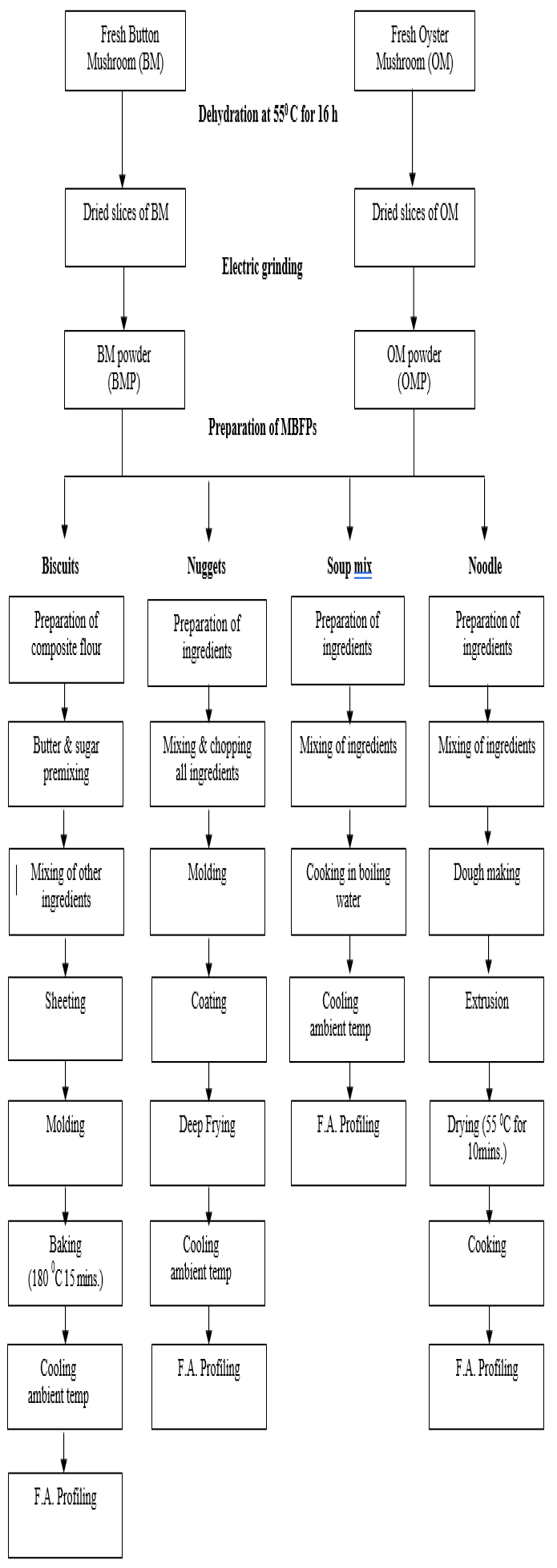
Product preparation flow chart of mushroom by products.
References
- Aisala, H., O. Laaksonen, H. Manninen, A. Raittola, A. Hopia and M. Sandell. 2018. Sensory properties of nordic edible mushrooms. Food Res. Int., 109: 526-536. https://doi.org/10.1016/j.foodres.2018.04.059[CrossRef]
- Aishah, M.S. and W.I.W. Rosli. 2013. The effect of addition of oyster mushroom (Pleurotussajor-caju) on nutrient composition and sensory acceptation of selected wheat-and rice-based products. Int. Food Res. J., l20(1): 183-188.
- Amaefule, K.U., U.A. Ukpanah and A.E. Ibok. 2011. Performance of starter broilers fed raw pigeon pea [Cajanuscajan (L.) Millsp.] seed meal diets supplemented with lysine and or methionine. Int. J. Poult. Sci., 10(3): 205-211. https://doi.org/10.3923/ijps.2011.205.211[CrossRef]
- Amirullah, N.A., N.Z. Abidin and N. Abdullah. 2018. The potential applications of mushrooms against some facets of atherosclerosis: A review. Food Res. Int., 105: 517-536. https://doi.org/10.1016/j.foodres.2017.11.023[CrossRef]
- AOAC, 2016. Official methods of analysis Method 996.06, Fat (Total, Saturated, and Monounsaturated) in Foods, AOAC international, 20th Ed. Gaithersburg, Maryland, USA.
- Arora, B., S. Kamal and V.P. Sharma. 2018. Nutritional and quality characteristics of instant noodles supplemented with oyster mushroom (Pleurotus ostreatus). J. Food Process. Preserv. 42(2): 1-8. https://doi.org/10.1111/jfpp.13521[CrossRef]
- Bamidele, O.P. and B.M. Fasogbon. 2020. Nutritional and functional properties of maize-oyster mushroom (Zea mays-Pleurotus ostreatus) based composite flour and its storage stability. Open Agric., 5(1): 40-49. https://doi.org/10.1515/opag-2020-0007[CrossRef]
- Banerjee, D.K., A.K. Das, R. Banerjee, M. Pateiro, P.K. Nanda, Y.P. Gadekar and J.M. Lorenzo. 2020. Application of enoki mushroom (Flammulina velutipes) stem wastes as functional ingredients in goat meat nuggets. Foods, 9(1): 1-15. https://doi.org/10.3390/foods9040432[CrossRef]
- Barros, L., P. Baptista, D.M. Correia, S. Casal, B. Oliveira and I.C.F.R. Ferreira. 2007. Fatty acid and sugar compositions, and nutritional value of five wild edible mushrooms from Northeast Portugal. Food Chem., 105(1): 140–145. https://doi.org/10.1016/j.foodchem.2007.03.052[CrossRef]
- Bello, M., M.O. Oluwamukomi and V.N. Enujiugha. 2017. Nutrient composition and sensory properties of biscuit from mushroom-wheat composite flours. Arch. Curr. Res. Int., 9(3): 1-11. https://doi.org/10.9734/ACRI/2017/35686[CrossRef]
- Çayan, F., G. Tel-Çayan, M.A. Özler and M.E. Duru. 2017. Comparative study of fatty acids profile of wild mushroom species from Turkey. Eurasian J. Anal. Chem., 12(3): 257-263. https://doi.org/10.12973/ejac.2017.00168a[CrossRef]
- De RománM. and S.E. Boa. 2006. Wood ward Wild-gathered fungi for health and rural livelihoods. Proc. Nutr. Soc., 65(2): 190-197. https://doi.org/10.1079/PNS2006491[CrossRef]
- Eissa, H.A., A. Hussein and B. Mostafa. 2007. Rheological properties and quality evaluation on Egyptian balady bread and biscuits supplemented with flours of ungerminated and germinated legume seeds or mushroom. Polish J. Food Nut. Sci., 57(4): 487-496.
- Ergonal, P.G., I. Akata, F. Kalyoncu and B. Ergonal. 2013. Fatty acid compositions of six wild edible mushroom species. Sci. World J., 2013: 1-4. https://doi.org/10.1155/2013/163964[CrossRef]
- Farooq, M., A. Rakha, J.U. Hassan, R. Fazal, M. Saleem, A. Saboor and K. Kakar. 2021. Physicochemical and nutritional characterization of mushroom powder enriched muffins. J. Inno. Sci., 7(1): 110-120. https://doi.org/10.17582/journal.jis/2021/7.1.110.120[Full text][CrossRef]
- Fatima, S., X. Hu, R.H. Gong, C. Huang, M. Chen, H.L.X. Wong and H.Y. Kwan. 2019. Palmitic acid is an intracellular signaling molecule involved in disease development. Cell. Mole. Life Sci., 76: 2547-2557. https://doi.org/10.1007/s00018-019-03092-7[CrossRef]
- Gadallah, M.G., and I.S. Ashoush. 2016. Value addition on nutritional and sensory properties of using desert truffle (Terfeziaclaveryi) powder. Food Nutr. Sci., 7(12): 1171-1181. https://doi.org/10.4236/fns.2016.712109[CrossRef]
- Gałgowska, M. and R. Pietrzak-Fiećko. 2022. Evaluation of the nutritional and health values of selected polish mushrooms considering fatty acid profiles and lipid indices. Mole, 27(19): 1-12. https://doi.org/10.3390/molecules27196193[CrossRef]
- Gopal, J., I. Sivanesan, M. Muthu, and J. W.Oh. 2022. Scrutinizing the nutritional aspects of asian mushrooms, Its Commercialization and Scope for Value-Added Products. Nutrion, 14(18): 1-23. https://doi.org/10.3390/nu14183700[CrossRef]
- Hasegawa, T., M. Ishibashi, T. Takata, F. Takano and T. Ohta. 2007. Cytotoxic fatty acid from Pleurocybellaporrigens. Chem. Pharma. Bull., 55(12): 1748-1749. https://doi.org/10.1248/cpb.55.1748[CrossRef]
- Heleno, S.A., L. Barros, M.J. Sousa, A. Martins and I.C. Ferreira. 2009. Study and characterization of selected nutrients in wild mushrooms from Portugal by gas chromatography and high-performance liquid chromatography. Microchem. J., 93(2): 195-199. https://doi.org/10.1016/j.microc.2009.07.002[CrossRef]
- Hossain, S., M. Hashimoto, E.K. Choudhury, N. Alam, S. Hussain, M. Hasan and I. Mahmud. 2003. Dietary mushroom (Pleurotus ostreatus) ameliorates atherogenic lipid in hypercholesterolaemic rats. Clin. Exp. Pharmacol., 30(7): 470-475.
- Jeong, C.H. and K.H. Shim. 2004. Quality characteristics of sponge cakes with addition of pleurotuseryngii mushroom powders. J. Korea. Soc. Food Sci. Nutr., 33: 716–722. https://doi.org/10.3746/jkfn.2004.33.4.716[CrossRef]
- Kakon, A.J., M.B.K., Choudhury and S. Saha. 2012. Mushroom is an ideal food supplement. J. Dhaka Nati. Med. Coll. Hosp., 18(1): 58-62. https://doi.org/10.3329/jdnmch.v18i1.12243[CrossRef]
- Kalac, P., 2013. A review of chemical composition and nutritional value of wild-growing and cultivated mushrooms. J. Sci. Food Agric., 93(2): 209–218. https://doi.org/10.1002/jsfa.5960[CrossRef]
- Kim, K.H., S.U. Choi and K.R. Lee. 2012. Three new fatty acid esters from the mushroom Boletus pseudocalopus. Lipids, 47(6): 593-599. https://doi.org/10.1007/s11745-012-3657-2[CrossRef]
- Kumar, K. and A. Barmanray. 2007. Nutritional evaluation and storage studies of button mushroom powder fortified biscuits. Mushroom Res., 16(1): 31-35.
- Majesty, D., E. Ijeoma, K. Winner and O. Prince. 2019. Nutritional, anti-nutritional and biochemical studies on the oyster mushroom, Pleurotusostreatus. EC Nutr., 14(1): 36-59.
- Ng, S.H., S.D. Robert, W.A.N.W. Ahmad and W.R.W. Ishak. 2017. Incorporation of dietary fiber-rich oyster mushroom (Pleurotussajor-caju) powder improves postprandial glycaemic response by interfering with starch granule structure and starch digestibility of biscuit. Food Chem., 227: 358–368. https://doi.org/10.1016/j.foodchem.2017.01.108[CrossRef]
- Okafor, J., G. Okafor, A. Ozumba and G. Elemo. 2012. Quality characteristics of bread made from wheat and nigerian oyster mushroom (Pleurotus plumonarius) powder. Pak. J. Nutr., 11(1): 5–10. https://doi.org/10.3923/pjn.2012.5.10[CrossRef]
- Pedneault, K., P. Angers, A. Gosselin and R.J. Tweddell. 2008. Fatty acid profiles of polar and neutral lipids of ten species of higher basidiomycetes indigenous to eastern Canada. Mycol. Res., 112(12): 1428–1434. https://doi.org/10.1016/j.mycres.2008.06.026[CrossRef]
- Prodhan, U.K., K.M.M.R. Linkon, M.F. Al-Amin and M.J. Alam. 2015. Development and quality evaluation of mushroom (Pleurotussajor-caju) enriched biscuits. Emirates J. Food Agric., 27: 542-547. https://doi.org/10.9755/ejfa.2015.04.082[CrossRef]
- Proserpio, C., V. Lavelli, M. Laureati and E. Pagliarini. 2019. Effect of pleurotusostreatus powder addition in vegetable soup on ß-glucan content, sensory perception, and acceptability. Food Sci. Nutr., S7(2): 730-737. https://doi.org/10.1002/fsn3.917[CrossRef]
- Ribeiro, B., P.G. de Pinho, P.B. Andrade, P. Baptista and P. Valentão. 2009. Fatty acid composition of wild edible mushrooms species: A comparative study. Microchem. J., 93(1): 29-35. https://doi.org/10.1016/j.microc.2009.04.005[CrossRef]
- Sadiq, S., N.B. Haq, A.H. Muhammad, A.A. Muhammad and U.R. Ata. 2008. Studies on chemical composition and nutritive evaluation of wild edible mushrooms. Iranian J. Chem. Chem. Eng., 27(3): 151-154.
- Sadler, M., 2003. Nutritional properties of edible fungi. Br. Nutr. Found. Nutr. Bull., 28(3): 305–308. https://doi.org/10.1046/j.1467-3010.2003.00354.x[CrossRef]
- Saini, R.K., A. Rauf, A.A. Khalil, E.Y. Ko, Y.S. Keum, S. Anwar and K.R. Rengasamy. 2021. Edible mushrooms show significant differences in sterols and fatty acid compositions. S. Afr. J. Bot., 141: 344-356. https://doi.org/10.1016/j.sajb.2021.05.022[CrossRef]
- Saiqa, S., N.B. Haq, A.H. Muhammad, A.A. Muhammad and A. Rehman. 2008. Studies on chemical composition and nutritive evaluation of wild edible mushrooms. Iranian J. Chem. Chemic. Eng., 27(3): 151-154.
- Salehi, F., M. Kashaninejad, E. Akbari, S.M. Sobhani and F. Asad. 2016. Potential of sponge cake making using infrared–hot air-dried carrot. J. Texture Stud., 47(1): 34–39. https://doi.org/10.1111/jtxs.12165[CrossRef]
- Sande, D., G.P. de Oliveira, M.A.F. Moura, B.A. Martins, M.T.N.S. Lima and J.A. Takahashi. 2019. Edible mushrooms as a ubiquitous source of essential fatty acids. Food Res. Int., 125: 1-16. https://doi.org/10.1016/j.foodres.2019.108524[CrossRef]
- Silva, F.P., A.C. Inada, G. Marcelino, C.M.L. Cardozo, K.C. Freitas, R.C.A. Guimarães and P.A. Hiane. 2017. Fatty acids consumption: The role metabolic aspects involved in obesity and its associated disorders. Nutrion, 9(10): 1-32. https://doi.org/10.3390/nu9101158[CrossRef]
- Singh, K. and M. Thakur. 2016. Formulation, organoleptic and nutritional evaluation of value-added baked product incorporating oyster mushrooms (pleurotusostearus) powder. Int. J. Food Sci. Nutr., 1(6): 16–20.
- Singhal, S., P. Rasane, S. Kaur, U. Garba, J. Singh, N. Raj and N. Gupta. 2019. Mushroom cultivation, processing and value-added products: A patent based review. Recent Patents Food Nutr. Agric., 10(1): 3-19. https://doi.org/10.2174/2212798410666180604101353[CrossRef]
- Smith, J., N. Rowan and R. Sullivan. 2002. Medicinal mushrooms: Their therapeutic properties and current medical usage with special emphasis on cancer treatments. Cancer Res. UK, 24: 1839-1845. https://doi.org/10.1023/A:1020994628109[CrossRef]
- Srivastava, A., B. Attri and S. Verma. 2019. Development and evaluation of instant soup premix using oyster mushroom powder. Mushroom Res., 28(1): 65-69. https://doi.org/10.36036/MR.28.1.2019.91960[CrossRef]
- Steel, R.G.D. and J.H. Torrie. 1980. Principles and procedures of statistics. 2nd ed. McGraw Hill, New York.
- Stojković, D., F.S. Reis, J. Glamočlija, A. Ćirić, L. Barros, L.J. Van Griensven and M. Soković. 2014. Cultivated strains of Agaricusbisporus and A. brasiliensis: Chemical characterization and evaluation of antioxidant and antimicrobial properties for the final healthy product–natural preservatives in yoghurt. Food Funct., 5(7): 1602-1612. https://doi.org/10.1039/c4fo00054d[CrossRef]
- Süfer, Ö., F. Bozok and H. Demir. 2016. Usage of edible mushrooms in various food products. Turk. J. Agric. -Food Sci. Technol., (3): 144-149. https://doi.org/10.24925/turjaf.v4i3.144-149.599[CrossRef]
- Sulieman, A.A., K.X. Zhu, W. Peng, H.A. Hassan, M. Obadi, A. Siddeeg and H.M. Zhou. 2019. Rheological and quality characteristics of composite gluten-free dough and biscuits supplemented with fermented and unfermented agaricusbisporus polysaccharide flour. Food Chem., 271: 193–203. https://doi.org/10.1016/j.foodchem.2018.07.189[CrossRef]
- Szydłowska-Tutaj, M., U. Szymanowska, K. Tutaj, D. Domagała and U. Złotek. 2023. The addition of reishi and lion’s mane mushroom powder to pasta influences the content of bioactive compounds and the antioxidant, potential znti-inflammatory, and anticancer properties of pasta. Antioxidents, 12: 1-15. https://doi.org/10.3390/antiox12030738[CrossRef]
- Tsai, S.Y., G.J. Tsay, C.Y. Li, Y.T. Hung and C.P. Lin. 2020. Assessment of melting kinetics of sugar-reduced silver ear mushroom ice cream under various additive models. J. Appl. Sci., 10(8): 1-14. https://doi.org/10.3390/app10082664[CrossRef]
- Wahyono, A. and A. Bakri. 2018. Physicochemical and sensorial characteristics of noodle enriched with oyster mushroom (Pleorotusostreatus) powder. Int. J. Phys. Conf. Ser., 953: 1-6. https://doi.org/10.1088/1742-6596/953/1/012120[CrossRef]
- Woldegiorgis, A.Z., D. Abate, G.D. Haki, G.R. Ziegler and K.J. Harvatine. 2015. Fatty acid profile of wild and cultivated edible mushrooms collected from Ethiopia. J. Food Sci., 5: 1-5.
- Yilmaz, N., M. Solmaz, İ. Türkekul and M. Elmastaş. 2006. Fatty acid composition in some wild edible mushrooms growing in the middle Black Sea region of Turkey. J. Food Chem., 99(1): 168-174. https://doi.org/10.1016/j.foodchem.2005.08.017[CrossRef]
- Yufidasari, H.S., A.A. Prihanto, R. Nurdiani and A.A. Jaziri. 2018. Evaluation of the proximate quality of the combination of Tuna (Thunnusalbacares) and white oyster mushroom (Pleurotusostreatus) nuggets. IOP Conf. Ser. Earth Environ. Sci., 137(1): 1-8. https://doi.org/10.1088/1755-1315/137/1/012068[CrossRef]
Supplementary material
Services
Article usage statistics
Loading…