
The study investigated the impact of root-knot nematode (Meloidogyne incognita) infection on chilli plants and evaluated the efficacy of various chemical nematicides in controlling the infection. Infected plants exhibited symptoms such as pale green to yellow discolouration, stunted growth, and the development of knots on roots containing egg masses and female nematodes. Pathogenicity tests on “Ghotki” chilli plants revealed a direct correlation between inoculum levels of M. incognita and infection severity, with higher inoculum levels resulting in increased knot formation, nematode counts in roots and soil and reduced shoot and root growth. Four chemical nematicides (Actara, Furadan, Ulala, and Rugby) were evaluated at various concentrations. Overall, all nematicides were effective in reducing M. incognita and increasing chilli plant growth. Higher doses of nematicides were more effecctive, with some treatments completely removing nematode presence in roots and soil. Actara (500 ppm, 1000 ppm, and 2000 ppm), Furadan (50 ppm to 2000 ppm), Ulala (1000 ppm and 2000 ppm), and Rugby (250 ppm to 2000 ppm) treatments completely inhibited root knot formation. Furadan at 2000 ppm produced the longest roots, whereas Actara at 2000 ppm produced the most shoot length and weight. In conclusion, the study highlights the detrimental effects of M. incognita on chilli plants and demonstrates the effectiveness of chemical nematicides in controlling root-knot nematode infections. Higher concentrations of nematicides showed superior efficacy, effectively preventing root knot formation and promoting healthier plant growth. These findings contribute to understanding nematode management strategies in the agricultural field.
Research Article · Volume 42, Issue 1, 23 May 2024 · Open Access
Evaluation of Different Nematicides Against Root-Knot Disease in Chilli Caused by Meloidogyne incognita
· · · · · ·
Affiliations & Notes ⌄
- 1Department of Plant Protection, Faculty of Crop Protection, Sindh Agriculture University, Tandojam 70050, Sindh, Pakistan
- 2Department of Agricultural Entomology and Pest Control, College of Plant Science and Technology, Huazhong Agricultural University, Wuhan 430070, Hubei, China. *Correspondence | Amir Khan Korai, Shakal Khan Korai, Department of Plant Protection, Faculty of Crop Protection, Sindh Agriculture University, Tandojam 70050, Sindh, Pakistan
- 3Department of Agricultural Entomology and Pest Control, College of Plant Science and Technology, Huazhong Agricultural University, Wuhan 430070, Hubei, China
- 4Email
Article Info ⌄
- Journal:
- Pakistan Journal of Nematology
- Published:
- 23 May 2024
From the article
- The pathogenicity test showed M. incognita’s potential to cause root knot disease in chilli plants, with larger inoculum densities resulting in increased infection and reduced plant development.
- Chemical control developed as a feasible technique, with Actara, Furadan, Ulala, and Rugby showing efficacy against M. incognita while promoting chilli plant development.
- Furadan and Rugby were particularly effective in controlling root knot disease.
Selected from the article's own text.
Abstract
Introduction
Chilli (Capsicum annuum) stands as a significant member of the Solanaceae family . Tropical and sub-tropical regions, owing to their adaptable climates, serve as ideal locales for chilli cultivation, with the plant demonstrating resilience to both heat and moderate cold . Originating from South and Central America , chilli cultivation has expanded globally, with prominent producers including Pakistan, China, Indonesia, Korea, India, Turkey, and Sri Lanka . Renowned for its nutritional richness, chilli offers abundant vitamins A, B, and C, along with magnesium, potassium, and iron . It serves primarily as a spice, either in whole or powdered form, adding flavor to various foods and beverages. The chilli seeds starch used in various medicines, which is valuable in dyspepsia and blood cancer ; .
Pakistan, ranking as the fourth largest chilli producer , relies heavily on chilli as a staple food ingredient, covering substantial agricultural acreage after potatoes and onions. In Pakistan, chilli cultivation spans approximately 65.1 hectares, yielding around 148.1 tonnes per hectare , contributing 1.5 percent to the country’s GDP . Notably, Sindh emerges as a major chilli-producing province, contributing 85 percent to the nation’s overall production . Within Sindh, Kunri stands as a significant chilli hub, earning the moniker “Chilli Capital of Asia,” with its production accounting for around 55 percent of the total . Other prominent chilli-growing cities in Sindh include Mirpurkhas, Hyderabad, and Ghotki.
Despite its economic importance, chilli agriculture confronts major problems, such as insect and disease infestations, which significantly impact both quality and productivity. Among these issues, root-knot nematodes (Meloidogyne spp.) are a major threat, generating significant global losses ; Di-Vito et al., 1985). In India alone, root-knot nematodes lead to annual losses of approximately Rs. 240 billion in chilli crop production . These nematodes parasitize plant roots, inducing the formation of knots, thereby impairing nutrient and water uptake, resulting in stunted growth, yellowing, and poor pod development. Moreover, they often lead to disease complexes involving fungi, bacteria, viruses, and other pathogens ; . Approximately 2000 plant species are hosted by root knot nematodes and globally 5% crop yield lose caused ; .
In Pakistan, five species of the genus Meloidogyne have been reported, including M. javanica, M. incognita, M. arenaria, M. hapla, and M. graminicola . These nematodes inflict substantial losses on chilli crops , showcasing their broad host range and destructive potential ; . Their infestation results in root galling, impeding water and nutrient transport, thereby weakening and wilting plants .
Effective nematode management remains challenging, with chemical control employing nematicides emerging as the most reliable strategy . Nematicides such as Furadan 5G, Vydate 24 L, Rugby 10 G, Aldicarb, Enzon, Oxamyl, and Cadusafos have demonstrated efficacy in reducing root-knot nematode infections and enhancing plant growth ; . Thus, this study aims to explore novel nematicides to mitigate nematode damage and bolster plant productivity.
Materials and Methods
Collection of diseased plants
The survey of chilli fields conducted in Tandojam, Nasarpur, and Tando Allahyar was focused on gathering root knot-infected plants. In these regions, chilli cultivation stands as a cornerstone of agricultural activity, supporting local economies and livelihoods. The presence of root knot nematodes presents a significant challenge to chilli growers, prompting the need for thorough investigation and management strategies. During the survey, contaminated chilli plants were carefully identified and collected, along with soil samples from the surrounding root zone. The specimens were carefully labelled and separated in polyethylene bags to guarantee their integrity for transport to the laboratory for comprehensive investigation. This concerted effort not only aids in understanding the prevalence of nematode infestations but also underscores the importance of proactive measures in sustaining chilli production in these vital agricultural areas (Figure 1A).
Isolation and identification of Meloidogyne incognita
Isolation from soils: The soil samples, each weighing 200 grams, were processed by sieving through 300-millimeter meshes to isolate nematodes from the infected plant root zones. This step ensured the removal of debris and organic matter, facilitating a more concentrated nematode population. Subsequently, the nematodes were extracted using the Baermann funnel method, a renowned technique for its efficacy in nematode isolation. These procedures are essential for accurate nematode quantification and further analysis of soil ecosystem dynamics surrounding infected chilli plants .
Isolation from infected plants root
The infected chilli plant roots displaying galls were meticulously treated by washing them with tap water before being delicately cut into small pieces using scissors. These sections were then carefully submerged in a watch glass filled with distilled water. The material was thoroughly examined using a stereo microscope to identify nematodes based on their individual morphological traits. Utilizing plant parasitic nematode identification keys as a reference, researchers accurately classified the nematodes, providing crucial insights into the species composition and distribution within the infected root zones .
Pathogenicity test
A pathogenicity test of root-knot nematode was conducted on one-month-old chilli variety Ghotki. The seedlings, each one month old, were transplanted into thermopole glasses, with each glass containing 200 grams of sterilized soil. Following transplantation, the seedlings were inoculated with freshly hatched second-stage juveniles of M. incognita at different inoculum levels, namely 0, 10, 100, and 150 J2 per thermopole glass, onto the exposed roots. Each treatment was replicated three times using a completely randomized design. After 45 days of inoculation, the seedlings were uprooted, and various plant parameters such as shoot length, shoot weight, root length, and root weight, along with nematode multiplication parameters including the number of galls and nematode population, were recorded (Figure 3 and 4).
Efficacy of nematicides against colony growth of M. incognita
Four nematicides, namely Actara, Furadan, Rugby, and Ulala, were meticulously evaluated for their efficacy against M. incognita, a notorious nematode species known to afflict chilli crops. In Table 1, comprehensive details including the trade name, chemical name, active ingredient percentage, and company name for each nematicide are provided, offering valuable insights for agricultural practitioners. To assess their effectiveness, six different doses of each nematicide ranging from 50 to 2000 ppm were meticulously tested on one-month-old chilli seedlings, representing a broad spectrum of concentrations commonly used in agricultural practice. The calculation of chemical fungicides’ efficacy was carried out using a standardized formula, ensuring precise evaluation and comparison of their performance against the nematode infestation.
Nematicides (g)= ppm required × Solution required (ml)
Active ingredient of nematicide×106
100
Table 1: Details of nematicides used in greenhouse experiments against M. incognita.
| Trade name | Chemical name | Active ingredient % | Company name |
| Actara | Thiamethoxam | 25% WG | Sygenta |
| Furadan | Carbofuran | 3% WG | FMC |
| Ulala | Flonicamid | 50% WG | ICI |
| Rugby | Cadusafos | 0.5% WG | FMC |
Each nematicide was individually incorporated into the soil by thoroughly mixing the required concentration of each nematicide with sterilized soil. This mixture was then filled into thermopole glasses at 190 grams of soil per glass. Control plants remained untreated with any nematicides. One-month-old single chilli seedlings were transplanted into the nematicide-treated thermopole glasses. Following transplantation, 150 J2 M. incognita per 1 cc water were inoculated into the root zone of each chilli seedling. After 30 days post-transplantation, the plants were uprooted, and data on plant growth and root infection were determined.
Data analyses
The experiment followed a comprehensive completely randomized block design with four replications, ensuring robustness and reliability in the data collection process. Analysis of variance (ANOVA) was conducted using statistic 8.1 software, employing rigorous statistical methods to assess the significance of differences among treatment groups. This meticulous approach allows for precise determination of treatment effects and facilitates informed decision-making regarding the efficacy of the tested nematicides in mitigating M. incognita infestation on chilli seedlings.
Results and Discussion
Disease symptoms
Chilli plants infected by root knot nematodes exhibit distinct symptoms, including a noticeable change in color from pale green to yellow, indicative of their compromised health. Additionally, stunted growth is a common manifestation of nematode infestation, significantly impacting plant vigor and productivity. Upon closer inspection, the roots of diseased plants reveal the presence of small to large knots, housing numerous egg masses and characteristic pear-shaped Meloidogyne incognita females. These symptoms serve as crucial diagnostic markers, aiding farmers and researchers in the early detection and management of nematode-induced stress in chilli crops (Figure 1B-E).
Isolation and identification of M. incognita
The root knot nematodes were meticulously isolated from both the roots of a diseased chilli plant exhibiting characteristic knots and the surrounding soil in the infected root zone. Among the nematodes isolated, the most prevalent species was identified as M. incognita, distinguished by the perineal pattern of adult females. This identification process relied on the meticulous observation of typical characteristics described by experts, including those outlined by Amarasinghe et al. (2012), ensuring accurate classification of the nematode species responsible for the observed symptoms in the chilli plants (Figure 1).
Pathogenicity test of M. incognita
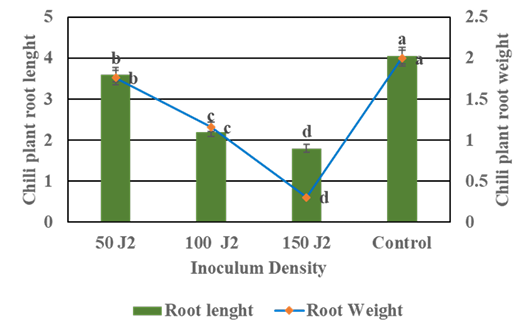
Pathogenicity tests were conducted on a local chilli variety “Ghotki” using different inoculum levels of J2 M. incognita. Maximum inoculum resulted in maximum infection, with the highest number of knots (3) observed in chilli plants inoculated with 150 J2, followed by 100 J2 (1.8), while control plants showed no knot formation on the roots. A similar trend was observed in the re-isolation of M. incognita from both chilli plant roots and soils. The highest numbers of M. incognita were isolated from the soil (15) and roots (55) of chilli plants inoculated with 150 J2, followed by 100 J2 inoculated plants (12.4 and 20.6, respectively). Additionally, the minimum shoot length was recorded in plants inoculated with 150 J2 (0.08 cm), followed by 100 J2 (2.86 cm), compared to control plants with a shoot length of 9.34 cm (Figure 2).
Effect of chemical control on M. incognita and plant growth
Four chemical pesticides, namely Actara, Furadan, Ulala, and Rugby, were applied at six different concentrations (50 ppm, 100 ppm, 250 ppm, 500 ppm, 1000 ppm, and 2000 ppm) to control root knot infection in chilli plants. All insecticides tested showed various degrees of efficiency in reducing M. incognita and positively improving chilli plant growth. Higher pesticide doses were discovered to be more effective in reducing root knot nematodes. Notably, treatments with Furadan (1000 ppm and 2000 ppm) and Rugby (2000 ppm) resulted in no detectable M. incognita in roots and soils of chilli plants. Similarly, Actara at 2000 ppm showed significantly reduced nematode populations compared to the control, where nematode populations were notably higher.
Furthermore, chilli plants treated with Actara (500 ppm, 1000 ppm, and 2000 ppm), Furadan (50 ppm to 2000 ppm), Ulala (1000 ppm and 2000 ppm), and Rugby (250 ppm to 2000 ppm) showed no development of root knots compared to the control, where root knots were recorded.
Regarding plant growth parameters, the maximum root length was observed in plants treated with Furadan at 2000 ppm, followed by Rugby and Ulala at 1000 ppm, while control plants exhibited the lowest root length (Figure 5F). Control plants also exhibited the highest root weight, while the highest shoot length and shoot weight were recorded in plants treated with Actara at 2000 ppm, followed by Ulala at 2000 ppm (Figure 5A-G).
Actara
Among the tested concentrations, Actara proved to be effective in reducing the population of root knot nematodes and promoting the growth of chilli plants. The highest dose of Actara successfully prevented knot development in chilli plant roots. Notably, the lowest M. incognita population (0.25 in roots and 0.025 in soils) was recorded in plants treated with 2000 ppm, followed by 1000 ppm. Plants treated with 2000 ppm also exhibited the highest root length (9.05 cm) and root weight (3.75 gm), followed by those treated with 1000 ppm. This demonstrates that Actara, particularly at higher doses, has the potential to help manage nematode infestations while also enhancing chilli plant health and productivity. As researchers carefully examined the effects of Actara on root knot nematodes and chilli plants, they were intrigued by the considerable results seen at greater concentrations. The data painted a compelling picture of Actara’s potential as a valuable tool in nematode management strategies, offering hope for enhanced productivity and sustainability in chilli cultivation. These findings serve as a beacon of progress in the ongoing quest to mitigate the impact of nematode infestations on agricultural yields, inspiring further exploration and refinement of plant protection methods (Figure 6A-G).
Furadan
All concentrations of Furadan displayed remarkable effectiveness against M. incognita, completely preventing knot development on chilli plant roots across the board. Intriguingly, no M. incognita population was detected in the roots and soils of plants treated with both 2000 and 1000 ppm. Notably, plants treated with 2000 ppm exhibited the maximum root length (18.25 cm) and root weight (3.75 gm), with similar outcomes observed in those treated with 1000 ppm. As researchers delved into the effects of Furadan on root knot nematodes and chilli plants, they were struck by the consistent success observed across all concentrations. These findings highlight Furadan’s effectiveness as a dependable tool in worm management tactics, with potential for increased productivity and resilience in chilli farming. Such achievements demonstrate continued attempts to improve agricultural methods to resist insect pressures and increase crop yields. All concentrations of Furadan were highly effective against M. incognita, with complete prevention of knot development on chilli plant roots at all concentrations. No M. incognita population was recorded in roots and soils of plants treated with 2000 and 1000 ppm. Plants treated with 2000 ppm exhibited the maximum root length (18.25 cm) and root weight (3.75 gm), followed by those treated with 1000 ppm (Figure 7A-G).
Ulala
Among the tested concentrations, only 1000 ppm and 2000 ppm of Ulala demonstrated notable efficacy in preventing knot development in chilli roots. This selective response raises intriguing questions about the specific mechanisms underlying Ulala’s effectiveness against M. incognita infestations. The recorded lowest M. incognita population (1.75 in roots and 0.025 in soils) at 2000 ppm highlights the potential of this concentration in nematode management strategies. The correlation between concentration and root length further underscores the intricate relationship between dosage and plant response, hinting at potential avenues for optimizing treatment protocols. Interestingly, while 2000 ppm exhibited the maximum root length (9.2 cm), the highest root weight was recorded in control plants (5.25 gm), suggesting nuanced effects of Ulala on different aspects of plant growth. This discrepancy prompts further investigation into the underlying factors influencing root development in response to Ulala treatment. Moreover, the observation of the highest shoot length (11.85 cm) and shoot weight (3.12 gm) at 2000 ppm introduces a compelling dimension to the discussion, highlighting the potential holistic benefits of Ulala treatment beyond root health. As researchers rigorously study the data, they want to gain a better understanding of the complicated interactions between Ulala concentration, nematode suppression, and plant development characteristics. These findings hold promise for the refinement of Ulala-based management strategies, offering farmers a valuable tool in their arsenal against nematode-induced crop losses (Figure 8A-G).
Rugby
Most concentrations of Rugby exhibited notable effectiveness against M. incognita, presenting a promising avenue for nematode management in chilli cultivation. The absence of root knots in plants treated with 250 ppm, 500 ppm, 1000 ppm, and 2000 ppm underscores the broad-spectrum efficacy of Rugby across a range of concentrations. Particularly noteworthy is the complete absence of M. incognita population in both roots and soil at 2000 ppm, highlighting the potent impact of this concentration on nematode suppression. The recorded minimal population of M. incognita (0.65 in roots and 0.04 in soil) at 1000 ppm further emphasizes the dose-dependent nature of Rugby’s effectiveness in nematode control. The correlation between concentration and root length is evident, with the maximum root length (9.27 cm) observed in plants treated with 2000 ppm, followed by 6.27 cm in plants treated with 1000 ppm. The heaviest root weight (5.25 gm) was obtained in control plants, indicating that Rugby treatment has nuanced impacts on root development. In terms of shoot length and weight, interesting patterns emerge, with plants treated with 2000 ppm having the longest root length (9.63 cm) and shoot weight (1.78 gm). These findings suggest potential synergistic effects of Rugby treatment on both root and shoot development, warranting further investigation into the underlying mechanisms driving these responses. As researchers delve deeper into the data, they are poised to uncover valuable insights into the dynamics of Rugby-mediated nematode suppression and its impact on chilli plant growth parameters. These findings hold promise for the development of targeted Rugby-based management strategies, offering farmers an effective solution to mitigate nematode-induced crop losses and improve overall productivity (Figure 9A-G).
The research findings shed light on the complex relationships between chilli plants and root knot nematodes (Meloidogyne incognita). As previously observed, infected chilli plants exhibit symptoms such as discolouration, slowed development, and the creation of knots on roots that house M. incognita females and egg masses. Consistent with previous studies by Birithia et al. (2012) and Chaudhary et al. (2011), our research identified M. incognita as the predominant nematode species infesting chilli crops, emphasizing the widespread impact of this pest across various crops.
Pathogenicity tests conducted on the local chilli variety “Ghotki” revealed intriguing insights into the dynamics of nematode infection. Higher inoculum levels of J2 M. incognita led to increased infection severity, manifested by a greater number of knots on chilli roots. However, this increase in inoculum negatively affected plant growth parameters, corroborating findings by Sharma and Sharma (2015), Agwu and Ezigbo (2005), and Tariq-Khan et al. (2017), which highlighted the detrimental effects of nematode infestation on plant growth.
To treat root knot nematode infestation, we compared the efficiency of four chemical nematicides: Actara, Furadan, Ulala, and Rugby. The results showed that these nematicides were effective at controlling M. incognita and promoting chilli plant development, aligning with findings by Aminu-Taiwo (2017), Adegbite, (2011), Wahla et al. (2012), Faruk et al. (2011), which highlighted the potential of nematicides in managing nematode infestations and improving crop yield.
Furthermore, the isolation of root knot nematodes from infected chilli plants, along with pathogenicity tests, provided valuable insights into the distribution and severity of nematode infestation. The observed differences in plant growth metrics, such as shoot length, shoot weight, root length, and root weight, highlight the intricate relationship between nematode infection levels and plant health.
Our research contributes to a deeper understanding of the mechanisms underlying chilli plant-nematode interactions and offers practical insights into effective nematode management strategies. By elucidating the efficacy of chemical nematicides and highlighting the impact of nematode infestation on chilli plant growth, this study lays the groundwork for future research aimed at enhancing crop productivity and resilience in the face of nematode-induced stress.
Additionally, future research avenues may explore the genetic mechanisms underlying plant resistance to nematode infestations and the development of novel, environmentally friendly approaches to nematode management. Collaborative efforts between researchers, agricultural practitioners, and policymakers are crucial to implementing sustainable solutions that mitigate the economic and environmental impact of nematode infestations on crop production.
Conclusions and Recommendations
The pathogenicity test showed M. incognita’s potential to cause root knot disease in chilli plants, with larger inoculum densities resulting in increased infection and reduced plant development. Chemical control developed as a feasible technique, with Actara, Furadan, Ulala, and Rugby showing efficacy against M. incognita while promoting chilli plant development. Furadan and Rugby were particularly effective in controlling root knot disease. Future research should delve into field experiments to assess management strategies comprehensively and explore the effectiveness of novel chemicals against M. incognita in both laboratory and field settings. These endeavors are vital for refining nematode management practices and ensuring sustainable chilli crop production. Furthermore, elucidating the mechanisms of action of these nematicides could provide valuable insights into their long-term efficacy and potential environmental impacts.
Acknowledgement
We would like to express our gratitude to all those who contributed to this research article, including our co-authors, collaborators, and supporters. Thank you for your valuable contributions and support.
Novelty Statement
Unveiling a breakthrough in nematode management, the efficacy of Actara, Furadan, Ulala, and Rugby against M. incognita in chilli plants not only controls root knot disease but also promotes plant development. Among them, Furadan and Rugby stand out as potent defenders against nematode infestation. This pioneering chemical control approach offers a promising pathway for sustainable chilli crop production, urging further exploration into novel chemical solutions and comprehensive field experiments to refine nematode management strategies.
Author’s Contribution
Muhammad Ali Khanzada, Roshan Ara and Amir Khan Korai: Conceptualization.
Roshan Ara: Methodology.
Shakal Khan Korai: Software.
Roshan Ara and Amir Khan Korai: Validation.
Abdul Mubeen Lodhi and Khalid Hussain Qureshi: Formal analysis.
Roshan Ara: Investigation.
Muhammad Ali Khanzada: Resources.
Abdul Mubeen Lodhi, Amir Khan Korai and Muhammad Ali Khanzada: Data curation.
Roshan Ara and Muhammad Ali Khanzada: Writing original draft preparation.
Shakal Khan Korai, Muhammad Ali Khanzada and Roshan Ara: Writing review and editing.
Roshan Ara, Khalid Hussain Qureshi and Anam Mehwish Khanzada: Visualization.
Muhammad Ali Khanzada and Abdul Mubeen Lodhi: Supervision.
Funding
The authors did not receive support from any organization for the submitted work.
Ethical statement
Ethics approval was not required for this study.
Conflict of interest
The authors have declared no conflict of interest.
Figures
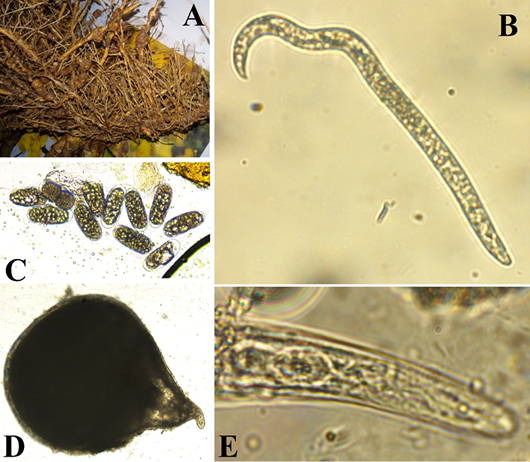
(A) Infected chilli plant roots showed root knot typical symptoms. (B-E) Microscopic structure of M. incognita, (B) J2, (C) Eggs, (D) Female, (E) J2 mouth part.
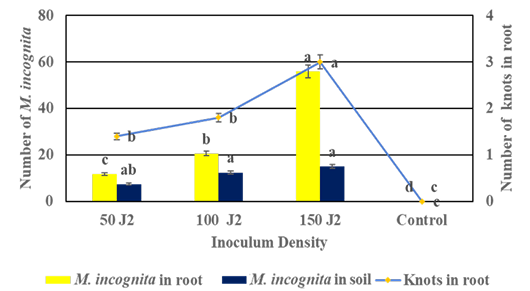
M. incognita population in chilli plant root and soil, number of knots developed on roots.
Effect of inoculum density of M. incognita on chilli plant shoot length and shoot weight.
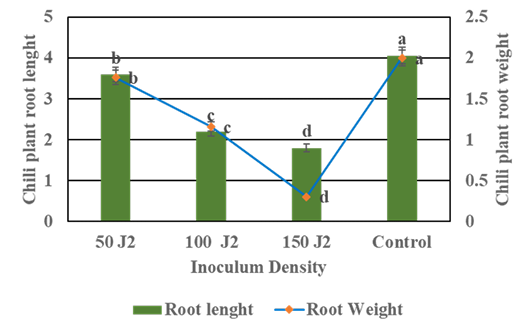
Effect of inoculum density of M. incognita on chilli plant root length and root weight.
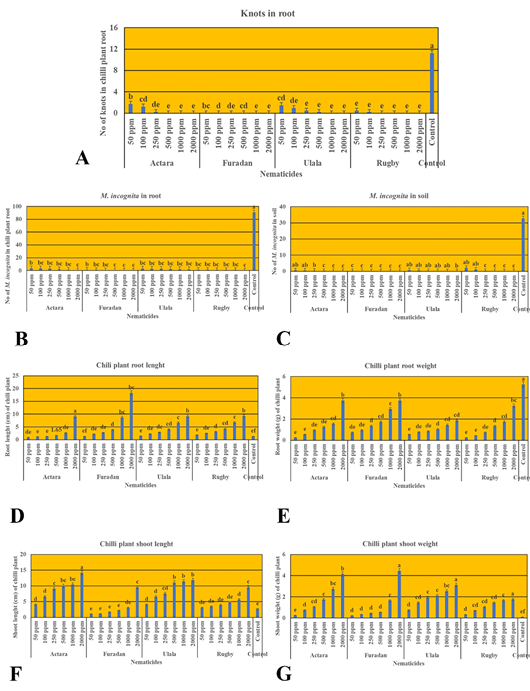
(A) Efficacy of nematicides on root knot development in chilli plant, (B) Efficacy of nematicides on M. incognita population in chilli plant root, (C) Efficacy of nematicides on M. incognita population in chilli plant soil, (D) Efficacy of nematicides on root length of chilli plant, (E) Efficacy of nematicides on root weight of chilli plant, (F) Efficacy of nematicides on shoot length of chilli plant, (G) Efficacy of nematicides on shoot length of chilli plant.
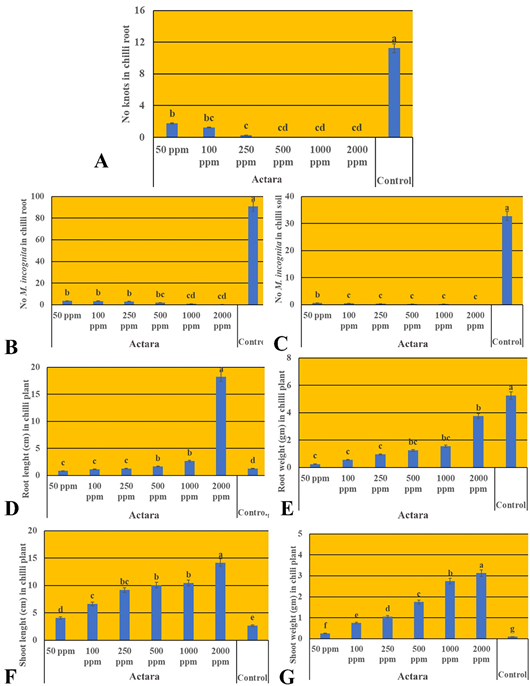
Effect of different concentrations of Actara on (A) root knot development (B) M. incognita population in chilli root (C) M. incognita population in chilli plant soil (D) on chilli plant root length (E) on chilli plant root weight (F) on chilli plant shoot length (G) on chilli plant shoot weight.
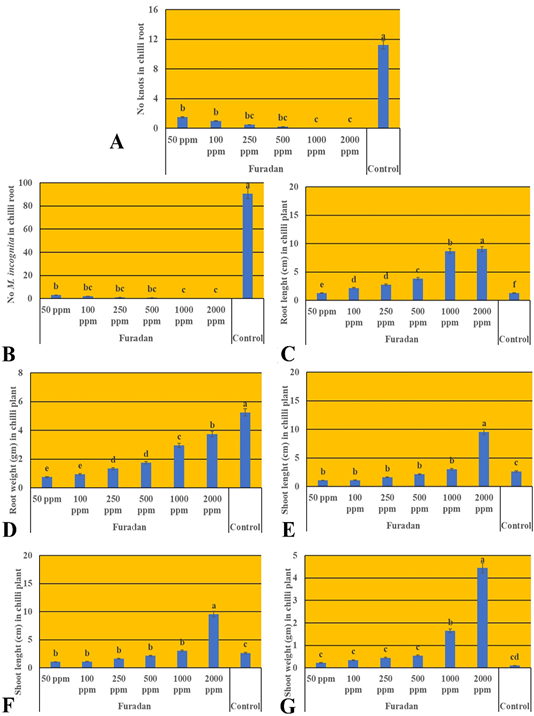
(A) Effect of different concentrations of Furadan on (B) root knot development (C) M. incognita population in chilli root (D) M. incognita population in chilli plant soil (E) on chilli plant root length (F) on chilli plant root weight (G) on chilli plant shoot length (H) on chilli plant shoot weight.
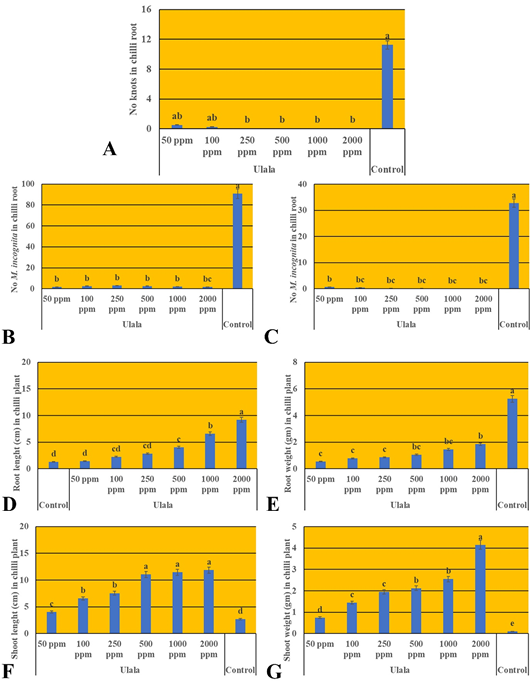
Effect of different concentrations of Ulala on (A) root knot development (B) M. incognita population in chilli root (C) M. incognita population in chilli plant soil (D) on chilli plant root length (E) on chilli plant root weight (F) on chilli plant shoot length (G) on chilli plant shoot weight.
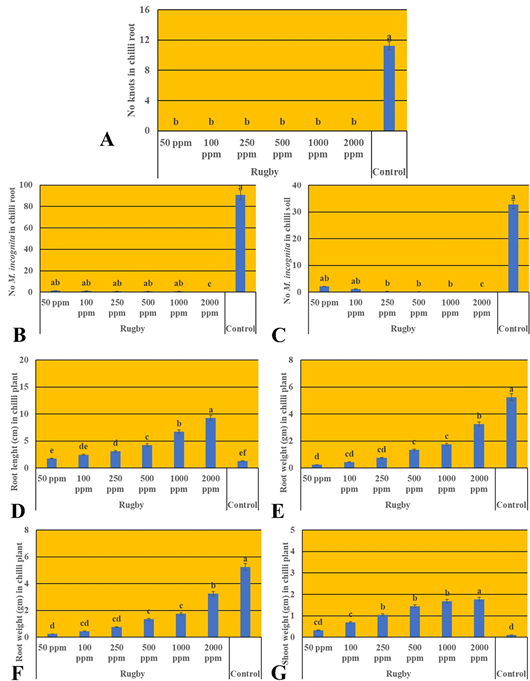
Effect of different concentrations of Rugby on (A) root knot development (B) M. incognita population in chilli root (C) M. incognita population in chilli plant soil (D) on chilli plant root length (E) on chilli plant root weight (F) on chilli plant shoot length (G) on chilli plant shoot weight.
References
- Abad, P., Favery, B., Rosso, M. and Castagnone-Sereno, P., 2003. Root-knot nematode parasitism and host response: molecular basis of a sophisticated interaction. Mol. Plant Pathol., 4: 217–224. https://doi.org/10.1046/j.1364-3703.2003.00170.x[CrossRef]
- Adegbite, A.A., 2011. Assessment of yield loss of cowpea (Vigna unguiculata L.) due to root knot nematode, Meloidogyne incognita under field conditions. Am. J. Exp. Agric. 1: 79–85.
- Agwu, J.E. and Ezigbo, J.C., 2005. Effect of Meloidogyne incognita (root-knot nematode) on the development of Abelmoschus esculentus (Okra). Anim. Res. Int., 2: 358–362. https://doi.org/10.4314/ari.v2i3.40868[CrossRef]
- Amarasinghe, L.D., Wijesinghe, W. and Jayawardhane, B.K., 2012. Efficacy of essential oils from bark and leaf of Cinnamomum zeylanicum on root knot nematode, Meloidogyne graminicola in rice seedlings and young rice plants. J. Sci. Univ. Kelaniya, 6: 45–54. https://doi.org/10.4038/josuk.v6i0.4220[CrossRef]
- Aminu-Taiwo, B.R., 2017. Biology and management of Meloidogyne incognita (Kofoid and White, 1919) Chitwood, 1949 on Cucumis sativus L. Using crop rotation. J. Agric. Nat., 6: 1317–1324.
- Anwar, S.A. and McKenry, M.V., 2012. Incidence and population density of plant-parasitic nematodes infecting vegetable crops and associated yield losses in Punjab, Pakistan. Pak. J. Zool., 44: 327-333.
- Birithia, R., Waceke, W., Lomo, P. and Masiga, D., 2012. Identification of root-knot nematode species occurring on tomatoes in Kenya: Use of isozyme phenotypes and PCR-RFLP. Int. J. Trop. Insect Sci. 32: 78–84. https://doi.org/10.1017/S1742758412000173[CrossRef]
- Chaudhary, K.K., Brhane, D., Okube, H., Zaid, T. and Dagnew, E., 2011. Distribution, frequency of occurrence and population density of root knot nematode in Hamelmalo–Eritrea. Afr. J. Microbiol. Res., 5: 5656–5661. https://doi.org/10.5897/AJMR11.809[CrossRef]
- Chen, J., Li, Q.X. and Song, B., 2020. Chemical nematicides: Recent research progress and outlook. J. Agric. Food Chem., 68: 12175–12188. https://doi.org/10.1021/acs.jafc.0c02871[CrossRef]
- Chowdhury, M.S.N., Hoque, F., Mehraj, H. and Uddin, A.F.M.J., 2015. Vegetative growth and yield performance of four chilli (Capsicum frutescens) cultivars. Differences, 1: 3.
- Di, Vito, M., Greco, N. and Carella, A., 1985. Population densities of Meloidogyne incognita and yield of Capsicum annuum. J. Nematol., 17: 45. https://pubmed.ncbi.nlm.nih.gov/19294056/
- Eisenback, J.D. and Triantaphyllou, H.H., 2020. Root-knot nematodes: Meloidogyne species and races. In: Manual of agricultural nematology. CRC Press, pp. 191–274. https://doi.org/10.1201/9781003066576-6[CrossRef]
- Faruk, M.I., Rahman, M.I., Ali, M.R., Rahman, M.M. and Mustafa, M.M.H., 2011. Efficacy of two organic amendments and a nematicide to manage root-knot nematode (Meloidogyne incognita) of tomato (Lycopersicon esculentum L.). Bangladesh J. Agric. Res., 3: 477-486. https://doi.org/10.3329/bjar.v36i3.9275[CrossRef]
- Hemannavar, V., 2008. Studies on seed borne aspects of anthracnose of chilli and its management (Doctoral dissertation, UAS, Dharwad). http://krishikosh.egranth.ac.in/handle/1/82616
- Hooper, D.J., 1986. Laboratory methods for work with plant and soil nematodes. Reference Book 402. Minist. Agric. Fish. Food Tech. Bull., 2: 133–154.
- Karpate, R.R. and Saxena, R., 2010. Post harvest profile of chilli. Department of Agriculture and Cooperation, Ministry of Agriculture, Government of India. https://agmarknet.gov.in/Others/preface-chhilli.pdf
- Khokhar, M.K., 2014. Production status of major vegetables in Pakistan, their problems and suggestions. Agric. Corner 9.
- Lalthantluangi, C., 2022. Production and marketing of ginger and chillies in Champhai District, Mizoram. http://mzuir.inflibnet.ac.in:8080/jspui/handle/123456789/1277
- Ludwig, T.G. and Goldberg, H.J.V., 1956. The anthrone method for the determination of carbohydrates in foods and in oral rinsing. J. Dental Res., 35: 90–94. https://doi.org/10.1177/00220345560350012301[CrossRef]
- Mai, W., 2018. Plant-parasitic nematodes: A pictorial key to genera. Cornell University Press. https://www.jstor.org/stable/10.7591/j.ctv5rdz0t.
- Mangan, T. and Ruthbah, U., 2018. Preliminary report on the growers’ and marketing channel surveys (chilli) in Sindh. Policy and institutional reforms to improve horticultural markets in Pakistan: ACIAR Project 2014 43. https://www.monash.edu/business/cdes/assets/documents/horticulture-and-market-reforms-in-pakistan/Draft-Report-01.pdf
- Mohammed, B., Abdulsalam, Z. and Ahmed, B., 2016. Profitability in chilli pepper production in Kaduna State, Nigeria. Br. J. Appl. Sci. Technol., 12: 1–9. https://doi.org/10.9734/BJAST/2016/20300[CrossRef]
- Nurul, H.A.A.R., Khandaker, M.M.K., Nashriyah and Mat, N.M., 2016. Occurrence and control of root knot nematode in crops: A review. Aust. J. Crop Sci., 12: 1649–1654. https://doi.org/10.21475/ajcs.2016.10.12.p7444[CrossRef]
- Patil, J.A., Yadav, S. and Kumar, A., 2021. Management of root-knot nematode, Meloidogyne incognita and soil borne fungus, Fusarium oxysporum in cucumber using three bioagents under polyhouse conditions. Saudi J. Biol. Sci., 28: 7006–7011. https://doi.org/10.1016/j.sjbs.2021.07.081[CrossRef]
- Pickersgill, B., 1997. Genetic resources and breeding of Capsicum spp. Euphytica, 96: 129–133. https://doi.org/10.1023/A:1002913228101[CrossRef]
- Santha, S.D., Mandhare, K.V. and Gajbhiye, D., 2024. In search of the native: A posthumanist approach to community practice. Glocalism J. Cult. Polit. Innov., 2: 1-30. https://doi.org/10.54103/gjcpi.2023.2.22471[CrossRef]
- Sehgal, M., Jeswani, M.D. and Kalra, N., 2021. Management of insect, disease, and nematode pests of rice and wheat in the Indo-Gangetic Plains. Rice-Wheat Cropp. Syst. South Asia, pp. 167–226. https://doi.org/10.1201/9781003210658-5[CrossRef]
- Shahina, F., Zarina, B., Firoza, K., Soomro, M.H. and Javed, N., 2009. Research on root-knot nematode, Meloidogyne by Pakistani scientists: A review with description of species prevalent in Pakistan. Pak. J. Nematol., 27: 1–115.
- Shakya, S., 2022. Nematicidal activity of natural products against root-knot nematode: A review. J. Plant Sci. Res., 38: 751-752. https://doi.org/10.32381/JPSR.2022.38.02.20[CrossRef]
- Sharma, I.P. and Sharma, A.K., 2015. Effects of initial inoculums levels of Meloidogyne incognita J2 on development and growth of Tomato cv. PT-3 under control conditions. Afr. J. Microbiol. Res., 9: 1376–1380. https://doi.org/10.5897/AJMR2015.7553[CrossRef]
- Soltani, T., Nejad, R.F., Ahmadi, A.R. and Fayazi, F., 2013. Chemical control of root-knot nematode (Meloidogyne javanica) on olive in the greenhouse conditions. J. Plant Pathol. Microbiol., 183-187. https://doi.org/10.4172/2157-7471.1000183[CrossRef]
- Stirling, G.R., Stanton, J.M. and Marshall, J.W., 1992. The importance of plant-parasitic nematodes to Australian and New Zealand agriculture. Austral. Plant Pathol., 21: 104–115. https://doi.org/10.1071/APP9920104[CrossRef]
- Tariq-Khan, M., Munir, A., Mukhtar, T., Hallmann, J. and Heuer, H., 2017. Distribution of root-knot nematode species and their virulence on vegetables in northern temperate agro-ecosystems of the Pakistani-administered territories of Azad Jammu and Kashmir. J. Plant Dis. Prot., 124: 201–212. https://doi.org/10.1007/s41348-016-0045-9[CrossRef]
- Wahla, V., Maheshwari, D.K. and Bajpai, V.K., 2012. Nematicidal fluorescent pseudomonads for the in vitro and in vivo suppression of root knot (Meloidogyne incognita) of Capsicum annuum L. Pest Manage. Sci., 68: 1148–1155. https://doi.org/10.1002/ps.3276[CrossRef]
- Yang, Y.X., Wang, M.M., Ren, Y., Onac, E., Zhou, G., Peng, S., Xia, X.J., Shi, K., Zhou, Y.H. and Yu, J.Q., 2015. Light-induced systemic resistance in tomato plants against root-knot nematode Meloidogyne incognita. Plant Growth Regul., 76: 167–175. https://doi.org/10.1007/s10725-014-9986-9[CrossRef]
Services
Article usage statistics
Loading…