Raslan Ain-Fatin1, Saulol Hamid Nur-Fazila1*, Md Isa Nur-Mahiza1, Abd Rahaman Yasmin2, Yong Meng Goh3, Firdaus Mohd-Qawiem1
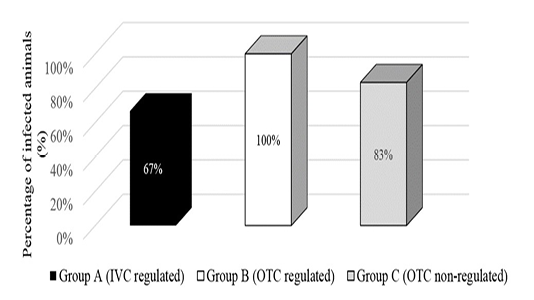
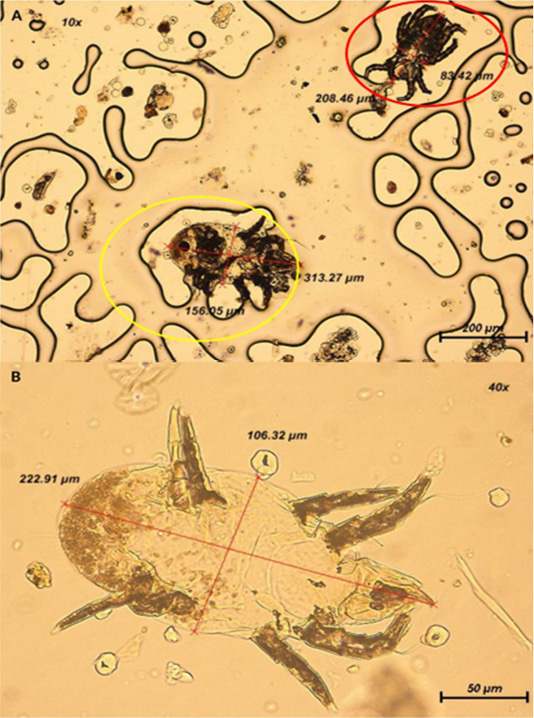
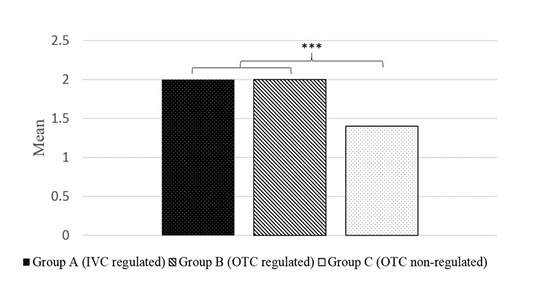
1Department of Veterinary Pathology and Microbiology, Faculty of Veterinary Medicine, Universiti Putra Malaysia, 43400 UPM Serdang, Selangor, Malaysia; 2Department of Veterinary Laboratory Diagnosis, Faculty of Veterinary Medicine, Universiti Putra Malaysia, 43400 UPM Serdang, Selangor, Malaysia; 3Department of Veterinary Preclinical Sciences, Faculty of Veterinary Medicine, Universiti Putra Malaysia, 43400 UPM Serdang, Selangor, Malaysia.Abstract | A high parasitic burden in the laboratory mice (Mus musculus) disrupts significant research outcomes. Many factors in the animal facility contribute to parasites manifestation. Presently, the environmental variables on parasites presence in laboratory mice remain scarce in Malaysia. Hence, this study aimed to determine the association of varied environmental conditions towards parasitic infections in laboratory mice. Fifty-four (54) male BALB/c mice were chosen randomly from an animal facility located in Klang Valley, Malaysia. They were placed in three groups of different environmental conditions with 3 replicates for each group. Endoparasites were identified using direct faecal smear, perianal tape test, faecal floatation and gastrointestinal examination techniques. Ectoparasites were detected by fur pluck, tape impression and carcass immersion methods while blood parasites were recognised using blood smear techniques. Samples were taken weekly for a total of 5 weeks. Identification of the parasites was made based on observation and classification of their distinct characteristics under a light microscope. The results revealed that the mice were infected with pinworms; Syphacia obvelata and Aspiculuris tetraptera, but blood parasites were absent. Mites were only detected in the non-regulated environment at a prevalence of 20.4% by the tape impression method. It was contributed by the stressful conditions of the non-regulated environment. There was an association between parasitic levels with various environmental conditions using one-way ANOVA (P < 0.05). Overall, the results varied according to the parasitological methods used, and environmental conditions play roles towards parasites manifestation in the laboratory mice housed in the conventionally maintained animal facility.
Keywords | Environmental conditions, Laboratory mice, Mites, Parasites, Pinworms