
Salinity stress is a major constraint affecting crop productivity worldwide, necessitating sustainable strategies to enhance plant tolerance. This study evaluates the influence of the endophytic fungus SGR2 on growth performance and biochemical responses of Zea mays L. under salinity stress in autoclaved soil over 21 days. Six treatments were established: control, 100 mM NaCl, 150 mM NaCl, SGR2 inoculation, and SGR2 combined with 100 mM or 150 mM NaCl. SGR2 inoculation significantly enhanced shoot length by 44.72% and root length (20.3 cm) compared to the control, while alleviating salinity-induced growth inhibition, which reduced shoot length by 15.73% and 33.87% at 100 mM and 150 mM NaCl, respectively, in non-inoculated seedlings. Fresh weight (4.46 g) and dry weight (0.24 g) were also significantly increased in SGR2-inoculated plants under both control and saline conditions. Biochemical analyses revealed that SGR2 markedly increased total chlorophyll (70.18 µg g-¹), indole-3-acetic acid (266.78 µg g-¹), salicylic acid (4.57 µg g-¹), flavonoids (131.44 µg g-¹), phenolics (1.47 µg g-¹), protein (303.98 µg g-¹), and sugars (227.69 µg g-¹), particularly under 150 mM NaCl stress. In addition, antioxidant enzyme activities, including ascorbic acid oxidase (2.14 units enzyme/30 s/g), peroxidase (0.192 units enzyme/30 s/g), and radical scavenging activity (43.30% DPPH), were significantly enhanced in SGR2-inoculated plants compared to non-inoculated controls. These findings demonstrate that SGR2 effectively enhances growth, biochemical attributes, and antioxidant defense mechanisms in Zea mays under salinity stress, highlighting its potential as a sustainable bio-inoculant for improving crop productivity in saline environments.
Research Article · Volume 32, Issue 1, 19 April 2026 · Open Access
Endophytic Fungus Sgr2 Enhances Zea Mays L. Growth and Biochemical Resilience Under Salinity Stress
· · · · · ·
Affiliations & Notes ⌄
- 1Hebei Key Laboratory of Soil Ecology, Center for Agricultural Resources Research, Institute of Genetic and Developmental Biology, The Chinese Academy of Sciences, 286 Huaizhong Road, Shijiazhuang 050021, China
- 22University of Chinese Academy of Sciences, 19A Yuquan Road, Beijing 100049, China
- 33Department of Botany, Abdul Wali Khan University, Khyber Pakhtunkhwa, Pakistan
- 44Department of Botany, Women University Mardan, Mardan 23200, Khyber Pakhtunkhwa, Pakistan
- 55College of Horticulture and Lan
Article Info ⌄
- Journal:
- Pakistan Journal of Weed Science Research
- Published:
- 19 April 2026
From the article
- The present study demonstrates that the endophytic fungus SGR2, isolated from Silene italica L., significantly enhances growth performance and salinity tolerance in Zea mays L. seedlings.
- SGR2 inoculation improved key growth attributes, including shoot and root development as well as biomass accumulation, while effectively mitigating the inhibitory effects of salinity stress.
- The observed increase in antioxidant enzyme activities, including ascorbic acid oxidase and peroxidase, along with enhanced radical scavenging capacity, further indicates improved oxidative stress tolerance in inoculated plants.
- Overall, SGR2 functions as an effective plant growth–promoting endophyte that enhances physiological and biochemical stability under saline conditions.
Selected from the article's own text.
Abstract
Introduction
Maize (Zea mays L.) is one of the most important cereal crops globally and serves as a cornerstone of modern agriculture due to its multifunctional role as a source of food, feed, and industrial raw materials . It is cultivated across diverse agro-ecological regions and contributes significantly to global food security and economic development ; . In many developing countries, maize constitutes a staple component of human diets and plays a vital role in livestock production as a primary feed source . Additionally, maize is widely utilized in various industrial applications, including biofuel production, starch manufacturing, and food processing . Owing to its broad utility and high yield potential, maize has become a strategic crop for ensuring agricultural sustainability and global food security . However, increasing food demand driven by rapid population growth, coupled with climate change, environmental degradation, and the expansion of marginal lands, has imposed significant challenges on maintaining stable maize productivity ; ; ; . These pressures necessitate the development of innovative and sustainable strategies to enhance crop performance under adverse environmental conditions (FAO, 2023).
Despite its agronomic importance, maize productivity is frequently constrained by various abiotic stresses that adversely affect plant growth and development ; . Among these, soil salinity is one of the most severe environmental factors limiting agricultural productivity worldwide (Khan et al., 2018a; . Salinity stress primarily results from the excessive accumulation of soluble salts, particularly sodium chloride (NaCl), in the soil, which disrupts key physiological and metabolic processes in plants . Elevated NaCl levels induce osmotic stress, reducing water uptake and leading to cellular dehydration, while excessive sodium ions cause ionic toxicity and disturb nutrient homeostasis within plant tissues ; Amaregouda et al., 2010; ; . These effects impair enzymatic activities and overall cellular metabolism . Consequently, salinity stress reduces chlorophyll content, disrupts photosynthetic efficiency, and limits biomass accumulation in maize ; . Ultimately, these physiological and biochemical disruptions result in significant reductions in crop yield and grain quality, posing a major threat to global agricultural sustainability ; ; .
The problem of soil salinization has intensified in recent decades due to various environmental and anthropogenic factors, including climate change, excessive irrigation, poor drainage systems, and the use of saline water in agricultural practices . Large areas of agricultural land around the world have already been affected by salinity, and projections suggest that the extent of salinity-affected soils will continue to increase in the future . This expansion of saline soils represents a major obstacle to achieving sustainable crop production and global food security ; Shakir et al., 2023a; . Maize, although moderately tolerant to salinity compared with some other cereal crops, still experiences significant growth inhibition under high salt concentrations . Therefore, developing effective strategies to enhance maize tolerance to salinity stress is essential for maintaining stable agricultural productivity, particularly in regions where soil salinity is rapidly increasing . The problem of soil salinization has intensified in recent decades due to both environmental and anthropogenic factors, including climate change, excessive irrigation, poor drainage systems, and the use of saline water in agriculture . As a result, vast areas of arable land worldwide have already been affected by salinity, and projections indicate a continued expansion of salinity-affected soils in the future .
This increasing salinization poses a major challenge to sustainable crop production and global food security . Although maize is considered moderately tolerant compared with some other cereal crops, it remains highly susceptible to growth inhibition under elevated salt concentrations . Therefore, developing effective and sustainable strategies to enhance salinity tolerance in maize is essential for maintaining stable agricultural productivity, particularly in regions where soil salinity is rapidly intensifying . Endophytic fungi represent an important group of beneficial microorganisms that establish intimate associations with plants ; Redman et al., 2011; . These fungi inhabit plant tissues for at least part of their life cycle without causing visible disease symptoms, often forming mutualistic relationships that enhance plant growth, stress tolerance, and resistance to pathogens . They colonize various plant organs, including roots, stems, and leaves, where they interact with host metabolic pathways and contribute to improved nutrient acquisition, water uptake, and overall plant performance ; ; ; ; .
A key mechanism by which endophytic fungi promote plant growth is through the regulation of phytohormones. These microorganisms can synthesize or stimulate the production of hormones such as indole-3-acetic acid (IAA), which plays a central role in root development, cell elongation, and plant growth . Enhanced root architecture improves water and nutrient uptake, particularly under stress conditions. In addition, endophytic fungi can influence the production of salicylic acid (SA), a critical signaling molecule involved in plant defense and stress adaptation ; . The modulation of these phytohormones strengthens plant physiological processes and enhances tolerance to adverse environmental conditions ; . Endophytic fungi also contribute to plant resilience by enhancing biochemical defense systems. Under salinity stress, excessive accumulation of reactive oxygen species (ROS) leads to oxidative damage, affecting cellular structures and metabolic functions. Endophytic fungi mitigate this damage by stimulating the production of antioxidant enzymes and secondary metabolites . Compounds such as flavonoids and phenolics play a crucial role in scavenging ROS, thereby protecting cellular components and maintaining metabolic stability ; . Furthermore, these fungi can promote the accumulation of osmoprotectants and soluble sugars, which help maintain osmotic balance and protect plant tissues from dehydration under saline conditions ; .
Recent studies have emphasized the potential of endophytic fungi as eco-friendly bio-inoculants for enhancing plant productivity under adverse environmental conditions ; ; ; ; . By improving plant growth, regulating phytohormone balance, and strengthening antioxidant defense systems, these microorganisms play a vital role in enhancing plant resilience to salinity stress . Such biological approaches offer sustainable alternatives to conventional chemical fertilizers and stress management strategies, providing promising solutions for maintaining agricultural productivity in saline environments . However, despite growing interest in plant–endophyte interactions, the functional potential of many fungal endophytes remains insufficiently explored, particularly in major cereal crops such as Zea mays. In this context, the present study evaluates the role of the endophytic fungal isolate SGR2 in enhancing growth and biochemical resilience of Zea mays under salinity stress. Specifically, the study investigates the effects of SGR2 on plant growth parameters, phytohormone regulation, and antioxidant and biochemical responses in maize seedlings subjected to different salinity levels. By integrating physiological and biochemical analyses, this study aims to provide deeper insights into the mechanisms by which endophytic fungi contribute to plant stress tolerance and to support the development of sustainable microbial strategies for improving crop productivity in saline environments.
Methodology
Collection of plant material
Healthy plants of Senna occidentalis L. and Silene italica L. were collected from saline and waterlogged soils in District Mardan, Khyber Pakhtunkhwa, Pakistan, based on their adaptation to abiotic stress conditions. The samples were transported to the Plant–Microbe Interactions Laboratory in sterile polythene bags for further processing ; .
Surface sterilization of plant samples
Plant samples were thoroughly washed under running tap water to remove adhering debris. Surface sterilization was carried out using 70% ethanol for 1 minute, followed by rinsing with sterile distilled water (Khan et al., 2018a). The samples were then treated with 2% sodium hypochlorite for 2 minutes and rinsed three times with sterile distilled water to remove residual sterilizing agents. Sterilized samples were dried on sterile filter paper under aseptic conditions .
Isolation of endophytic fungi
All glassware and instruments were sterilized by autoclaving at 121°C for 20 minutes. Potato dextrose agar (PDA) medium, supplemented with 50 µg L-¹ streptomycin to inhibit bacterial contamination, was prepared and autoclaved. The medium was incubated at 27°C for 24 hours to ensure sterility before use . Sterilized plant tissues were aseptically cut into 5–10 mm segments of roots, stems, and leaves, and placed onto PDA plates. The plates were incubated at 27°C for 72 hours to allow fungal growth .
Culturing and purification of fungal isolates
Emerging fungal colonies were carefully observed and sub-cultured onto fresh PDA plates to obtain pure cultures. Repeated sub-culturing was performed until morphologically uniform colonies were achieved. The purified isolates were maintained on PDA slants and stored at 4°C for subsequent analyses .
Selection of endophytic isolate (SGR2)
Among the isolated endophytic fungi, the strain designated as SGR2 was selected for further experiments based on its growth characteristics and potential for plant growth promotion .
Preparation of fungal inoculum
The SGR2 endophytic fungus was cultured in Czapek broth medium in a shaking incubator at 27°C and 120 rpm for 6 days (Ullah et al., 2025c). Mycelial biomass was harvested by filtration, washed with sterile distilled water, and homogenized for soil application .
Plant growth experiments
Growth conditions and experimental design
Seeds of Zea mays L. were surface-sterilized using 70% ethanol for 2 minutes and rinsed thoroughly with sterile distilled water. The sterilized seeds were sown in plastic pots (15 cm in diameter) containing 300 g of autoclaved soil . The experiment was conducted under controlled environmental conditions at room temperature with an 18-hour photoperiod (Khan et al., 2018b). A total of six treatment groups were established, each consisting of three biological replicates , 2024). The experimental design was applied to evaluate the effects of salinity stress and SGR2 inoculation on plant growth and biochemical responses (Redman et al., 2011; Shakir et al., 2023b).
Salinity stress treatments
The salinity experiment consisted of the following treatments:
- Control: Plants were maintained under normal conditions with regular watering.
- 100 mM NaCl: Plants were irrigated with a 100 mM NaCl solution.
- 150 mM NaCl: Plants were irrigated with a 150 mM NaCl solution.
- SGR2: Soil was amended with SGR2 fungal biomass at a rate of 1 g per 100 g of soil.
- SGR2 + 100 mM NaCl: Soil amended with SGR2 biomass and irrigated with 100 mM NaCl solution.
- SGR2 + 150 mM NaCl: Soil amended with SGR2 biomass and irrigated with 150 mM NaCl solution.
- Salinity treatments were initiated 7 days after seed germination and continued for a period of 21 days .
Waterlogging stress treatments
The waterlogging experiment included:
- Control: No treatment, regular watering.
- 6-day Waterlogging: Pots flooded for 6 days.
- 9-day Waterlogging: Pots flooded for 9 days.
- SGR2: Soil amended with SGR2 fungal biomass (1 g per 100 g soil).
- SGR2 + 6-day Waterlogging: SGR2 biomass plus 6-day flooding.
- SGR2 + 9-day Waterlogging: SGR2 biomass plus 9-day flooding.
Waterlogging was imposed by maintaining a 2–3 cm water column above the soil surface for the specified duration.
Growth parameter measurements
After 21 days of treatment, seedlings were carefully harvested for growth analysis. Shoot and root lengths were measured using a ruler and recorded in centimeters (cm). Fresh weight was determined immediately after harvest using an analytical balance (g). Dry weight was recorded after oven-drying the plant material at 70°C until a constant weight was obtained .
Biochemical analysis of Zea mays seedlings
Biochemical parameters were quantified using a UV–Visible spectrophotometer (PerkinElmer Lambda 25). Total chlorophyll content was extracted in 80% acetone and measured at 645 nm and 663 nm following the method of Arnon (1949).
Indole-3-acetic acid (IAA) was quantified using Salkowski’s reagent, with samples incubated in the dark and absorbance recorded at 540 nm . Salicylic acid (SA) content was determined by reacting extracts with 0.1% ferric chloride, and absorbance was measured at 540 nm ; Ullah et al., 2025a, b).
Total flavonoid content was estimated using NaNO₂, AlCl₃, and NaOH, with absorbance measured at 415 nm using quercetin as a standard . Total phenolic content was determined using the Folin–Ciocalteu method at 650 nm with gallic acid as a standard .
Protein content was analyzed using the Lowry method at 650 nm with bovine serum albumin (BSA) as a standard . Soluble sugars were quantified using the phenol–sulfuric acid method at 490 nm with glucose as a standard .
Ascorbic acid oxidase (AAO) activity was determined by monitoring the decrease in absorbance at 290 nm after the addition of ascorbic acid substrate . Peroxidase activity was measured by the increase in absorbance at 420 nm using guaiacol as a substrate .
Radical scavenging activity (%DPPH) was evaluated by mixing 1 mL of extract with DPPH solution, incubating for 30 minutes at 25°C, and measuring absorbance at 517 nm.
The percentage of DPPH inhibition was calculated as: %DPPH = (1 − AE/AD) × 100
where AE represents sample absorbance, and AD represents blank absorbance .
Results
Influence of SGR2 Endophytic Fungi and salinity stress on Zea mays seedling growth
Shoot length
Shoot length exhibited significant variation among treatments, indicating a strong response to both salinity stress and SGR2 inoculation (Figure 1). Under control conditions, plants showed moderate shoot growth (~30 cm), whereas salinity stress led to a marked reduction, with the lowest values observed at 150 mM NaCl (~20 cm). This decline reflects the inhibitory effect of high salt concentration on plant growth. In contrast, inoculation with SGR2 significantly enhanced shoot length, with the highest value recorded in SGR2-treated plants (~45 cm), indicating a strong growth-promoting effect. Moreover, combined treatments (SGR2 + 100 mM and SGR2 + 150 mM) mitigated the adverse effects of salinity, maintaining shoot length comparable to or slightly higher than the control (~30–32 cm). Statistical analysis further confirmed these differences, with SGR2 treatment forming a distinct group with the highest significance (e), while 150 mM NaCl exhibited the lowest group (a). Overall, these results demonstrate that SGR2 effectively alleviates salinity-induced growth inhibition and promotes shoot development in Zea mays.
Root length
Root length exhibited significant variation among treatments, reflecting the pronounced impact of salinity stress and the ameliorative effect of SGR2 inoculation (Figure 2). Under control conditions, plants showed moderate root development (~14 cm). However, salinity stress resulted in a clear reduction in root length, with values decreasing to ~11 cm at both 100 mM and 150 mM NaCl, indicating that elevated salt concentrations negatively affect root growth.
Interestingly, SGR2 inoculation significantly enhanced root elongation, producing the highest root length (~20 cm), which was substantially greater than both control and salt-stressed treatments. This suggests that SGR2 promotes root growth, potentially by improving water uptake efficiency, enhancing root system architecture, and regulating phytohormonal balance.
In combined treatments, SGR2 partially alleviated the inhibitory effects of salinity. While SGR2 + 100 mM showed the lowest root length (~10 cm), SGR2 + 150 mM improved root growth (~14 cm), approaching control levels. This indicates that the mitigating effect of SGR2 under salinity stress may vary depending on stress intensity and plant physiological responses.
Statistical analysis confirmed significant differences among treatments, with SGR2 forming the highest significance group (e), whereas SGR2 + 100 mM showed the lowest group (a). Other treatments were grouped accordingly, indicating a clear pattern of variation. Overall, these results demonstrate that salinity stress suppresses root growth, whereas SGR2 inoculation enhances root development and partially mitigates the adverse effects of salt stress.
Fresh weight
Fresh weight showed significant variation among treatments, clearly reflecting the combined effects of salinity stress and SGR2 inoculation on biomass accumulation (Figure 3). Under control conditions, plants exhibited moderate fresh weight (~2.0 g). However, salinity stress caused a substantial reduction in fresh biomass, with values decreasing to ~1.2–1.3 g at 100 mM NaCl and reaching the lowest level (~0.5–0.6 g) at 150 mM NaCl. This reduction indicates that salinity severely restricts plant growth, likely due to osmotic stress, reduced water uptake, and metabolic disturbances. In contrast, SGR2 inoculation significantly enhanced fresh weight, producing the highest biomass (~4.5 g), which was more than double that of the control. This suggests that SGR2 plays a critical role in promoting plant growth, possibly through improved nutrient assimilation, enhanced photosynthetic efficiency, and increased stress tolerance.
Furthermore, the combined treatments (SGR2 + 100 mM and SGR2 + 150 mM) effectively mitigated the adverse effects of salinity. Plants under these treatments maintained fresh weight (~2.1–2.4 g) comparable to or slightly higher than the control, indicating that SGR2 alleviates salt-induced growth inhibition and helps sustain biomass production under stress conditions.
Statistical analysis revealed significant differences among treatments, with SGR2 forming a distinct group with the highest significance (d), while 150 mM NaCl showed the lowest group (a). Intermediate treatments were grouped accordingly, demonstrating a clear gradient of response. Overall, these results indicate that salinity stress markedly reduces plant biomass, whereas SGR2 inoculation enhances fresh weight and significantly improves plant performance under saline conditions.
Dry weight
Dry weight exhibited significant variation among treatments, reflecting the effects of salinity stress and SGR2 inoculation on plant biomass accumulation (Figure 4). Under control conditions, plants showed moderate dry weight (~0.15 g). However, salinity stress resulted in a noticeable reduction in dry biomass, decreasing to ~0.11–0.12 g at 100 mM NaCl and reaching the lowest values (~0.09–0.10 g) at 150 mM NaCl. This decline indicates that high salinity negatively affects biomass production, likely due to reduced photosynthetic activity, impaired nutrient uptake, and metabolic limitations. In contrast, SGR2 inoculation significantly enhanced dry weight, producing the highest value (~0.24–0.25 g), which was substantially higher than both control and salinity-stressed treatments. This suggests that SGR2 promotes biomass accumulation by improving physiological and metabolic processes under both normal and stress conditions. Furthermore, the combined treatments (SGR2 + 100 mM and SGR2 + 150 mM) effectively alleviated the adverse effects of salinity. Plants under these treatments showed increased dry weight (~0.19–0.20 g and ~0.15–0.16 g, respectively), with values approaching or exceeding those of the control. This indicates that SGR2 plays a significant role in mitigating salinity-induced growth inhibition and sustaining biomass accumulation. Statistical analysis confirmed significant differences among treatments, with SGR2 forming the highest significance group (e), whereas 150 mM NaCl showed the lowest group (a). Other treatments occupied intermediate groups, reflecting a clear pattern of variation. Overall, these results demonstrate that salinity stress reduces dry biomass, while SGR2 inoculation enhances dry weight and improves plant tolerance under saline conditions.
Biochemical analysis of zea mays l. seedlings treated with SGR2 Endophytic Fungi and Salinity Stress
Total Chlorophyll
Total chlorophyll content showed significant variation among treatments, indicating a strong influence of salinity stress and SGR2 inoculation on photosynthetic capacity (Figure 5). Under control conditions, plants exhibited relatively low chlorophyll content (~10 µg/g). However, exposure to salinity stress resulted in a notable increase, with chlorophyll content reaching ~40 µg/g at 100 mM NaCl and ~30–32 µg/g at 150 mM NaCl. This increase under moderate salinity may reflect an adaptive response aimed at maintaining photosynthetic efficiency under stress conditions.
In contrast, SGR2 inoculation significantly enhanced chlorophyll content, producing the highest value (~70 µg/g), which was markedly higher than both control and salinity treatments. This suggests that SGR2 promotes chlorophyll biosynthesis and improves photosynthetic performance, possibly through enhanced nutrient uptake, reduced oxidative damage, and improved physiological stability. Furthermore, the combined treatments (SGR2 + 100 mM and SGR2 + 150 mM) also exhibited elevated chlorophyll content (~38–40 µg/g and ~55 µg/g, respectively), indicating that SGR2 effectively mitigates the adverse effects of salinity stress and supports chlorophyll retention. Notably, SGR2 + 150 mM showed higher chlorophyll content than the corresponding salinity treatment alone, demonstrating the protective role of SGR2 under severe stress. Statistical analysis confirmed significant differences among treatments, with SGR2 forming the highest significance group (f), while the control showed the lowest group (a). Other treatments were grouped accordingly, indicating a clear pattern of variation. Overall, these results demonstrate that SGR2 inoculation enhances chlorophyll content and improves photosynthetic capacity, thereby contributing to better plant performance under both normal and saline conditions.
IAA
Indole-3-acetic acid (IAA) content varied significantly among treatments, indicating a strong influence of salinity stress and SGR2 inoculation on hormonal regulation (Figure 6). Under control conditions, plants exhibited moderate IAA levels (~240 µg/g). However, salinity stress caused a reduction in IAA content, with values decreasing to ~220 µg/g at 100 mM NaCl and reaching the lowest level (~170 µg/g) at 150 mM NaCl. This decline suggests that salinity stress disrupts endogenous auxin balance, thereby negatively affecting plant growth and development. In contrast, SGR2 inoculation maintained relatively high IAA levels (~230 µg/g), indicating its role in stabilizing hormonal balance under non-stress conditions. More importantly, the combined treatments (SGR2 + 100 mM and SGR2 + 150 mM) significantly enhanced IAA content, reaching ~250 µg/g and ~270 µg/g, respectively. These values were higher than both control and salinity treatments, demonstrating that SGR2 not only counteracts the inhibitory effects of salinity but also promotes auxin accumulation. The increase in IAA under SGR2 treatments may be attributed to microbial production of phytohormones or stimulation of plant hormone biosynthesis pathways, leading to improved cell elongation, root development, and overall plant growth under stress conditions. Statistical analysis confirmed significant differences among treatments, with SGR2 + 150 mM forming the highest significance group (f), whereas 150 mM NaCl showed the lowest group (a). Other treatments occupied intermediate groups, reflecting a clear trend of hormonal modulation. Overall, these results indicate that salinity stress reduces endogenous IAA levels, while SGR2 inoculation enhances auxin content and contributes to improved plant growth and stress tolerance.
Salicylic Acid (SA)
Salicylic acid (SA) content showed significant variation among treatments, indicating its important role in plant stress response under salinity and SGR2 inoculation (Figure 7). Under control conditions, plants exhibited relatively high SA levels (~4.4–4.5 µg/g). However, salinity stress led to a reduction in SA content, decreasing to ~4.0–4.1 µg/g at 100 mM NaCl and reaching the lowest level (~3.6–3.7 µg/g) at 150 mM NaCl. This decline suggests that severe salinity may impair endogenous SA synthesis or disrupt signaling pathways associated with stress defense. In contrast, SGR2 inoculation-maintained SA content at levels comparable to salinity treatments (~4.0–4.1 µg/g), indicating its role in stabilizing plant physiological responses. Notably, the combined treatments (SGR2 + 100 mM and SGR2 + 150 mM) significantly increased SA content (~4.2–4.3 µg/g and ~4.5–4.6 µg/g, respectively), with the highest value observed in SGR2 + 150 mM. This enhancement demonstrates that SGR2 promotes SA accumulation under stress conditions, thereby strengthening plant defense mechanisms. The increase in SA under combined treatments may be associated with the activation of systemic acquired resistance and improved antioxidant defense, enabling plants to better cope with salinity-induced oxidative stress. Statistical analysis confirmed significant differences among treatments, with SGR2 + 150 mM forming the highest significance group (f), whereas 150 mM NaCl showed the lowest group (a). Other treatments were grouped accordingly, indicating a clear pattern of variation. Overall, these results suggest that salinity stress reduces SA levels, while SGR2 inoculation enhances salicylic acid accumulation and contributes to improved stress tolerance through activation of defense pathways.
Phenol
Total phenolic content exhibited moderate but statistically significant variation among treatments,
indicating its role in plant defense and stress adaptation under salinity and SGR2 inoculation (Figure 8). Under control conditions, plants showed a phenol content of approximately ~1.44 µg/g. Exposure to
salinity stress resulted in slight changes, with values of ~1.43 µg/g at 100 mM NaCl and ~1.455 µg/g at 150 mM NaCl, suggesting a marginal response of phenolic compounds to increasing salinity levels. In contrast, SGR2 inoculation led to a noticeable increase in phenol content (~1.47 µg/g), indicating enhanced accumulation of secondary metabolites. This suggests that SGR2 may stimulate phenolic biosynthesis pathways, thereby strengthening plant defense mechanisms. Similarly, the combined treatments (SGR2 + 100 mM and SGR2 + 150 mM) maintained or slightly increased phenol levels (~1.44–1.445 µg/g and ~1.47–1.48 µg/g, respectively), with SGR2 + 150 mM showing one of the highest values. This indicates that SGR2 helps sustain or enhance phenolic content under salinity stress, contributing to improved antioxidant capacity. Although the overall variation in phenol content was relatively small compared to other biochemical parameters, statistical analysis confirmed significant differences among treatments. SGR2 and SGR2 + 150 mM formed the highest significance group (d), while 100 mM NaCl showed the lowest group (a). Other treatments occupied intermediate groups. Overall, these results suggest that phenolic compounds are moderately influenced by salinity stress, while SGR2 inoculation enhances their accumulation, thereby contributing to improved antioxidant defense and stress tolerance in plants.
Protein
Total protein content varied significantly among treatments, reflecting the combined effects of salinity stress and SGR2 inoculation on plant metabolic activity (Figure 9). Under control conditions, plants exhibited moderate protein levels (~260 µg/g). However, salinity stress resulted in a substantial decline in protein content, decreasing to ~210 µg/g at 100 mM NaCl and reaching the lowest level (~160 µg/g) at 150 mM NaCl. This reduction suggests that salinity stress negatively affects protein synthesis and may enhance protein degradation due to oxidative damage and metabolic disruption. In contrast, SGR2 inoculation significantly enhanced protein content, producing the highest value (~300 µg/g), which was markedly higher than both control and salinity treatments. This indicates that SGR2 promotes protein biosynthesis and improves cellular metabolic functions under normal conditions. Furthermore, the combined treatments (SGR2 + 100 mM and SGR2+ 150 mM) also showed increased protein levels
(~250 µg/g and ~300 µg/g, respectively). Notably, SGR2 + 150 mM restored protein content to levels comparable to SGR2 alone, demonstrating a strong protective effect of SGR2 under severe salinity stress. The enhancement of protein content under SGR2 treatments may be associated with improved nitrogen metabolism, stabilization of cellular structures, and activation of stress-related proteins, which collectively contribute to enhanced stress tolerance. Statistical analysis confirmed significant differences among treatments, with SGR2 forming the highest significance group (f), followed closely by SGR2 + 150 mM (e), whereas 150 mM NaCl showed the lowest group (a). Other treatments were grouped accordingly, reflecting a clear pattern of variation.
Flavonoid
Flavonoid content exhibited significant variation among treatments, highlighting its role in antioxidant defense under salinity stress and SGR2 inoculation (Figure 10). Under control conditions, plants showed moderate flavonoid levels (~100 µg/g). Salinity stress resulted in a slight increase in flavonoid content, reaching ~110 µg/g at 100 mM NaCl and ~105 µg/g at 150 mM NaCl, suggesting an induced antioxidant response to mitigate stress-induced oxidative damage. In contrast, SGR2 inoculation alone showed comparatively lower flavonoid levels (~95–100 µg/g), indicating that under non-stress conditions, flavonoid accumulation remains moderate. However, the combined treatments (SGR2 + 100 mM and SGR2 + 150 mM) significantly enhanced flavonoid content, reaching ~130 µg/g and ~135–140 µg/g, respectively. These values were substantially higher than both control and salinity treatments, demonstrating a strong synergistic effect of SGR2 under stress conditions. The increase in flavonoid content under combined treatments suggests that SGR2 stimulates secondary metabolite production, thereby enhancing the antioxidant capacity of plants and protecting cellular components from oxidative stress caused by salinity. Statistical analysis confirmed significant differences among treatments, with SGR2 + 150 mM forming the highest significance group (f), followed by SGR2 + 100 mM (e), whereas SGR2 alone showed the lowest group (a). Other treatments were grouped accordingly, reflecting a clear pattern of variation. Overall, these results indicate that flavonoid accumulation is moderately induced by salinity stress but is strongly enhanced by SGR2 under combined conditions, contributing to improved oxidative stress tolerance.
Sugar
Total soluble sugar content showed significant variation among treatments, reflecting its important role in osmotic adjustment and stress tolerance under salinity and SGR2 inoculation (Figure 11). Under control conditions, plants exhibited relatively high sugar content (~225 µg/g). However, salinity stress resulted in a reduction in sugar levels, decreasing to ~200 µg/g at 100 mM NaCl and reaching the lowest value (~170 µg/g) at 150 mM NaCl. This decline suggests that salinity stress disrupts carbohydrate metabolism and reduces the availability of soluble sugars required for energy and osmotic balance. In contrast, SGR2 inoculation slightly increased sugar content (~230 µg/g), indicating its role in maintaining carbohydrate metabolism under non-stress conditions. Furthermore, the combined treatments (SGR2 + 100 mM and SGR2 + 150 mM) showed moderate recovery in sugar levels (~200 µg/g and ~205 µg/g, respectively), demonstrating that SGR2 partially mitigates the adverse effects of salinity on sugar accumulation. The maintenance of higher sugar content under SGR2 treatments may contribute to improved osmotic adjustment, stabilization of cellular structures, and enhanced stress tolerance under saline conditions. Statistical analysis confirmed significant differences among treatments, with SGR2 forming the highest significance group (f), whereas 150 mM NaCl showed the lowest group (a). Other treatments were grouped accordingly, indicating a clear pattern of variation. Overall, these results suggest that salinity stress reduces soluble sugar content, while SGR2 inoculation helps maintain carbohydrate balance and contributes to improved plant performance under stress conditions.
AAO
Ascorbate oxidase (AAO) activity showed significant variation among treatments, indicating its involvement in oxidative stress regulation under salinity and SGR2 inoculation (Figure 12). Under control conditions, plants exhibited moderate AAO activity (~1.6–1.7 units). Salinity stress at 100 mM NaCl increased AAO activity (~2.0 units), suggesting an induced oxidative response. However, at higher salinity (150 mM NaCl), AAO activity decreased (~0.9–1.0 units), indicating possible enzymatic inhibition under severe stress conditions. In contrast, SGR2 inoculation significantly enhanced AAO activity, producing the highest value (~2.2 units), which was substantially
higher than both control and salinity treatments. This suggests that SGR2 stimulates antioxidant enzyme activity, thereby improving the plant’s ability to cope with oxidative stress. Furthermore, the combined treatments (SGR2 + 100 mM and SGR2 + 150 mM) also exhibited elevated AAO activity (~2.1 units and ~1.8–1.9 units, respectively), indicating that SGR2 effectively enhances enzymatic defense even under saline conditions. Notably, SGR2 + 100 mM maintained high AAO activity comparable to SGR2 alone, while SGR2 + 150 mM showed a moderate decrease, reflecting partial stress impact at higher salinity. The increase in AAO activity under SGR2 treatments may be associated with enhanced redox regulation and improved detoxification of reactive oxygen species (ROS), contributing to better stress tolerance. Statistical analysis confirmed significant differences among treatments, with SGR2 forming the highest significance group (f), whereas 150 mM NaCl showed the lowest group (a). Other treatments were grouped accordingly, indicating a clear pattern of enzymatic response. Overall, these results demonstrate that SGR2 inoculation enhances AAO activity and strengthens the antioxidant defense system, thereby mitigating oxidative stress induced by salinity.
Peroxidase
Peroxidase (POD) activity exhibited significant variation among treatments, reflecting its crucial role in antioxidant defense under salinity stress and SGR2 inoculation (Figure 13). Under control conditions, plants showed moderate POD activity (~0.145 units). Exposure to salinity stress resulted in an increase in POD activity, reaching ~0.16 units at 100 mM NaCl and ~0.18 units at 150 mM NaCl. This enhancement indicates an induced defense response, as peroxidase enzymes are involved in scavenging reactive oxygen species (ROS) generated under stress conditions. In contrast, SGR2 inoculation alone resulted in the lowest POD activity (~0.085 units), suggesting reduced oxidative stress under non-saline conditions due to improved physiological balance. However, under combined treatments, POD activity increased again, with values of ~0.165 units in SGR2 + 100 mM and reaching the highest level (~0.195 units) in SGR2 + 150 mM. This indicates that SGR2 enhances the plant’s enzymatic defense system under salinity stress, particularly at higher salt concentrations. The elevated POD activity in combined treatments suggests that SGR2 facilitates efficient detoxification of hydrogen peroxide and other ROS, thereby protecting cellular components from oxidative
damage and improving stress tolerance. Statistical analysis confirmed significant differences among treatments, with SGR2 + 150 mM forming the highest significance group (f), whereas SGR2 alone showed the lowest group (a). Other treatments were grouped accordingly, demonstrating a clear pattern of enzymatic response. Overall, these results indicate that peroxidase activity is stimulated under salinity stress and further enhanced by SGR2 inoculation, highlighting its role in strengthening the antioxidant defense system and improving plant resilience under adverse conditions.
DPPH Radical scavenging activity
DPPH radical scavenging activity exhibited significant variation among treatments, indicating the influence of salinity stress and SGR2 inoculation on antioxidant capacity (Figure 14). Under control conditions, plants showed moderate DPPH activity (~0.25). Salinity stress resulted in contrasting effects, with a slight increase at 100 mM NaCl (~0.30) and a decrease at 150 mM NaCl (~0.20), suggesting that moderate stress may induce antioxidant responses, whereas severe stress impairs antioxidant efficiency. In contrast, SGR2 inoculation significantly enhanced DPPH activity (~0.38–0.40), indicating improved antioxidant capacity under non-stress conditions. Moreover, the combined treatments (SGR2 + 100 mM and SGR2 + 150 mM) further increased DPPH activity (~0.42–0.44), with both treatments showing the highest values. This demonstrates a strong synergistic effect of SGR2 under salinity stress, leading to enhanced free radical scavenging ability. The increase in DPPH activity under SGR2 treatments suggests improved accumulation of antioxidant compounds and enhanced detoxification of reactive oxygen species (ROS), thereby protecting plant cells from oxidative damage. Statistical analysis confirmed significant differences among treatments, with SGR2 + 100 mM and SGR2 + 150 mM forming the highest significance group (e), whereas 150 mM NaCl showed the lowest group (a). Other treatments were grouped accordingly, reflecting a clear pattern of antioxidant response. Overall, these results indicate that SGR2 inoculation significantly enhances antioxidant capacity, particularly under salinity stress, contributing to improved plant tolerance and stress resilience.
Discussion
The results of the present study demonstrate that the endophytic fungus SGR2, isolated from Silene italica L., plays a significant role in enhancing both growth performance and biochemical resilience of Zea mays
L. seedlings under normal and saline conditions ; . Salinity stress is widely recognized as a major environmental constraint that limits crop productivity by disrupting plant physiological processes, nutrient uptake, and metabolic activities. In the present study, SGR2 inoculation markedly improved key growth parameters, including shoot length (44.72%), root length (20.3 cm), fresh biomass (4.46 g), and dry biomass (0.24 g). These improvements indicate that SGR2 promotes plant vigor and biomass accumulation, even under stressful conditions ; . Similar growth-promoting effects of endophytic fungi have been widely reported, where microbial symbionts enhance nutrient acquisition, improve root architecture, and regulate plant growth regulators, ultimately supporting plant development ; .
In contrast, non-inoculated seedlings exposed to salinity stress exhibited significant reductions in growth traits, with shoot length decreasing by 15.73% at 100 mM NaCl and 33.87% at 150 mM NaCl . These reductions are consistent with the inhibitory effects of salinity stress, which induces osmotic imbalance, ionic toxicity, and reduced water availability. However, SGR2-inoculated plants maintained significantly higher growth performance under the same conditions, indicating enhanced tolerance to salinity stress . This protective effect may be attributed to improved ion homeostasis, enhanced nutrient uptake, and better water relations mediated by the endophytic fungus. Similar findings have been reported in other plant–endophyte systems, where fungal symbionts mitigate salt-induced damage by regulating physiological and biochemical processes ; ; . Furthermore, the maintenance of root growth under saline conditions is particularly important, as roots serve as the primary interface for water and nutrient absorption and play a critical role in stress adaptation. Biochemical analyses further demonstrated that SGR2 inoculation significantly enhanced photosynthetic pigments, particularly total chlorophyll content, which reached 70.18 µg g-¹ under salinity stress ; . Maintenance of chlorophyll under saline conditions is essential for sustaining photosynthetic efficiency and plant productivity ; ; . Salinity stress typically accelerates chlorophyll degradation due to oxidative damage and disruption of chloroplast structures ; . However, endophytic fungi are known to mitigate such effects by enhancing antioxidant capacity and stabilizing the photosynthetic apparatus . The elevated chlorophyll content observed in SGR2-inoculated seedlings, therefore, indicates improved photosynthetic performance and energy metabolism under salt stress ; .
The present study also revealed a substantial increase in indole-3-acetic acid (IAA) levels in SGR2-inoculated seedlings, reaching 266.78 µg g-¹ under high salinity conditions. IAA is a key phytohormone regulating cell elongation, root development, and overall plant growth ; ; . Many endophytic fungi are capable of synthesizing auxins or inducing auxin biosynthesis in host plants, thereby enhancing root architecture and nutrient acquisition. The increased IAA levels observed in this study suggest that SGR2 may contribute to growth promotion either through direct production of auxin-like compounds or by stimulating endogenous hormone pathways in maize . Similarly, salicylic acid (SA) accumulation was significantly enhanced in SGR2-inoculated plants under salinity stress, indicating activation of stress signaling pathways. SA plays a crucial role in regulating plant defense responses and improving tolerance to abiotic stresses such as salinity and drought . The elevated SA levels observed in this study suggest that SGR2 may enhance stress perception and signaling, thereby enabling plants to better adapt to saline conditions ; .
A notable increase in secondary metabolites, including flavonoids and phenolic compounds, was also observed in SGR2-inoculated seedlings. Under 150 mM NaCl stress, flavonoid content reached 131.44 µg g-¹, while phenolic content increased to 1.47 µg g-¹. These compounds act as potent antioxidants, protecting plant cells from oxidative damage caused by reactive oxygen species (ROS). Salinity stress is known to induce excessive ROS production, leading to cellular damage and metabolic dysfunction ; ; ; . The enhanced accumulation of these metabolites in SGR2-treated plants indicates activation of the plant’s antioxidant defense system. Similar responses have been reported in other plant–endophyte associations, where fungal symbionts stimulate the biosynthesis of protective secondary metabolites and enhance stress tolerance ; . In addition, SGR2 inoculation significantly increased protein and soluble sugar contents, reaching 303.98 µg g-¹ and 227.69 µg gv¹, respectively, under salinity stress. Soluble sugars play a vital role in osmotic adjustment by maintaining cellular water balance and protecting cellular structures from dehydration . Increased protein accumulation reflects enhanced metabolic activity and enzyme synthesis, which are essential for stress adaptation and recovery. The accumulation of these biochemical components in SGR2-inoculated seedlings therefore indicates improved metabolic stability, osmotic regulation, and overall stress resilience under saline conditions .
Furthermore, antioxidant enzyme activities were significantly enhanced in SGR2-treated plants. Higher activities of ascorbic acid oxidase (AAO; 2.14 units enzyme/30 s g-¹) and peroxidase (0.192 units enzyme/30 s g-¹), along with increased radical scavenging activity (43.30% DPPH), indicate that SGR2 strengthens the antioxidant defense system of Zea mays seedlings . Antioxidant enzymes play a critical role in detoxifying reactive oxygen species (ROS) generated under environmental stress conditions. Enhanced enzyme activity therefore minimizes oxidative damage and helps maintain cellular integrity . Similar responses have been reported in plants associated with beneficial microorganisms, where activation of antioxidant systems contributes to improved stress tolerance .
Interestingly, non-inoculated seedlings also exhibited moderate increases in chlorophyll, flavonoid, and phenolic contents under salinity stress compared to the control, indicating the activation of intrinsic stress response mechanisms ; . However, these responses were insufficient to sustain overall metabolic stability, as reflected by the progressive decline in IAA, SA, protein, and sugar contents with increasing salinity levels. In contrast, SGR2 inoculation effectively maintained or enhanced these biochemical parameters, suggesting that the fungal symbiont plays a pivotal role in strengthening plant defense and adaptation mechanisms under stress conditions ; . The beneficial effects of SGR2 likely involve multiple coordinated physiological and biochemical processes . These may include phytohormone regulation, improved nutrient acquisition, maintenance of ion homeostasis, stimulation of antioxidant enzyme activities, and induction of protective secondary metabolites. Such multifaceted interactions are characteristic of plant–endophyte associations and contribute significantly to enhanced plant growth and stress resilience . The sustained radical scavenging activity observed in SGR2-inoculated plants further supports the role of this endophyte in mitigating ROS-induced damage, a key consequence of salinity stress . Overall, the findings of this study provide strong evidence that SGR2 functions as an effective endophytic partner capable of improving both physiological performance and biochemical defense mechanisms in Zea mays . The ability of this fungal isolate to enhance plant growth and salinity tolerance highlights its potential application as a biofertilizer or bio stimulant for crops grown in saline soils. The utilization of such beneficial microorganisms represents a promising and sustainable strategy for improving agricultural productivity in salt-affected regions .
Future research should focus on elucidating the molecular mechanisms underlying the interaction between SGR2 and Zea mays, including the identification of genes involved in phytohormone biosynthesis, antioxidant pathways, and stress signaling networks. Advanced approaches such as transcriptomic and metabolomic analyses could provide deeper insights into the regulatory processes governing this symbiotic relationship. Moreover, large-scale field experiments are necessary to validate the effectiveness of SGR2 under natural agricultural conditions, where multiple environmental factors influence plant performance. Integration of SGR2 with other beneficial microbial consortia may further enhance its potential for developing sustainable crop management strategies in saline environments.
Conclusions and Recommendations
The present study demonstrates that the endophytic fungus SGR2, isolated from Silene italica L., significantly enhances growth performance and salinity tolerance in Zea mays L. seedlings. SGR2 inoculation improved key growth attributes, including shoot and root development as well as biomass accumulation, while effectively mitigating the inhibitory effects of salinity stress. In addition, SGR2 enhanced biochemical resilience by maintaining chlorophyll content, regulating phytohormones such as indole-3-acetic acid (IAA) and salicylic acid (SA), and increasing the accumulation of secondary metabolites (flavonoids and phenolics) and osmoprotectants (proteins and soluble sugars). The observed increase in antioxidant enzyme activities, including ascorbic acid oxidase and peroxidase, along with enhanced radical scavenging capacity, further indicates improved oxidative stress tolerance in inoculated plants. Overall, SGR2 functions as an effective plant growth–promoting endophyte that enhances physiological and biochemical stability under saline conditions. Its application as a bioinoculant represents a promising and sustainable strategy for improving crop productivity in salt-affected soils. Future studies should focus on elucidating the molecular mechanisms of SGR2–plant interactions and validating its performance under field conditions.
Acknowledgements
The authors sincerely acknowledge the Department of Botany, Abdul Wali Khan University, Mardan, for their generous provision of laboratory facilities and technical assistance, which were indispensable for the successful execution of this research. The continuous encouragement and institutional support offered by the department greatly facilitated the smooth progress of the experimental work. The authors also extend their appreciation to the faculty members and technical staff whose valuable guidance and cooperation contributed significantly to the completion of this study.
Novelty Statement
This study provides the first report on the plant growth–promoting potential of the endophytic fungus SGR2 isolated from Silene italica L. in enhancing the growth and salinity tolerance of Zea mays L. seedlings. While endophytic fungi are known to improve plant stress tolerance, the physiological and biochemical role of SGR2 in maize under saline conditions has not previously been investigated. The present work demonstrates that SGR2 inoculation significantly improves plant growth, biomass accumulation, and photosynthetic pigment content under both normal and salt-stressed environments. Furthermore, this study reveals that SGR2 enhances key biochemical and antioxidant defense mechanisms, including increased production of phytohormones (IAA and salicylic acid), accumulation of phenolics, flavonoids, proteins, and soluble sugars, and activation of antioxidant enzymes such as ascorbic acid oxidase and peroxidase. These findings provide new insights into the mechanisms by which endophytic fungi enhance plant tolerance to salinity stress and highlight the potential of SGR2 as a promising bioinoculant for improving maize productivity in saline soils.
Author Contributions
Rahid Khan: Conceptualization, Methodology, Investigation, Data curation, Writing – original draft.
Nazli Rahid: Investigation, Data collection, and laboratory analysis.
Wasim Khan: Investigation, Data analysis, Visualization.
Abdul Basit: Formal analysis, Validation, and data interpretation.
Tariq Aziz: Supervision, Review and editing, and technical guidance.
Naveen Dilawar: Data collection and laboratory analysis
Shakir Ullah: Conceptualization, Supervision, writing – review and editing, Project administration.
All authors have read and approved the final manuscript.
Future work
Future research should focus on elucidating the molecular mechanisms underlying the interaction between SGR2 and Zea mays, particularly gene expression related to stress tolerance and antioxidant pathways. In addition, field-based experiments are required to evaluate the effectiveness of SGR2 under natural agricultural conditions and to assess its potential application as a bioinoculant for improving crop productivity in saline soils.
Generative AI and AI-assisted technology statement
The authors declare that no generative AI and AI assisted technology was used in the creation of this manuscript.
Conflict of interest
The authors declare that there are no conflicts of interest regarding the publication of this paper.
Funding
This research received no external funding.
Data availability statement
The datasets generated and/or analyzed during the current study are available from the corresponding author upon reasonable request.
Figures
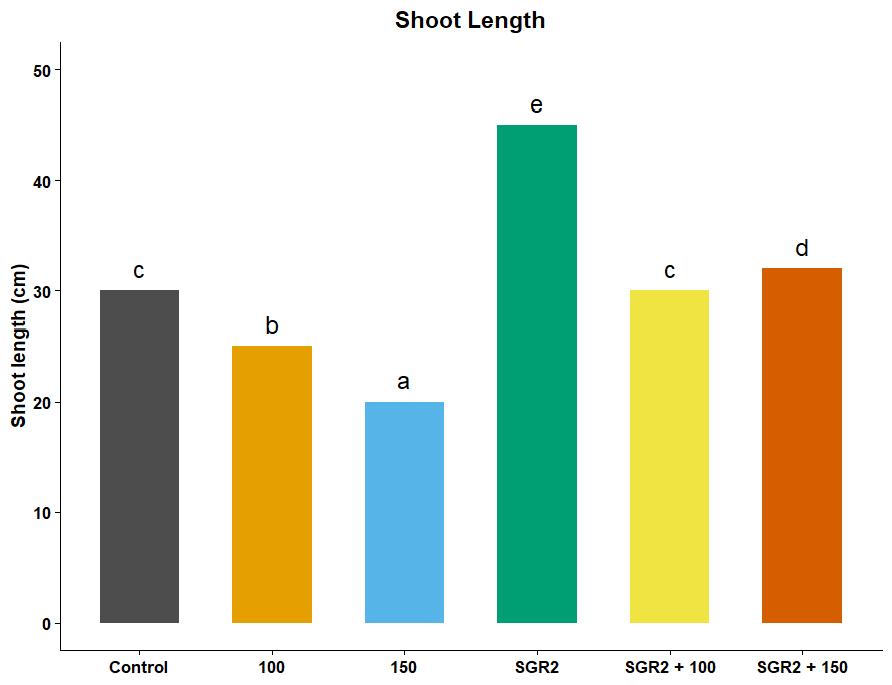
Effect of SGR2 inoculation and salinity stress on shoot length of Zea mays L. seedlings. Bar chart showing shoot length (cm) under control, 100 mM NaCl, 150 mM NaCl, SGR2 inoculation, and combined treatments (SGR2 + 100 mM and SGR2 + 150 mM) after 21 days. SGR2 treatment resulted in the highest shoot length, whereas salinity stress, particularly at 150 mM NaCl, significantly reduced shoot growth. Combined treatments mitigated the adverse effects of salinity, maintaining shoot length comparable to control conditions. Different letters above bars indicate statistically significant differences among treatments (p < 0.05).
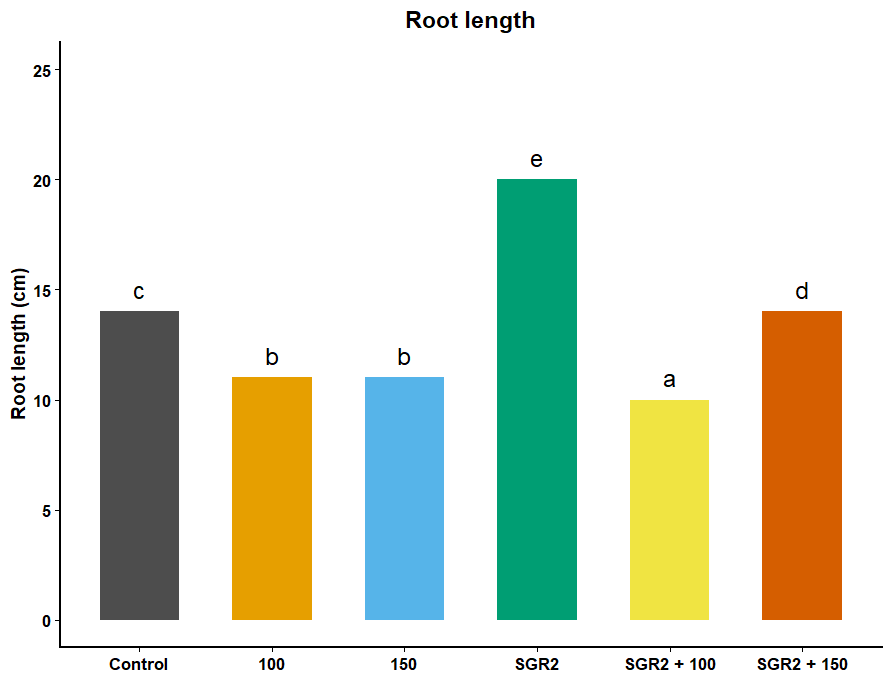
Effect of SGR2 inoculation and salinity stress on root length of Zea mays L. seedlings. Bar chart showing root length (cm) under control, 100 mM NaCl, 150 mM NaCl, SGR2 inoculation, and combined treatments (SGR2 + 100 mM and SGR2 + 150 mM) after 21 days. Root length was significantly reduced under salinity stress, whereas SGR2 inoculation markedly enhanced root growth. Combined treatments showed partial mitigation of salinity effects, with SGR2 + 150 mM maintaining root length comparable to control conditions. Different letters above bars indicate statistically significant differences among treatments (p < 0.05).
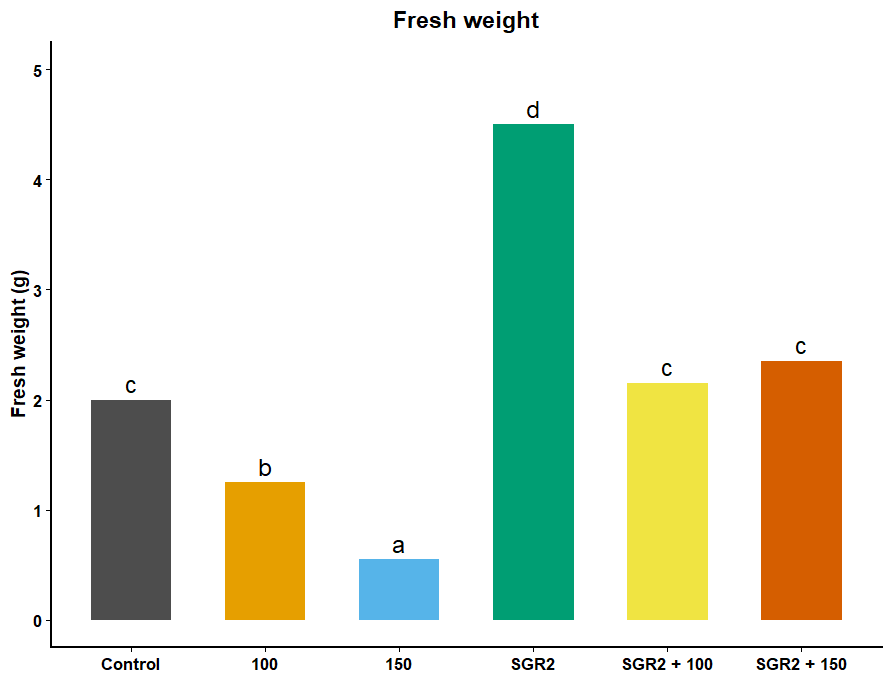
Effect of SGR2 inoculation and salinity stress on fresh weight of Zea mays L. seedlings. Bar chart showing fresh weight (g) under control, 100 mM NaCl, 150 mM NaCl, SGR2 inoculation, and combined treatments (SGR2 + 100 mM and SGR2 + 150 mM) after 21 days. Fresh weight was significantly reduced under salinity stress, particularly at 150 mM NaCl, whereas SGR2 inoculation markedly increased biomass accumulation. Combined treatments alleviated the negative effects of salinity, maintaining fresh weight comparable to or higher than control conditions. Different letters above bars indicate statistically significant differences among treatments (p < 0.05).
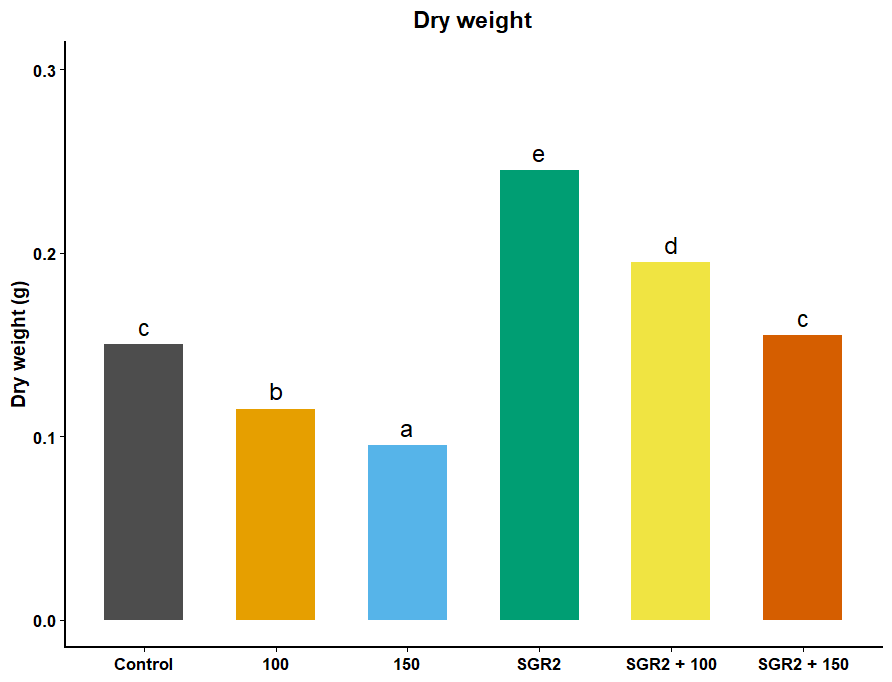
Effect of SGR2 inoculation and salinity stress on dry weight of Zea mays L. seedlings. Bar chart showing dry weight (g) under control, 100 mM NaCl, 150 mM NaCl, SGR2 inoculation, and combined treatments (SGR2 + 100 mM and SGR2 + 150 mM) after 21 days. Dry weight was significantly reduced under salinity stress, whereas SGR2 inoculation markedly enhanced biomass accumulation. Combined treatments mitigated the adverse effects of salinity, resulting in dry weight values comparable to or higher than control conditions. Different letters above bars indicate statistically significant differences among treatments (p < 0.05).
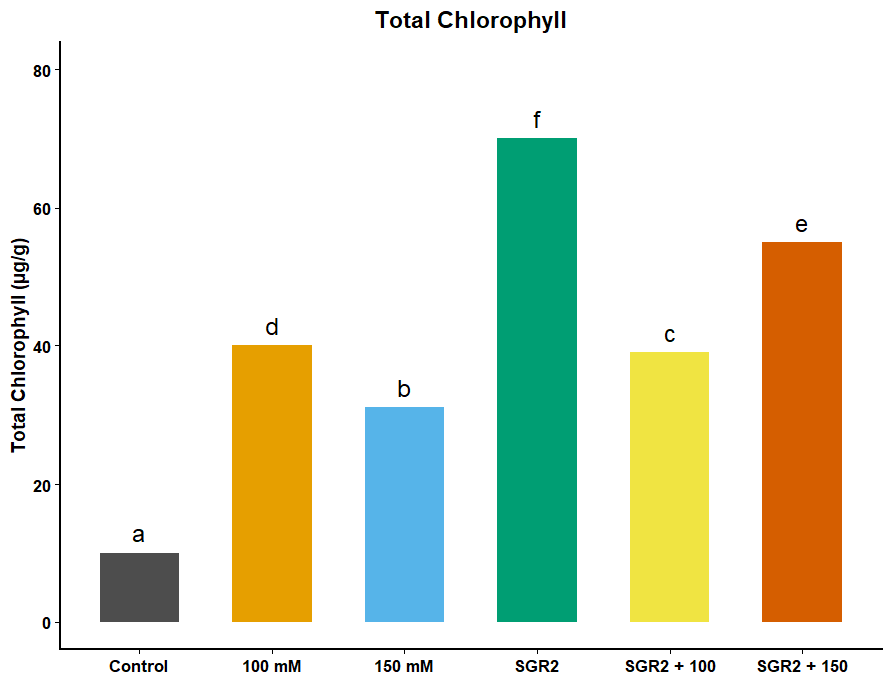
Effect of SGR2 inoculation and salinity stress on total chlorophyll content of Zea mays L. seedlings. Bar chart showing total chlorophyll (µg/g) under control, 100 mM NaCl, 150 mM NaCl, SGR2 inoculation, and combined treatments (SGR2 + 100 mM and SGR2 + 150 mM) after 21 days. Chlorophyll content increased under salinity stress and was further enhanced by SGR2 inoculation, with the highest values observed in SGR2-treated plants. Combined treatments maintained higher chlorophyll levels compared to salinity alone, indicating mitigation of stress effects. Different letters above bars indicate statistically significant differences among treatments (p < 0.05).
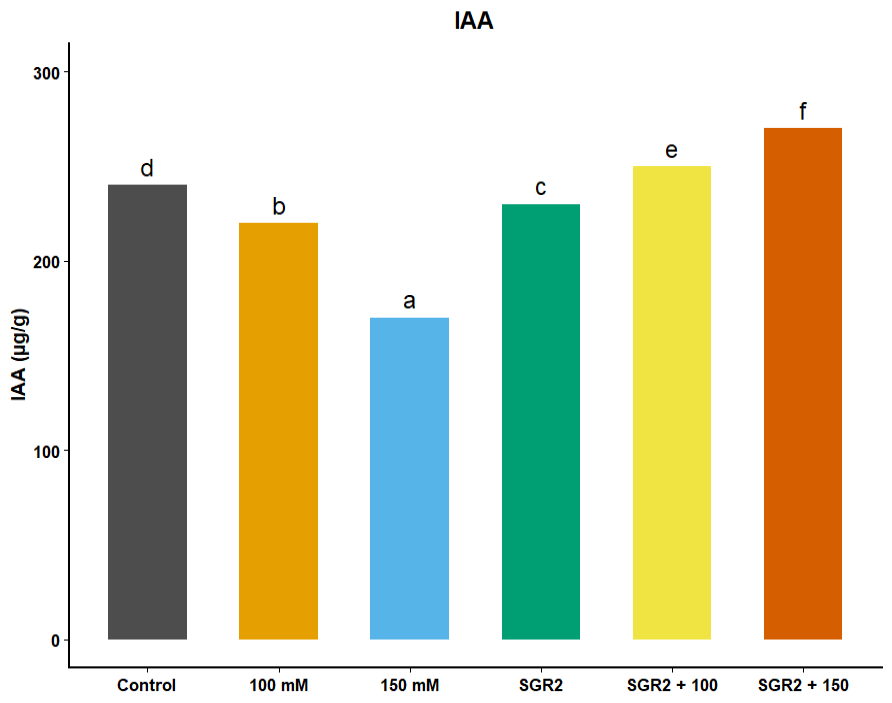
Effect of SGR2 inoculation and salinity stress on IAA content of Zea mays L. seedlings. Bar chart showing IAA (µg/g) under control, 100 mM NaCl, 150 mM NaCl, SGR2 inoculation, and combined treatments (SGR2 + 100 mM and SGR2 + 150 mM) after 21 days. IAA content decreased under salinity stress, whereas SGR2 inoculation enhanced auxin levels, particularly under combined treatments. The highest IAA content was observed in SGR2 + 150 mM, indicating improved hormonal regulation under stress conditions. Different letters above bars indicate statistically significant differences among treatments (p < 0.05).
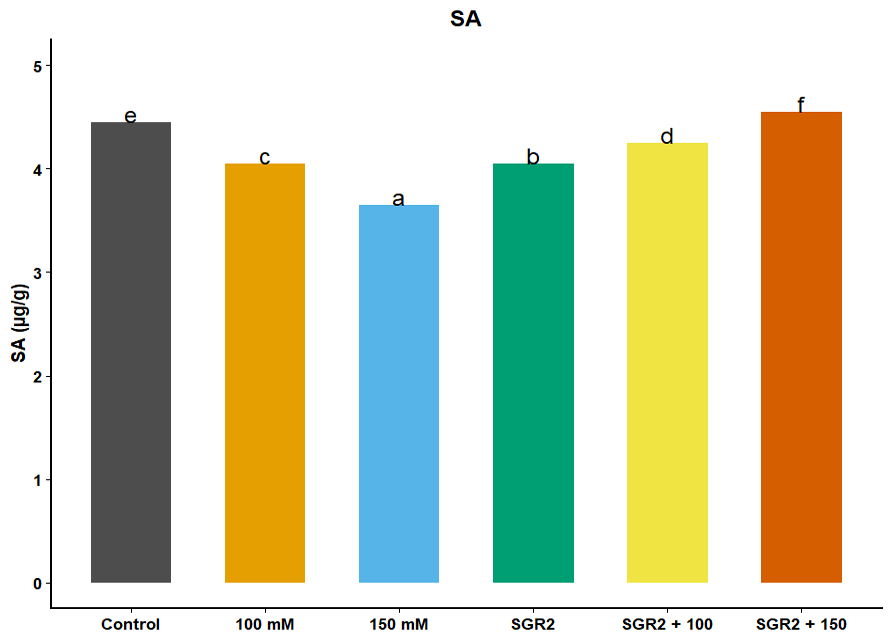
Effect of SGR2 inoculation and salinity stress on salicylic acid (SA) content of Zea mays L. seedlings. Bar chart showing SA (µg/g) under control, 100 mM NaCl, 150 mM NaCl, SGR2 inoculation, and combined treatments (SGR2 + 100 mM and SGR2 + 150 mM) after 21 days. SA content decreased under salinity stress but was significantly enhanced by SGR2 inoculation, particularly under combined treatments. The highest SA content was observed in SGR2 + 150 mM, indicating improved stress defense responses. Different letters above bars indicate statistically significant differences among treatments (p < 0.05).
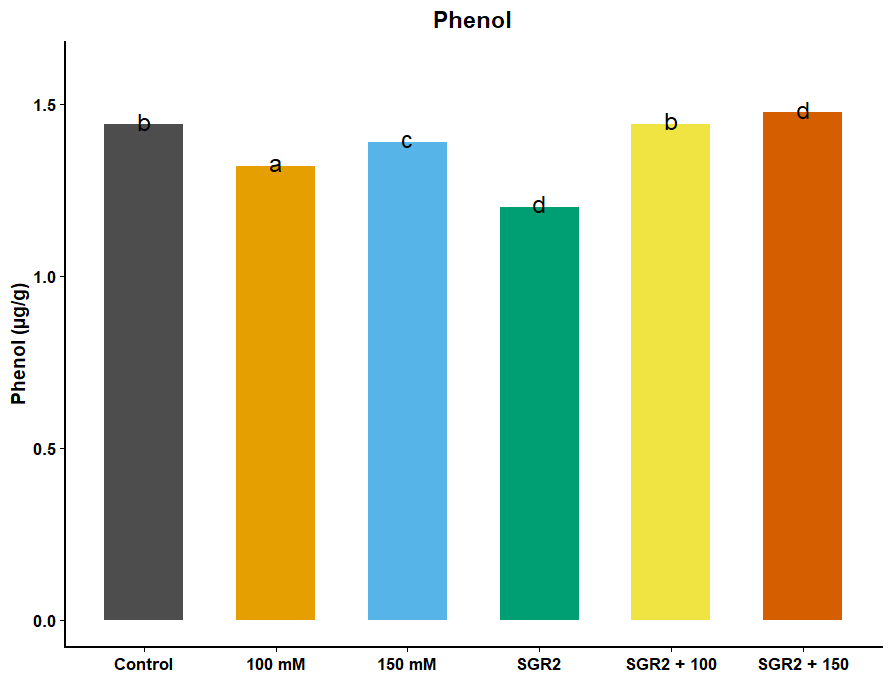
Effect of SGR2 inoculation and salinity stress on phenol content of Zea mays L. seedlings. Bar chart showing phenol content (µg/g) under control, 100 mM NaCl, 150 mM NaCl, SGR2 inoculation, and combined treatments (SGR2 + 100 mM and SGR2 + 150 mM) after 21 days. Phenol content showed slight variation under salinity stress, while SGR2 inoculation enhanced phenolic accumulation. Combined treatments maintained or slightly increased phenol levels, indicating improved antioxidant capacity under stress conditions. Different letters above bars indicate statistically significant differences among treatments (p < 0.05).
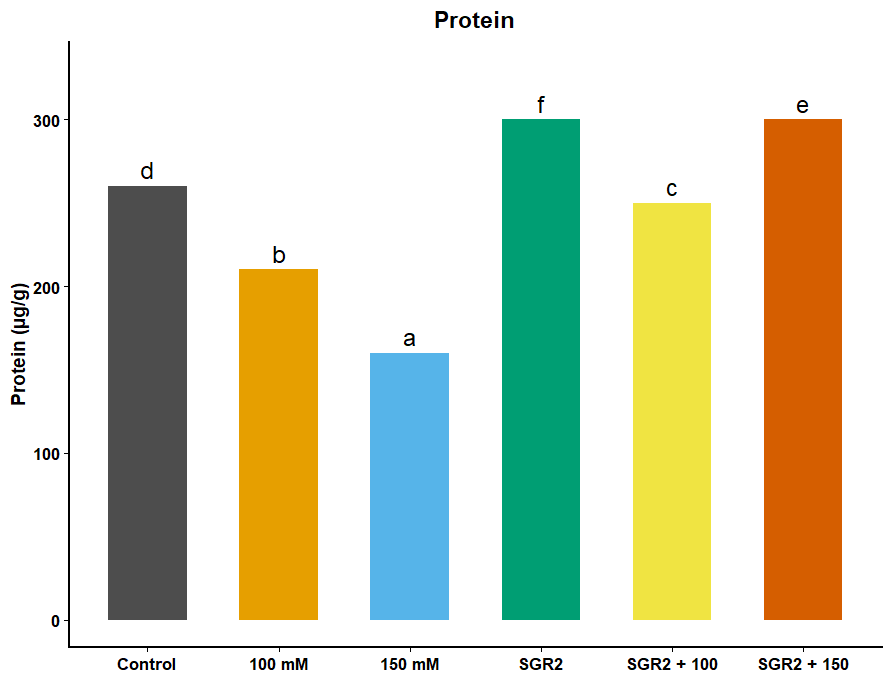
Effect of SGR2 inoculation and salinity stress on protein content of Zea mays L. seedlings. Bar chart showing protein content (µg/g) under control, 100 mM NaCl, 150 mM NaCl, SGR2 inoculation, and combined treatments (SGR2 + 100 mM and SGR2 + 150 mM) after 21 days. Protein content decreased under salinity stress, whereas SGR2 inoculation significantly enhanced protein accumulation. Combined treatments alleviated the adverse effects of salinity, with SGR2 + 150 mM restoring protein levels comparable to SGR2 treatment. Different letters above bars indicate statistically significant differences among treatments (p < 0.05).
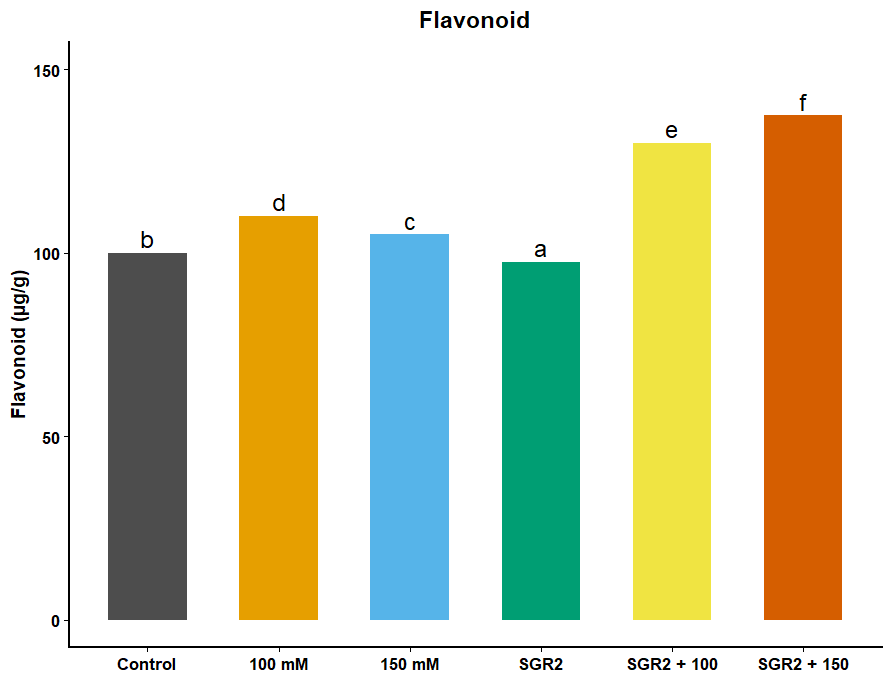
Effect of SGR2 inoculation and salinity stress on flavonoid content of Zea mays L. seedlings. Bar chart showing flavonoid content (µg/g) under control, 100 mM NaCl, 150 mM NaCl, SGR2 inoculation, and combined treatments (SGR2 + 100 mM and SGR2 + 150 mM) after 21 days. Flavonoid content showed a slight increase under salinity stress and was significantly enhanced under combined treatments with SGR2. The highest flavonoid levels were observed in SGR2 + 150 mM, indicating improved antioxidant defense under stress conditions. Different letters above bars indicate statistically significant differences among treatments (p < 0.05).
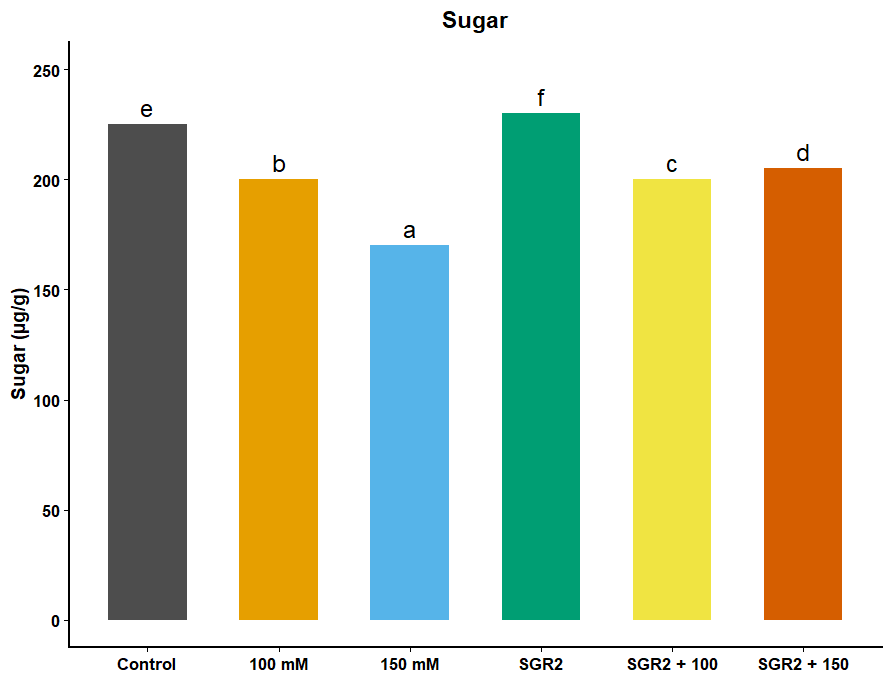
Effect of SGR2 inoculation and salinity stress on soluble sugar content of Zea mays L. seedlings. Bar chart showing sugar content (µg/g) under control, 100 mM NaCl, 150 mM NaCl, SGR2 inoculation, and combined treatments (SGR2 + 100 mM and SGR2 + 150 mM) after 21 days. Sugar content decreased under salinity stress, whereas SGR2 inoculation maintained or slightly increased sugar levels. Combined treatments partially alleviated the negative effects of salinity, indicating improved osmotic adjustment and stress tolerance. Different letters above bars indicate statistically significant differences among treatments (p < 0.05).
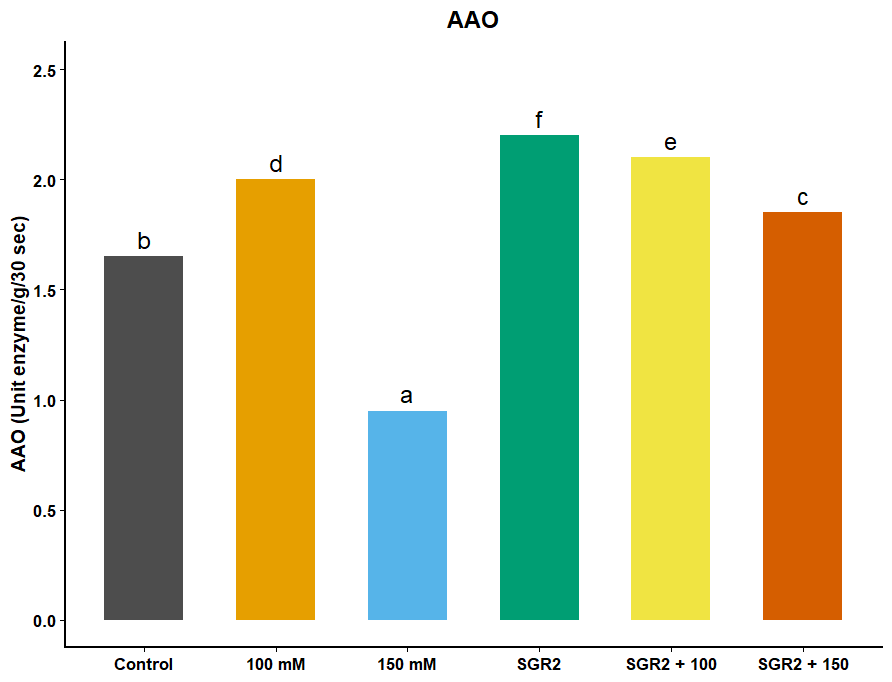
Effect of SGR2 inoculation and salinity stress on ascorbate oxidase (AAO) activity of Zea mays L. seedlings. Bar chart showing AAO activity (Unit enzyme/g/30 sec) under control, 100 mM NaCl, 150 mM NaCl, SGR2 inoculation, and combined treatments (SGR2 + 100 mM and SGR2 + 150 mM) after 21 days. AAO activity increased under moderate salinity and was significantly enhanced by SGR2 inoculation. Combined treatments maintained elevated enzyme activity, indicating improved antioxidant defense under stress conditions. Different letters above bars indicate statistically significant differences among treatments (p < 0.05).
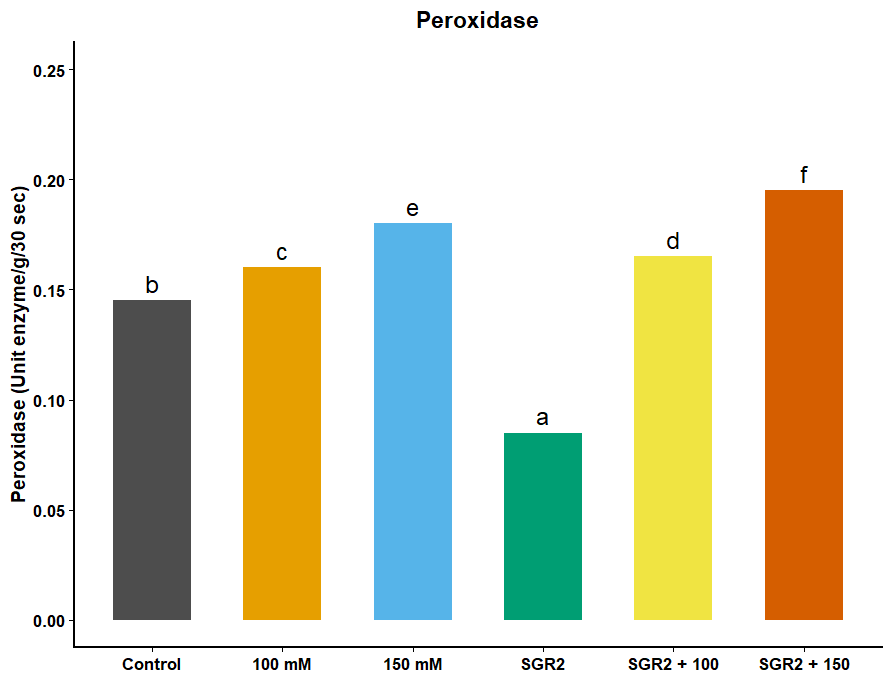
Effect of SGR2 inoculation and salinity stress on peroxidase (POD) activity of Zea mays L. seedlings. Bar chart showing peroxidase activity (Unit enzyme/g/30 sec) under control, 100 mM NaCl, 150 mM NaCl, SGR2 inoculation, and combined treatments (SGR2 + 100 mM and SGR2 + 150 mM) after 21 days. POD activity increased under salinity stress and was further enhanced in combined treatments, with the highest activity observed in SGR2 + 150 mM. SGR2 alone showed the lowest activity, indicating reduced oxidative stress under non-stress conditions. Different letters above bars indicate statistically significant differences among treatments (p < 0.05).
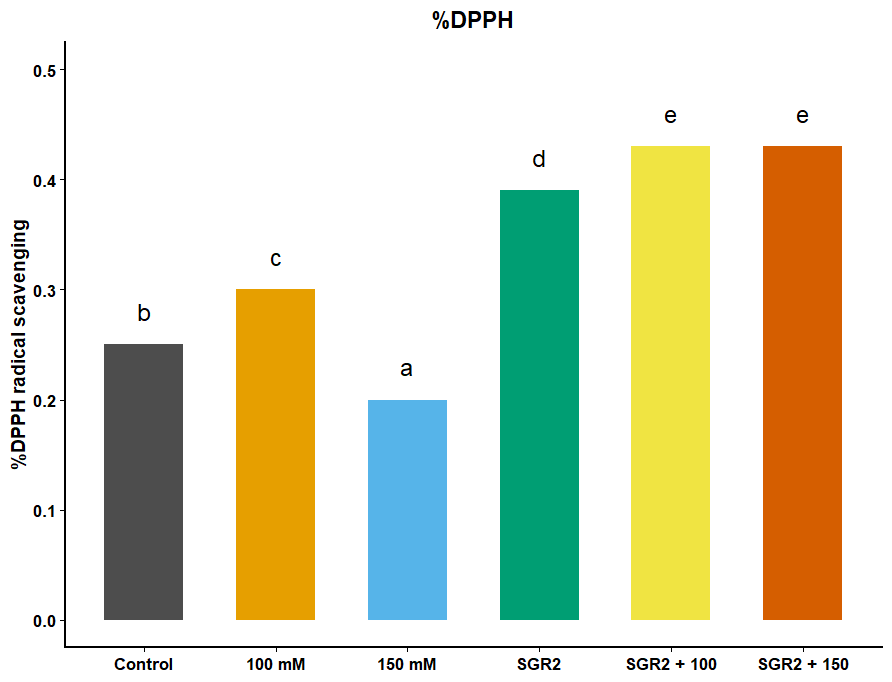
Effect of SGR2 inoculation and salinity stress on DPPH radical scavenging activity of Zea mays L. seedlings. Bar chart showing DPPH radical scavenging activity under control, 100 mM NaCl, 150 mM NaCl, SGR2 inoculation, and combined treatments (SGR2 + 100 mM and SGR2 + 150 mM) after 21 days. DPPH activity increased under moderate salinity and was significantly enhanced by SGR2 inoculation. The highest antioxidant activity was observed in combined treatments, indicating improved free radical scavenging capacity under stress conditions. Different letters above bars indicate statistically significant differences among treatments (p < 0.05).
References
- Afzal, A., M. Ashraf, S.A. Asad, and M. Farooq. 2005. Effect of phosphate-solubilizing microorganisms on phosphorus uptake, yield, and yield traits of wheat (Triticum aestivum L.) in a rainfed area. Int. J. Agric. Biol., 7: 207–209.
- Ali, S., A.L. Khan, I. Ahmad, M. Iqbal, and I.J. Lee. 2023. Endophytic fungi alleviate salinity stress in wheat and rice. Plant Soil., 452: 127–142.
- Alka, A.J., M.K Singh, S. Kumar, S. Shambhavi, and Sneha. 2020. Effect of plant geometry, graded fertility and zinc level on growth characters, yield and quality of baby corn (Zea mays L.) fodder in Bihar. Int. J. Chem. Stud., 8(3): 816–821. https://doi.org/10.22271/chemi.2020.v8.i3j.9304.[CrossRef]
- Amaregouda, A., M.V. Ravi, and M.M. Dhanoji. 2020. Morpho-physiological impact of growth indices to biofortification on growth and yield of sweet corn (Zea mays L. saccharata). Bull. Environ. Pharmacol. Life Sci., 9(3): 37–43.
- Arnon, D.I., 1949. Copper enzymes in isolated chloroplasts: polyphenoloxidase in Beta vulgaris. Plant Physiol., 24(1): 1–15.
- Apel, K. and H. Hirt. 2004. Reactive oxygen species: metabolism, oxidative stress, and signal transduction. Annu. Rev. Plant Biol., 55: 373–399. https://doi.org/10.1146/annurev.arplant.55.031903.141701.[CrossRef]
- Ashraf, M. and P.J.C. Harris. 2013. Photosynthesis under stressful environments: an overview. Photosynthetica., 51(2): 163–190. https://doi.org/10.1007/s11099-013-0021-6.[CrossRef]
- Asif, S., M. Nisar, S. Ullah, and M. Naeem. 2025. Impact of seed-borne mycoflora on mycotoxin accumulation: a threat to lentil genetic resources. Toxicon., 108290. https://doi.org/10.1016/j.toxicon.2025.108290.[CrossRef]
- Bailey-Serres, J. and L.A.C.J. Voesenek. 2008. Flooding stress: acclimations and genetic diversity. Annu. Rev. Plant Biol., 59: 313–339. https://doi.org/10.1146/annurev.arplant.59.032607.092752.[CrossRef]
- Baltruschat, H., J. Fodor, B.D. Harrach, E. Niemczyk, B. Barna, G. Gullner, A. Janeczko, and K.H. Kogel. 2008. Salt tolerance of barley induced by the root endophyte Piriformospora indica is associated with a strong increase in antioxidants. New Phytol., 180(2): 501–510. https://doi.org/10.1111/j.1469-8137.2008.02583.x.[CrossRef]
- Brand-Williams, W., M.E. Cuvelier and C. Berset, 1995. Use of a free radical method to evaluate antioxidant activity. LWT–Food Sci. Technol., 28(1): 25–30.
- Brazhnikova, Y., A. Belimov, L. Ignatova, T. Mukasheva, T. Karpenyuk, and A. Goncharova. 2025. The antagonistic activity of beneficial fungi and mechanisms underlying their protective effects on plants against phytopathogens. Sustain., 17(2): 450.
- Chanu, S.N., R.R. Pandey, and S. Kannaiah. 2025. Arbuscular mycorrhizal and dark septate endophytic fungal symbioses in three different Citrus species from hillside orchards of North-Eastern India. Agric. Res., 1–14.
- Chance, B. and A.C. Maehly, 1955. Assay of catalases and peroxidases. Methods Enzymol., 2: 764–775.
- Chaudhary, P. 2022. Overview of biofertilizers in crop productivity and stress resilience. Front. Plant Sci., 13: 930340. https://doi.org/10.3389/fpls.2022.930340.[CrossRef]
- Dubois, M., K.A. Gilles, J.K. Hamilton, P.A. Rebers and F. Smith, 1956. Colorimetric method for determination of sugars and related substances. Anal. Chem., 28(3): 350–356.
- Egamberdieva, D., S.J. Wirth, A.A. Alqarawi, E.F. Abd_Allah, and A. Hashem. 2017. Phytohormones and beneficial microbes: essential components for plants to balance stress and fitness. Front. Microbiol., 8: 2104. https://doi.org/10.3389/fmicb.2017.02104.[CrossRef]
- Evelin, H., R. Kapoor, and B. Giri. 2009. Arbuscular mycorrhizal fungi in alleviation of salt stress: a review. Ann. Bot., 104(7): 1263–1280. https://doi.org/10.1093/aob/mcp251.[CrossRef]
- Fageria, N.K. 2010. Nitrogen use efficiency in upland rice genotypes. J. Plant Nutr., 33(11): 1696–1711. https://doi.org/10.1080/01904167.2010.496892.[CrossRef]
- Farooq, M., M. Hussain, A. Wakeel, and K.H.M. Siddique. 2015. Salt stress in maize: effects, resistance mechanisms, and management. Agron. Sustain. Dev., 35(2): 461–481. https://doi.org/10.1007/s13593-015-0287-0.[CrossRef]
- Food and Agriculture Organization. 2023. The state of food and agriculture 2023. Food and Agriculture Organization.
- Ghodpage, R.M., S.S. Balpanda, V.P. Babhulkar, and S. Pongade. 2008. Effect of phosphorus and zinc fertilization on nutrient content in root, yield and nutritional quality of maize. J. Soils Crop., 18: 458–461.
- Gill, S.S. and N. Tuteja, 2010. Reactive oxygen species and antioxidant machinery in abiotic stress tolerance in crop plants. Plant Physiol. Biochem., 48(12): 909–930. https://doi.org/10.1016/j.plaphy.2010.08.016.[CrossRef]
- Gill, S.S. and N. Tuteja. 2010. Reactive oxygen species and antioxidant machinery in abiotic stress tolerance in crop plants. Plant Physiol. Biochem., 48(12): 909–930. https://doi.org/10.1016/j.plaphy.2010.08.016.[CrossRef]
- Gupta, A., S. Kumar, R. Singh, and N. Sharma. 2022. Salinity stress in maize: effects and mitigation strategies. Crop Sci., 62(3): 891–904. https://doi.org/10.1002/csc2.20694.[CrossRef]
- Gupta, S., N. Swaroop, T. Thomas, J. Dawson, and S.P. Rao. 2018. Effect of different levels of phosphorus and zinc on physico-chemical properties of soil, growth, and yield of maize (Zea mays L.) var. Shivani. Int. J. Chem. Stud., 6(6): 2105–2108.
- Gordon, S.A. and R.P. Weber, 1951. Colorimetric estimation of indoleacetic acid. Plant Physiol., 26(1): 192–195.
- Hamilton, C.E., P.E. Gundel, M. Helander, and K. Saikkonen. 2012a. Endophytic fungi and plant stress tolerance. Fungal Ecol., 5(2): 145–152. https://doi.org/10.1016/j.funeco.2011.08.004.[CrossRef]
- Hamilton, C.E., P.E. Gundel, M. Helander, and K. Saikkonen. 2012b. Endophytic fungi in grasses: what’s in it for the plant? Fungal Biol. Rev., 26(1): 1–7. https://doi.org/10.1016/j.fbr.2012.02.001.[CrossRef]
- Hardoim, P.R., L.S. van Overbeek, and J.D. van Elsas, 2015a. The hidden world within plants: endophytic fungi in plant ecology. FEMS Microbiol. Rev., 39(3): 293–311. https://doi.org/10.1093/femsre/fuu013.[CrossRef]
- Hardoim, P.R., L.S. van Overbeek, and J.D. van Elsas. 2015b. Properties of bacterial endophytes and their proposed role in plant growth. Trends Microbiol., 23(12): 766–775. https://doi.org/10.1016/j.tim.2015.09.003.[CrossRef]
- Hu, J. and D. Qin. 2025. Diversity and biological activity of secondary metabolites produced by the endophytic fungus Penicillium ochrochlorae. Fermentat., 11(7): 394.
- Irshad, A., S. Noreen, U. Sajid, M. Jamal, M.A. Iqbal, S. Ullah, T. Sabtain, S. Ullah, E. Ibañez-Arancibia, P.R. De Los Ríos-Escalante, H. Belkahia, M. Ben Said, and A.A. Swelum. 2025. Molecular identification, risk factors’ assessment, and phylogenetic analysis of Toxoplasma gondii in goats from Malakand Division, Khyber Pakhtunkhwa, Pakistan. Trop. Anim. Health Prod., 49(21). https://doi.org/10.1007/s11259-025-10783-z.[CrossRef]
- Jarak, M., N. Mrkovacki, D. Bjelic, D. Josic, T.H. Jafari, and D. Stamenov. 2012. Effects of plant growth promoting rhizobacteria on maize in greenhouse and field trial. Afr. J. Microbiol. Res., 6(27): 5683–5690. https://doi.org/10.5897/AJMR12.101.[CrossRef]
- Jayakannan, M., J. Bose, O. Babourina, Z. Rengel, and S. Shabala. 2015. Salicylic acid in plant salinity stress signalling and tolerance. Plant Growth Regul., 76(1): 25–40. https://doi.org/10.1007/s10725-015-0028-z.[CrossRef]
- Kader, M.A., M.H. Mian, and M.S. Hoque. 2002. Effect of Azotobacter inoculants on the yield and nitrogen uptake by wheat. J. Biol. Sci., 4: 259–261. https://doi.org/10.3923/jbs.2002.259.261.[CrossRef]
- Khan, A.L., M. Hamayun, I. Iqbal, B. Ahmad, and I.J. Lee. 2012. Endophytic fungi produce gibberellins and indoleacetic acid in host plants. World J. Microbiol. Biotechnol., 28(4): 1467–1474. https://doi.org/10.1007/s11274-011-0947-7.[CrossRef]
- Khan, A.L., M. Hamayun, S.M. Kang, Y.H. Kim, H.Y. Jung, J.H. Lee, and I.J. Lee. 2012. Endophytic fungal association via gibberellins and indole acetic acid can improve plant growth under abiotic stress: an example of Paecilomyces formosus LHL10. BMC Microbiol., 12(1). https://doi.org/10.1186/1471-2180-12-3.[CrossRef]
- Khan, A.L., J. Hussain, A. Al-Harrasi, A. Al-Rawahi, and I.J. Lee. 2015. Endophytic fungi: resource for gibberellins and crop abiotic stress resistance. Crit. Rev. Biotechnol., 35(1): 62–74. https://doi.org/10.3109/07388551.2013.800018.[CrossRef]
- Khan, A.L., M. Waqas, J. Hussain, A. Al-Harrasi, A. Al-Rawahi, and I.J. Lee. 2016. Endophytes from medicinal plants and their potential for producing indole acetic acid, improving growth and mitigating salinity stress in plants. Plant Growth Regul., 78(2): 129–140. https://doi.org/10.1007/s10725-015-0080-8.[CrossRef]
- Khan, M., M. Haris, M. Riaz Khan, I. Ali, N. Nasreen, M. Sohail, and S. Ullah. 2024. Acaricidal efficacy of Melia azedarach, Olea ferruginea, and Zanthoxylum armatum against Rhipicephalus microplus from Khyber Pakhtunkhwa, Pakistan. Adv. J. Sci. Eng. Technol., 3(1): 99–114. https://doi.org/10.47264/idea.ajset/3.1.7.[CrossRef]
- Khan, S., G. Jan, H. Bibi, J. Sher, S. Ullah, and S. Abidullah. 2018a. Phytochemical screening and antimicrobial activity of Cichorium intybus (Family: Asteraceae) and Medicago sativa (Family: Fabaceae), Peshawar, Pakistan. J. Pharmacogn. Phytochem., 7(3): 603–616.
- Khan, S., G. Jan, H. Bibi, K. Ullah, and S. Ullah. 2018c. Antimicrobial, phytochemical, and traditional studies of selected medicinal plants in Bajaur Agency, Pakistan. Int. J. Res. Pharm. Sci., 8(2): 4–21.
- Khan, S., G. Jan, H. Bibi, K. Ullah, F. Gul, and S. Ullah. 2018b. Plants traditional medication in the arid and semi-arid zone of Tehsil Domal, District Bannu, Khyber Pakhtunkhwa, Pakistan. J. Appl. Environ. Biol. Sci., 8(8): 14–21.
- Kumar, A., V. Sharma, A.N. Yadav, and R. Singh. 2020. Maize under abiotic stress: mechanisms and adaptations. J. Plant Physiol., 245: 153099. https://doi.org/10.1016/j.jplph.2019.153099.[CrossRef]
- Kumar, A., R. Singh, V. Sharma, and A.N. Yadav. 2023. Endophytic fungi as biocontrol agents for sustainable agriculture. Front. Microbiol., 14: 112345. https://doi.org/10.3389/fmicb.2023.112345.[CrossRef]
- Kumar, P., S.D. Dubey, R.K. Pandey, K. Hussain, and R.K. Singh. 2021. Effect of VC, FYM, S, Zn, Azotobacter and PSB on growth and yield attributes of maize and wheat. Int. J. Curr. Microbiol. Appl. Sci., 10(6): 764–773. https://doi.org/10.20546/ijcmas.2021.1006.086.[CrossRef]
- Kumar, S. 2022. Biofertilizers: an ecofriendly technology for nutrient sustainability in cropping systems. J. Sustain. Agric., 12(1): 45–58.
- Lata, R., S. Chowdhury, S.K. Gond, and J.F. White. 2018. Induction of abiotic stress tolerance in plants by endophytic microbes. Lett. Appl. Microbiol., 66(4): 268–276. https://doi.org/10.1111/lam.12856.[CrossRef]
- Lowry, O.H., N.J. Rosebrough, A.L. Farr and R.J. Randall, 1951. Protein measurement with the Folin phenol reagent. J. Biol. Chem., 193: 265–275.
- Manan, F., I. Ahmad, F. Asad, L. Shakir, and S. Ullah. 2025. Pharmacognosy, phytochemistry, and antimicrobial potential of Pteris cretica L. collected from Dir (Lower), Khyber Pakhtunkhwa. Pak. J. Weed Sci. Res., 31(2).
- Mastouri, F., T. Björkman, and G.E. Harman. 2010. Seed treatment with Trichoderma harzianum alleviates biotic, abiotic, and physiological stresses in germinating seeds and seedlings. Phytopathol., 100(11): 1213–1221. https://doi.org/10.1094/PHYTO-03-10-0091.[CrossRef]
- Mittler, R. 2002. Oxidative stress, antioxidants and stress tolerance. Trends Plant Sci., 7(9): 405–410. https://doi.org/10.1016/S1360-1385(02)02312-9.[CrossRef]
- Monib, M., Y. Abd-el-Malek, I. Hosny, and M. Fayez. 1979. Effect of Azotobacter inoculation on plant growth and soil nitrogen. Zentralbl. Bakteriol. Naturwiss., 134: 140–148. https://doi.org/10.1016/S0323-6056(79)80040-3.[CrossRef]
- Munns, R. and T.D. Colmer. 2015. Sodium chloride toxicity and the cellular basis of salt tolerance in halophytes. Ann. Bot., 115(3): 419–431. https://doi.org/10.1093/aob/mcu217.[CrossRef]
- Munns, R. and M. Tester. 2008. Mechanisms of salinity tolerance. Annu. Rev. Plant Biol., 59: 651–681. https://doi.org/10.1146/annurev.arplant.59.032607.092911.[CrossRef]
- Munns, R. and M. Tester. 2008. Mechanisms of salinity tolerance. Annu. Rev. Plant Biol., 59: 651–681. https://doi.org/10.1146/annurev.arplant.59.032607.092911.[CrossRef]
- Naik, B.S., D. Rekha, and S.R. Deshpande. 2025. Volatile organic compounds from endophytic fungi and their role in plant growth and disease management. In: Fungal Endophytes Volume I: Biodiver. Bioact. Mater., pp. 241–259. Springer Nature Singapore.
- Oberbacher, M.F. and H.M. Vines, 1963. Spectrophotometric assay of catalase. Nature, 197: 1200–1201.
- Orlandelli, R.C., R.N. Alberto, C.J. Rubin Filho, and J.A. Pamphile. 2012. Diversity of endophytic fungal community associated with Piper hispidum (Piperaceae) leaves. Genet. Mol. Res., 11(2): 1575–1585.
- Paramasivam, M., K.R. Kumaresan, P. Malarvizhi, S. Mahimairaja, and K. Velayudham. 2010. Effect of different levels of NPK and Zn on yield and nutrient uptake of hybrid maize (Zea mays L.) (COHM 5) in Madhukkur (Mdk) series of soils of Tamil Nadu. Asian J. Soil Sci., 5: 236–240.
- Ragel, P., R. Ródenas, E. García-Martín, Z. Andrés, I. Villalta, M. Nieves-Cordones, and F. Rubio. 2015. The CBL-interacting protein kinase CIPK23 regulates HAK5-mediated high-affinity K⁺ uptake in Arabidopsis roots. Plant Physiol., 169(4): 2863–2873. https://doi.org/10.1104/pp.15.01401.[CrossRef]
- Reddy, K.D., R. Singh, and A. Pradhan. 2023. Field study at SHUATS on PSB, Azotobacter, and zinc sulphate in maize. Int. J. Environ. Clim. Change., IJECC-101926.
- Redman, R.S., K.B. Sheehan, R.G. Stout, R.J. Rodriguez, and J.M. Henson. 2011. Thermotolerance generated by plant/fungal symbiosis. Sci., 298(5598): 1581. https://doi.org/10.1126/science.1078055.[CrossRef]
- Rodriguez, R.J., J.F. White, A.E. Arnold, and R.S. Redman, 2008. Fungal endophytes: diversity and functional roles. New Phytol., 182(2): 314–330. https://doi.org/10.1111/j.1469-8137.2009.02773.x.[CrossRef]
- Sajid, M., F. Rahim, S. Ullah, R. Ullah, R. Bilqees, and L. Shakir. 2023. Qualitative and quantitative ethnobotanical study of Arrang Valley of District Bajaur, Khyber Pakhtunkhwa, Pakistan. J. Agric. For. Res., 2(3).
- Samantaray, A. 2024. Advances in microbial-based bio-inoculum for amelioration of abiotic stress and nutrient uptake in cereals. Agric. Sci. Rev., 19(2): 78–92.
- Santos, I., A.L.M. Oliveira, J.P. Costa, and M.R. Almeida. 2021. Endophytic fungi as biofertilizers in agriculture. Microb. Ecol., 81(2): 321–335. https://doi.org/10.1007/s00248-020-01567-4.[CrossRef]
- Schulz, B. and C. Boyle. 2005. The endophytic continuum. Mycol. Res., 109(6): 661–686. https://doi.org/10.1017/S095375620500273X.[CrossRef]
- Setter, T.L. and I. Waters. 2003. Review of prospects for germplasm improvement for waterlogging tolerance in wheat, barley, and oats. Plant Soil., 253(1): 1–34. https://doi.org/10.1023/A:1024573305997.[CrossRef]
- Shakir, L., S. Asif, A. Haq, S. Haq, K. Zada, M. Said, M. Sajid, S. Ullah, and R. Ullah. 2023a. Phytochemical detection and medicinal studies of selected plants from war-affected areas of Khyber Pakhtunkhwa, Pakistan. J. Agric. For. Res., 2(5).
- Shakir, L., S. Ullah, M. Suhail, and R. Ullah. 2023b. Phytochemical analysis, antipyretic and antifungal activities of Solanum nigrum L. Nat. J. Pharm. Sci., 3(2): 6–12.
- Sharma, A., S. Kumar, R. Singh, and A.N. Yadav. 2024. Secondary metabolites in plant stress tolerance. Plant Stress, 11: 100245. https://doi.org/10.1016/j.plants.2023.100245.[CrossRef]
- Shiferaw, B., B.M. Prasanna, J. Hellin, and M. Bänziger. 2011. Maize in global food security. Food Sec., 3(3): 307–327. https://doi.org/10.1007/s12571-011-0140-5.[CrossRef]
- Shrivastava, P. and R. Kumar. 2015. Soil salinity: a serious environmental issue and plant growth promoting bacteria as one of the tools for its alleviation. Saudi J. Biol. Sci., 22(2): 123–131. https://doi.org/10.1016/j.sjbs.2014.12.001.[CrossRef]
- Singleton, V.L. and J.A. Rossi, 1965. Colorimetry of total phenolics with phosphomolybdic–phosphotungstic acid reagents. Am. J. Enol. Vitic., 16: 144–158.
- Spaepen, S. and J. Vanderleyden. 2011. Auxin and plant-microbe interactions. Cold Spring Harb. Perspect. Biol., 3(4): a001438. https://doi.org/10.1101/cshperspect.a001438.[CrossRef]
- Srivastava, S., A. Chandrapati, R. Kumar, M. Rana, M. Srivastava, and V.P. Singh. 2025. Management of airborne fungal phytopathogens by uniting the mechanisms of endophytic fungi. In: Detection, Diagnosis and Management of Air-Borne Diseases in Agricultural Crops, pp. 235–265. Springer Nature Singapore.
- Subhan, G., S. Ullah, S. Ali, R. Zainab, M. Sohail, L. Shakir, and I. Ullah. 2024. Floristic composition and phenology of vegetation in Dir Lower, Khyber Pakhtunkhwa. Plant Prot., 8(3): 469–486. https://doi.org/10.33804/pp.008.03.5264.[CrossRef]
- Sun, C., J.M. Johnson, D. Cai, I. Sherameti, R. Oelmüller, and B. Lou. 2010. Piriformospora indica confers drought tolerance in Arabidopsis by stimulating the expression of drought stress-related genes in roots. Mol. Plant Microbe Interact., 23(6): 801–809. https://doi.org/10.1094/MPMI-23-6-0801.[CrossRef]
- Tariq, A., A. Shakeel, A. Anjum, Mahmood, E. Randhawa, and U. Ehsan. 2014. Influence of zinc nutrition on growth and yield behaviour of maize (Zea mays L.) hybrids. Am. J. Plant Sci., 5: 2646–2654. https://doi.org/10.4236/ajps.2014.518279.[CrossRef]
- Ullah, R., F. Rahim, M. Sajid, S. Ullah, S. Ali, L. Shakir, and G. Subhan. 2024a. Ethnobotanical study of Munda Khazana, Dir Lower, Khyber Pakhtunkhwa. Pak. J. Weed Sci. Res., 30(3): 105–120.
- Ullah, S. and L. Shakir, 2023. The effects of plant age on phytochemical and geographical distribution of Euphorbia helioscopia from Arrang District, Bajaur. Pak. J. Weed Sci. Res., 29(4): 206–212.
- Ullah, S., S.M. Ahmad, I. Ul-Haq, I. Ullah, R. Bilqees, A. Ali, Y. Khan, and M. Sajid. 2023. Ethnobotanical study of Village Darangal Kambat, Tehsil Samarbagh, District Dir Lower, Khyber Pakhtunkhwa, Pakistan. Int. J. For. Res., 2023: 1–18.
- Ullah, S., G. Jan, F. Gul, M. Israr, S. Khan, M. Khattak, H. Bibi, and J. Sher. 2018e. Phytochemical analysis, antipyretic, analgesic, anti-inflammatory, and antifungal activities of Pteris quadriaurita Retz. World J. Pharm. Pharm. Sci., 7(1): 857–876.
- Ullah, S., G. Jan, F. Gul, S. Khan, and J. Sheer. 2018f. Antifungal, nutritional, and phytochemical investigation of Asplenium dalhousiae of District Dir Lower, Pakistan. J. Pharmacogn. Phytochem., 7(2): 3281–3288.
- Ullah, S., G. Jan, F. Gul, S. Khan, Husna, J. Sher, and S. Abidullah, 2018c. Phytochemistry and antibacterial activities of some selected plants of the war-affected area Bajaur Agency, Pakistan. J. Pharmacogn. Phytochem., 7(3): 415–422.
- Ullah, S., G. Jan, F. Gul, S. Khan, M. Khattak, H. Bibi, and J. Sher. 2018h. Phytochemistry, anti-inflammatory and antipyretic activities of Adiantum capillus-veneris in Swiss albino mice. Int. J. Fauna Biol. Stud., 5(3): 19–25.
- Ullah, S., G. Jan, F. Gul, S. Khan, M. Khattak, M. Ihsan, and H. Bibi. 2018d. Phytochemical and nutritional analysis of selected plants of District Buner, Pakistan. Int. J. Fauna Biol. Stud., 5(3): 111–117.
- Ullah, S., G. Jan, F. Gul, S. Khan, M. Khattak, J. Sher, and H. Bibi. 2018g. Antifungal and phytochemical screening of selected medicinal plants of Malamjaba, Swat, Pakistan. Pharma Innov. J., 7(5): 176–180.
- Ullah, S., G. Jan, F.G. Jan, S. Khan, M. Khattak, H. Bibi, and M. Ihsan. 2018. Phytochemical analysis, antipyretic and antifungal activities of Cyrtomium caryotideum. Biosci. Biotechnol. Res. Asia., 15(3): 577–589. https://doi.org/10.13005/bbra/2664.[CrossRef]
- Ullah, S., G. Jan, F.G. Jan, S. Khan, M. Khattak, H. Bibi, and M. Ihsan, 2018b. Phytochemical analysis, analgesic, anti-inflammatory, and antibacterial activities of Berberis lycium. Int. J. Adv. Res., 6(7): 1150–1166. https://doi.org/10.21474/IJAR01/7470.[CrossRef]
- Ullah, S., M. Khattak, F. Abasi, M. Sohil, M. Ihsan, and R. Ullah. 2019b. Antifungal, nutritional and phytochemical investigation of Actiniopteris radiata of District Dir Lower, Pakistan. Int. J. Hortic. Food Sci., 1(1): 1–8. https://doi.org/10.33545/26631067.2019.v1.i2a.21.[CrossRef]
- Ullah, S., M. Saeed, M. Sohail, A. Sajid, L. Aziz, A. Noreen, and L. Shakir. 2025b. Indigenous knowledge of medicinal plants used by tribal communities of Hasham Valley, Dir Lower, Khyber Pakhtunkhwa. Pak. J. Weed Sci. Res., 31(1): 37–55.
- Ullah, S., L. Shakir, and R. Ullah. 2023. Morphological and phytochemical study of Cirsium arvense from District Mardan, Pakistan. J. Bioinform. Biotechnol. Res., 1(1): 1–7. https://doi.org/10.61440/JBBR.2023.v1.01.[CrossRef]
- Ullah, S., L. Shakir, S. Ali, G. Subhan, M. Sohail, I. Khan, and S. Ali. 2025c. Nutritional analysis, phytochemical and antifungal study of Equisetum arvense L. from Village Kharkay, Pak-Afghan border, District Dir Lower. Kashmir J. Sci., 4(1). https://doi.org/10.63147/krjs.v4i01.85.[CrossRef]
- Ullah, S., L. Shakir, M. Sohail, A. Noreen, and L. Aziz. 2025a. Control of cotton leaf worm in Solanum nigrum L. at District Swat under semi-field conditions. Pak. J. Weed Sci. Res., 31(1): 56–65.
- Ullah, S., L. Shakir, G. Subhan, and M. Sohail. 2023. Different soybean varieties are affected by irrigation in Mardan, Khyber-Pakhtunkhwa, Pakistan. Pak. J. Weed Sci. Res., 29(4): 229–237. https://doi.org/10.33804/pp.008.03.5264.[CrossRef]
- Ullah, S., L. Shakir, G. Subhan, M. Sohail, R. Bilqees, F. Khan, U. Gulzar, S. Ali, Z. Ullah, and S. Ali. 2024. Phytodiversity and conservation assessment of ethnobotanically significant flora in Khall Hagram Dara, Lower Dir, Khyber Pakhtunkhwa, Pakistan. Plant Prot., 8(1): 143–162. https://doi.org/10.33804/pp.008.01.5084.[CrossRef]
- Ullah, S., M. Sohail, K. Niaz, S. Khan, and M. Khattak. 2018. Phytochemistry and antibacterial activity of Convolvulus arvensis Linn against Escherichia coli. J. Chem. Biol. Phys. Sci., 8(4): 2249–2299. https://doi.org/10.24214/jcbps.B.8.4.89204.[CrossRef]
- Ullah, S., I. Ullah, M. Khan, M. Zamir, B.T. Khan, R. Naz, M. Sohil, M. Ihsan, and F. Abasi. 2019c. Phytochemical analysis and antibacterial activity of Ajuga bracteosa, Bergenia ciliata, and Amaranthus viridis from District Lower Dir, Village Maidan Banda of Khyber Pakhtunkhwa, Pakistan. Int. J. Biosci., 14(5): 403–412.
- Ullah, S., I. Ullah, R. Naz, M. Sohil, M. Ihsan, and F. Abasi. 2019a. Phytochemical screening and chromatographic separation of bio-active compounds from the roots of Berberis lyceum. J. Biotechnol. Bioinform. Res., 1(1). https://doi.org/10.33545/26180723.2019.v2.i1a.19.[CrossRef]
- Wang, H., Z. Liu, F. Duan, Y. Chen, K. Qiu, Q. Xiong, and H. Tan. 2023. Isolation, identification, and antibacterial evaluation of endophytic fungi from Gannan navel orange. Front. Microbiol., 14: 1172629.
- Waqas, M., A.L. Khan, M. Kamran, M. Hamayun, S.M. Kang, Y.H. Kim, and I.J. Lee. 2012. Endophytic fungi produce gibberellins and indoleacetic acid and promote host-plant growth during stress. Molecul., 17(9): 10754–10773. https://doi.org/10.3390/molecules170910754.[CrossRef]
- Waqas, M., A.L. Khan, M. Kamran, M. Hamayun, S.M. Kang, Y.H. Kim, and I.J. Lee. 2012. Endophytic fungi produce gibberellins and indoleacetic acid, promoting host-plant growth during stress. Molecul., 17(9): 10754–10773. https://doi.org/10.3390/molecules170910754.[CrossRef]
- Warrier, R.R., M. Paul and R. Vineetha, 2013. Endophytic fungi: diversity, distribution and potential applications. J. Microbiol. Biotechnol., 23(1): 1–10.
- Wege, S., M. Gilliham, and S.W. Henderson. 2017. Chloride: not simply a cheap osmoticum, but a beneficial plant macronutrient. J. Exp. Bot., 68(12): 3057–3069. https://doi.org/10.1093/jxb/erx050.[CrossRef]
- Yadav, A.N., M. Kumar, S. Dhaliwal, and A.K. Saxena. 2010. Plant growth-promoting endophytic fungi for abiotic stress tolerance. J. Appl. Microbiol., 108(2): 761–770.
- Yadav, A.N., R. Singh, A. Kumar, and V. Sharma. 2022. Endophytic fungi and their role in plant growth promotion. Curr. Microbiol., 79(5): 134. https://doi.org/10.1007/s00284-022-02815-8.[CrossRef]
- Yang, Y. and Y. Guo. 2018. Unraveling salt stress signaling in plants. J. Integr. Plant Biol., 60(9): 796–804. https://doi.org/10.1111/jipb.12689.[CrossRef]
- Zhang, S., Y. Gan, and B. Xu. 2020. Endophytic fungi reduce the adverse effects of salt stress on plant growth and improve the antioxidant system in maize seedlings. BMC Plant Biol., 20: 1–13.
- Zhao, C., H. Zhang, C. Song, J.K. Zhu, and S. Shabala. 2020. Mechanisms of plant responses and adaptation to soil salinity. Innov., 1(1): 100017. https://doi.org/10.1016/j.xinn.2020.100017.[CrossRef]
- Zhu, J., X. Wei, C. Yin, H. Zhou, J. Yan, W. He, J. Yan, and H. Li. 2023. ZmEREB57 regulates OPDA synthesis and enhances salt stress tolerance through two distinct signalling pathways in Zea mays. Plant Cell Environ., 46(9): 2867–2883. https://doi.org/10.1111/pce.14644.[CrossRef]
- Zhu, J.K. 2016. Abiotic stress signaling and responses in plants. Cell, 167(2): 313–324. https://doi.org/10.1016/j.cell.2016.08.029.[CrossRef]
- Zhishen, J., T. Mengcheng and W. Jianming, 1999. The determination of flavonoid contents in mulberry and their scavenging effects on superoxide radicals. Food Chem., 64(4): 555–559.[CrossRef]
Services
Article usage statistics
Loading…