
Exploring effective treatment regimens for patients with HER2-positive breast cancer (HPBC) is of significant importance. Pyrotinib is a small-molecule tyrosine kinase inhibitor (TKI) developed in China and irreversibly binds to human epidermal growth factor receptor types 1, 2, and 4. The objective of this study was to evaluate the long-term safety and efficacy of Pyrotinib on the carcinoembryonic antigen (CEA), carbohydrate antigen 15-3 (CA15-3), and carbohydrate antigen 125 (CA125) changes in human epidermal growth factor receptor 2 (HER2) positive breast cancer patients. This randomized clinical trial was conducted in China. A total of 50 patients with HPBC, already receiving conventional chemotherapy with trastuzumab combined with docetaxel (TCD), were enrolled in the study, which was conducted from January 2021 to March 2022. Patients were randomly assigned to receive combination therapy with Pyrotinib and TCD (observation group) or TCD chemotherapy (control group) in a 1:1 ratio. Changes in CEA, CA15-3, and CA125 levels at pre-treatment (T0), after 2 treatment cycles (T1), and after 4 treatment cycles (T2), as well as safety parameters of the patients in the 2 groups were compared. The observation group clinical treatment outcomes were significantly higher than those of the control group. However, at T1 and T2, the levels were lower than at T0, with T2 levels being lower than T1 levels. Additionally, at the same time points, the observation group levels were under the control group’s value. No significant difference was identified in the occurrence of adverse reactions between the groups. The integration of Pyrotinib into the treatment regimen for patients with HPBC significantly improves clinical treatment outcomes, prolongs PFS levels, and exhibits an ideal effect in improving tumor markers such as CEA, CA15-3, and CA125 in patients. Moreover, it does not significantly increase the occurrence of adverse reactions while increasing drug usage, thus presenting a relatively ideal treatment safety profile.
Research Article · Volume 56, 22 March 2025 · Open Access
Effect of Pyrotinib on Levels of Tumor Markers in Patients with HER2-Positive Breast Cancer
· · · · · ·
Affiliations & Notes ⌄
- 1Department of Breast and Thyroid Surgery, Affiliated Hospital of Chengdu University, Chengdu, 610000, China 2Department of Medical Oncology, Affiliated Hospital of Chengdu University, Chengdu, 610000, China 3Department of Ultrasound Medicine, Affiliated Hospital of Chengdu University, Chengdu, 610000, China 4Department of Pathology, Affiliated Hospital of Chengdu University, Chengdu, 610000, China 5Department of Radiology, Affiliated Hospital of Chengdu University, Chengdu, 610000, China * Corre
Article Info ⌄
- Journal:
- Pakistan Journal of Zoology
- Published:
- 22 March 2025

Abstract
INTRODUCTION
Breast cancer is categorized as a malignant tumor disease among females that is usually discovered . Breast cancer has the highest incidence rate among malignant tumor diseases in women in China . Its incidence continues to increase by about 2% annually. By 2017, there were 280,000 new cases of breast cancer each year, posing a serious public health threat to women’s lives and health . In the 1980s, scholars found a high expression of human epidermal growth factor receptor 2 (HER2) in tumor tissues with poor prognosis in breast cancer patients with strong invasiveness. With the deepening of related research, some scholars have proposed that, for breast cancer, HER2 can be considered an independent risk factor for poor prognosis . Globally, HER2-positive/over expressed breast cancer patients account for approximately 15% to 30% according to reviews, while in China, this percentage reaches as high as 20% to 30% . Therefore, exploring effective treatment regimens for patients with HER2-positive breast cancer (HPBC) is of significant importance.
At present, no ligands have been discovered that can bind to the HER2 receptor, leading to a lack of targeted drugs for HPBC in clinical treatment. Pyrotinib is a small-molecule tyrosine kinase inhibitor (TKI) developed in China, irreversibly binds to human epidermal growth factor receptor types 1, 2, and 4. In terms of anti-tumor mechanisms, it can replace lapatinib and trastuzumab for treating HPBC . The combination of Pyrotinib with capecitabine chemotherapy in HPBC significantly improves patient overall response rate (ORR) and progression-free survival (PFS) levels. Moreover, the treatment’s safety profile is relatively ideal, confirming Pyrotinib’s certain value for treating the disease. In the clinical treatment of malignant tumors, besides monitoring the size and metastasis of the tumor, tracking changes in tumor biomarkers has also become an important means of evaluating treatment effectiveness. Carcinoembryonic antigen (CEA), cancer antigen 15-3 (CA15-3), and cancer antigen 125 (CA125) are commonly used tumor markers in clinical practice, playing a crucial role in the diagnosis, treatment, and prognosis assessment of breast cancer. CEA is primarily used for monitoring tumors in the digestive system, but in recent years, some scholars have suggested that CEA is also highly expressed in breast cancer patients . CA15-3, as a breast cancer-specific marker, can reflect tumor growth and treatment effects during the therapeutic process . While CA125 was originally used for monitoring ovarian cancer, recent studies have indicated its expression in breast cancer is associated with prognosis . We present a study evaluating the effects of Pyrotinib on CEA, CA15-3 and CA125 levels after 2 and 4 treatment cycles in patients with HPBC as well as Pyrotinib safety and efficacy over a 65-week period.
MATERIALS AND METHODS
Subjects
Fifty patients with HPBC admitted from January 2021 to March 2022 were included in this study. The patients conformed to the relevant diagnostic criteria for advanced breast cancer outlined in the “Chinese Expert Consensus on Clinical Diagnosis and Treatment of Advanced Breast Cancer (2018 Edition), 2 had pathological histology results supporting the clinical diagnosis, and HER2 test results indicating positive status; 3) tumor maximum diameter ≥2cm, expected survival time ≥12 weeks, and patients with an ECOG score between 0 and 1. The patients with a history of chemotherapy or surgical treatment within the 1 month prior to enrollment, brain metastases from breast cancer, concurrently participation in other clinical studies, malignant tumors in other tissues or organs within the past 5 years, and a history of treatment with HER2 tyrosine kinase inhibitors (Pyrotinib, Neratinib, Lapatinib) were excluded.
Methods
The control group were treated with a conventional regimen of trastuzumab combined with docetaxel chemotherapy. The specific medication regimen comprised of Trastuzumab initial dose of 8mg/kg, administered once every 4 weeks followed by a maintenance dose of 6mg/kg. This was repeated for a total of 4 cycles. Docetaxel was administered at 75mg/m2, iv., once every 3 weeks, and a total of 4 cycles were conducted.
In addition to the control group treatment regimen, patients in the observation group were treated with Pyrotinib orally 30 min at a dose of 320mg per day, once daily. A treatment cycle consisted of continuous treatment for 4 weeks, and a total of 4 cycles were conducted: T0 treatment initiation, T1 after 2 treatment cycles, and T2 after 4 treatment cycles. Blood samples taken after each treatment were processed for isolation of serum which was used for determination of the levels of CEA, CA15-3, and CA125.
Statistical analysis
Statistical software SPSS 26.0 was utilized to accomplish the data analysis. Metric data conforming to a normal distribution were expressed as x̅±s. Independent sample and paired t-tests were employed for inter-group and intra-group comparisons, respectively. Count data were presented as frequencies and percentages and analyzed using the x2 test, with a significance level set at P<0.05.
RESULTS
Table I shows general patient information of the women who were enrolled in the study. As the table shows there are no significant differences between the control group and the observation group so it can be concluded that they are homogenous groups.
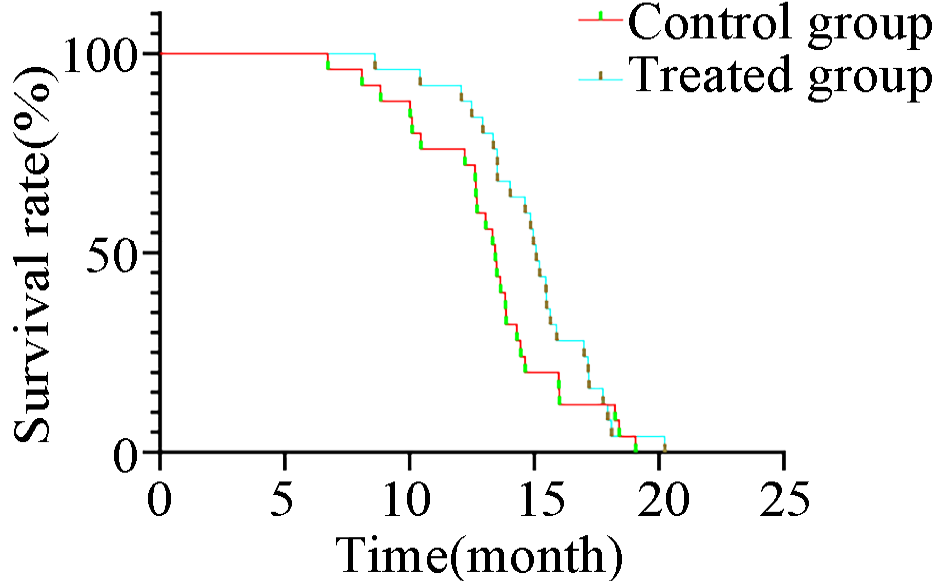
Table II shows performance in detail while Figure 1 shows that the survival rate of the observation group was higher than the control group patients data. The discease control rate (DCR) in the observation group patients was greater than the control group’s performance (P<0.05), and the progression-free survival (PFS) level was significantly higher than in the control group patients.
Table I. General patient information [n(%), (x̅±s)].
| Control group (n=25) | Observation group (n=25) | P value | |
| Age (Years) | 41.52±6.85 | 41.65±6.76 | 0.946 |
| Disease duration (Months) | 26.52±8.52 | 25.95±8.46 | 0.813 |
| Unilateral lesion site | 18(72.00) | 16(64.00) | 0.544 |
| Bilateral lesion site | 7(28.00) | 9(36.00) |
Tumor marker levels at T0 showed no significant difference between groups in accordance of the comparison outcomes (P>0.05). At time points T1 and T2, the levels were lower than at T0, with T2 levels lower than T1, and at the identical point, the observation group’s level were under than the control group performance (P<0.05). Inter-group, intra-group over time, and interaction comparisons of tumor marker levels were statistically significant (Tables III). Patients at post-treatment (T1, T2) exhibited a decreasing trend in CEA, CA15-3, and CA125 levels, with the degree of reduction in the observation group being higher than in the control group.
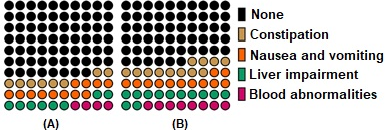
Significant difference was not able to be identified in the adverse reaction incidence between the observation group and the control group (P>0.05) (Table II). The proportions of various adverse reactions were not observed with significantly different between the observation group and the control group (Fig. 2).
Table II. Clinical treatment [n (%), (x̅±s)].
| Control group (n=25) | Observation group (n=25) | P value | |
| CR | 5(20) | 11(44) | 0.046 |
| PR | 9(36) | 8(32) | 0.022 |
| SD | 3(12) | 4(16) | 0.039 |
| PD | 8(32) | 2(8) | 0.018 |
| DCR | 17(38) | 23(92) | 0.034 |
| PFS (Months) | 12.53±3.25 | 15.23±3.25 | 0.005 |
| Adverse reaction incidence | 0.382 | ||
| Diarrhea | 2(8) | 3(12) | |
| Nausea and vomiting | 3(12) | 3(12) | |
| Liver function impairment | 2(8) | 3(12) | |
| Abnormal blood count | 1(4) | 2(8) | |
| Incidence | 8(32) | 11(44) | |
CR (Complete response; disappearance of the tumor with no new tumor tissue). PR (partial response, tumor diameter reduction of ≥ 30%). SD (Stable disease; tumor diameter changes between PR and PD. PD (progressive disease, tumor diameter increase of >20%). DCR (disease control rate; the sum of CR, PR, and SD). Regular follow-ups were conducted to calculate the progression-free survival (PFS) of patients.
Table III. Tumor marker levels (x̅±s).
| Control group (n=25) | Observation group (n=25) | P value | |||||
| T0 | T1 | T2 | T0 | T1 | T2 | ||
| CEA (ng/ml) | 26.52±6.25 | 23.56±3.53* | 20.42±1.25*# | 26.68±6.84 | 21.65±3.02* | 18.52±2.36*# | 0.001 |
| CA15-3 (U/ml) | 52.53±13.25 | 44.53±8.52* | 36.53±8.52*# | 53.65±12.95 | 38.54±6.25* | 30.53±6.54*# | 0.007 |
| CA125 (U/ml) | 42.25±5.52 | 40.53±4.52* | 36.53±4.25*# | 43.52±5.65 | 37.86±3.56* | 33.53±4.52*# | 0.019 |
CEA, carcinoembryonic antigen; CA15-3, carbohydrate antigen 15-3; CA125, carbohydrate antigen 125.
(*), P<0.05 compared with T0 within group; (#), P<0.05 compared with T1 within group, CEA: FIntergroup/FTime/FInteractive= 15.556/2774.222/2.456, PIntergroup/PTime/PInteractive= <0.001/<0.001/0.012; CA15-3: FIntergroup/FTime/FInteractive= 29.498/2079.806/5.442, PIntergroup/PTime/PInteractive= <0.001/<0.001/<0.001: CA125: FIntergroup/FTime/FInteractive= 20.571/6651.744/6.854, PIntergroup/PTime/PInteractive= <0.001/<0.001/<0.001.
DISCUSSION
Pyrotinib is a TKI developed independently in China, exerting its action by targeting the HER-1, HER-2, and HER-4 sites to block downstream pathways of the HER family . Pyrotinib and lapatinib, when combined with capecitabine in breast cancer patients, demonstrated an objective response rate (OPP) of 78.5% and 57.1%, with median PFS durations of 18.1 months and 7.0 months, respectively . Consistent with the findings of this study, patients in the observation group exhibited a significantly higher DCR than the control group (P<0.05), and PFS levels were significantly higher than the control group (P<0.05), suggesting that Pyrotinib has a promising effect in extending the survival time. Currently, in the assessment of malignant tumor treatment outcomes, attention is increasingly focused not only on factors such as tumor diameter , metastasis occurrence (Duro-Sanchez et al., 2023), and patient survival time , but also on changes in tumor biomarker levels.
For breast cancer, CEA, CA15-3, and CA125 play crucial roles. CEA, a protein expressed at high levels during embryonic stages, exhibits low expression in normal adult tissues. It can influence cell adhesion and the invasion capabilities of tumor cells by regulating cell adhesion molecules and signaling pathways . Additionally, it can impact immune system monitoring and attack on tumors, leading to immune escape of tumor cells and further progression of breast cancer . CA15-3 is a glycoprotein complex and a commonly used tumor marker for breast cancer. Elevated levels can enhance cell migration by altering the expression of cell adhesion molecules and rearranging the cell cytoskeleton , as well as increase invasive capabilities . Additionally, CA15-3 exhibits a significant pro-angiogenic effect, contributing to tumor growth and dissemination . CA125, a membrane glycoprotein, is typically overexpressed in ovarian cancer but may also be elevated in other malignant tumors, including breast cancer . The expression of the CA125 gene can be influenced by epigenetic regulation, such as DNA methylation and histone modification, leading to overexpression and affecting the growth and proliferation of breast cancer cells . Furthermore, CA125 may impact the biological behavior of tumor cells by influencing cell to cell communication in the tumor microenvironment, cell adhesion, and the components of the extracellular matrix. The post-treatment results indicate that both groups of patients show a decreasing trend in CEA, CA15-3, and CA125 levels, with levels in the observation group lower than those in the control group.
The HER2 signaling pathway is highly active in HPBC, driving tumor cell proliferation and survival . As a HER2 inhibitor, pyrotinib irreversibly binds to the HER2 receptor, reducing the activity of it signaling pathway, decreasing tumor cell growth and division, and consequently leading to a decrease in tumor marker levels . Additionally, Pyrotinib can influence cell-to-cell communication, cell adhesion, and the components of the extracellular matrix in the tumor microenvironment, affecting the biological behavior of tumor cells. Moreover, Pyrotinib plays an anti-tumor role by restoring the programmed apoptotic signals of tumor cells, thereby reducing the release of tumor markers .
Malignant tumor diseases belong to systemic wasting conditions, wherein the process of growth and development of tumor tissues can deprive a significant amount of nutrients, leading to damage in various physiological functions. Therefore, in the course of treatment, emphasis should be placed on treatment safety to reduce the occurrence of adverse reactions . Regarding chemotherapy for malignant tumors, the adverse reactions is correlated with the dose and type of chemotherapy drugs used. The outcomes manifested that their significant difference was not able to be identified in the adverse reactions between the observation group and the control group, suggesting that the addition of Pyrotinib to the standard chemotherapy regimen for HPBC is not likely to significantly increase adverse reactions in patients. The drug-related adverse reactions of Pyrotinib are mainly diarrhea, with an occurrence rate as high as 87.5% at a single dose of 400mg, but 25% of these are grade 3 or above. The incidence of diarrhea in this study did not reach the aforementioned level. An analysis of the reasons for this reveals that it may be attributed to the relatively small number of patients included in this study, and there are certain limitations in the data on drug-related adverse reactions. Therefore, it is necessary to expand the sample size for in-depth analysis.
CONCLUSION
Combining Pyrotinib with standard chemotherapy regimens for the treatment of HPBC can effectively enhance clinical treatment outcomes, prolong progression-free survival in patients, and demonstrate favorable results in reducing tumor markers without significantly increasing drug-related adverse reactions.
Declarations
Acknowledgments
Thanks to the members from Affiliated Hospital of Chengdu University, the group collected samples, obtained data, and theoretical guidance.
Funding
The study received no external funding.
IRB approval
This study was approved by the Advanced Studies Research Board of Affiliated Hospital of Chengdu University, Chengdu, China.
Ethical approval
The study was carried out in compliance with guidelines issued by Ethical Review Board Committee of Affiliated Hospital of Chengdu University, China. The official letter would be available on fair request to corresponding author.
Statement of conflict of interest
The authors have declared no conflict of interest.
Figures
Survival rates between study groups.
Proportion of various adverse reactions. (A) control group; (B) observation group.
References
- Agostinetto, E., Montemurro, F., Puglisi, F., Criscitiello, C., Bianchini, G., Del Mastro, L., Introna, M., Tondini, C., Santoro, A. and Zambelli, A., 2022. Immunotherapy for HER2-positive breast cancer: Clinical evidence and future perspectives. Cancers, 14: 2136. https://doi.org/10.3390/cancers14092136[CrossRef]
- Bashraheel, S.S., Kheraldine, H., Khalaf, S. and Al-Moustafa, A.E., 2023. Metformin and HER2-positive breast cancer: Mechanisms and therapeutic implications. Biomed. Pharmacoth., 162: 114676. https://doi.org/10.1016/j.biopha.2023.114676[CrossRef]
- Behravan, N., Zahedipour, F., Jaafari, M.R., Johnston, T.P. and Sahebkar, A., 2022. Lipid-based nanoparticulate delivery systems for HER2-positive breast cancer immunotherapy. Life Sci., 291: 120294. https://doi.org/10.1016/j.lfs.2021.120294[CrossRef]
- Duro-Sánchez, S., Alonso, M.R. and Arribas, J., 2023. Immunotherapies against HER2-positive breast cancer. Cancers, 15: 1069. https://doi.org/10.3390/cancers15041069[CrossRef]
- Erickson, A.W., Ghodrati, F., Habbous, S., Jerzak, K.J., Sahgal, A., Ahluwalia, M.S. and Das, S., 2020. HER2-targeted therapy prolongs survival in patients with HER2-positive breast cancer and intracranial metastatic disease: A systematic review and meta-analysis. Neurooncol. Adv., 2: vdaa136. https://doi.org/10.1093/noajnl/vdaa136[CrossRef]
- Garcia-Alvarez, A., Papakonstantinou, A. and Oliveira, M., 2021. Brain metastases in HER2-positive breast cancer: Current and novel treatment strategies. Cancers, 13: 2927. https://doi.org/10.3390/cancers13122927[CrossRef]
- Garrido-Palacios, A., Rojas Carvajal, A.M., Núñez-Negrillo, A.M., Cortés-Martín, J., Sánchez-García, J.C. and Aguilar-Cordero, M.J., 2023. MicroRNA dysregulation in early breast cancer diagnosis: A systematic review and meta-analysis. Int. J. mol. Sci., 24: 8270. https://doi.org/10.3390/ijms24098270[CrossRef]
- Gonciar, D., Mocan, L., Zlibut, A., Mocan, T. and Agoston-Coldea, L., 2021. Cardiotoxicity in HER2-positive breast cancer patients. Heart Fail Rev., 26: 919-935. https://doi.org/10.1007/s10741-020-10072-8[CrossRef]
- Gunasekara, A.D.M., Anothaisintawee, T., Youngkong, S., Ha, N.T., McKay, G.J., Attia, J. and Thakkinstian, A., 2022. Neoadjuvant treatment with HER2-targeted therapies in HER2-positive breast cancer: A systematic review and network meta-analysis. Cancers, 14: 523. https://doi.org/10.3390/cancers14030523[CrossRef]
- Guo, L., Shao, W., Zhou, C., Yang, H., Yang, L., Cai, Q., Wang, J., Shi, Y., Huang, L. and Zhang, J., 2023. Neratinib for HER2-positive breast cancer with an overlooked option. Mol. Med., 29: 134. https://doi.org/10.1186/s10020-023-00736-0[CrossRef]
- Kioutchoukova, I. and Lucke-Wold, B.P., 2023. Pyrotinib as a therapeutic for HER2-positive breast cancer. Cancer Res., 12: 247-256. https://doi.org/10.21037/tcr-22-1746[CrossRef]
- Kyriazoglou, A., Kaparelou, M., Goumas, G., Liontos, M., Zakopoulou, R., Zografos, E., Zygogianni, A., Dimopoulos, M.A. and Zagouri, F., 2022. Immunotherapy in HER2-positive breast cancer: A systematic review. Breast Care, 17: 63-70. https://doi.org/10.1159/000514860[CrossRef]
- Lei, S., Zheng, R., Zhang, S., Chen, R., Wang, S., Sun, K., Zeng, H., Wei, W. and He, J., 2021. Breast cancer incidence and mortality in women in China: Temporal trends and projections to 2030. Cancer Biol. Med., 18: 900. https://doi.org/10.20892/j.issn.2095-3941.2020.0523[CrossRef]
- Li, C., Fan, Z., Lin, X., Cao, M., Song, F. and Song, F., 2021. Parity and risk of developing breast cancer according to tumor subtype: A systematic review and meta-analysis. Cancer Epidemiol., 75: 102050. https://doi.org/10.1016/j.canep.2021.102050[CrossRef]
- Li, Y., Ma, X., Zhao, Z., Li, L., Gao, C., Liu, D., Li, B. and Zhao, B., 2022. Pyrotinib for elderly patients with advanced HER2-positive breast cancer. Breast Cancer, 14: 405-415. https://doi.org/10.2147/BCTT.S383272[CrossRef]
- Mansha, M., Yaqub, S., Latif, A.A., Wasim, M. and Thomson, P.C., 2022. HER2/neu levels, premature termination of pregnancy and breast cancer risk: A hospital-based study from Lahore, Pakistan. Pakistan J. Zool., 54: 31-37. https://doi.org/10.17582/journal.pjz/20200810090832[Full text][CrossRef]
- Mery, B., Toussaint, P., Heudel, P.E., Dufresne, A., Carbonnaux, M., Vanacker, H., Bachelot, T. and Trédan, O., 2021. New therapeutic strategies in HER2-positive breast cancer. Bull. Cancer, pp. S0007-4551.
- Nader-Marta, G., Martins-Branco, D., Agostinetto, E., Bruzzone, M., Ceppi, M., Danielli, L., Lambertini, M., Kotecki, N., Awada, A. and de Azambuja, E., 2022. Efficacy of tyrosine kinase inhibitors for the treatment of patients with HER2-positive breast cancer with brain metastases: A systematic review and meta-analysis. ESMO Open, 7: 100501. https://doi.org/10.1016/j.esmoop.2022.100501[CrossRef]
- Najjar, M.K., Manore, S.G., Regua, A.T. and Lo, H.W., 2022. Antibody-drug conjugates for the treatment of HER2-positive breast cancer. Genes, 13: 2065. https://doi.org/10.3390/genes13112065[CrossRef]
- Singh, J.C. and Lichtman, S.M., 2021. Targeted agents for HER2-positive breast cancer: Optimal use in older patients. Drugs Aging, 38: 829-844. https://doi.org/10.1007/s40266-021-00889-9[CrossRef]
- Swain, S.M., Shastry, M. and Hamilton, E., 2023. Targeting HER2-positive breast cancer: Advances and future directions. Nat. Rev. Drug Discov., 22: 101-126. https://doi.org/10.1038/s41573-022-00579-0[CrossRef]
- Upton, R., Banuelos, A., Feng, D., Biswas, T., Kao, K., McKenna, K., Willingham, S., Ho, P.Y., Rosental, B., Tal, M.C. and Raveh, T., 2021. Combining CD47 blockade with trastuzumab eliminates HER2-positive breast cancer cells and overcomes trastuzumab tolerance. Proc. natl. Acad. Sci., 118: e2026849118. https://doi.org/10.1073/pnas.2026849118[CrossRef]
- Wu, X., Yang, H., Yu, X. and Qin, J.J., 2022. Drug-resistant HER2-positive breast cancer: Molecular mechanisms and overcoming strategies. Front. Pharmacol., 13: 1012552. https://doi.org/10.3389/fphar.2022.1012552[CrossRef]
- Xing, F., Gao, H., Chen, G., Sun, L., Sun, J., Qiao, X., Xue, J. and Liu, C., 2023. CMTM6 overexpression confers trastuzumab resistance in HER2-positive breast cancer. Mol. Cancer, 22: 1-18. https://doi.org/10.1186/s12943-023-01716-y[CrossRef]
- Yu, Y., Wang, J., Liao, D., Zhang, D., Li, X., Jia, Y. and Kong, F., 2022. Advances in antibody-drug conjugates in the treatment of HER2-positive breast cancer. Breast Cancer, 14: 417-432. https://doi.org/10.2147/BCTT.S384830[CrossRef]
- Yuan, Y., Gao, H., Zhuang, Y., Wei, L., Yu, J., Zhang, Z., Zhang, L. and Wang, L., 2021. NDUFA4L2 promotes trastuzumab resistance in HER2-positive breast cancer. Ther. Adv. Med. Oncol., 13: 17588359211027836. https://doi.org/10.1177/17588359211027836[CrossRef]
- Zagami, P., Bielo, L.B., Nicolò, E. and Curigliano, G., 2023. HER2-positive breast cancer: Cotargeting to overcome treatment resistance. Curr. Opin. Oncol., 35: 461-471. https://doi.org/10.1097/CCO.0000000000000971[CrossRef]
- Zou, Y., Zheng, S., Xie, X., Ye, F., Hu, X., Tian, Z., Yan, S.M., Yang, L., Kong, Y., Tang, Y. and Tian, W., 2022. N6-methyladenosine regulated FGFR4 attenuates ferroptotic cell death in recalcitrant HER2-positive breast cancer. Nat. Commun., 13: 2672. https://doi.org/10.1038/s41467-022-30217-7[CrossRef]
Services
Article usage statistics
Loading…