Research Article · Volume 14, Issue 3, 24 July 2026 · Open Access
Detection of Escherichia coli Resistance in Chicken Meat Against Various Types of Antibiotics at Tradisional Markets, Banyuwangi, Indonesia
· · · · · · · · ·
Affiliations & Notes ⌄
1Veterinary Medicine Study Program, Department of Health, Medicine, and Life Sciences, Faculty of Health, Medicine, and Life Sciences, Universitas Airlangga, Wijaya Kusuma Street 113, Banyuwangi, East Java, Indonesia
2Research Group for Animal Biomedical and Conservation, Universitas Airlangga, Indonesia. *Correspondence | Ratih Novita Praja, Veterinary Medicine Study Program, Department of Health, Medicine, and Life Sciences, Faculty of Health, Medicine, and Life Sciences, Universitas Airlangga,
Antibiotic susceptibility testing revealed that the E. coli isolates were completely sensitive to aztreonam and chloramphenicol (100%) but exhibited complete resistance to erythromycin (100%), followed by streptomycin (66.6%), ciprofloxacin (55.5%), trimethoprim (55.5%), and tetracycline (33.3%).
The production of β-lactamase enzymes is the primary mechanism underlying β-lactam antimicrobial resistance in E. coli, leading to hydrolysis of the antibiotic’s beta-lactam ring and inactivation.
Escherichia coli has been effectively isolated and identified from chicken meat samples in Blambangan and Banyuwangi Traditional Market at a rate of 45% (9/20).
These findings highlighting the need for improved food hygiene and antimicrobial resistance monitoring in food supply chain.
Selected from the article's own text.
Abstract
Antimicrobial resistance is currently become a serious world health problem because it reduces the effectiveness of antibiotics. Bacteria are microorganisms responsible for causing foodborne illnesses. The occurrence of Escherichia coli has been extensively documented in food products, particularly in chicken meat. Microbial contamination of food causes a decrease in meat quality and can act as a medium for the growth of microorganisms. Food sanitation is essential, especially in public areas such as marketplaces, where large crowds frequently gather. This study employed a quota sampling technique and was exploratory in nature. The objective was to determine whether chicken meat from the Blambangan and Banyuwangi Traditional Markets, which are closely associated with the local community, harbors Escherichia coli resistant to multiple antibiotics. Antimicrobial resistance was assessed using the Kirby–Bauer disk diffusion method. A total of 20 samples were collected from the two markets in accordance with the research sample requirements. Identification results showed that nine samples (45%) tested positive for E. coli. Antibiotic susceptibility testing revealed that the E. coli isolates exhibited 100% resistance to erythromycin, 66.6% resistance to streptomycin, 55.5% resistance to ciprofloxacin and trimethoprim, and 33.3% resistance to tetracycline. The isolates remained 100% sensitive to aztreonam and chloramphenicol. The study also shows that 77.7% isolates were multidrug resistant (MDR). The study concluded that E. coli resistant to multiple antibiotics was present in chicken meat from traditional markets, highlighting the need for improved food hygiene and antimicrobial resistance monitoring.
Keywords | Antimicrobial resistance, Banyuwangi, Escherichia coli, One health, Public health
INTRODUCTION
Chicken meat has emerged as one of the most preferred protein sources globally, widely consumed due to its exceptional nutritional profile and palatability . Chicken meat is rich in essential vitamins and minerals, including B-complex vitamins, phosphorus, selenium, zinc, and iron, while maintaining relatively low-fat content and moderate caloric density . Despite these nutritional benefits, chicken meat exhibits heightened susceptibility to microbial contamination, which poses significant food safety risks. The high protein content, moisture levels, and neutral pH of chicken meat create an ideal environment for bacterial proliferation, especially when proper storage and handling protocols are not maintained .
The primary bacterial agents responsible for human intestinal infections from meat source include several bacteria such as Campylobacter spp., Staphylococcus spp., Escherichia coli, and Salmonella spp. . The persistence and prevalence of these foodborne pathogens throughout the poultry processing chain, from slaughterhouses to retail markets, present substantial public health challenges. The risk of foodborne diseases is further amplified by cross-contamination occurring throughout various stages of food handling and preparation, particularly when temperature abuse takes place during storage and distribution ; . Among the various foodborne pathogens, bacterial contamination represents the most serious threat to food safety in chicken meat. Bacterial pathogens are particularly dangerous because they can multiply rapidly under favourable conditions, produce toxins, and develop resistance to antimicrobial treatments (Salam et al., 2024). E. coli represents one of the most significant bacterial threats associated with chicken meat consumption. Although E. coli typically lives harmlessly in the intestines of both humans and animals some pathogenic strains can lead to serious illness in humans . Research has documented E. coli contamination rates ranging from 44.26% to 100% in broiler chicken meat samples across various studies ; . Virulence factors and toxins produced by pathogenic E. coli strains can lead to a wide spectrum of illnesses, starting with mild intestinal disturbances and potentially progressing to severe complications such as hemolytic uremic syndrome and hemorrhagic colitis (Whang et al., 2021). The organism’s ability to survive under diverse environmental conditions and to undergo horizontal gene transfer make it a particularly concerning foodborne pathogen .
The emergence of antibiotic-resistant E. coli in chicken meat has become an increasingly critical public health concern. Contaminated chicken meat serves as a reservoir for multidrug-resistant (MDR) E. coli strains that carry resistance genes against clinically important antibiotics . Research has reported resistance levels greater than 60% against frequently used antibiotics such as erythromycin, trimethoprim, and ampicillin in E. coli isolates from chicken meat ; ; . The detection of Extended Spectrum Beta-Lactamase (ESBL)-producing E. coli is especially concerning because these strains resist third-generation cephalosporins and other vital antimicrobials used in human healthcare . Studies have reported that the prevalence of ESBL-producing E. coli in chicken meat samples ranges from 14.84% to 100%. Frequently detected resistance genes include β-lactamase TEM (blaTEM), which confers resistance to penicillin and some cephalosporins; β-lactamase Cefotaximase-Munich (blaCTX-M), which is highly effective at hydrolyzing cefotaxime; and mobilized colistin resistance-1 (mcr-1), which modifies lipid A in the bacterial outer membrane and reduces affinity for colistin ; ; ; .
Global monitoring studies have repeatedly shown a high occurrence of multidrug-resistant E. coli in chicken meat from various regions. Research from Peru documented that non-organic chicken isolates were more resistant to most antibiotics tested compared to human isolates, with E. coli strains containing clinically relevant resistance genes including mcr-1 for colistin resistance and blaCTX-M ESBLs . Studies from Saudi Arabia found 57% of E. coli isolates from chicken meat to be multidrug-resistant, with maximum resistance observed against penicillin G (95%) and amoxicillin (85%) . In Bangladesh, research revealed 84.71% of multidrug resistance was observed in E. coli isolates from broiler meat, with high resistance rates recorded for tetracycline reach 86.78% and sulfamethoxazole-trimethoprim until 88.84% . Indonesia, studies have documented E. coli prevalence rates of 44.26% in East Java broiler meat, with 59.26% of isolates showing multidrug resistance patterns. E. coli isolates exhibited resistance to ampicillin reach (59.3%), trimethoprim (61.1%), and erythromycin (66.7%) .
Traditional marketplaces present particularly high-risk environments for microbial contamination and growth due to suboptimal hygiene and sanitation practices. These markets often lack adequate refrigeration systems, proper waste management, and clean water supplies, creating conditions conducive to bacterial proliferation and cross-contamination ; . Studies have documented that traditional markets frequently fail to meet sanitation requirements, with vendors often not implementing proper personal hygiene behaviours and lacking access to clean water and appropriate waste disposal facilities . The absence of temperature control, combined with prolonged exposure to ambient conditions, increases the risk of bacterial multiplication and toxin production in chicken meat . The physical infrastructure of traditional markets, including wooden surfaces that are difficult to sanitize and inadequate drainage systems, further contributes to the persistence and spread of pathogenic microorganisms . The antimicrobial resistance profile of E. coli isolates from broiler chicken meat sold in Blambangan and Banyuwangi traditional markets has not been previously examined. This study aimed to determine whether chicken meat from these community-associated markets contains E. coli strains resistant to multiple antibiotics.
MATERIALS AND METHODS
Study period and location
This study was conducted at the Faculty of Health, Medicine, and Life Science, Universitas Airlangga, Banyuwangi, East Java, Indonesia from August to October 2024.
Experimental design
An exploratory laboratory study was performed to isolate, identify, and determine the antimicrobial resistance profile of E. coli from broiler chicken meat. A quota sampling method was used, with inclusion criteria consisting of broiler chicken breast meat (Musculus pectoralis) sold in poultry meat sections, not adjacent to stalls selling other food products. Ten samples were collected from each market, resulting in a total of 20 samples.
Sample collection and preparation
A total of 20 samples of fresh broiler chicken meat were collected from two wet markets (Blambangan and Banyuwangi Traditional Market) in Banyuwangi Subdistrict (lat 8°13′; long 114°22′), Banyuwangi District, East Java, Indonesia during the dry season. Each sample weighing approximately 100 g was placed into a sterile polypropylene bag, labelled according to market and sample number, and transported to the laboratory under chilled conditions. Sterilization of laboratory equipment and materials was performed using an oven, autoclave, and UV light. Petri dishes, inoculating loops, and test tubes were sterilized in a hot air oven at 160 °C for 2 h, while plastic materials and cotton swabs were sterilized under UV light. Media used for bacterial isolation and identification were sterilized in an autoclave at 121 °C for 15 min.
Isolation and identification of E. coli
Bacterial isolation was carried out by swabbing the surface of chicken meat and streaking it onto Eosin Methylene Blue Agar (EMBA) (Merck, Germany) using the zig-zag method. The plates were then incubated for 24 hours at 37°C. E. coli colonies displayed a metallic green sheen, resulting from lactose fermentation that increased medium acidity and precipitated methylene blue in the medium. Suspected positive samples of E. coli were further identified using Gram staining and IMViC biochemical tests, including Indole (I), Methyl Red (MR), Voges–Proskauer (VP), and Citrate (C) tests. Samples confirmed as E. coli showed positive results for Indole and MR tests (Merck, Germany), but negative results for VP (Merck, Germany) and Simmons Citrate Agar (SCA) (Merck, Germany). In Grams’ staining, E. coli colonies appeared pink, short rod-shaped, and non-spore forming . In the SIM test (Merck, Germany), E. coli exhibited positive growth indicated by bacterial proliferation beyond the stab line and the formation of a pink layer (ring) on the surface after the addition of Kovac’s or Ehrlich’s reagent. The MR test was positive, as indicated by the medium turning red, whereas the VP test was negative, showing no color change in the medium . The Citrate test also yielded a negative result, as the medium remained green and did not turn blue .
Antibiotic susceptibility testing
Antibiotic susceptibility was assessed using the Kirby–Bauer disc diffusion method on Mueller Hinton Agar (Oxoid, United Kingdom). Bacterial suspensions were adjusted to the 0.5 McFarland standard (approximately 1.5 × 10⁸ CFU/ml) and evenly spread over the agar surface. After 5 min, antibiotic discs containing streptomycin 10 μg (Oxoid, United Kingdom), tetracycline 30 μg (Oxoid, United Kingdom), erythromycin 15 μg (Oxoid, United Kingdom), chloramphenicol 30 μg (Oxoid, United Kingdom), trimethoprim 5 μg (Oxoid, United Kingdom), aztreonam 10 μg (Oxoid, United Kingdom), and ciprofloxacin 5 μg (Oxoid, United Kingdom) were applied and plates were incubated at 37 °C for 24 hours, after which inhibition zones were measured using a caliper and interpreted based on the CLSI (2018) guidelines.
Data collection and analysis
Primary data were obtained from bacterial isolation, identification, and antibiotic susceptibility testing. All results were recorded directly by the researchers. Data were tabulated and analysed descriptively to present the resistance profiles of E. coli isolated from broiler chicken meat.
RESULTS
Isolation and identification of E. coli
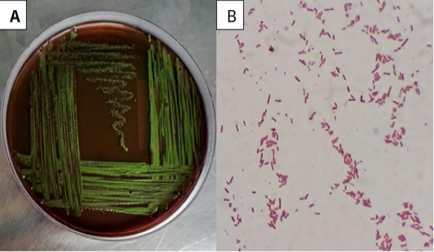
Distinctive metallic green colonies with dark centers were produced by E. coli on Eosin Methylene Blue Agar (EMBA). Suspected E. coli colonies were purified by subculturing the metallic green colonies onto fresh EMBA plates. The isolation results are presented in Figure 1, with an estimated E. coli recovery rate of 85%.
Based on Grams’ staining, the colony was confirmed to be Gram-negative (Figure 1B). Identification of E. coli was performed using a series of IMViC biochemical tests with positive indole production test results (+), indicated by the formation of a red ring at the interface. Positive methyl red test results (+), indicated by a color change to red. Negative Voges-Proskauer test results (-), indicating no color change in the medium. Negative citrate utilization test results (-), indicated by no color change in the medium. Isolation and identification of E. coli yielded positive results in 9 of the 20 test samples (45%). These results are presented in Table 1.
Table 1: Isolation and identification results of Escherichia coli from chicken meat.
Market*
N
Media isolation (EMBA)
Grams’ staining
Biochemical identification (IMViC)
A
10
7
6
3
B
10
10
10
6
Total
20
17
16
9
*A= Banyuwangi Market, B= Blambangan Market. EMBA: eosin methylene blue agar; IMViC: A series of tests carried out to idetrify the E.coli isolates.
Resistance test
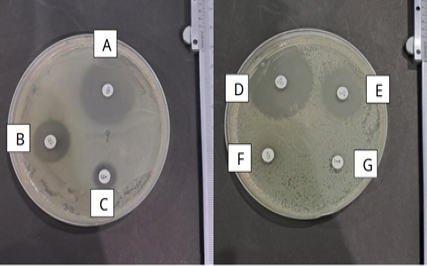
Antimicrobial resistance testing revealed that E. coli isolates were 100% resistant to erythromycin (9/9), 66.7% resistant to streptomycin (6/9), 55.6% resistant to ciprofloxacin (5/9), 55.6% resistant to trimethoprim (5/9), and 33.3% resistant to tetracycline (3/9). All E. coli isolates demonstrated 100% susceptibility to chloramphenicol and aztreonam. The findings of the antimicrobial susceptibility assessment are displayed in Table 2, while Figure 2 displays the resistance patterns obtained using the Kirby-Bauer disc diffusion method on Mueller-Hinton Agar (MHA).
This study showed that 77.7% of the E. coli (7/9) isolates exhibited multidrug resistance (MDR). MDR results on E. coli isolated from meat broiler chickens can be seen in Table 3.
Table 2: Antimicrobial resistance test results of E. coli.
Sample
N
Sensitivity test results
ATM
E
C
CIP
S
TE
W
R
I
S
R
I
S
R
I
S
R
I
S
R
I
S
R
I
S
R
I
S
A
3
0
2
1
3
0
0
0
0
3
2
0
1
2
0
1
1
0
2
2
0
1
B
6
0
0
6
6
0
0
0
0
6
3
3
0
4
1
1
2
1
3
3
1
2
Total
9
0
2
7
9
0
0
0
0
9
5
3
1
6
1
2
3
1
5
5
1
3
Resistance %
0%
100%
0%
55.5%
66.6%
33.3%
55.5%
A = Banyuwangi Market, B = Blambangan Market, R = Resistant, I = Intermediate, S = Sensitive, ATM = aztreonam, E = erythromycin, C = chloramphenicol, CIP = ciprofloxacin, S = streptomycin, TE = tetracycline, W = trimethoprim.
Table 3: Multidrug resistant (MDR) E. coli in blambangan and banyuwangi traditional markets.
Market*
N
MDR E.coli (n)
%
A
3
2
66.6
B
6
5
83.3
Total
9
7
77.7
* A = Banyuwangi Market, B = Blambangan Market. MDR (Multidrug resistant): Results of E. coli resistance to ≥3 classes of antibiotics.
DISCUSSION
Escherichia coli was identified in 45% (9/20) of chicken meat samples from Blambangan and Banyuwangi traditional markets. This prevalence aligns with findings by Febrianti et al. (2022), who reported that chicken meat is highly susceptible to E. coli contamination. Soepranianondo et al. (2019) documented a contamination rate of 32.5% in East Java, while Amalia et al. (2020) found 16.66% in Makassar. International studies have reported varying contamination rates, including 83.33% in Bangladesh , 70.4% in Japan , 43.93% in Ethiopia , 71.2% in China , and 98.3% in Turkey .
Chicken meat sold in traditional markets often exhibits lower quality and hygiene standards compared to modern markets. Traders’ lack of knowledge regarding proper handling practices negatively affects meat safety. Contamination may originate from workers, equipment, waste, insects, rodents, and environmental factors such as air and water . Microbial contamination of food sold in markets poses a significant public health concern in developing countries largely due to inadequate hygiene practices and limited awareness among vendors .
Bacterial contamination in chicken meat can result from unhygienic handling, poor sanitation, open sales areas, stacking of meat without proper separation, storage without refrigeration, and prolonged exposure to open air, which favours bacterial growth . Survival of microbes in the air both within and outside droplets is influenced by environmental factors such as humidity and ambient temperature, influencing the potential for airborne transmission. Air circulation, including ventilation rates, strongly affects the removal and distribution of airborne pathogens indoors ; Argyropoulos et al., 2022). Poor-quality water used in carcass washing may act as a source of microbial contamination, transferring bacteria including enteric pathogens onto meat surfaces and increasing the risk of foodborne illness . Poor water sanitation during carcass cleaning has been identified as an additional source of contamination .
Antibiotic susceptibility testing revealed that the E. coli isolates were completely sensitive to aztreonam and chloramphenicol (100%) but exhibited complete resistance to erythromycin (100%), followed by streptomycin (66.6%), ciprofloxacin (55.5%), trimethoprim (55.5%), and tetracycline (33.3%). Resistance to erythromycin has been widely reported, including 93.33% in Ghana, 78% in Sulawesi, and 100% in Lampung (Adzitey, 2018; . Erythromycin, a macrolide antibiotic, has limited ability to penetrate the outer membrane of E. coli due to the lipopolysaccharide barrier ; . The resistance mechanism involves inhibition of protein synthesis and genetic alterations in ribosomal protein-coding genes .
Resistance to streptomycin was frequently detected with a rate of 53.7%, consistent with other regional studies reporting rates between 47% and 58% . Streptomycin exhibits bactericidal activity by binding to the 30S ribosomal subunit, thereby inhibiting bacterial protein synthesis and disrupting peptide chain elongation (StatPearls, 2025). The inappropriate and excessive use of antibiotics, particularly their incorporation in animal feed for growth promotion and disease prevention, is a major contributing factor to the global rise of antimicrobial resistance, posing significant risks to public health .
Sensitivity to ciprofloxacin among clinical bacterial isolates ranged from 55% to 65%, reflecting a decline compared to earlier reports and emphasizing the persistent challenge posed by the increasing antimicrobial resistance among bacterial pathogens . Ciprofloxacin acts by inhibiting bacterial enzymes DNA gyrase and topoisomerase IV prevents DNA supercoiling and blocks bacterial replication. and transcription (StatPearls, 2025). Its extensive application has been linked to a higher likelihood of resistance development and reduced treatment effectiveness .
Trimethoprim resistance was found in 41% of E. coli blood culture isolates in a cohort study, with previous trimethoprim-resistant urinary tract infections identified as a significant risk factor for resistance, consistent with similar resistance rates reported in other regions . Trimethoprim inhibits dihydrofolate reductase, but genetic mutations enable continued production of tetrahydrofolic acid, resulting in resistance .
Tetracycline resistance was observed in 33.3% of isolates, which was lower than the 87.2% reported by Wardhana et al. (2021). Excessive use of first-generation tetracyclines as growth promoters in livestock production creates selective pressure that drives the emergence of antimicrobial resistance mechanisms in bacterial populations . This antibiotic is bacteriostatic, acting by inhibiting protein synthesis through binding to the 30S ribosomal subunit .
Chloramphenicol demonstrated complete sensitivity in this study, showing no resistance among the E. coli isolates tested. This finding is consistent with other reports indicating chloramphenicol remains effective against E. coli despite resistance observed for many other antibiotics . Chloramphenicol is bacteriostatic and acts by binding to the 50S ribosomal subunit, specifically at the peptidyl transferase centre, thereby inhibiting peptide bond formation during protein synthesis . Its efficacy is maintained when bacterial purine structures remain unchanged, facilitating antibiotic entry .
Aztreonam retained high activity against E. coli isolates with susceptibility rates exceeding 95% across most countries . Monobactams like aztreonam prevent bacterial cell division by binding to penicillin-binding protein 3 (PBP-3), which leads to inhibition of peptidoglycan synthesis and cell death. Their spectrum of activity is largely limited to aerobic Gram-negative organisms, providing an important alternative to aminoglycosides, particularly in cases of resistance or toxicity concerns .
Multidrug-resistant E. coli isolates were identified in 57.3% of samples from pig farms in Kupang city, Indonesia. The high prevalence is marked by resistance to multiple classes of antibiotics, raising serious concerns about the possible transmission of resistant bacteria between animals and humans . Multidrug-resistant E. coli carriage on chicken farms was highly prevalent, with a studied prevalence of 62.7% among 158 sampled farms in Uganda . Since 2017, the World Health Organization has classified E. coli is recognized as a critical pathogen due to its ability to cause a wide range of infections and its growing resistance to multiple antibiotics highlighting the urgent need for strict antibiotic regulation in humans, animals, and food production ; .
E. coli frequently develops antimicrobial resistance through multiple mechanisms such as production of β-lactamases that hydrolyse β-lactam antibiotics, mutations in dihydrofolate reductase (DHFR) and DNA gyrase that alter target sites, increased expression of efflux pumps reducing intracellular drug concentrations, and loss of purine biosynthesis genes that affect metabolic pathways related to susceptibility . The production of β-lactamase enzymes is the primary mechanism underlying β-lactam antimicrobial resistance in E. coli, leading to hydrolysis of the antibiotic’s beta-lactam ring and inactivation. Extended-spectrum β-lactamase (ESBL)-producing E. coli strains pose significant challenges in clinical treatment due to their ability to hydrolyse a broad spectrum of β-lactams . Antimicrobial resistance arises from genetic mutations and the horizontal transfer of resistance genes between bacteria. Human activities such as inappropriate antibiotic consumption exert selective pressure, prompting the evolution and dissemination of resistant strains via mobile genetic elements (Habboush and Guzman, 2018). The mechanisms of action of antibiotics include inhibition of cell wall biosynthesis, alteration of membrane permeability, and interruption of DNA, RNA, and protein synthesis. By targeting these critical bacterial processes, antibiotics can effectively kill or inhibit bacterial growth. Different antibiotics specialize in one or more of these modes, which form the basis for their selective toxicity against bacteria .
The prevalence of multidrug-resistant E. coli in poultry meat underscores the urgent need for enhanced hygiene and monitoring systems along the production chain to safeguard public health and ensure meat quality . Foodborne infection caused by E. coli can result in abdominal pain, diarrhea, vomiting, fever, and reduced appetite . Severe diarrhea may cause fluid and electrolyte loss, potentially leading to life-threatening complications .
Antibiotic-resistant E. coli infections, particularly to erythromycin, streptomycin, ciprofloxacin, tetracycline, and trimethoprim, increase the risk of treatment failure, secondary complications, and systemic spread . Broad-spectrum antibiotic therapy may produce adverse effects and limit treatment options, especially in low-income countries with limited healthcare resources. Resistance also elevates treatment costs due to the need for expensive antibiotics and additional medical procedures.
Raising awareness of the dangers of antibiotic misuse is essential for sustainable behavioural change . Improvement of food hygiene practices is critical in preventing foodborne diseases and limiting the spread of antibiotic-resistant bacteria within the food supply chain. Proper handling, storage, and preparation of food reduce microbial contamination and cross-contamination risks, which are critical factors in controlling antimicrobial resistance . Training traders in sanitation, hygiene, and food safety practices is essential for ensuring compliance with Good Manufacturing Practices (GMP) and Hazard Analysis Critical Control Points (HACCP) systems, thereby improving the overall safety and quality of food products . Prevention of antimicrobial resistance in E. coli can be effectively achieved by enforcing strict sanitation measures, implementing HACCP principles throughout the food production chain, launching public awareness campaigns on judicious antibiotic use, maintaining antimicrobial resistance surveillance systems, and fostering the development of vaccines or alternative therapeutic agents .
CONCLUSIONS
Escherichia coli has been effectively isolated and identified from chicken meat samples in Blambangan and Banyuwangi Traditional Market at a rate of 45% (9/20). The antimicrobial resistance profile of E. coli isolated from chicken meat in the Blambangan and Banyuwangi Traditional Markets showed 100% resistance to erythromycin, 66.6% resistance to streptomycin, 55.5% resistance to ciprofloxacin and trimethoprim, and 33.3% resistance to tetracycline, while remaining 100% sensitive to aztreonam and chloramphenicol. These findings highlighting the need for improved food hygiene and antimicrobial resistance monitoring in food supply chain.
Acknowledgements
The author would like to convey heartfelt thanks to Universitas Airlangga, especially the Veterinary Medicine Study Program, Faculty of Health, Medicine, and Life Sciences, for the exceptional support and facilities provided throughout the completion of this research
Novelty Statement
This study provides the first comprehensive evaluation of antimicrobial resistance profiles in broiler chicken meat from the Blambangan and Banyuwangi traditional markets, highlighting a concerning 77.7% prevalence of multidrug-resistant (MDR) Escherichia coli. While previous studies have broadly documented E. coli in poultry, this research addresses a critical local data gap by explicitly targeting community-associated wet markets, which present unique contamination risks due to suboptimal sanitation and hygiene infrastructure. Ultimately, these findings deliver crucial epidemiological evidence that underscores the urgent need for targeted food safety management interventions and supports broader One Health initiatives to monitor and mitigate foodborne antimicrobial resistance within developing urban food networks.
Authors Contribution
RNP and AY: Designed the study, materials preparation, data analysis, and manuscript preparation. AK, EKP, and RBH: Conducted the surveys and participated in laboratory examinations. DWS, AHS, SHAF, and FK: Contributed to the milk samples collection and field examination. AB, RNP: read, reviewed, and approved the final manuscript.
Ethical approval
Ethical approval was not required for this study because no experimental treatment was administered to the animals.
Generative AI and AI assisted technology statement
The authors declare that no generative AI and AI assisted technology was used in the creation of this manuscript.
Conflicts of interest
The authors declare that they have no conflict of interest.
Figures
Figure 1:.
Escherichia coli observed on culture media and under the microscope.
Note: (A) Suspected E. coli colonies on eosin methylene blue agar (EMBA); (B) E. coli observed under a light microscope at 1000× magnification.
Figure 2:.
Antibiotic susceptibility test results of Escherichia coli.
Note: Disc A (chloramphenicol) showed sensitivity with an inhibition zone diameter of 27.04 mm; Disc B (tetracycline) showed resistance with a zone diameter of 20.71 mm; Disc C (streptomycin) showed resistance with a zone diameter of 8.07 mm; Disc D (aztreonam) showed sensitivity with a zone diameter of 31.60 mm; Disc E (ciprofloxacin) showed resistance with a zone diameter of 17.90 mm; Disc F (erythromycin) showed resistance with a zone diameter of 9.07 mm; and Disc G (trimethoprim) showed resistance with a zone diameter of 17.13 mm.
References
Adzite F (2018). Antibiotic resistance of Escherichia coli and Salmonella enterica isolated from cabbage and lettuce samples in Tamale metropolis of Ghana. Int. J. Food Con., 5: 1-7. https://doi.org/10.1186/s40550-018-0068-z[CrossRef]
Ahmed MJ, Hossain MI, Bhuiyan MIH, Rahman MA, Kaderi IJ, Nirob AI, Rahi MAI, Mamun M, Alam KE, Chowdhury MJ, Bhandari P, Chalise R, Alam MJ, Chowdhury MTI, Ali M, Hossain D (2025). Antimicrobial resistance in meat and meat products from Asia: An urgent one health challenge-a systematic review and meta-analysis. Poult. Sci., 178: 108498. https://doi.org/10.1016/j.psj.2025.105811[CrossRef]
Akinsemolu AA, Onyeaka HN (2024). Microorganisms associated with food spoilage and foodborne diseases. In: Food safety and quality in the global south. Springer nature Singapore; pp. 489–531. https://doi.org/10.1007/978-981-97-2428-4_16[CrossRef]
Alharbi AAD, Alalawi FM, Dabash SHY, Alotaibi MDA, Alsadah AMA, Alshammari MN, Alshamry ANS, Alosaimi MA, Hemili OMA, Messawa HYH, Albesher SA, Al-Dhafiri AFJ, Tukruni H AQO, Almutiry WAA, Alhrbi SO (2024). Electrolyte imbalances and dehydration in children: Biochemical insights and nursing interventions in ICU settings-An updated review. J. Med. Chem. Sci., 7(11): 1708-1721.
Ali A, Chidrawar VR (2021). Multidrug resistance among Gram negative Escherichia coli in chicken meat (Rafha-Saudi Arabia). J. Pharm. Res. Int., 33(58A): 38-48. https://doi.org/10.9734/jpri/2021/v33i58A34087[CrossRef]
Al-Salauddin AS, Hossain MF, Dutta A., Mahmud S, Islam MS, Saha S, Kabir SL (2015). Isolation, identification, and antibiogram studies of Salmonella species and Escherichia coli from broiler meat in some selected areas of Bangladesh. Int. J. Basic Clin. Pharmacol., 4(5): 999-1003. https://doi.org/10.18203/2319-2003.ijbcp20150881[CrossRef]
Alobaidallah, M. S. A., García, V., Wellner, S. M., Thomsen, L. E., Herrero-Fresno, A., and Olsen, J. E. (2024). Enhancing the Efficacy of Chloramphenicol Therapy for Escherichia coli by Targeting the Secondary Resistome. Antibiotics, 13(1), 73. https://doi.org/10.3390/antibiotics13010073[CrossRef]
Amalia A, Apada AMS, Ridwan R (2020). Analysis of Escherichia coli O157:H7 contamination in chicken meat sold in traditional markets in Makassar, Indonesia. IOP Conf. Ser. Earth Environ. Sci., 575(1): 012026. https://doi.org/10.1088/1755-1315/575/1/012026[CrossRef]
Argyropoulos CD, Skoulou V, Efthimiou G, Michopoulos AK (2023). Airborne transmission of biological agents within the indoor built environment: A multidisciplinary review. Air Qual. Atmos Health, 16(3): 477-533. https://doi.org/10.1007/s11869-022-01286-w[CrossRef]
Ariyani N, Sari RA (2018). Doxycycline and ciprofloxacin resistance in Escherichia coli isolated from layer feces. PhD thesis, Faculty of Veterinary Medicine, Universitas Airlangga, Surabaya, Indonesia.
Aslam B, Wang W, Arshad MI, Khurshid M, Muzammil S, Rasool MH, Nisar MA, Alvi RF, Aslam MA, Qamar MU, Salamat MKF, Baloch Z (2018). Antibiotic resistance: A rundown of a global crisis. Infect. Drug Resist., 11: 1645-1658. https://doi.org/10.2147/IDR.S173867[CrossRef]
Balfour J, Barclay M, Danial J, Philip C., Perry M., Etherson M., Henderson N (2022). Risk factors for antimicrobial resistance in patients with Escherichia coli bacteraemia related to urinary tract infection. Infect. Prev. Pract., 4(4): 100248. https://doi.org/10.1016/j.infpip.2022.100248[CrossRef]
Bhosle A, Datey A, Chandrasekharan G, Singh D, Chakravortty D, Chandra N (2020). A strategic target rescues trimethoprim sensitivity in Escherichia coli. iScience., 23(4): 101060. https://doi.org/10.1016/j.isci.2020.100986[CrossRef]
Blake KS, Xue YP, Gillespie VJ, Fishbein S RS, Tolia NH, Wencewicz TA, Dantas G (2025). The tetracycline resistome is shaped by selection for specific resistance mechanisms by each antibiotic generation. Nat. Commun., 16(1): 1452. https://doi.org/10.1038/s41467-025-56425-5[CrossRef]
Brătfelan DO, Tabaran A, Colobatiu L, Mihaiu R, Mihaiu M (2023). Prevalence and antimicrobial resistance of Escherichia coli isolates from chicken meat in Romania. Animals (Basel), 13(22): 3488. https://doi.org/10.3390/ani13223488[CrossRef]
Cetuk H, Anishkin A, Scott AJ, Rempe SB, Ernst RK, Sukharev S (2021). Partitioning of seven different classes of antibiotics into LPS monolayers supports three different permeation mechanisms through the outer bacterial membrane. Langmuir, 37(4): 1372-1385. https://doi.org/10.1021/acs.langmuir.0c02652[CrossRef]
Clinical and Laboratory Standards Institute (2018). M100 performance standards for antimicrobial susceptibility testing. 28th edn. twenty second informational supplement. Clin. Lab. Stand. Inst. West Valley, USA, 2018; pp. 30–36, 144–156.
Cuba GT, Rocha-Santos G, Cayô R, Streling AP, Nodari CS, Gales AC, Pignatari ACC, Nicolau DP, Kiffer CRV (2020). In vitro synergy of ceftolozane/tazobactam in combination with fosfomycin or aztreonam against MDR Pseudomonas aeruginosa. J. Antimicrob. Chemother., 75(7): 1874-1878. https://doi.org/10.1093/jac/dkaa095[CrossRef]
Dean CR, Barkan DT, Bermingham A, Blais J, Casey F, Casarez A, Colvin R, Fuller J, Jones A K, Li C, Lopez S, Metzger LEIV, Mostafavi M, Prathapam R, Rasper D, Reck F, Ruzin A, Shaul J, Shen X, Simmons RL, Wei JR (2018). Mode of action of the monobactam LYS228 and mechanisms decreasing in vitro susceptibility in Escherichia coli and Klebsiella pneumoniae. Antimicrob. Agents Chemother., 62(10): e01200-18. https://doi.org/10.1128/AAC.01200-18[CrossRef]
DeWaal C S, Okoruwa A, Yalch T, McClafferty B (2022). Regional Codex guidelines and their potential to impact food safety in traditional food markets. J. Food Prot., 85(8): 1148-1156. https://doi.org/10.4315/JFP-22-052[CrossRef]
Drugea RI, Siteavu MI, Pitoiu E, Delcaru C, Sârbu EM, Postolache C, Bărăităreanu S (2025). Prevalence and antibiotic resistance of Escherichia coli isolated from raw cow’s milk. Microorganisms., 13(1): 209. https://doi.org/10.3390/microorganisms13010209[CrossRef]
Faridah HD, Wibisono FM, Wibisono FJ, Nisa N, Fatimah F, Effendi MH, Silaen OSM (2023). Prevalence of the blaCTX-M and blaTEM genes among extended-spectrum beta lactamase–producing Escherichia coli isolated from broiler chickens in Indonesia. J. Vet. Res., 67(2): 179. https://doi.org/10.2478/jvetres-2023-0025[CrossRef]
Farrukh M, Munawar A, Nawaz Z, Hussain N, Hafeez AB, Szweda P (2025). Antibiotic resistance and preventive strategies in foodborne pathogenic bacteria: A comprehensive review. Food Sci. Biotechnol., 34(10): 2101-2129. https://doi.org/10.1007/s10068-024-01767-x[CrossRef]
Febrianti D, Agustin ALD, Ningtyas NSII (2022). Detection bacteria of Escherichia coli in broiler chicken in traditional market Mataram City. MVJ., Mandalika Veterinary Journal. 2(2): 34-41. https://doi.org/10.33394/mvj.v2i2.6282[CrossRef]
Gita R, Kumaji SS, Lainjong EA (2021). Identification of Escherichia coli bacteria in quail eggs that for sale in the central market of the city of Gorontalo. Journal of Health, Technology and Science. 2(2): 19-27. https://doi.org/10.47918/jhts.v2i1.100[CrossRef]
Gizaw Z (2019). Public health risks related to food safety issues in the food market: A systematic literature review. Environ. Health Prev. Med., 24(1): 68. https://doi.org/10.1186/s12199-019-0825-5[CrossRef]
González J, Ríos MS, Hernandez L, Chiapparrone ML, Riccio MB, Cacciato C, Sanso AM (2025). Extended-spectrum beta-lactamase-producing Escherichia coli through the poultry production chain in Argentina. Vet. Micro. 302: 110421. https://doi.org/10.1016/j.vetmic.2025.110421[CrossRef]
Gusti A, Fitriyani F (2022). Safety and health risk assessment of a traditional Indonesian market. Pub. Health Indo., 8(3): 82–88. https://doi.org/10.36685/phi.v8i3.604[CrossRef]
Habboush Y, Guzman N (2025). Antibiotic resistance. In: StatPearls. Treasure Island (FL): StatPearls Publishing; Available from: http://www.ncbi.nlm.nih.gov/books/NBK513277/.
Hagos Y, Gugsa G, Awol N, Ahmed M, Tsegaye Y, Abebe N, Bsrat A (2021). Isolation, identification, and antimicrobial susceptibility pattern of Campylobacter jejuni and Campylobacter coli from cattle, goat, and chicken meats in Mekelle, Ethiopia. PLoS One, 16(2): e0246755. https://doi.org/10.1371/journal.pone.0246755[CrossRef]
Hamaideh S, Olaimat AN, Al-Holy MA, Ababneh A, Shahbaz HM, Abughoush M, Holley RA (2024). The influence of technological shifts in the food chain on the emergence of foodborne pathogens: An overview. Appl. Microbiol., 4(2): 594-606. https://doi.org/10.3390/applmicrobiol4020041[CrossRef]
Handayani K S, Setiyono A, Lukman D W, Pisestyani H, Rahayu P (2024). Distribution of extended-spectrum β-lactamase producing Escherichia coli genes in an integrated poultry-fish farming system in Bogor, Indonesia. Vet. World., 17(7): 1596. https://doi.org/10.14202/vetworld.2024.1596-1602[CrossRef]
Helio S Sader, Cecilia G Carvalhaes, S J Ryan Arends, Mariana Castanheira, Rodrigo E Mendes. 2021. Aztreonam/avibactam activity against clinical isolates of Enterobacterales collected in Europe, Asia and Latin America in 2019, Journal of Antimicrobial Chemotherapy, Volume 76, Issue 3, March 2021, Pages 659–666, https://doi.org/10.1093/jac/dkaa504[CrossRef]
Hernandez DM, Marzouk M, Cole M, Fortoul MC, Kethireddy SR, Contractor R, Smith RP (2024). Purine and pyrimidine synthesis differently affect the strength of the inoculum effect for aminoglycoside and β-lactam antibiotics. Microbiol. Spectr., 12: e01895-24. https://doi.org/10.1128/spectrum.01895-24[CrossRef]
Jaiswal A, Khan A, Yogi A, Singh S, Pal AK, Soni R, Tripathi V (2024). Isolation and molecular characterization of multidrug resistant Escherichia coli from chicken meat. 3 Biotech, 14(4): 107. https://doi.org/10.1007/s13205-024-03950-7[CrossRef]
Jannah FR, Asyfiradayati R (2024). Knowledge with sanitation and hygiene behavior among food traders in traditional market, Surakarta City. Malahayati Int. J. Nurse Health Sci., 7(7): 818-824. https://doi.org/10.33024/minh.v7i7.343[CrossRef]
Kallau NHG, Wibawan IWT, Lukman DW, Sudarwanto MB (2018). Detection of multi-drug resistant (MDR) Escherichia coli and tet gene prevalence at a pig farm in Kupang, Indonesia. Journal of Advanced Veterinary and Animal Research. 5(4): 388–396. https://doi.org/10.5455/javar.2018.e289[CrossRef]
Khan RT, Sharma V, Khan SS, Rasool S (2024). Prevention and potential remedies for antibiotic resistance. Front. Microbiol., 15: 1455759. https://doi.org/10.3389/fmicb.2024.1455759[CrossRef]
Khanom H, Nath C, Mshelbwala PP, Pasha MR, Magalhaes RS, Alawneh JI, Hassan MM (2025). Epidemiology and molecular characterisation of multidrug-resistant Escherichia coli isolated from chicken meat. PLoS One, 20(5): e0323909. https://doi.org/10.1371/journal.pone.0323909[CrossRef]
Khoiriyah A, Sumardi S, Busman H (2023). Identification and pathogenicity of Escherichia coli from cloacal swabs. Jurnal Ilmiah Peternakan Terpadu. 10(3): 323-332. https://doi.org/10.23960/jipt.v10i3.p323-332[CrossRef]
Lee JC, Daraba A, Voidarou C, Rozos G, Enshasy HAE, Varzakas T (2021). Implementation of food safety management systems along with other management tools (HAZOP, FMEA, Ishikawa, Pareto). The case study of Listeria monocytogenes and correlation with microbiological criteria. Foods, 10(9): 2169. https://doi.org/10.3390/foods10092169[CrossRef]
Lemlem M, Aklilu E, Mohammed M, Kamaruzzaman F, Zakaria Z, Harun A, Devan SS (2023). Molecular detection and antimicrobial resistance profiles of extended-spectrum beta-lactamase (ESBL) producing Escherichia coli in broiler chicken farms in Malaysia. PLoS One, 18(5): e0285743. https://doi.org/10.1371/journal.pone.0285743[CrossRef]
Liu L, Chen Q, Yin L, Tang Y, Lin Z, Zhang D, Liu Y (2023). A comparison of the meat quality, nutritional composition, carcass traits, and fiber characteristics of different muscular tissues between aged indigenous chickens and commercial laying hens. Foods, 12(19): 3680. https://doi.org/10.3390/foods12193680[CrossRef]
Mancuso G, Midiri A, Gerace E, Biondo C (2021). Bacterial antibiotic resistance: The most critical pathogens. Pathogens, 10(10): 1310. https://doi.org/10.3390/pathogens10101310[CrossRef]
Martin MJ, Thottathil SE, Newman TB (2015). Antibiotics overuse in animal agriculture: A call to action for health care providers. Am. J. Publ. Health., 105(12): 2409-2410. https://doi.org/10.2105/AJPH.2015.302870[CrossRef]
Mathew P, Sivaraman S, Chandy S (2019). Communication strategies for improving public awareness on appropriate antibiotic use: Bridging a vital gap for action on antibiotic resistance. J. Family Med. Prim. Care, 8(6): 1867-1871. https://doi.org/10.4103/jfmpc.jfmpc_263_19[CrossRef]
Milawarni M, Pisestyani H, Lukman DW (2022). Gambaran Escherichia coli resistan antibiotik asal tangan pemerah, ambing sapi, susu serta air di peternakan sapi perah Kecamatan Cendana, Enrekang, Sulawesi Selatan. Livest. Anim. Res., 20(3): 267-274. https://doi.org/10.20961/lar.v20i3.61288[CrossRef]
Mir N A, Rafiq A, Kumar F, Singh V, Shukla V (2017). Determinants of broiler chicken meat quality and factors affecting them: A review. J. Food Sci Technol., 54(10): 2997-3009. https://doi.org/10.1007/s13197-017-2789-z[CrossRef]
Murray M, Salvatierra G, Dávila-Barclay A, Ayzanoa B, Castillo-Vilcahuaman C, Huang M, Tsukayama P (2021). Market chickens as a source of antibiotic-resistant Escherichia coli in a peri-urban community in Lima, Peru. Front. Microbiol., 12: 635871. https://doi.org/10.3389/fmicb.2021.635871[CrossRef]
Ncoko P, Jaja IF, Oguttu JW (2020). Microbiological quality of beef, mutton, and water from different abattoirs in the Eastern Cape Province, South Africa. Vet. World., 13(7): 1363-1371. https://doi.org/10.14202/vetworld.2020.1363-1371[CrossRef]
Ngan WY, Rao S, Chan LC, Sekoai PT, Pu Y, Yao Y, Habimana O (2020). Impacts of wet market modernization levels and hygiene practices on the microbiome and microbial safety of wooden cutting boards in Hong Kong. Microorganisms, 8(12): 1941. https://doi.org/10.3390/microorganisms8121941[CrossRef]
Nyolimati CA, Mayito J, Obuya E, Acaye AS, Isingoma E, Kibombo D, Byonanebye DM, Walwema R, Musoke D, Orach CG, Kakooza F (2025). Prevalence and factors associated with multidrug resistant Escherichia coli carriage on chicken farms in West Nile region in Uganda: A cross-sectional survey. PLoS Glob. Publ. Health, 5(1): e0003802. https://doi.org/10.1371/journal.pgph.0003802[CrossRef]
Odoi JO, Takayanagi S, Sugiyama M, Usui M, Tamura Y, Asai T (2021). Prevalence of colistin-resistant bacteria among retail meats in Japan. Food Saf. (Tokyo)., 9(2): D-21-00002. https://doi.org/10.14252/foodsafetyfscj.D-21-00002[CrossRef]
Paranos, P., Vourli, S., Pournaras, S., and Meletiadis, J. (2022). Assessing Clinical Potential of Old Antibiotics against Severe Infections by Multi-Drug-Resistant Gram-Negative Bacteria Using In Silico Modelling. Pharmaceuticals, 15(12): 1501. https://doi.org/10.3390/ph15121501[CrossRef]
Peykov S, Kirov B, Strateva T (2025). Linezolid in the focus of antimicrobial resistance of Enterococcus species: A global overview of genomic studies. Int. J. Mol. Sci., 26(17): 8207. https://doi.org/10.3390/ijms26178207[CrossRef]
Poirel L, Madec JY, Lupo A, Schink AK, Kieffer N, Nordmann P, Schwarz S (2018). Antimicrobial resistance in Escherichia coli. Microbiol. Spectr., 6(4): 10–1128. https://doi.org/10.1128/microbiolspec.ARBA-0026-2017[CrossRef]
Praja RN, Yudhana A, Haditanojo W, Oktaviana V (2021). Antimicrobial properties in cloacal fluid of olive ridley sea turtle (Lepidochelys olivacea). Biodiversitas, 22(9): 3671-3676. https://doi.org/10.13057/biodiv/d220909[CrossRef]
Reis AC, Santos SR, Souza SC, Saldanha MG, Pitanga TN, Oliveira RR (2016). Ciprofloxacin resistance pattern among bacteria isolated from urinary tract infections in Brazil: A retrospective study. Rev. Inst. Med. Trop. Sao Paulo., 58: e46. https://doi.org/10.1590/S1678-9946201658053.[CrossRef]
Roy B, Das T, Bhattacharyya S (2023). Overview on old and new biochemical test for bacterial identification. Scholastic Microbiol., 1: 2–7.
Sahin S (2020). Determination of the ciprofloxacin-resistant Escherichia coli isolated from chicken meat in Turkey. J. Hellenic Vet. Med. Soc., 71(3): 2291-2300. https://doi.org/10.12681/jhvms.25162[CrossRef]
Salam MA, Al-Amin MY, Salam MT, Pawar JS, Akhter N, Rabaan AA, Alqumber MA (2023). Antimicrobial resistance: A growing serious threat for global public health. Healthcare (Basel)., 11(13): 1946. https://doi.org/10.3390/healthcare11131946[CrossRef]
Santos RA, Garcia RG, Gandra ERS, Burbarelli MFC, Muchon JL, Caldara FR (2020). Carcass washing as an alternative to trimming in commercial broiler slaughterhouses in Brazil. Braz. J. Poult. Sci., 22: eRBCA-2019. https://doi.org/10.1590/1806-9061-2019-1209[CrossRef]
Scheres J, Kuszewski K (2019). The ten threats to global health in 2018 and 2019. A welcome and informative communication of WHO to everybody. Zdrowie Publiczne i Zarządzanie., 17(1): 2-8. https://doi.org/10.4467/20842627OZ.19.001.11297[CrossRef]
Silva F, Domingues FC, Nerin C (2018). Trends in microbial control techniques for poultry products. Crit. Rev. Food Sci. Nutr., 58(4): 591-609. https://doi.org/10.1080/10408398.2016.1206845[CrossRef]
Simanjuntak H, Simanjuntak H, Maimunah S, Rahmiati R, Situmorang T (2022). Diameter zona hambat antibiotik amoxicillin dan tetracycline terhadap Escherichia coli. Herbal Med. J., 5(2): 55–59. https://doi.org/10.58996/hmj.v5i2.52[CrossRef]
Soepranianondo K, Wardhana DK, Budiarto, Diyantoro (2019). Analysis of bacterial contamination and antibiotic residue of beef meat from city slaughterhouses in East Java Province, Indonesia. Vet. World., 12(2): 243–248. https://doi.org/10.14202/vetworld.2019.243-248[CrossRef]
Susilaningrum DF, Arum WPA, Ayunia NPB, Maylida I, Mutmainah M, Ujilestari T (2022). Impact of poultry vendors’ hygiene practices on Escherichia coli presence. Journal of Tropical Animal Research. 3(1): 10–20.
Susilo S, Setyaningsih M, Mulyawati D (2022). Escherichia coli strains of chicken intestines: Characterization of ciprofloxacin and erythromycin antibiotic resistance profiles. J. Pembelajaran Biol. Nukleus, 8(1): 103–113. https://doi.org/10.36987/jpbn.v8i1.2484[CrossRef]
Suswati E, Pratama D R, Hermansyah B (2025). Prevalence of multi-drug resistance Escherichia coli in broiler chicken meat in Jember, Indonesia. World Vet. J., 15(1): 79-85. https://doi.org/10.54203/scil.2025.wvj10[CrossRef]
Uddin TM, Chakraborty AJ, Khusro A, Zidan BRM, Mitra S, Emran TB, Koirala N (2021). Antibiotic resistance in microbes: History, mechanisms, therapeutic strategies and future prospects. J. Infect. Publ. Health., 14(12): 1750–1766. https://doi.org/10.1016/j.jiph.2021.10.020[CrossRef]
Vinayamohan PG, Pellissery AJ, Venkitanarayanan K (2022). Role of horizontal gene transfer in the dissemination of antimicrobial resistance in food animal production. Curr. Opin. Food Sci., 47: 100882. https://doi.org/10.1016/j.cofs.2022.100882[CrossRef]
Wang M, Jiang M, Wang Z, Chen R, Zhuge X, Dai J (2021). Characterization of antimicrobial resistance in chicken-source phylogroup F Escherichia coli: Similar populations and resistance spectrums between E. coli recovered from chicken colibacillosis tissues and retail raw meats in Eastern China. Poult. Sci., 100(9): 101370. https://doi.org/10.1016/j.psj.2021.101370[CrossRef]
Wardhana DK, Haskito AEP, Purnama MTE, Safitri DA, Annisa S (2021). Detection of microbial contamination in chicken meat from local markets in Surabaya, East Java, Indonesia. Vet. World., 14(12): 3138. https://doi.org/10.14202/vetworld.2021.3138-3143[CrossRef]
Wardhana DK, Safitri DA, Annisa S, Harijani N, Estoepangestie ATS, Maghfiroh L (2021). Prevalence of extended-spectrum beta-lactamase-producing Escherichia coli in beef sold in traditional markets in Surabaya, Indonesia. Biodiversitas, 22(5): 2789-2793. https://doi.org/10.13057/biodiv/d220542[CrossRef]
Waters M, Tadi P (2025). Streptomycin. [Updated 2023 Jul 4]. In: StatPearls [Internet]. Treasure Island (FL): StatPearls Publishing; 2025 Jan-. Available from: https://www.ncbi.nlm.nih.gov/books/NBK555886/
Wibawati P A, Hartadi E B, Kartikasari A M, Wardhana D K, Abdramanov A (2023). Prevalence and profile of antimicrobial resistance in Escherichia coli isolated from broiler meat in East Java, Indonesia. Int. J. One Health, 9(1): 27-31. https://doi.org/10.14202/IJOH.2023.27-31[CrossRef]
Wibisono FJ, Effendi MH, Tyasningsih W, Rahmaniar RP, Khairullah AR, Kendek IA, Ahmad RZ (2025). Antibiotic resistance profiles of Escherichia coli and Salmonella spp. isolated from chicken meat sold in traditional markets in Gresik District, East Java, Indonesia. Open Vet. J., 15(5): 2160–2170. https://doi.org/10.5455/OVJ.2025.v15.i5.34[CrossRef]
Young I, Thaivalappil A, Reimer D, Greig J (2017). Food safety at farmers markets: A knowledge synthesis of published research. J. Food Prot., 80(12): 2033-2047. https://doi.org/10.4315/0362-028X.JFP-17-193[CrossRef]