The total bacteria population in both organic and conventional goat milk was still below the Indonesian National Standard threshold and EU Council Directive 92/46/EEC.
The results showed no differences in TPC, S. aureus, Enterobacteriaceae, and coliform between organic and conventional goat milk.
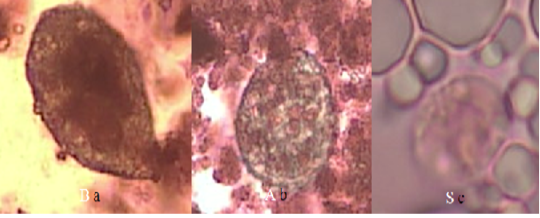
T. gondii is not found in organic and conventional goat milk, but another parasite was found, namely Entamoeba sp.trophozoites in conventional goat milk and Balantidium sp. in organic and conventional goat milk.
Selected from the article's own text.
Abstract
Veronica Wanniatie1,2, Mirnawati B. Sudarwanto3*, Trioso Purnawarman3, Anuraga Jayanegara4
1Graduate School of Veterinary Public Health, Bogor Agricultural University, Indonesia; 2Department of Animal Husbandry, Faculty of Agriculture, University of Lampung, Indonesia; 3Departement of Animal Diseases and Veterinary Public Health, Faculty of Veterinary Medicine, Bogor Agricultural University, Indonesia; 4Department of Nutrition and Feed Technology, Faculty of Animal Science, Bogor Agricultural University, Indonesia.
Abstract | The aim of this study was to compare microbiological quality between organic and conventional goat milk in Bogor District, West Java Province, Indonesia.Between March to August 2018, a total of 36 bulk tank milk samples were collected from 3 locations of organic and conventional goat farms. The milk samples were determined for bacteria population (total plate count, Staphylococcus aureus, Enterobacteriaceae and coliform) and parasite population (Toxoplasma gondii, Entamoeba sp.and Balantidium sp.). The determination was according to US FDA-BAM (United States Food and Drug Administration–Bacteriological Analytical Manual) for Aerobic Plate Count analysis. Data were analyzed by Mann Whitney test. The presence of parasite was analyzed descriptively. Results showed that the populations of total bacteria, S. aureus, Enterobacteriaceae and coliform present inorganic goat milk were 5.58, 3.51, 4.32 and 3.69 log cfu/ml, respectively. On the otherhand, total bacteria, S. aureus, Enterobacteriaceae and coliform populations present in conventional goat milk were 5.02, 2.89, 4.12, and 2.46 log cfu/ml, respectively. Population of S. aureus, Enterobacteriaceae, and coliform in organic goat milk exceeded the maximum limit of the Indonesian National Standard, whereas for conventional goat milk only S. aureus and Enterobacteriaceae exceeded the maximum limit. T. gondii was not found either in organic or conventional goat milk, but other types of protozoa, i.e. Entamoeba sp. and Balantidium sp. were found. In conclusion, microbiological quality of organic and conventional goatmilk in Bogor was relatively similar and appropriate within the Indonesian National Standard.
Organic milk is defined as milk that free of hazardous materials, originating from livestock based on environmental sustainability and animal welfare. It is produced in organic farms that apply minimum standards to ensure livestock well-being ; . Presently the demand for organic milk is increasing ; since it is believed to promote health better as compared to conventional milk . Organic milk products are free from antibiotics, hormones, synthetic chemicals, and genetic modification; and they should be beneficial for human health . Despite its benefit, risk of parasitic contamination in dairy products from organic farms is higher than those from conventional farms due to the typical grazing system. In a previous study, organic milk from cows was contaminated with a number of microbes such as coliform bacteria, S. aureus, Enterobacter aerogenes and Proteus vulgaris . In addition, protozoa species such as Toxoplasma gondii as also found in raw goatmilk, and it had been studied in the United States, Brazil, Greeceand Indonesia ; ; ; Saridewi et al., 2015). T. gondii can cause toxoplasmosis, an intracellular anobligate cosmopolitan zoonosis, when infects humans and warm-blooded animals. Prevention can be done to avoid contamination of T. gondii in goat’s milk by improving sanitation management. T. gondii in goat’s milk can be transmitted to humans if it was raw consumed or used without pasteurization ; .
In Indonesia, dairy goats have not received much attention as compared to dairy cows . Meanwhile, the tradition in drinking raw goat milk is still common for many consumers, which is believed that it can enhance health beside better taste and nutrition . However, raw milk might contain microbial pathogens such as S. aureus, Escherichia coli, Listeria, Campylobacter and Salmonella ; , and zoonotic pathogens such as T. gondii . To date, comparison of microbiological quality (including the pathogens) between organic and conventional goat milk has never been previously investigated in Indonesia. Therefore the aim of this research was to compare the microbiological quality, i.e.total plate count (TPC), S. aureus, Enterobacteriaceae, coliform and parasites between organic and conventional goat milk in Bogor District, West Java, Indonesia.
Materials and Methods
Study Area and Milk Sampling
Thirty six individual milk samples were collected from six dairy goat farms all over Bogor District, Indonesia, in March to August 2018. Milk samples were collected from two types of goat farms, i.e., organic and conventional goat farms. We used a composite samples from Etawa and Sapera goats. Samples were collected once a month for 6 months. Every 500 mL of bulk was collected in sterile glass bottles and transferred to laboratory under cool condition (5°C). All samples were analyzed immediately at Protozoology Laboratory and Veterinary Public Health, Faculty of Veterinary Medicine, Bogor Agricultural University.
Procedures
The tests carried out in this research were according to Kornacki dan Johnson (2001). This research consisted of some methods like conventional culture of TPC, whereas for the total S. aureus count, Enterobacteriaceae count, and coliforms count. The number of bacteria was calculated with count method by pouring. Some agars had been used in this study such as Plate Count Agar (PCA) (CM325 Oxoid), Vogel Johnson Agar (VJA) (CM641 Oxoid), MacConkey Agar (MCA) and Violet Red Bile Agar (VRBA) (CM485 Oxoid) . The presence of parasites was done by detection of tachyzoites and trophozoites. The method used microscopic test with Giemsa and Lugol stain. To observe thetachyzoites and trophozoites a preparate of samples examined thoroughly with a microscope using an oil immersion objective lens (100×) ; .
Statistical Analysis
The data obtained were analyzed by Mann Whitney test. Kolmogorov-Smirnov and Shapiro Wilk tests were applied to perceive normality data. The presence of parasite was analyzed descriptively.
Results
There was no difference in bacteria population (TPC,S. aureus, Enterobacteriaceae and coliform) between organic and conventional goat milk (Table 1). The total bacteria population in both organic and conventional goat milk was still below the Indonesian National Standard threshold and EU Council Directive 92/46/EEC. However, Enterobacteriaceae count in both organic and conventional goat milk was above the SNI threshold (3.00 log cfu/ml), i.e. 4.32 and 4.12 logcfu/ml, respectively. The number of S. aureus and coliform in organic goat milk were higher than conventional goat milk namely 3.51 and 3.69 log cfu/ml, respectively, and they exceed both SNI and EEC maximum standard.The TPC and Enterobacteriaceae were positively correlated with coliform count in organic goat milk (P<0.05) (Table 2). Similarly, the count of TPC in conventional goat milk showed a positive correlation with coliform count (Table 3). T. gondii was not detected, however, Entamoeba sp. and Balantidium sp. were found in both organic goat milk and conventional goat milk (Table 4; Figure 1).
The S. aureus grows on VJA was showed colored black colonies, convex, shiny surrounded by yellow zones . Enterobacteriaceae have been grown on MCA shows two different types of colonies such as red or pink
Table 1: Bacteria population (log cfu/ml) presentin organic and conventional goat milk compared to the standard maximum limit
Bacteria
Organic (mean±SD)
Conventional (mean±SD)
P value
Indonesian National Standard for Fresh Milk
EU Council Directive 92/46/EEC (raw goat and sheep milk) (EC, 1992)
Total plate count
5.58±1.25
5.02±0.91
0.137
6.00
5.70
S. aureus
3.51±1.32
2.89±1.56
0.206
2.00
3.30
Enterobacteriaceae
4.32±1.51
4.12±1.56
0.670
3.00
-
Coliforms
3.69±2.05
2.46±1.86
0.067
3.00
2.00
Table 2: Correlation matrix of microbiological quality in organic goat milk (n =18)
Parameter
TPC
S. aureus
Enterobacteriaceae
Coliforms
TPC
1.000
0.381
0.441
0.589*
S. aureus
1.000
0.011
0.327
Enterobacteriaceae
1.000
0.494*
Coliform
1.000
Table 3: Correlation matrix of microbiological quality in conventional goat milk (n = 18)
Parameter
TPC
S. aureus
Enterobacteriaceae
Coliforms
TPC
1.000
0.302
0.423
0.709**
S. aureus
1.000
0.312
0.310
Enterobacteriaceae
1.000
0.393
Coliform
1.000
Table 4: Presence of T. gondii, Entamoeba sp. and Balantidium sp.(in percentage) in organic and conventional goat milk
Protozoa
Organic (n = 18)
Conventional (n=18)
T. gondii
0
0
Entamoeba sp.
0
16.7%
Balantidium sp.
33.3 %
11.1%
(bacteria that ferment lactose like Escherichia coli and Klebsiella sp.) and colorless or transparent (bacteria that do not ferment lactose such as Salmonella sp. and Shigella sp.) (Kornacki dan Johnson, 2001). The coliform grows on VRBA was showed all purplish red colonies, surrounded by red zones (Kornacki dan Johnson, 2001).
The presence of microbes in this study was seen from TPC, S. aureus, Enterobacteriaceae, and coliform in organic and conventional goat milk with no difference. This result similar to another study conducted by , which was found no difference in microbial count between organic and conventional goat milk. TPC is the best way to assess milk management and quality by calculating bacterial density in milk and estimating the amount of milliliter aerobic bacteria. TPC values can be high if contamination occurs from milking equipment, dirty udders, and livestock are suffered to subclinical or clinical mastitis . In this study we presumed that contamination occur from milk milking since it still used manual milking rather than machine milking.
There was no significant difference between organic and conventional goat milk in S. aureus count. Although higher in organic udder, the presence of S. aureus in bulk tank milk was associated with mastitis, age of the cage and a higher percentage of cows with 3 or fewer teats in both the organic and total herd . S. aureus can originate from mastitis which can be contagious causes IMI, furthermore it will the affects milk production and somatic cell count (SCC) . S. aureus can spread easily from animal to animal through a milking hand or milking device.
The total of coliform in organic goat milk was higher than conventional, although it was not significantly different. In contrast, research in the United States , the total coliform in organic cow milk was lower than conventional cow milk. The presence of coliforms, such as E. coli and Klebsiella spp., in milk indicates contamination, that can occur from dirty environments and equipment and can come from mastitis infected livestock . Besides coliform, another bacteria also contaminate organic cow milk in Pakistan, especially Staphylococcus aureus, and Proteus vulgaris.
The count of TPC and Enterobacteriaceae had a correlation with the amount of coliform in organic goat milk (P <0.05). This result shows that the high of coliform increases the number of total plate count and Enterobacteriaceae. Coliform bacteria are used as microbial indicators of cleanliness in the dairy industry. In addition to coliform was also Enterobacteriaceae used as an indicator of cleanliness in the dairy industry . Coliform bacteria consist of Escherichia, Klebsiella, Citrobacter, and Enterobacter, although more than 20 gram negative genera meet the phenotypic coliform criteria . The Enterobacteriaceae family includes most coliform bacteria usually lack the ability to ferment lactose such as Salmonella and Yersinia .
In this study there was no T. gondii found in both milk samples (Table 3). T. gondii was an intracellular protozoa which cause of toxoplasmosis infect attack warm-blooded animals and humans. Tachyzoites T. gondii is found in the milk of sheep, goats, cows, and rats ; ; . Infection in humans was transmitted through drinking consumption of raw goat milk practice and suspected transmission through lactation can also occur in humans . Toxoplasmosis can occur through drinking unpasteurized goat’s milk ; . Excretion of tachyzoites in milk comes from naturally infected goats with T. gondii. Although infections occur due to drinking goat’s milk, other researchers report that drinking raw milk products from other animals can also cause transmission of T. gondii horizontally ; .
Although T. gondii was not found, we have found another gastro intestinal parasites namely Entamoeba sp and Balantidium sp. The risk of parasitic contamination in dairy products from organic farms was higher. It’s due to more intensive grazing system in organic farm than conventional farm because organic farms use a more intensive grazing system compared to conventional farms . Gastrointestinal parasite was an unusual problem in small ruminant production systems . Gastrointestinal parasites such as worms and protozoa are very common in goats and sheep [] so it becomes an infection and can reduce milk and meat production . Diseases caused by gastrointestinal parasites can interfere with health and harm the economy of farmers .
Entamoeba sp. was found in conventional goat milk as much as 16.67% (3 samples). Gastrointestinal parasites such as Entamoeba sp. can be found in goat’s milk probably because of contamination from animal or human feces. Entamoeba sp. has been found in goats in Kenya , Thailand , Cameroon , Brazil , Nigeria and Australia .
Balantidiumsp. was found in organic goat milk (33.33%) and conventional goat milk (11.11%) in the Bogor District. Balantidium sp. cysts and trophozoites found 7.1% (n = 14/198) in goat intestines and stools in the Egyptian region . The prevalence of Balantidium coli in Tanzania was 4.8% whereas in Kenya, the prevalence was 3%, which is mostly a mixed infection with other parasites . Goat milk has the opportunity to be contaminated with Balantidium sp. during the milking process. Cyst B. coli that contaminate food and water can come from human and animal feces. Balantidiasis in humans occurs due to contact with sheep, goats and pigs ; .
Conclusion
The results showed no differences in TPC, S. aureus, Enterobacteriaceae, and coliform between organic and conventional goat milk. The amount of S. aureus, and coliform in organic goat milk exceed the Indonesian National Standard. This is due to the possibility of organic maintenance practices allowing for high amounts of microbes in livestock and in the enclosure environment. T. gondii is not found in organic and conventional goat milk, but another parasite was found, namely Entamoeba sp.trophozoites in conventional goat milk and Balantidium sp. in organic and conventional goat milk. The presence of Entamoeba sp. and Balantidium sp. in milk is probably due to fecal contamination.
Acknowledgments
This research was supported by BUDI-DN (Beasiswa Unggulan Dosen Indonesia-Dalam Negeri) scholarship from Indonesian Ministry of Research, Technology and Higher Education.
Conflict of Interest
All authors declare that there is no conflict of interest.
Authors contributions
VW performed sample collection, data analysis and wrote the manuscript draft. MBW, TP and AJ designed the study, supervised the experiment and revised the manuscript. All the authors have read and approved the final manuscript
References
• Adua MM, Idahor KO, Sambo UM (2017). Role of physiological status of ruminant animals reared in Lafia metropolis on gastrointestinal parasites burden. J. Anim. Sci. Vet. Med. 1: 119–125.
• Al-Habsi K, Yang R, Ryan U, Miller DW, Jacobson C (2017). Morphological and molecular characterization of an uninucleated cyst-producing Entamoeba spp. in captured Rangeland goats in Western Australia. Vet. Parasitol. 9: 75–83. http://doi.org/doi:10.1016/j.vetpar.2017.01.013[CrossRef]
• AOAC (2005). Official Methods of Analysis of AOAC International. Official Methods of Ananlysis of AOAC international 18th editi (February): 2087–2417.
• Asif M, Azeem S, Asif S, Nazir S (2008). Prevalence of Gastrointestinal Parasites of Sheep and Goats in and around Rawalpindi and Islamabad, Pakistan. Changes. 1:14–17.
• Baird R, Lee W (1995). Media used in the detection and enumeration of Staphylococcus aureus. Int. J. Food Microbiol. 2615–2624.
• Bonametti A, Passos J, Koga de Silva E, Macedo J (1997). Probable transmission of acute Toxoplasmosis through breast feeding. J. Trop. Pediat. 43:116.
• Choubisa SL, Jaroli VJ (2013). Gastrointestinal parasitic infection in diverse species of domestic ruminants inhabiting tribal rural areas of southern Rajasthan, India. J. Parasit. Dis. 37(2): 271–275.
• Cicconi-Hogan KM, Gamroth M, Richert R, Ruegg PL, Stiglbauer KE, Schukken YH (2013). Risk factors associated with bulk tank standard plate count, bulk tank coliform count, and the presence of Staphylococcus aureus on organic and conventional dairy farms in the United States. J. Dairy Sci. 96(12): 7578–7590. http://doi.org/10.3168/jds.2012-6505[CrossRef]
• Claeys WL, Cardoen S, Daube G, De Block J, Dewettinck K, Dierick K, De Zutter L, Huyghebaert A, Imberechts H, Thiange P, Vandenplas Y, Herman L (2013). Raw or heated cow milk consumption: Review of risks and benefits. Food Cont. 31(1): 251–262.
• Da Silva JG, Alves BHLS, Melo RPB, Kim PCP, Neto OLS, Bezerra MJG, Sá SG, Mota RA (2015). Occurrence of anti-Toxoplasma gondii antibodies and parasite DNA in raw milk of sheep and goats of local breeds reared in Northeastern Brazil. Acta Tropica. 142:145–148. http://doi.org/10.1016/j.actatropica.2014.11.011[CrossRef]
• Dehkordi F, Rahimi E, Abdizadeh R (2013). Detection of Toxoplasma gondii in raw caprine, ovine, buffalo, bovine, and camel milk using cell cultivation, CAT Bioassay, capture ELISA, and PCR methods in Iran. Foodborn Path. Dis. 10(2): 120–125.
• Dubey JP, Verma SK, Ferreira LR, Oliveira S, Cassinelli AB, Ying Y, Kwok OCH, Tuo W, Chiesa OA, Jones JL (2014). Detection and survival of Toxoplasma gondii in milk and cheese from experimentally infected goats. J. Food Prot. 77(10): 1747–1753. http://doi.org/10.4315/0362-028X.JFP-14-167[CrossRef]
• Elmadawy RS, Diab MS (2017). Prevalence of Balantidium coli and molecular analysis of Isospora oocysts found in goats in Qalyobia Governorate, Egypt. Annals Vet. Anim. Sci. 4(1): 8-17.
• Hasso SA (2016). An update review of confirmed pathogens of six animal species in Iraq. Iraqi J. Vet. Sci. 30(1): 15–17.
• Hervert CJ, Alles AS, Martin NH, Boor KJ, Wiedmann M (2016). Evaluation of different methods to detect microbial hygiene indicators relevant in the dairy industry. J. Dairy Sci. 99(9): 7033–7042.
• Hervert CJ, Martin NH, Boor KJ, Wiedmann M (2017). Survival and detection of coliforms, Enterobacteriaceae, and gram-negative bacteria in Greek yogurt. J. Dairy Sci. 100(2): 950–960.
• Hill B, Smythe B, Lindsay D, Shepherd J (2012). Microbiology of raw milk in New Zealand. Internt. J. Food Microbiol. 157(2): 305–308.
• Iqbal H, Ishfaq M, Abbas MN, Wahab A, Qayum M, Mehsud S (2016). Pathogenic bacteria and heavy metals toxicity assessments in evaluating unpasteurized raw milk quality quality through biochemical tests collected from dairy cows. Asian Pac. J. Trop.Dis. 6(11): 868–872. http://doi.org/10.1016/S2222-1808(16)61148-9[CrossRef]
• Imhoff J (2005). Enterobacteriales. Bergey’s Manual of Systematic Bacteriology. In: Brenne D., N. Krieg, J. Staley, G. Garrity, D. Boone , P. De Vos, M. Goodfellow, F. Rainey, K.H. Schleifer (eds), Springer, New York, NY.[CrossRef]
• Jamil M, Ijaz M, Muddassir Ali M (2015). Prevalence, hematology and treatment of Balantidium coli among small ruminants in and around Lahore, Pakistan. Kafkas Univers. Vet. Fakultesi Dergisi. 21(1): 123–126. http://doi.org/10.9775/kvfd.2014.11781[CrossRef]
• Kalmus P, Kramarenko T, Roasto M, Meremäe K, Viltrop A (2015). Quality of raw milk intended for direct consumption in Estonia. Food Contr. 51:135–139.
• Kanyari PWN, Kagira JM, Mhoma RJ (2009). Prevalence and intensity of endoparasites in small ruminants kept by farmers in Kisumu Municipality, Kenya. Livest. Res. Rural Develop. 21(11).
• Keefe G (2012). Update on control of Staphylococcus aureus and Streptococcus agalactiae for management of mastitis. Vet. Clin. North Am. Food Anim. Pract. 28: 203–216.
• Kijlstra A, Jongert E (2008) Control of the risk of human toxoplasmosis transmitted by meat. Internt. J. Parasitol. 38(12): 1359–1370. http://doi.org/10.1016/j.ijpara.2008.06.002[CrossRef]
• Kornacki JL, Johnson JL (2001). Enterobacteriaceae, coliform, and Escherichia coli as quality and safety indicators. In: Downes F.P. and K. Ito (eds), APHA, Washington, DC, Volume 4.[CrossRef]
• Liu Z, Kanter CA, Messer KD, Kaiser HM (2013). Identifying significant characteristics of organic milk consumers: A CART analysis of an artefactual field experiment. Appl. Econ. 45(21): 3110–3121. http://doi.org/10.1080/00036846.2012.699189[CrossRef]
• Malissiova E, Tzora A, Katsioulis A, Hatzinikou M, Tsakalof A, Arvanitoyannis IS, Govaris A, Hadjichristodoulou C (2015). Relationship between production conditions and milk gross composition in ewe’s and goat’s organic and conventional farms in central Greece. Dairy Sci. Technol. 95(4): 437–450. http://doi.org/10.1007/s13594-015-0224-7[CrossRef]
• Masiello SN, Martin NH, Trmčić A, Wiedmann M, Boor KJ (2016). Identification and characterization of psychrotolerant coliform bacteria isolated from pasteurized fluid milk. J. Dairy Sci. 99(1): 130–140.
• Mhoma JRL, Kanyari PWN, Kagira JM (2011). The prevalence of gastro-intestinal parasites in goats in urban and peri-urban areas of Mwanza City, Tanzania. Sci. Parasitol. 12: 191–196.
• Murthy GSS, Rao PV (2014). Prevalence of gastro intestinal parasites in ruminants and poultry in Telangana region of Andhra Pradesh. J. Parasit. Dis. 38(2):190–192. http://doi.org/10.1007/s12639-012-0218-9[CrossRef]
• Ntonifor HN, Shei SJ, Ndaleh NW, Mbunkur GN (2013). Epidemiological studies of gastrointestinal parasitic infections in ruminants in Jakiri, Bui Division, North West Region of Cameroon. J. Vet. Med. Anim. Health. 5(12): 344–352.
• Radavelli WM, Pazinato R, Klauck V, Volpato A, Balzan A, Rossett J, Cazarotto CJ, Lopes LS, Kessler JD, Cucco DC, Tonin AA, Da Silva AS (2014). Occurrence of gastrointestinal parasites in goats from the Western Santa Catarina, Brazil. Braz. J. Parasitol. Vet. 23(1):101–104. http://doi.org/S1984-29612014000100017
• Rahman A, Labony SS, Rani Dey A, Zahangir Alam M (2017). An epidemiological investigation of gastrointestinal parasites of small ruminants in Tangail, Bangladesh. J. Bangladesh Agricul. Univ. 15(2):255–259. http://doi.org/10.5455/javar.2017.d234.[CrossRef]
• Sadek O, Abdel-Hamed Z, M. Kuraa HM (2015). Molecular detection of Toxoplasma gondiiDNA in raw goat and sheep milk with discussion of its public health importance in assiut. Assiut Vet. Med. J. 61(145): 166–177.
• Sangvaranond A, Lampa N, Wongdachkajorn D, Sritong D (2010). Prevalence of helminth parasites and intestinal parasitic protozoa among meat goats raised in private farms in Saraburi Province Thailand. Kasetsart Veterinarians. 20(2): 85–95.
• Saridewi R, Lukman DW, Sudarwanto M, Cahyaningsih U (2015). Survival of Toxoplasma gondii in goat milk after pasteurization with high temperature and short time. Indonesian J. Vet. Sci. 9(2): 120-123.
• Schwendel BH, Wester TJ, Morel PCH, Tavendale MH, Deadman C, Shadbolt NM (2015). Invited review : Organic and conventionally produced milk — An evaluation of factors influencing milk composition. J. Dairy Sci. 98(2): 721–746. http://doi.org/10.3168/jds.2014-8389[CrossRef]
• Skinner LJ, Timperley AC, Wightman D, Chatterton JMW, Ho-Yen DO (1990). Simultaneous diagnosis of toxoplasmosis in goats and goatowner’s family. Scandinavian J. Infec. Dis. 22(3): 359–361.
• Sundrum A (2001). Organic livestock farming A critical review. Livest. Prod. Sci. 67: 207–215.
• Taufik E, Hildebrandt G, Kleer JN, Wirjantoro TI, Kreausukon K, Zessin KH (2011). Microbiological quality of raw goat milk in Bogor, Indonesia. Med. Pet. 34(2): 105–111. http://doi.org/10.5398/medpet.2011.34.2.105[CrossRef]
• Yazar S, Altuntas F, Sahin I, Atambay M (2004). Dysentery caused by Balantidium coli in a patient with non-Hodgkin’s lymphoma from Turkey. World J. Gastroenterol. 10(3): 458–459.