
Coccinellid beetles (ladybird beetles) are valuable biological pest control agents in all terrestrial landscapes including agroecosystems. Agricultural intensification contributes to the decline of these pest predators mainly due to pesticides, habitat reduction, and decreased food availability. Here, we explored the diversity of ladybird beetles in croplands alongside the river Chenab at Wazirabad. We collected coccinellid beetles from seven sampling sites (Behram, Wazirabad City, Khanki, Burj Cheema, Tahli da Kot, Rasool Nagar and Kot Har Auddin) by handpicking and sweeping aerial net fortnightly during 2016-2017. A total of 4589 individuals were recorded that belonged to 13 species representing six genera, three tribes and three subfamilies. The results showed that maximum number of species belong to genus Epilachna (five species) and Coccinella (four species) which make them most diverse genera. Coccinella septempunctata (16.40%) was the most dominant species followed by Coccinella undecimpunctata (12.83%) whereas Epilachna varivestis (1.61%) was the least abundant species. The results of diversity indices showed lowest Simpson index value (1-D= 0.89) in Rasool Nagar which is indication of high diversity. Maximum species richness was recorded at Behram (H’: 2.47) whereas greater evenness was recorded at Burj Cheema (e^H/S: 0.89). This quantitative assessment of coccinellids from riverside fauna indicated the conservatory impact of the habitat on lady bird beetles.
Research Article · Volume 56, Issue 3, 26 March 2024 · Open Access
Community Structure of Ladybird Beetles (Coccinellidae: Coleoptera) Alongside the Chenab River at Wazirabad, Gujranwala, Punjab, Pakistan
· ·
Affiliations & Notes ⌄
- 1Department of Zoology, University of Gujrat, Gujrat, Punjab, Pakistan * Corresponding author: dr.mubashar@uog.edu.pk
Article Info ⌄
- Journal:
- Pakistan Journal of Zoology
- Published:
- 26 March 2024

From the article
- The occurrence of coccinellid species in the study area reported 13 species belonging to 6 genera demonstrated greater species richness.
- We also documented greater number of species (5 species) belonging to genus Epilachna.
- The natural vegetation with adjacent agricultural fields could serve as conservatory for the coccinellid species due to absence of agricultural inputs.
- These coccinellid species could add in the biological control and in the integrated pest management programs against several pest species.
Selected from the article's own text.
Abstract
INTRODUCTION
Ladybird beetles (Coccinellidae: Coleoptera) are natural predators of many insect pest species ; including aphids ; , mealybugs , mites ; ; ; ; , psyllids , jassids , scale insects , whiteflies ; and larvae of other insects ; ; .
Coccinellids show great diversity having above 6000 described species ; with five predacious subfamilies (Chilocorinae, Coccidulinae, Coccinellinae, Ortaliinae, Scymninae, Sticholotidinae) and a phytophagous subfamily Epilachninae ; ; . They have immense importance in regulating pest populations in agricultural crops, fruits and vegetables, ornamentals and forest plantations ; . Feeding on a variety of pest species under different cropping systems enhances their ecological plasticity . The use of pesticides for the management of insect pests have massive impact on ladybird beetles their abundance and diversity negatively ; ; . Several studies on diversity, distribution and predatory efficacy of coccinellid beetles under different climatic conditions and ecosystems have recently been explored ; ; ; ; .
Diversity and distribution of Ladybird beetles have been studied in different eco zones and farming systems have been explored from Layyah , Bannu , Pothwar Plateau , Gujrat , Sind , Sargodha , Northern Pakistan , Swabi , Sind , Gilgit-Baltistan , Mirpur , Faisalabad , Dir Lower , and Chitral .
Despite their importance as biological agents in agroecosystems, coccinellid beetles have not been explored extensively from different parts of Pakistan. The study was designed to explore the species diversity at riverside habitat adjacent to agricultural fields dominated with rice-wheat cropping system. This study highlighted the conservatory role of riverside habitats as non-cultivated area for coccinellid insect pest predators.
MATERIALS AND METHODS
Study area
Wazirabad (32°44’59.99” N; 74°09’60.00” E; 232 m above sea level) have sub-humid climate lies in Gujranwala Division, Punjab, Pakistan ; . The study area has distinct dry and cold winter and hot and humid summer seasons . The mean highest temperature in July (36.1 °C) and lowest in the January (15.2 °C). Similarly, the variations in precipitation with up to 20 mm difference in the driest month of October (2 mm) and the wettest in July (22 mm) . The dominant families of flowering plants include Apiaceae, Poaceae, Fabaceae, Moraceae and Solanaceae ; ; and Rice-wheat cropping system .
Sampling sites
Behram, Wazirabad City, Khanki, Burj Cheema, Tahli da Kot, Rasool Nagar and Kot Har were seven sites selected along the riverside of the Chenab River in Tehsil Wazirabad (Fig. 1). We selected a total length of 78 km Chenab River in study area out of which sampling sites covered a distance of 11 km. The selected sites have river on one side whereas agricultural crops on the other side with rice wheat dominated cropping system.
Sampling
Sampling of coccinellids was conducted fortnightly by hand picking and sweeping netting the vegetation between 09:00 and 16:00 h. Sampling consisted of two hundred sweeps on each sampling date in each area during 2016-2017.
Identification, collection and preservation
Specimens were identified by using taxonomic literature and taxonomical identification keys ; ; ; Raimundo and van Harten, 2000). By using genital organs for identification, the specimen’s genitalia were dissected by boiling initially in 10% KOH for 15-20 minutes after that KOH were rinsed off by using distilled water . Canada balsam used for slide preparation and the prepared slides were observed using Olympus CZM-6 microscope and photographs were taken and edited by using digital camera and Photoshop software.
Statistical analysis
Shannon Wiener index (H) values ranges between 1.5 to 4.5, and the values of Simpson’s index (D) ranges from 0 to 1 (where zero represent infinite diversity and 1 means no diversity; we used 1-D which means that 0 value reflects no diversity and 1 means infinite diversity) explains richness (H) and evenness (e^H/S) of species . We calculated indices for the estimation of diversity in the study sites. The estimated values of species diversity, dominance and richness were compared to describe the species diversity in the area ; ; .
RESULTS
Species richness and abundance
In this study, we collected 4589 specimens of ladybird beetles from the study area. Collected specimens were identified into 13 species which belonged to six genera, three tribes, and three subfamilies. Amongst predatory coccinellids, maximum abundance was shown by the genus Coccinella with four species i.e., C. septempunctata, C. undecimpunctata, C. transversalis and C. trifasciata. Five species belonging to the genus Epilachna were collected with variable abundance i.e., E. borealis, E. tredecimnotata, E. vigintioctopunctata, E. indica and E. varivestis. Four genera, Hippodamia, Propylea, Cheilomenes and Brumus each was represented by single species were documented from the study area (Table I). Relative abundance of species showed poor evenness with declining trend abundance levels of the community. Shannon-Wiener richness and evenness values (H’: 2.42) indicated moderately higher richness, and evenness were observed (E: 0.94).
Abundance of species at different sites
Behram
Data recorded from Behram (D: 0.09, H: 2.47, 1-D: 0.91, e^H/S: 0.85) exhibited the presence of 13 different species of ladybird beetles amongst which C. septempunctata (2.84) was found to be the most abundant species whereas E. varivestis (0.24) was least abundant species recorded from Behram (Table II).
Wazirabad city
The species diversity at Wazirabad city (D: 0.10, H: 2.43, 1-D: 0.90, e^H/S: 0.81) include presence of 13 species with variation in the abundance with C. septempunctata (2.85%) showing maximum abundance whereas the least abundant species was the E. varivestis (0.24%) at Wazirabad city (Table II).
Khanki
The data recorded from Khanki (D: 0.10, H: 2.37, 1-D: 0.90, e^H/S: 0.89) showed that C. septempunctata (2.59), C. undecimpunctata (2.24), H. convergens (2.09), and B. suturalis (1.81) were amongst dominant species (Table II).
Buraj Cheema
Coccinellid diversity recorded at Buraj Cheema (D: 0.10, H: 2.38, 1-D: 0.90, e^H/S: 0.90) showed C. septempunctata (2.35) was the most abundant species followed by C. transversalis (1.55) and H. convergens (1.39) whereas lowest abundance was recorded for E. indica (0.15) (Table II).
Tahli da kot
The data collected from different sites of Tahli da kot (D: 0.10, H: 2.39, 1-D: 0.90, e^H/S: 0.84) exhibited the presence of 13 species with C. septempunctata (1.9), C. undecimpunctata (1.55), C. trifasciata (1.42), and C. transversalis (1.37) dominant species (Table II).
Rasool Nagar
The data collected from different sites of Rasool Nagar (D: 0.1, H: 2.34, 1-D: 0.90, e^H/S: 0.86) exhibited that C. septempunctata (2.53), C. undecimpunctata (1.92), C. sexmaculata (1.70), C. transversalis (1.61), and C. trifasciata (1.44) (Table II).
Kot Har
The data collected from different sites of Kot Har (D: 0.10, H: 2.45, 1-D: 0.90, e^H/S: 0.83) showed that C. septempunctata (2.33), C. transversalis (1.98), C. undecimpunctata (1.81) and C. trifasciata (1.59) were found abundant species at Kot Har (Table II).
Table I. Relative abundance (%) of species reported from the riverside habitat of Wazirabad, Gujranwala, Punjab, Pakistan.
| Family | Subfamily | Tribe | Genus | Species | Abundance (%) |
| Coccinellidae | Coccinellinae | Coccinellini | Coccinella | Coccinella septempunctata | 16.40 |
| Coccinella undecimpunctata | 12.83 | ||||
| Coccinella transversalis | 10.89 | ||||
| Coccinella trifasciata | 09.91 | ||||
| Hippodamia | Hippodamia convergens | 09.30 | |||
| Propylea | Propylea dissecta | 08.49 | |||
| Cheilomenes | Cheilomenes sexmaculata | 07.71 | |||
| Chilocorinae | Chilocorini | Brumus | Brumus suturalis | 06.88 | |
| Epilachninae | Epilachnini | Epilachna | Epilachna borealis | 05.99 | |
| Epilachna tredecimnotata | 04.38 | ||||
| Epilachna vigintioctopunctata | 03.11 | ||||
| Epilachna indica | 02.44 | ||||
| Epilachna varivestis | 01.61 |
Table II. Shannon wiener diversity index of coccinellid species recorded from different sites.
| Indices | Behram | Wazirabad city | Khanki | Burj Cheema | Tahli da Kot | Rasool Nagar | Kot Har |
| Dominance (D) | 0.09 | 0.10 | 0.10 | 0.10 | 0.10 | 0.11 | 0.10 |
| Simpson (1-D) | 0.91 | 0.90 | 0.90 | 0.90 | 0.90 | 0.89 | 0.90 |
| Shannon (H) | 2.47 | 2.43 | 2.37 | 2.38 | 2.39 | 2.34 | 2.45 |
| Evenness (e^H/S) | 0.85 | 0.81 | 0.89 | 0.90 | 0.84 | 0.86 | 0.83 |
Discussion
Ladybird beetles demonstrate considerable diversity in different habitats and specificity. Different tribes within the subfamilies of Coccinellidae preferably inclined to feed on a specific category of food such as aphids, or coccids, or plant material ; . Overall 6000 species of coccinellid reported shows cosmopolitan distribution . The occurrence of coccinellid species in the study area reported 13 species belonging to 6 genera demonstrated greater species richness. Similar trend of species richness was reported from Faisalabad recording four sub-families representing 91 species . Another study conducted in Sargodha, documented nine species belonging to four subfamilies , two species from Pothwar Plateau and six species were recorded from Sind .
Among predatory lady bird beetles, Coccinella was the most abundant genus with four species . Greater abundance of phytophagous and predatory species was noted which may be due to presence of pesticide free natural vegetation adjacent to cropped area. However, this has almost equating predatory beetles in number and though relative abundance was significantly lower .
In our study, we documented highest relative abundance C. septempunctata was the most abundant genus followed by C. undecimpunctata. Genus Coccinella has been reported from Azad Jammu and Kashmir like other parts of the country and have a wide range of host plants . Similar patterns of distribution and of diversity were recorded from Lower Dir, Malakand Division ; . Comparatively greater abundance was recorded for the subfamily Coccinellinae from Buner . C. transversalis have been recorded from different parts of Pakistan with variable abundance ; .
Similar results of taxonomic diversity of Coccinellids from Bagh, Sudhnuti and Poonch Districts of Azad Jammu Kashmir . Similar trend of distribution of coccinellid species were recorded from Rawalakot, Hajera (Poonch) and other parts of AJ and K ; . We also documented greater number of species (5 species) belonging to genus Epilachna. Similar, findings were reported from district Gujrat where five species of genus Epilachna were recorded.
Conclusion
The natural vegetation with adjacent agricultural fields could serve as conservatory for the coccinellid species due to absence of agricultural inputs. These coccinellid species could add in the biological control and in the integrated pest management programs against several pest species. Thus, this quantitative assessment of coccinellids from riverside fauna indicated conservatory impact of this habitat type on coccinellids.
Acknowledgment
Authors are grateful to MPhil scholars of Laboratory of Systematics and Pest Management, Department of Zoology, University of Gujrat, Gujrat for their help in collection and identification of specimens.
IRB approval
The study was approved by the Ethical Committee of the University of Gujrat, Gujrat.
Ethics statement
All efforts were taken to minimize pain and discomfort to the animal while conducting this research.
Funding
There was no funding available for this research.
Statement of conflict of interest
The authors have declared no conflict of interest.
Figures
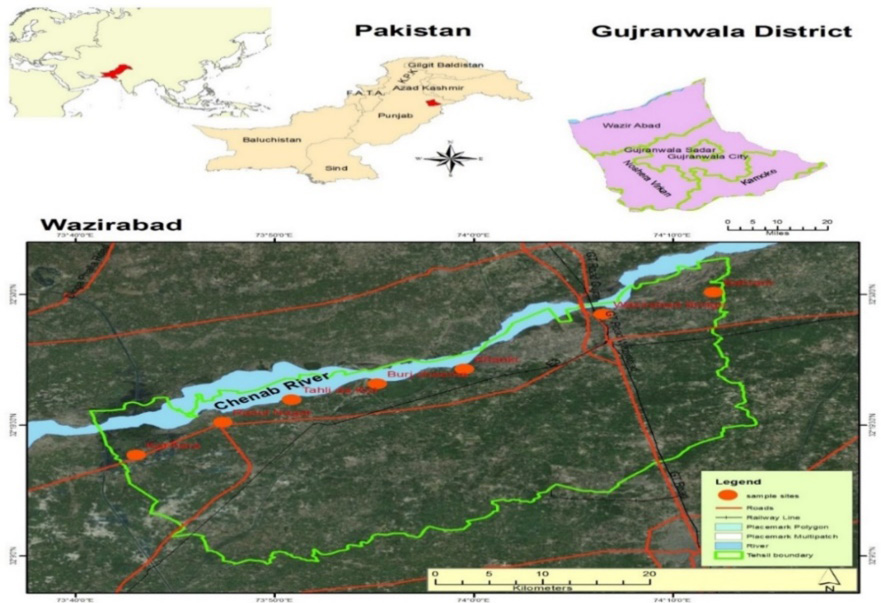
Location of study sites Wazirabad, Gujranwala, Punjab, Pakistan.
References
- Abbas, M., Kausar, S. and Rana, N., 2013. Diversity and distribution of ladybird beetles (Coccinellidae) in the cropland of Faisalabad District. Int. J. Adv. Res., 1: 27-33.
- Ahmed, K.S., Majeed, M.Z., Rafi, M.A., Sellami, F. and Afzal, M., 2017. Biodiversity and species distribution of coccinellids (Coccinellidae: Coleoptera) in District Sargodha (Punjab), Pakistan. Pakistan J. Zool., 49: 1749-1759. https://doi.org/10.17582/journal.pjz/2017.49.5.1749.1759[CrossRef]
- Akhavan, E., Jafari, R., Vafai, R. and Afrogheh, S., 2013. Biodiversity and distribution of predaceous ladybird (Coleoptera: Coccinelliae). Int. Res. J. appl. Basic Sci., 5: 705-709.
- Ali, A. and Rizvi, P.Q., 2007. Development and predatory performance of Coccinella septempunctata L. (Coleoptera: Coccinellidae) on different aphid species. J. biol. Sci., 7: 1478-1483. https://doi.org/10.3923/jbs.2007.1478.1483[CrossRef]
- Ali, A., Altaf, M. and Khan, M.S.H., 2016. Winter survey of birds at Keti Bunder, district Thatha, Pakistan. Punjab Univ. J. Zool., 31: 203-208.
- Ali, M., Ahmed, K., Ali, S., Raza, G., Hussain, I., Nafees, M.A. and Anjum, S.I., 2018. An annotated checklist of Coccinellidae with four new records from Pakistan (Coleoptera, Coccinellidae). ZooKeys, 803: 93-108. https://doi.org/10.3897/zookeys.803.22543.figure3[CrossRef]
- Ali, M., Perveen, R., Naqvi, A.U.N., Ahmed, K., Raza, G. and Hussain, I., 2015. The tribe Scymnini (Coccinellidae: Coleoptera) from Sindh Province, Pakistan. J. Insect Sci., 15: 1-8. https://doi.org/10.1093/jisesa/iev105[CrossRef]
- Altaf, R., Bhatti, K., Mirza, S., Ajaib, M. and Ishtiaq, M., 2019. Ethnomedicinal study of tehsil Wazirabad Gujranwala Punjab Pakistan. Pak. J. Sci., 71: 260-271.
- Ashfaque, M., Ullah, F., Rafi, M.A. and Naz, F., 2015. Taxonomic study of subfamily Scymninae (Coleoptera: Coccinellidae) with one new record from Gilgit-Baltistan, Pakistan. Turk. J. Zool., 39: 1034-1040. https://doi.org/10.3906/zoo-1401-17[CrossRef]
- Barbosa, P., Berry, D. and Kary, C.K., 2014. Insect histology: Practical laboratory techniques. John Wiley and Sons. https://doi.org/10.1002/9781118876114[CrossRef]
- Biddinger, D.J., Weber, D.C. and Hull, L.A., 2009. Coccinellidae as predators of mites: Stethorini in biological control. Biol. Contr., 51: 268-283. https://doi.org/10.1016/j.biocontrol.2009.05.014[CrossRef]
- Bielawski, R., 1984. Coccinellidae (Coleoptera) of Mongolia, annales zoologici. Państwowe Wydawnictwo Naukowe, pp. 281-460.
- Bienkowski, A.O., 2018. Key for identification of the ladybirds (Coleoptera: Coccinellidae) of European Russia and Russian Caucasus (native and alien species). Zootaxa, 4472: 233-260. https://doi.org/10.11646/zootaxa.4472.2.2[CrossRef]
- Biranvand, A., Tomaszewska, W., Li, W., Nicolas, V., Shakarami, J., Fekrat, L. and Hesami, S., 2017. Review of the tribe Chilocorini Mulsant from Iran (Coleoptera, Coccinellidae). ZooKeys, 712: 43. https://doi.org/10.3897/zookeys.712.20419[CrossRef]
- Bodlah, M.A., Bodlah, I., Rasheed, M.T., Fareen, A.G.e., Ikram, K., Iqbal, Z. and Zada, R., 2021. Coccinellidae beetles (Coleoptera) fauna of district Layyah (Punjab), Pakistan. Asian J. Agric. Biol., 5: 1-8. https://doi.org/10.35495/ajab.2020.05.299[CrossRef]
- Bouchard, P., Bousquet, Y., Davies, A.E., Alonso-Zarazaga, M.A., Lawrence, J.F., Lyal, C.H., Newton, A.F., Reid, C.A., Schmitt, M. and Ślipiński, S.A., 2011. Family-group names in Coleoptera (Insecta). ZooKeys, 88: 1-972. https://doi.org/10.3897/zookeys.88.807[CrossRef]
- Din, S., 2002. Distribution of predatory coccinellid (Coleoptera: Coccinellidae) beetles in District Chitral. Department of Plant Protect (Doctoral dissertation, M.Sc. thesis. NWFP Agric Univ Peshawar, Pakistan.
- Faizul, H., Sardar, A.M., Kausar, S. and Shamsur, R., 2011. Diversity and distribution of ladybird beetles in District Dir Lower, Pakistan. Int. J. Biodiv. Conserv., 3: 670-675.
- Fallahzadeh, M., Abdimaleki, R. and Saghaei, N., 2013. Contribution to the knowledge of the ladybird beetles (Coleoptera, Coccinellidae), predators of mealybugs (Hemiptera, Pseudococcidae) in Hormozgan province, Southern Iran. Linz. Biol. Beitr., 45: 673-679.
- Fathipour, Y. and Maleknia, B., 2016. Mite predators, Ecofriendly pest management for food security. Elsevier, pp. 329-366. https://doi.org/10.1016/B978-0-12-803265-7.00011-7[CrossRef]
- Giorgi, J.A., Vandenberg, N.J., McHugh, J.V., Forrester, J.A., Ślipiński, S.A., Miller, K.B., Shapiro, L.R. and Whiting, M.F., 2009. The evolution of food preferences in Coccinellidae. Biol. Contr., 51: 215-231. https://doi.org/10.1016/j.biocontrol.2009.05.019[CrossRef]
- Hayat, A. and Khan, M.R., 2013. Biodiversity and species composition of lady bird beetles (Coccinellidae: Coleoptera) from Mirpur division of Azad Jammu and Kashmir, Pakistan. Sarhad J. Agric., 30: 341-350.
- Hayat, A., Khan, M.R., Naz, F. and Rafi, M.A., 2014. Ladybird beetles of sub-family Chilocorinae (Coccinellidae: Coleoptera of Azad Jammu and Kashmir). Pak. Entomol., 36: 135-143.
- Hodek, I. and Honěk, A., 2009. Scale insects, mealybugs, whiteflies and psyllids (Hemiptera, Sternorrhyncha) as prey of ladybirds. Biol. Contr., 51: 232-243. https://doi.org/10.1016/j.biocontrol.2009.05.018[CrossRef]
- Hodek, I., 1993. Habitat and food specificity in aphidophagous predators. Biocontr. Sci. Technol., 3: 91-100. https://doi.org/10.1080/09583159309355264[CrossRef]
- Hoelmer, K. and Pickett, C., 2003. Geographic origin and taxonomic history of Delphastus spp.(Coleoptera: Coccinellidae) in commercial culture. Biocontr. Sci. Technol., 13: 529-535. https://doi.org/10.1080/0958315031000141018[CrossRef]
- Hoelmer, K., Osborne, L. and Yokomi, R., 1993. Reproduction and feeding behavior of Delphastus pusillus (Coleoptera: Coccinellidae), a predator of Bemisia tabaci (Homoptera: Aleyrodidae). J. econ. Ent., 86: 322-329. https://doi.org/10.1093/jee/86.2.322[CrossRef]
- Hussain, I., Shah, H., Khan, M.A., Akhtar, W., Majid, A. and Mujahid, M.Y., 2012. Productivity in rice-wheat crop rotation of Punjab: An application of typical farm methodology. Pak. J. agric. Res., 25: 1-11.
- Hussain, M., Kanwal, M., Aftab, K., Khalid, M., Liaqat, S., Iqbal, T., Rahman, G. and Umar, M., 2021. Distribution patterns of dung beetle (Coleoptera: Scarabaeidae) assemblages in croplands and pastures across two climatic zones of Pakistan. Orient Insects, pp. 1-16. https://doi.org/10.1080/00305316.2021.2010617[CrossRef]
- Hussain, M., Malik, M.F., Siddique, S., Umar, M., Zainab, T. and Zafar, F., 2018. Diversity and distribution of coccinellid beetles in irrigated and rainfed fields of Gujrat, Punjab, Pakistan. Punjab Univ. J. Zool., 33: 1-6. https://doi.org/10.17582/pujz/2018.33.1.1.6[CrossRef]
- Inayatullah, M. and Hayat, A., 2005. Species composition, distribution and seasonal occurrence of Coccinellidae (Coleoptera) in district Poonch, Azad Kashmir [Pakistan] withnew records. Sarhad J. Agric., 21: 97-100.
- Iqbal, Z., Nasir, M., Bodlah, I. and Qureshi, R., 2018. A contribution to the genus rodolia mulsant, 1850 (Coleoptera: Coccinellidae) from Pothwar Plateau of Pakistan. J. Anim. Pl. Sci., 28: 1103-1111.
- Iqbal, Z., Nasir, M., Bodlah, I., Qureshi, R. and Aihetasham, A., 2017. Notes on three morphs of Bulaea lichatschovii (Hummel)(Coleoptera: Coccinellidae) from Northern Pakistan. Punjab Univ. J. Zool., 32: 203-208.
- Jouveau, S., Delaunay, M., Vignes-Lebbe, R. and Nattier, R., 2018. A multi-access identification key based on colour patterns in ladybirds (Coleoptera, Coccinellidae). ZooKeys, 758: 55. https://doi.org/10.3897/zookeys.758.22171[CrossRef]
- Khan, M., Irshad, M. and Rafi, M., 2008. Insect fauna of Azad Jammu and Kashmir, pp. 143.
- Kumar, A., Singh, R., Prasad, C., Tiwari, G. and Kumar, S., 2017. New records of predatory coccinellids beetles (Coccinellidae: Coleoptera) in Western plain zone of Uttar Pradesh. J. Ent. Zool. Stud., 5: 1140-1147.
- Kureshy, K.U., Elahi, M.K. and Abbasi, A.A., 1981. Pakistan geographical review, parent material of Pakistan soil. K.U. Kureshy, Lahore.
- Leppanen, C., Alyokhin, A. and Gross, S., 2012. Competition for aphid prey between different lady beetle species in a laboratory arena. Psyche. https://doi.org/10.1155/2012/890327[CrossRef]
- Lin, W.T. and Pennings, S.C., 2018. Predator prey interactions in a ladybeetle aphid system depend on spatial scale. Ecol. Evol., 8: 6537-6546. https://doi.org/10.1002/ece3.4117[CrossRef]
- Liu, T.X., Stansly, P.A., Hoelmer, K.A. and Osborne, L.S., 1997. Life history of Nephaspis oculatus (Coleoptera: Coccinellidae), a predator of Bemisia argentifolii (Homoptera: Aleyrodidae). Ann. entomol. Soc. Am., 90: 776-782. https://doi.org/10.1093/aesa/90.6.776[CrossRef]
- Magurran, A.E., 2004. Measuring biological diversity. 29 Blackwell Publishing, Oxford, New Jersey, USA.
- Majerus, M.E., Sloggett, J.J., Godeau, J.F. and Hemptinne, J.L., 2007. Interactions between ants and aphidophagous and coccidophagous ladybirds. Popul. Ecol., 49: 15-27. https://doi.org/10.1007/s10144-006-0021-5[CrossRef]
- Michaud, J., 2001. Numerical response of Ollav-nigrum (Coleoptera: Coccinellidae) to infestations of Asian citrus psyllid (Hemiptera: Psyllidae) in Florida. Fla. Entomol., pp. 608-612. https://doi.org/10.2307/3496392[CrossRef]
- Naz, F., 2012. Taxonomic study of Epilachninae (Coleoptera: Coccinalidae) of Pakistan. Department of Entomology, Faculty of Crop Protection Sciences, The University of Agriculture, Peshawar, Pakistan.
- Nong, L. and Bennett, F., 1994. Biological control of the Mexican bean beetle [Epilachna varivestis].
- Noreen, F., Tamoor, M., Adil, M., Mushtaq, U. and Nisa, Q., 2018. Data of ethnomedicinal plants in Wazirabad, District Gujranwala, Punjab. Pak. J. Pharma. Care Hlth. Syst., 5: 2376-0419.1000194.
- Obrycki, J.J., Harwood, J.D., Kring, T.J. and O’Neil, R.J., 2009. Aphidophagy by coccinellidae: Application of biological control in agroecosystems. Biol. Contr., 51: 244-254. https://doi.org/10.1016/j.biocontrol.2009.05.009[CrossRef]
- Poor, A.M., Jafari, R. and Karahrudi, Z.R., 2013. The faunistic survey of predatory ladybeetles (Coleoptera, Coccinellidae) in the Aleshtar region (Lorestan province), Iran. Int. J. Agric. Crop Sci., 6: 723.
- Rafi, M.A., Irshad, M. and Inayatullah, M., 2005. Predatory ladybird beetles of Pakistan. National Insect Museum and Insect Pest Informatics, IPM Programme.
- Rafique, M. and Tahir, M., 1981. Parent material of Pakistan Soils. Pak. Geogr. Rev., 36: 1-14.
- Rahat, U., Faizul, H., Habib, A., Mian, I., Kausar, S. and Shahroz, K., 2012. Morphological characteristics of ladybird beetles collected from District Dir Lower, Pakistan. Afr. J. Biotechnol., 11: 9149-9155. https://doi.org/10.5897/AJB11.1363[CrossRef]
- Raimundo, A.A. and van Harten, A., 2000. An annotated checklist of the Coccinellidae (Insecta: Coleoptera) of Yemen. Fauna Arabia, 18: 211-244.
- Rain, F.F., Aslam, A.F.M., Ringki, H.S., Sultana, N., Akter, N. and Howlader, A.J., 2016. Coccinellid predators of aphid and their phylogenetic analysis using COI gene sequences. Int. J. appl. Sci. Biotechnol., 4: 408-416. https://doi.org/10.3126/ijasbt.v4i3.15782[CrossRef]
- Rehman, A.U., Awan, Zb .U.R. and Shah, A.H., 2018. Bionomics of ladybird beetles in district Bannu of Khyber Pakhtunkhwa, Pakistan. FUUAST J. Biol., 8: 249-256.
- Saeed, K., Khattak, M.N.K., Khan, F., Naz, F. and Akhtar, N., 2016. Morphological characteristics of ladybird beetles (Coccinellidae: Coleoptera) of District Buner, Khyber Pakhtunkhwa, Pakistan. Pakistan J. Zool., 48: 1367-1372. https://doi.org/10.4172/2161-0983.1000187[CrossRef]
- Saleem, M., Hussain, D., Anwar, H., Saleem, M., Ghouse, G. and Abbas, M., 2014. Predation Efficacy of Menochilus sexmaculatus fabricus (Coleoptera: Coccinellidae) against Macrosiphum rosae under laboratory conditions. J. Ent. Zool. Stud., 2: 160-163.
- Sarwar, M., 2015. Feasibility for development of comparative life histories and predation of predatory mites in Phytoseiidae complex and their experimental manipulations for pests control. Int. J. Anim. Biol., 1: 150-157.
- Sarwar, M., 2016. Food habits or preferences and protecting or encouraging of native ladybugs (Coleoptera: Coccinellidae). Int. J. Zool. Stud., 1: 13-18.
- Seago, A.E., Giorgi, J.A., Li, J. and Ślipiński, A., 2011. Phylogeny, classification and evolution of ladybird beetles (Coleoptera: Coccinellidae) based on simultaneous analysis of molecular and morphological data. Mol. Phylogen. Evol., 60: 137-151. https://doi.org/10.1016/j.ympev.2011.03.015[CrossRef]
- Ślipiński, A., Tomaszewska, W., Leschen, R., Beutel, R. and Lawrence, J., 2010. Coccinellidae Latreille, 1802. Handb. Zool., 2: 454-472. https://doi.org/10.1515/9783110911213.454[CrossRef]
- Sloggett, J.J. and Majerus, M.E., 2000. Habitat preferences and diet in the predatory Coccinellidae (Coleoptera): an evolutionary perspective. Biol. J. Linn. Soc., 70: 63-88. https://doi.org/10.1111/j.1095-8312.2000.tb00201.x[CrossRef]
- Snyder, W.E., Snyder, G.B., Finke, D.L. and Straub, C.S., 2006. Predator biodiversity strengthens herbivore suppression. Ecol. Lett., 9: 789-796. https://doi.org/10.1111/j.1461-0248.2006.00922.x[CrossRef]
- Swaminathan, R., Meena, A. and Meena, B., 2015. Diversity and predation potential of major aphidophagous predators in maize. Appl. Ecol. Environ. Res., 13: 1069-1084. https://doi.org/10.15666/aeer/1304_10691084[CrossRef]
- Urooj, Z. and Ali, A., 2016. Ladybird beetles (Coleoptera: Coccinellidae) fauna of District Swabi, Nowshera and Mardan. Int. J. Agric. environ. Res., 2: 86-92.
- Vandenberg, N.J., 2002. Family 93. Coccinellidae Latreille 1807. In: American beetles (eds. M.C.T.J. R.H. Arnett, P.E. Skelley and J.H. Frank). CRC Press, LLC, Boca Raton, USA, pp. 371-389.
Services
Article usage statistics
Loading…