Floristic Attributes
A total of 42 plant species belonging to 29 families were recognized. Poaceae had maximum diversity with 6 species followed by Asteraceae (4 spp), Euphorbiaceae and Verbinaceae were represented by (3 spp) Asclepidaceae, Caryophyllaceae and Zygophyllaceae (2 spp). The remaining 20 families each have single representative specie (Table 1). From this study also reported that Poaceae as a well–representing family followed by Asteraceae from Farash hills, Tehsil Katlang.
Biological Spectrum
The life form and leaf size spectra are important physiognomic attributes in vegetatation studies. Life form and leaf form classes of the vegetation are also determined according to Raunkier’s method (1934). The floristic diversity was determined. Therophytes (40%) Megaphanerophytes (25%) Nanophanerophytes (20%) and Chamaeophytes (15%) were dominant in all stands. Shah and Hussain (2009) reported that Therophytes have dominating properties in all sites in Hayatabad Peshawar and indicate that the habitat support the plants for short lived annuals.
The floristic leaf spectra showed that the analysis revealed that Microphyll (50%), Mesophyll (25%) and Leptophyll (15%) were dominant in all three sites. The leaf form reveled that Microphyll dominates in all stands and shows alternation in the habitats.
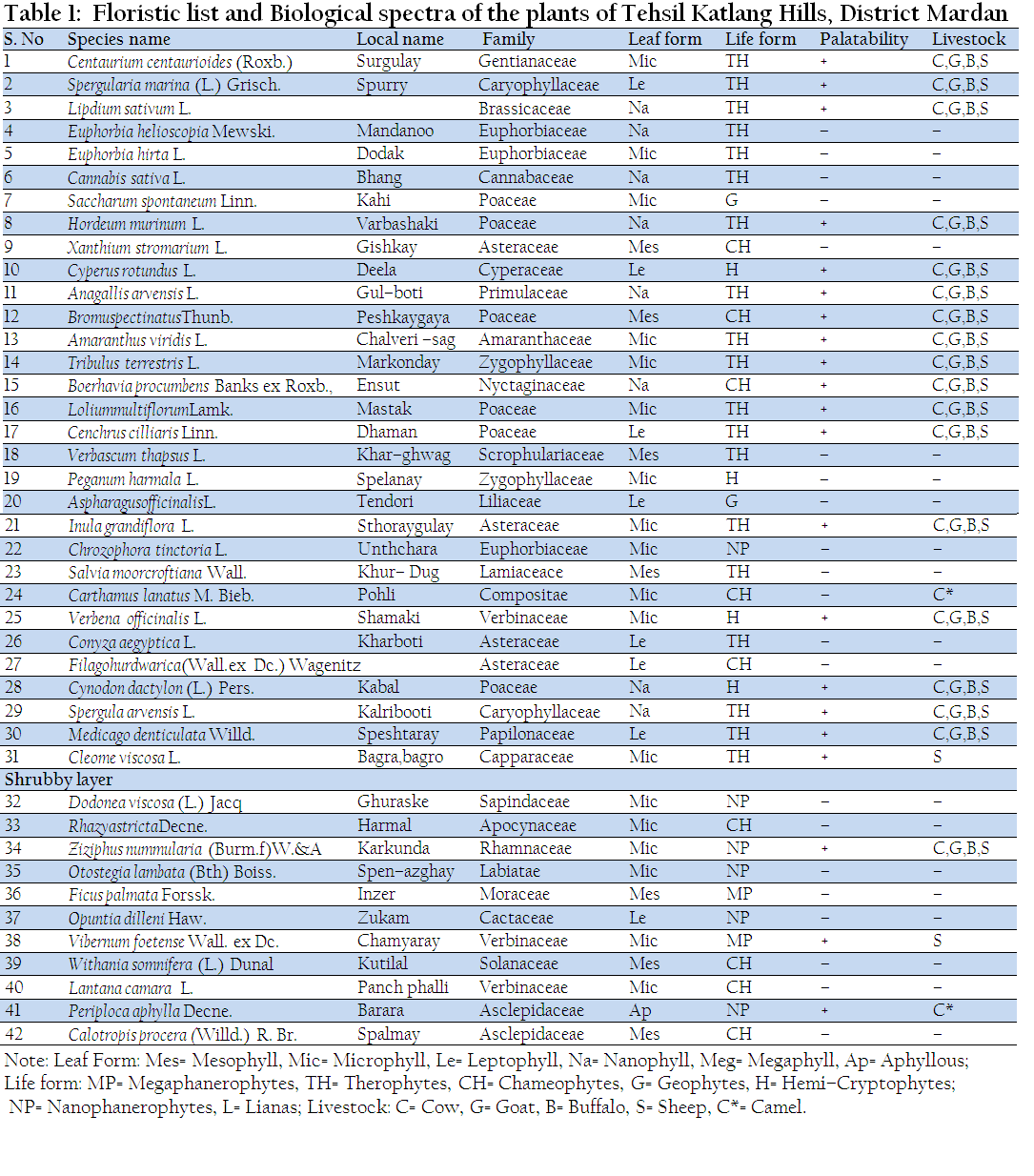
Table 1: Floristic list and Biological spectra of the plants of Tehsil Katlang Hills, District Mardan
Vegetation Structure
The vegetation of the research area consisted of following fifteen communities.
Dodonea – Rhazya – Spergularia Community (DRS)
This community varies in altitude from 410 m to 430 m height and consists of 35 species. 26 species in this community are herbs, and 9 species are shrubby. Dodonea viscosa, Rhazya stricta, Spergularia marina, in these species the Dodonea viscosa has the highest importance value 94.43, Therophytes and Megaphanerophytes dominated the site. While the community has mixed leaf spectra of Microphyll and Mesophyll (Table 1).
Rhazya – Dodonea – Otostegia Community (RDO)
The community is present at an altitude of 420 m to 430 m in altitude. Total of 22 species were present in this community, 14 were herbs having importance values and remaining 8 was shrubs with total importance values. This community was dominated by Rhazya stricta, Dodonea viscosa and Otostegia lambata. The importance values were 88.52, 69.25 and 59.65 respectively. The community life form is dominated by Therophytes and Megaphanerophytes while in leaf form spectra Microphyll is the dominating form of community.
Spergularia – Dodonea – Ziziphus Community (SDZ)
Area supporting this community starts from an elevation of 438 m to 446 m. This community was dominated by Spergularia marina, Dodonea viscosa and Ziziphus nummularia. The importance values of the species are 81.16, 78.01 and 59.36 respectively. This community contains total of 24 species 7 shrubs and the remaning are herbs. The Megaphanerophytes and Therophytes are the predominant life form in the community with Microphyll leaf form the (Table 1).
Dodonea – Anagallis – Ziziphus Community (DAZ)
This community is present next to the 3rd community with the same altitude. Dodonea viscosa, Anagallis arvensis, Ziziphus nummularia were the dominating species of community with importance values 97.08, 68.55 and 58.69 respectively. This community was dominated by Megaphanerophytes. In leaf spectra Microphyll was the dominant class of the community. The community consists of 13 herbs and 9 shrubs species having no trees strata
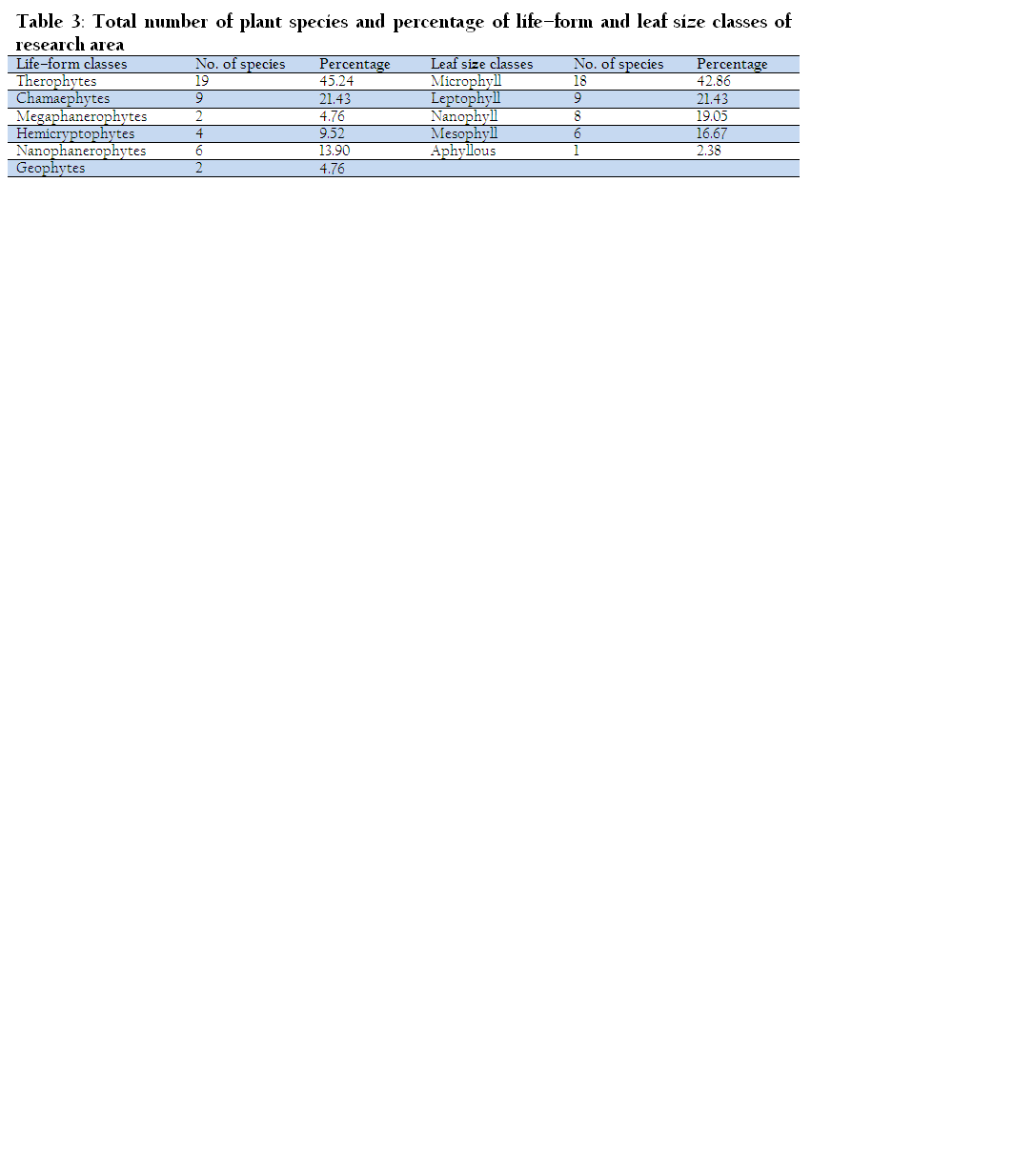
Table 3: Total number of plant species and percentage of life–form and leaf size classes of research area
Rhazya – Dodonea – Euphorbia Community (RDE)
Rhazya stricta, Dodonea viscosa and Euphorbia hirta Community stretched between 410m – 430m elevation. The community consists of a total 23 species. Rhazya stricta and Dodonea viscosa were among the shrubs and Euphorbia hirta were among herbs. No trees strata were observed in this community. Rhazya stricta, Dodonea viscosa and Euphorbia hirta with the importance values 109.95, 97.31 and 46.51 respectively. Megaphanerophytes was dominated this community. In leaf spectra Microphyll was the dominant class of the community.
Spergularia – Otostegia – Dodonea Community (SOD)
At 460 m height this community comprised 21 species. In the beginning the slope was steep but became gentle the top. There were 4 shrubs and 17 herbs. The contribution by percentage shrubs was 25% and herbs 75%. Spergularia marina, Otostegia lambata and Dodonea viscosa dominated with importance values 126.71,123.90 and 70.43 respectively. Therophytes can dominate the community. Whereas leaf size spectrum was dominated by Microphyll and Nanophyll.
Dodonea – Rhazya – Spergularia Community (DRS)
This community started from altitude 420 m to 450 m. The stand is supported by 20 species four of which are shrubs, and 16 species are herbaceous. Salvia moorcroftiana are introduced as new species thus the community have different floristic composition than the other stands. Soil of this stand is fertile and sandy loam suitable for the growth of the shrubby species. Dodonea viscosa, Rhazya stricta and Spergularia marina dominated the community having Importance values 144.72, 98.15 and 53.97 respectively.
Ziziphus – Dodonea – Spergularia Community (ZDS)
This stand starts from the upper top portion of the hill which separates it by its slope. Total of 21 species, 5 species were shrubs and the remaining are herbs. The community was dominated by Ziziphus nummularia, Dodonea viscosa and Spergularia marina. The importance values were 120.62, 98.59 and 64.01 respectively. Biological spectra shows that Therophytes and Nanophanerophytes dominant while leaf form by Microphyll.
Dodonea – Opuntia – Spergularia Community (DOS)
This community extended from 450m to 470m in altitude. The community was dominated by Dodonea viscosa, Opuntia dilleni and Spergularia marina. The importance values of the species were 137.36, 86.63 and 77.06 respectively. Community contains total of 17 species, 4 of which shrubs and 13 are herbs. Therophytes and Chameophytes dominated the life form while leaf form spectra by Microphyll.
Dodonea – Rhazya – Ziziphus Community (DRZ)
Dodonea viscosa, Rhazya stricta, Ziziphus nummularia were the dominating species of community with importance values 98.12, 91.49 and 56.17 respectively. This is the only stand which is dominated by shrubby species. Community is dominated by Therophytes. In leaf form spectra Microphyll was the dominant class. The community is consists of 15 species in which 5 were shrubs.
Rhazya – Dodonea – Spergularia Community (RDS)
The vegetation of this community is supported by 18 species out of which 6 are shrubs and the remaining 12 are herbs species. This community lies at an elevation of 470 m – 480 m. The percentage of herbs and shrubs plants is 55% and 45% in this stand in which community is dominated by Rhazya stricta, Dodonea viscosa and Spergularia marina. The importance values of the species are 106.25, 101.94 and 66.35 respectively. Therophytes and Nanophanerophytes are the dominant life form and Microphyll are the dominant leaf form.
Dodonea – Rhazya – Bromus Community (DRB)
This stand is stretched up to the end of the West facing hills. This community is dominated by Dodonea viscosa, Rhazya stricta and Bromus pectinatus. Community is supported by 13 species, 04 are shrubs and 09 are herbs. Climatic conditions are very suitable for the growth of the shrubby species. The Importance values of the species are 156.23, 105.61 and 40.70 respectively. Therophytes and Chameophytes were the predominant species in the community with Microphyll leaf form.
Cenchrus – Rhazya – Dodonea Community (CRD)
Cenchrus cilliaris, Rhazya stricta and Dodonea viscosa community have an elevation of 470m – 480m. The community is dominated by Cenchrus cilliaris, Rhazya stricta and Dodonea viscosa. The importance values of the dominant species are 69.06, 59.2 and 48.5 respectively. This community is supported by 11 species in which 04 are shrubby. This community was dominated by Therophytes. In leaf form spectra Microphyll was the dominant class of the community.
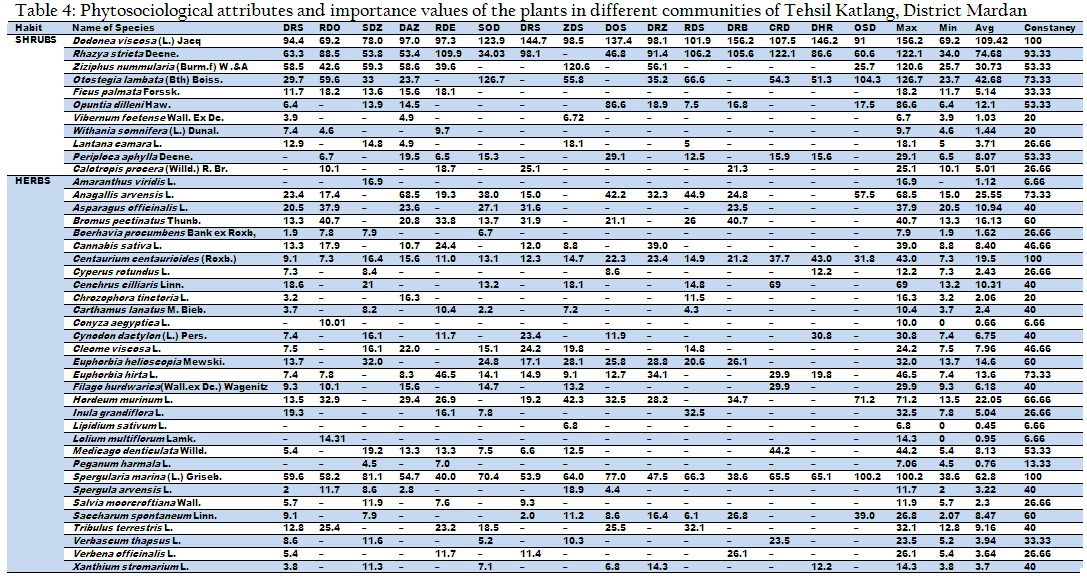
Table 4: Phytosociological attributes and importance values of the plants in different communities of Tehsil Katlang, District Mardan
Dodonea – Hordeum – Rhazya Community (DHR)
This stand has an elevation of 470 m. This stand shows more diversity as compare to other stands of the hill. It has the same vegetation but having the presence of Hordeum murinum as well as some small under story plants. This community contains a total 11 species but dominated by Dodonea viscosa, Hordeum murinum and Rhazya stricta. Importance values of the dominant species are 146.27, 116.63 and 86.67 respectively. Therophytes and Chameophytes are the dominant life form while Microphyll are the leaf form.
Otostegia – Spergularia – Dodonea Community (OSD)
Otostegia lambata, Spergularia marina, Dodonea viscosa were the dominant species of this community with importance values 104.39, 100.26 and 91.00 respectively. This community was dominating by Nanophanerophytes and Therophytes. The predominant leaf form was Microphyll were observed in this stand. The community was recognized at an altitude of 480 m. The community consists of 5 shrubs and 5 herbs and no tree species.
Community Characteristics
Indices of Similarity
From the study of these fifteen communities it shows a high degree of changes among in respect to the indices of similarities. Dodonea, Rhazya, and Spergularia Community shows the highest degree of similarity with Spergularia, Dodonea, and Ziziphus Community (37.2%) while the lowest degree of similarity with Cenchrus, Rhazya and Dodonea (17.13%). From the Table (5) we can see the index of similarity of all species.
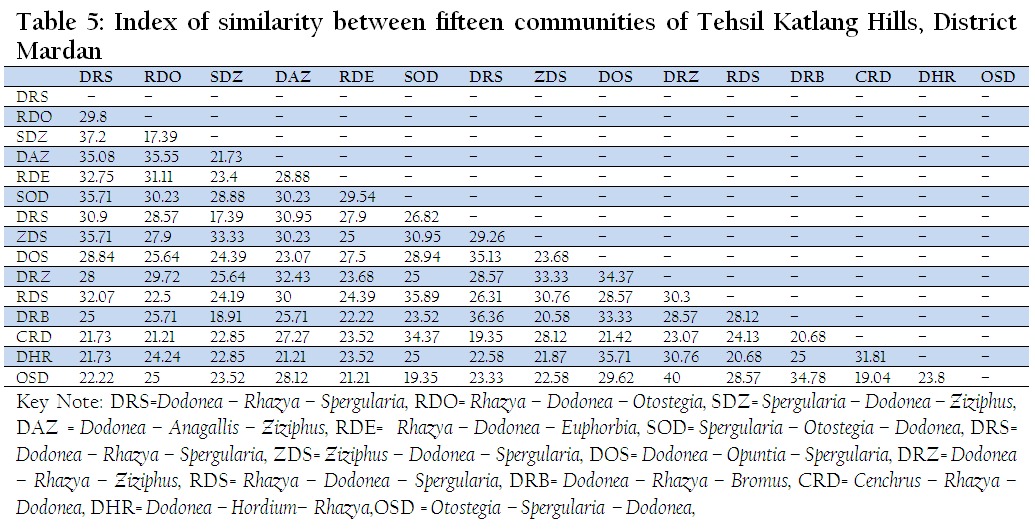
Table 5: Index of similarity between fifteen communities of Tehsil Katlang Hills, District Mardan
Species Richness in Different Communities
The species richness appeared to be different among the all fifteen communities and range from 0.68 (OSD) to 1.036 (DRS) and the values of the different communities are given in (Table 5).
Species Diversity in Different Communities
Species diversity showed that highest diversity was observed in OSD community (3.7) followed by RDE (2.8) and minimum diversity of (1.8) CRD (Table 5).
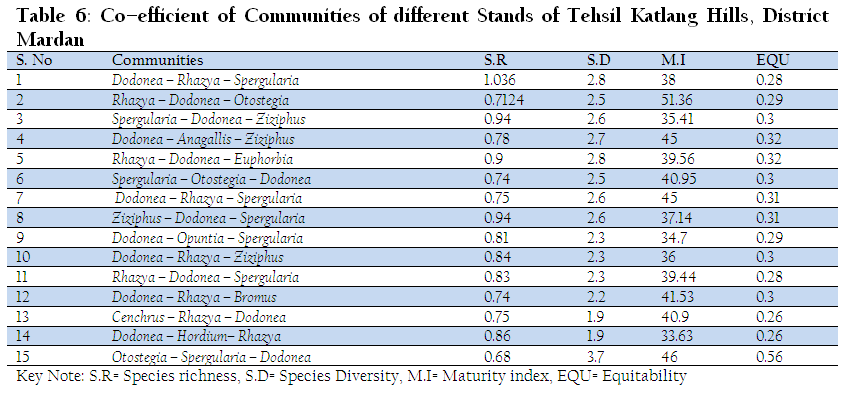
Table 6: Co–efficient of Communities of different Stands of Tehsil Katlang Hills, District Mardan
Degree of Maturity in Different Communities
Degree of maturity (Table 5) the RDO community had the highest value (51.36) followed by OSD community (46) and lowest degree of maturity for DHR community (33.63) respectively.
Equitability of Species in Different Communities
The highest Equitability shows by the OSD community (0.56) followed by DAZ community (0.32) and the lowest evenness of CRD and DHR community 0.26 (Table 5).