ResearchersLinks

Research Article · Volume 14, Issue 1, 20 January 2026 · Open Access

Camel Milk as a Strategic Resource for Global Food Security Physicochemical Characterization in Algeria’s Stepp and Saharan Regions

· · · · · ·

Affiliations & Notes ⌄
  1. 1Constantine 1, Frères Mentouri University, Institute of Veterinary Sciences, Research Laboratory PADESCA, Constantine, Algeria
  2. 2Constantine 1, Frères Mentouri University, Institute of Veterinary Sciences, Constantine, Algeria. *Correspondence | Latifa Boultif, Constantine 1, Frères Mentouri University, Institute of Veterinary Sciences, Research Laboratory PADESCA, Constantine, Algeria
  3. 3Email: boultif.latifa@umc.edu.dz
Article Info ⌄
Journal:
Advances in Animal and Veterinary Sciences
Published:
20 January 2026

From the article

  • This study provides the first comprehensive physicochemical characterization of camel milk (Camelus dromedarius) across Algeria’s steppe and Saharan regions, establishing critical benchmarks for its nutritional quality and regional variability.
  • The results confirm that Algerian camel milk exhibits a composition comparable to international standards, with distinct regional signatures influenced by environmental and seasonal factors.
  • Key findings include significant correlations between pH and acidity (r= -0.842, p < 0.001), density and total solids (r= 0.615, p < 0.001), and marked seasonal fluctuations in lactose and dry matter content.
  • These insights underscore camel milk’s potential as a sustainable, nutrient-dense food source for arid regions, particularly in the context of climate resilience and food security.

Selected from the article's own text.

Abstract

Milk from camel (Camelus dromedarius) is a traditional food source among nomadic communities in many Stepp and Saharan regions of Algeria. It represents a valuable resource for food security in Algeria and Africa, with increasing recognition of its nutritional and economic potential. Assessing its quality is crucial for ensuring consumer health and food safety. This study evaluated the physicochemical quality of camel milk consumed in the Algerian steppe and Sahara regions. Thirty camel milk samples were analyzed for the following parameters: pH, acidity, density, total dry matter, fat, protein, and lactose content. The results revealed an average pH of 6.24 ± 0.38, an average acidity of 23.58 ± 9.11 D°, and an average density of 1.031 ± 0.03. The average total dry matter was 115.23 ± 14.04 g.L-1, with average protein and fat contents of 33.5 ± 3.72 g.L-1 and 32.9 ± 6.3 g.L-1. Lactose content was 50.2 ± 5.53 g.L-1. Principal Component Analysis (PCA) highlighted distinct regional clustering, emphasizing environmental influences. This study provides the first Algerian regional benchmarks for camel milk, proposing data-driven standards to enhance quality control and nutritional valorization. It also contributes to characterizing the nutritional quality of the milk, especially in the absence of specific local standards.
 
Keywords | Camel milk, Physicochemical properties, Regional variability, Nutritional quality, Algeria
INTRODUCTION

Algeria’s Saharan regions, covering 85% of its territory, face escalating climate pressures, necessitating sustainable food sources like camel milk. In some arid regions of the world, camel milk is the primary source of animal protein for breeders and their surrounding communities . Elsewhere, its use remains limited despite its excellent nutritional value and the production advantages it offers throughout most of the year, even under harsh environmental conditions such as drought and high temperatures ; . The limited consumption of camel milk is likely due to its unfamiliar taste often described as salty and slightly acidic and a lack of awareness regarding its nutritional benefits (Cheikh-Ismail et al., 2022). Compared to cow’s milk, camel milk contains less fat and lactose while being richer in potassium, iron, and vitamin C . It is also renowned for its therapeutic benefits, including antibacterial, antiviral, antifungal, anticancer, antihypertensive, antioxidant, and antidiabetic properties ; ; . Additionally, its high immunoglobulin content can enhance immune system effectiveness , and it is even considered a remedy for gastric ulcers, autoimmune diseases, autism, and the prevention of aging (Sewlum et al., 2021).

In Algeria, where the Saharan regions cover over 85% of the country’s area, the camel population is significant. In 2020, the Algerian National Office of Statistics estimated nearly 435,000 camel heads, placing Algeria 14th globally and 6th in the Arab world (FAO, 2022). Camel milk production in Algeria is estimated at around 15,000 tons, although some experts suggest figures as high as 88,000 tons . The quality of camel milk is significantly influenced by the geographical location of rearing and the climate ; . Despite the country’s significant production, no official standards govern its physicochemical quality. Given Algeria’s unique regional and climatic characteristics, it is particularly pertinent to conduct a dedicated study in this context. This research aims to evaluate the physicochemical properties of camel milk consumed in Algeria, thereby contributing valuable data to fill the current knowledge gap and potentially informing future quality standards.

MATERIALS AND METHODS

Study area

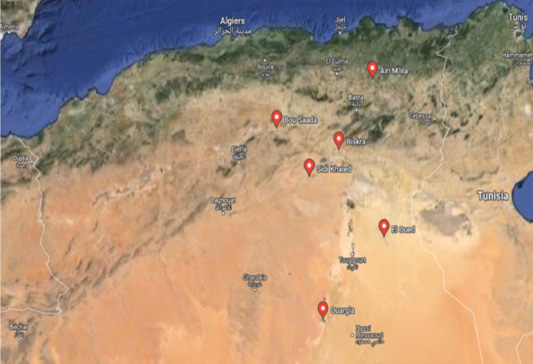
The study was conducted in six regions of Algeria (Figure 1): Two steppe regions (Ain M’Lila and Boussada) and four Saharan regions (Biskra, Sidi Khaled, El Oued, and Ourgla).

The Algerian steppe is an arid ecosystem characterized by limited natural resources, poor soil, low, open plant formations, and severe climatic conditions. Several human and environmental factors have further weakened this ecosystem, exposing it to desertification . The Saharan climate is characterized by low and irregular rainfall, high evaporation and wide temperature variations .

Sampling

The study was conducted from February to June 2022, this period is chosen to cover the seasonal transition (cold/warm). Thirty camel milk samples were collected from a limited number of vendors selling milk produced by local breeds of Camelus dromedarius in the study regions. The samples were collected in sterile, hermetically sealed bottles and transported in a cool box (28QT Xtreme™ Cooler Box, UK) to the laboratory for analysis.

Physical and chemical analysis

The physicochemical parameters of milk samples were measured using standard and referenced methods:

  • pH: Measured using a pH meter (Crison - Basic 20, Spain).
  • Titratable acidity: Determined by titration with sodium hydroxide (NaOH, N/9 = 0.111N) in the presence of phenolphthalein as a color indicator. It was expressed in Dornic degrees (°D) and calculated as follows (in °D) = Volume of NaOH used X 10.
  • Density: Measured using a FUNK GERBER thermo-lactodensimeter (Laktodensimetre, milch g/l T°20°C, 45 mMmbl obin, Funk Gerber berlin. 1,020-1,040,Germany), respecting the required temperature conditions. The density was corrected if necessary using the following formula:
  • Real density (corrected) = density read + 0.2 x [Milk temperature read - Measurement temperature (20°C)].
  • Fat content: Determined by the Gerber acido-butyrometric method. The principle involves mixing milk with sulfuric acid (95-97% SIGMA ALDRICH sulfuric acid, Germany) in the presence of isoamyl alcohol (96° CARLO ERBA ethanol, UN 1170, France). After mixing and centrifugation, the reading is based on the following formula:

Fat % = Reading at upper meniscus – Reading at lower meniscus

Lactose, protein, and total dry matter contents were measured using an ultrasonic milk analyzer LACTOSCAN® SP-45+ Ref ZKN006, Spain. The device is suitable and certified for camel milk analysis.

Statistical analysis

The physicochemical parameters of 30 camel milk samples were statistically analyzed using Minitab 19.1.1. Normality was confirmed via Shapiro-Wilk tests (p > 0.05 for all parameters), allowing the use of parametric analyses. Pearson correlations revealed significant relationships between variables (Table 2). Regional comparisons were assessed using one-way ANOVA with Tukey’s post-hoc test. Principal Component Analysis (PCA) was conducted to visualize multidimensional relationships among variables and samples. Statistical significance was set at p < 0.05 for all tests.

RESULTS AND DISCUSSION

Physical parameters analysis

The physical analysis of camel milk samples from six Algerian regions revealed the following results (Table 1).

Table 1: Descriptive statistics of physical parameters analyses.

Parameter

N

Mean

Median

SD

Min

Max

pH

30

6.24

6.28

0.387

5.20

6.90

Acidity (D°)

30

23.58

23.00

9.117

12.50

50.00

Density

30

1.031

1.031

0.03

1.028

1.036

Correlations were calculated between all physical and chemical parameters of the study and are presented in Table 2. Density measurements (1.031 ± 0.03) showed strong positive correlation with total solids content (r= 0.615, p < 0.001), consistent with established dairy chemistry principles. Interestingly, no significant relationship was found between density and fat content (r= -0.287, p= 0.124), contrasting with observations in bovine milk and suggesting unique compositional interactions in camel milk. Protein content (33.5±3.72 g/L) showed positive correlation with lactose levels (r= 0.357, p= 0.053), indicating potential biosynthetic linkages. Finally a strong negative correlation was observed between pH and acidity (r = -0.842, p < 0.001), while density positively correlated with total dry matter (r = 0.615, p < 0.001).

pH

The mean pH values obtained in this study were 6.24 ± 0.38, ranging from 5.2 to 6.9 (Table 1). In Algeria, camel milk pH varies according to studies. Some studies have reported a pH range of 5.67 to 6.49 , while others have mentioned values of 6.33 ± 0.15 . In Ethiopia, Legesse et al. (2017) found a pH value quite close to the values of this study (6.13 ± 0.11). Akbar (2014) reported a pH of 6.5. Bouhaddaoui et al. (2019) reported the same pH value in Moroccan camel milk. Finally, Al-Zoreky and Almathen (2021) found a pH of 6.65 in camel milk from the region of Al-Ahsa, Saudi Arabia.

According to Sboui et al. (2009), normal pH values for raw camel milk are between 6.4 and 6.6 (at 20°C). Knowing that pH is an indicator of freshness. Fresh milk contains little acid, and its pH is close to neutral. Bouhaddaoui et al. (2019) and Pak et al. (2019) suggest that the high vitamin C content might be responsible for the low pH of camel milk, making camel milk slightly more acidic than cow’s milk. This characteristic may contribute to its antioxidant capacity and extended shelf life. Additionally, Chethouna (2011) attributes the low pH of camel milk to its high concentration of volatile fatty acids. The low pH of camel milk, along with its unique composition of minerals, vitamins, and other components, contributes to its distinct acidic taste and potential health benefits . Indeed, low pH (6.24 ± 0.38) and high vitamin C content may enhance antioxidant activity .

Table 2: Correlation analysis between different analyzed parameters.

pH

Acidity

Density

Dry matter

Fat

Protein

Lactose

pH

Pearson r

—


p value

—


Acidity

Pearson r

-0.842

***

—


p value

< .001

—


Density

Pearson r

0.090

-0.069

—


p value

0.637

0.716

—


Dry matter

Pearson r

0.028

0.096

0.615

***

—


p value

0.883

0.612

< .001

—


Fat

Pearson r

-0.102

0.060

-0.287

0.329

—


p value

0.592

0.753

0.124

0.076

—


Protein

Pearson r

-0.016

0.190

0.467

**

0.353

-0.175

—


p value

0.935

0.315

0.009

0.055

0.354

—


Lactose

Pearson r

-0.016

0.188

0.465

**

0.357

-0.162

1.000

***

—


p value

0.932

0.319

0.010

0.053

0.391

< 0.001

—

Note: * p < .05, ** p < .01, *** p < .001

Acidity

Average acidity levels reach 23.58 ± 9.11 D°, with a wide range of variations from 12.50 to 50 D° (Table 1). Camel milk has been shown to possess buffering properties at specific pH levels, explaining its ability to resist changes in acidity . Indeed, in our study, three samples with acidity ranging from 45 to 50 D° had a pH between 5.2 and 5.45. Nevertheless, the inverse pH-acidity relationship (r = -0.842) (Table 2) reflects camel milk’s buffering properties, likely due to high phosphate and casein content . 

Previous studies have reported varying values for camel milk acidity. Khaskheli et al. (2005) reported a value between 12 and 20 D°, while Merzouk et al. (2013) mentioned a value of 18.6 D°.

The acidity of camel milk can be influenced by several factors, such as physiological stage, feeding and environmental conditions, and seasonal variations . Elbashir and Elhassan (2018) found that acidity is significantly affected by the season, being higher in the summer. Other studies suggest that acidity is strongly influenced by environmental conditions. Thus, for the same milk source, it can vary depending on milking hygiene and the total number of microbes in the milk.

Higher fat (34.8 g.L-1) and acidity (26.4°D) in Saharan regions reflect adaptive responses to arid diets and temperatures .

It is also worth noting that camel milk acidification is slower than that of cow’s milk , allowing for better preservation.

Density

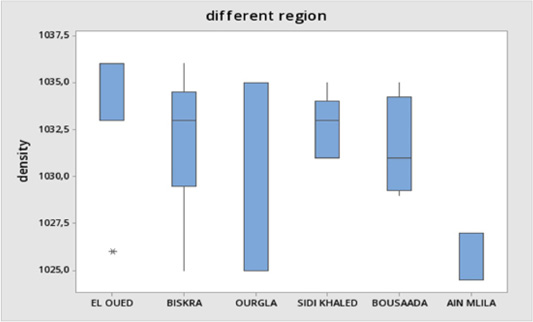
The average density obtained in our study was 1.031 ± 0.03, with a range of 1.028 to 1.036 (Table 1). Measuring milk density helps detect potential milk adulteration with water.

Studies in Algeria have revealed average density values ranging from 1.026 to 1.032 ; , suggesting that density may vary depending on the region and breed.

Elsewhere, reported camel milk density values differ: 1.020 in Sudanese camel milk , 1.026 to 1.040 in milk from Mongolia , 1.029 in Moroccan camel milk , and 1.024 ± 0.0021 in camel milk from the United Arab Emirates .

Several factors could influence camel milk density. In cows, an increase in the fat content of their milk reduces milk density . In the current study on camel milk, no significant correlation was found between these two parameters (Table 2).

Some authors suggest that the lactation stage significantly impacts density, which decreases as lactation progresses . Other authors reported an influence of the rearing system, especially feeding practices that are responsible for a difference in milk compositions between camels raised in traditional systems and those in modern systems.

Furthermore, density directly depends on the dry matter content, which is strongly linked to the frequency of watering . Our results confirm a strong positive correlation between density and dry matter content (Table 2), the density-dry matter correlation (r= 0.615) validates its use for detecting adulteration (Brezovečki et al., 2021).

Seasonal variations also influence camel milk density, with higher densities observed during cold seasons and lower densities during hot seasons . Finally, it is worth mentioning that camel milk density is lower than cow’s milk (1.032). This characteristic of camel milk explains the challenges faced during its transformation into cheese, for example .

Chemical parameters analyses

The chemical analysis of camel milk samples from six Algerian regions revealed the following results (Table 3). Table 3 shows the results of chemical parameters analyses.

Total dry matter

The total dry matter in this study was 115.23 ± 14.04 g.L-1, with a minimum of 86.70 g.L-1 and a maximum of 138.64 g.L-1 (Table 3). According to studies, the total dry matter content varies depending on the quality and quantity of water available to the animals, along with seasonal influence ; .

Table 3: Descriptive statistics of chemical parameters analysis.

N

Mean

Median

SD

Min

Max

Dry matter (g.L-1)

30

115.23

116.48

14.043

86.70

138.64

Proteins (g.L-1)

30

33.5

34.5

3.72

26.3

41.4

Fat (g.L-1)

30

32.9

34.0

6.30

20

46

Lactose (g.L-1)

30

50.2

51.8

5.53

39.4

61.9

The current study was conducted between the months of February and June. Some samples collected in June had the lowest dry matter contents (86.7 g.L-1), while those from February had the highest ones (138.64 g.L-1). Studies have confirmed the influence of the season on dry matter content. Merzouk et al. (2013) found 93.4 g.L-1 during the hot season and 144.8 g.L-1 during the cold season. Haddadin et al. (2008) demonstrated that total dry matter content reached its maximum during mid-winter and its minimum in summer.

During the summer, when animals consume more water, the water content in their milk increases, and therefore its dry matter decreases. Changes in dry matter content are also observed when camels switch from a hydrated to a water-deficient diet. Since 1980, a study conducted by Yagil and Etzion (1980) showed that such a change in the diet caused a significant reduction in the total dry matter content from 14.3% to 8.8%. The natural changes in dry matter content during hot seasons provide milk with sufficient nutritional value and a significant amount of water, which helps camel calves survive in hot weather conditions.

Furthermore, the dry matter content of milk also varies depending on the stage of lactation, lactation number, and number of calvings . Genetic variability and the effect of geographical location have also been reported .

Additionally, according to Brezovečki et al. (2015), the dry matter content in camel milk is similar to that of goat milk, mare’s milk, and donkey milk.

Protein content

The average protein content found in this study was 33.5 ± 3.72 g.L-1 (Table 3). The protein content of camel milk produced in Algeria varies across studies. An average of 42.6 g.L-1 was reported by Merzouk et al. (2013), and a variation between 26.3 and 33.1 g.L-1 was recorded in samples collected during different seasons (Si-Ahmed et al., 2013).

Elsewhere, studies have reported considerable protein level fluctuations: from 11 to 98.7 g.L-1 in Egyptian camel milk according to Elhosseny et al. (2018), 31.7 g.L-1 according to , and 13.00 ± 1.120 g.L-1 according to Musa et al. (2022) in Nigeria. These differences in protein content are due to the influence of numerous factors such as breed, age, geographical location, and season . A study conducted in Jordan, Haddadin et al. (2008) showed that protein content reaches its highest level in December and its lowest level in August.

It is important to note that camel milk is a rich source of protein, providing a well-balanced profile of essential amino acids . Protein levels (33.5 ± 3.72 g/L) correlate with immunoglobulins, reinforcing immune-boosting claims . Therefore, camel milk can significantly contribute to meeting daily protein requirements .

Fat content

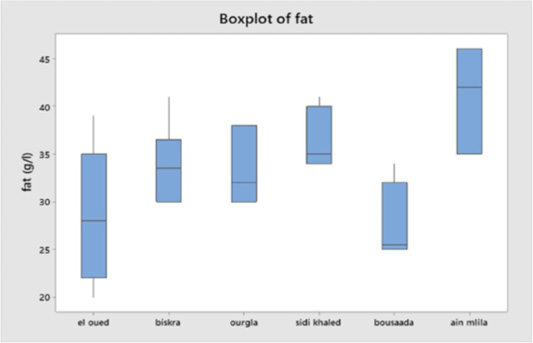
The average fat content in this study was 32.9 ± 6.3 g.L-1, with a minimum of 20 and a maximum of 46 g.L-1 (Table 3). A similar study conducted in the same Saharan regions (Biskra and El-Oued) reported a value of 29.87 g.L-1 . Another Algerian study showed values ranging from 30 to 52.1 g.L-1 .

In comparison, Habtegebriel et al. (2021) reported 42 g.L-1 of fat in Ethiopian whole camel milk, while Elhosseny et al. (2018) observed a range of 13.6-70 g.L-1 in Egyptian camel milk.

Factors influencing camel milk fat content include the breeding system, especially the used diet, the animal’s breed, lactation stage, and number .

Compared with other mammal milk, camel milk has a different fatty acid profile. For instance, it contains higher levels of monounsaturated fatty acids and lower levels of saturated fatty acids than human milk , 2023). Camel milk fat is also rich in essential fatty acids like omega-3 and omega-6, which are beneficial for health (Akbar, 2014). Additionally, it contains fewer short-chain fatty acids than cow, sheep, and buffalo milk . Notably, the homogenized fat in camel milk contributes to its white color .

Lactose content

Results showed an average lactose content of 50.2±5.53 g.L-1, with a minimum of 39.4 and a maximum of 61.9 g.L-1 (Table 3). Lactose content decreased significantly in June samples (45.3 ± 3.9 g/L) compared to February (55.1 ± 4.8 g/L; p = 0.018), aligning with seasonal hydration patterns . Other Algerian studies have reported highly variable lactose content. Benyagoub and Ayat (2016) found lactose content between 28.18 and 30 g.L-1, while another study reported 28.18 g.L-1 . In a study conducted by Merzouk et al. (2013) on samples from different Saharan regions reported values varying between 30 and 52.1 g.L-1 during hot and cold seasons, respectively, indicating a seasonal influence on lactose levels. The samples collected during the cold season contributed to the high average lactose level observed in our study.

Indeed, according to Kamoun (1995) a dehydrated diet decreases lactose levels in camel milk. Some studies suggest an influence of the region on lactose content. Elhosseny et al. (2018) reported values varying between 22.7 and 71.5 g.L-1 in Egypt. Swelum et al. (2021) have reported lactose content ranging from 35 to 58 g.L-1, with an average of 44 g.L-1. Although camel milk contains comparable lactose amounts to cow milk, it is considered a better alternative for individuals with lactose intolerance or cow milk allergy due to its better absorption by the body .

Conclusion

This study provides the first comprehensive physicochemical characterization of camel milk (Camelus dromedarius) across Algeria’s steppe and Saharan regions, establishing critical benchmarks for its nutritional quality and regional variability. The results confirm that Algerian camel milk exhibits a composition comparable to international standards, with distinct regional signatures influenced by environmental and seasonal factors. Key findings include significant correlations between pH and acidity (r= -0.842, p < 0.001), density and total solids (r= 0.615, p < 0.001), and marked seasonal fluctuations in lactose and dry matter content. These insights underscore camel milk’s potential as a sustainable, nutrient-dense food source for arid regions, particularly in the context of climate resilience and food security.

Acknowledgement

The authors extend their sincere gratitude to the quality control laboratory at Dairy Numidia Constantine for their valuable technical support and for providing access to their facilities, which were essential for conducting the physicochemical analyses presented in this study.

Novelty Statement

This study is the first complete characterization of camel milk quality across Algeria’s steppe and Saharan regions, setting local benchmarks where no standards exist. To our knowledge, this study is the first to use PCA to highlight environmental effects, supporting quality control and food security in arid regions.

Author’s Contribution

Boultif L. contributed to the conceptualization of the study, methodology development, data analysis, and drafting of the original manuscript.

Abdeldjelil M.C. participated in the investigation process, data collection, and validation of the results.

Boudebza A. contributed to the formal analysis, data interpretation, and manuscript revision.

Zeghilet N. was involved in the literature review, data curation, and manuscript review.

Chebira B. contributed to the literature review and provided methodological support.

Arzour N. supervised the research activities and provided revisions of the manuscript.

All authors have read and approved the final version of the manuscript.

Ethical approval

The conducted research is not related to animals use. No ethical approval was obtained because this study did not involve laboratory animals and only involved non-invasive procedures.

Generative AI and AI-assisted technology statement

The authors declare that no generative AI was used to conceive, analyze, or interpret the research data. Grammarly was employed only during the revision stage to enhance grammar.

Conflict of interest

The authors have declared no conflicts of interest with respect to the research, authorship, and/or publication of this article.

Figures

Figure 1:
Figure 1:.

Map representation of the study regions.

Figure 2:
Figure 2:.

Variations in density according to the study regions

Figure 3:
Figure 3:.

Variation in fat content according to study regions.

References

  1. Akbar Nikkhah (2014). Camel dairy food: A postmodern scitech. J. Adv. Dairy Res., 2(3): 1-2. https://doi.org/10.4172/2329-888X.1000e114[CrossRef]
  2. Alcântara LAP, Fontan RDC, Bonomo RCF, Souza EC, Sampaio VS, Pereira RG (2012). Density and dynamic viscosity of bovine milk affected by temperature and composition. Int. J. Food Eng., 8(1): 1-20. https://doi.org/10.1515/1556-3758.1860[CrossRef]
  3. Alhaj OA, Altooq NJ, Alenezi AF, Janahi AI, Janahi MI, Humood AM, AlRasheed MM, Bragazzi NL, Jahrami HA, Faye B (2022). Camel milk composition by breed, season, publication year, and country: A global systematic review, meta-analysis, and meta-regression. Compr. Rev. Food Sci. Food Saf., 21(3): 2520-2559. https://doi.org/10.1111/1541-4337.12943[CrossRef]
  4. Alhaj OA, Kanhal H (2010). Compositional, technological and nutritional aspects of dromedary camel milk. Int. Dairy J., 20(12): 811-821. https://doi.org/10.1016/j.idairyj.2010.04.003[CrossRef]
  5. Al-Zoreky NS, Almathen FS (2021). Using recombinant camel chymosin to make white soft cheese from camel milk. Food Chem., 337: 127994. https://doi.org/10.1016/j.foodchem.2020.127994[CrossRef]
  6. Bakry IA, Wei W, Farag MA, Korma SA, Khalifa I, Ziedan NI, Cacciotti I, Jin J, Wang X (2023). How does camel milk fat profile compare with that of human milk fat to serve as a substitute for human milk? Int. Dairy J., 146: 105738. https://doi.org/10.1016/j.idairyj.2023.105738[CrossRef]
  7. Bakry IA, Yang L, Farag MA, Korma SA, Khalifa I, Cacciotti I, Ziedan NI, Jin J, Jin Q, Wei W, Wang X (2021). A comprehensive review of the composition, nutritional value, and functional properties of camel milk fat. Foods, 10(9): 2158. https://doi.org/10.3390/foods10092158[CrossRef]
  8. Benmohamed C, Siboukeur O, Amar E (2018). Influence of feeding on some physicochemical and biochemical characteristics of camel milk (Camelus dromedarius). Emirates J. Food Agric., 30(4): 251-255. https://doi.org/10.9755/ejfa.2018.v30.i4.1658[CrossRef]
  9. Benyagoub E, Ayat M (2016). Biochemical, Physico-chemical and microbiological properties of camel raw milk marketed in Bechar city (South-West Algeria): Hygienic and safe consumers approach. Microbes Health, 4(1): 14-18. https://doi.org/10.3329/mh.v4i1.23087[CrossRef]
  10. Boudalia S, Gueroui Y, Zebsa R, Arbia T, Chiheb AE, Benada M, Hadri Z, Youcefi A, Bousbia A (2023). Camel livestock in the Algerian Sahara under the context of climate change: Milk properties and livestock production practices. J. Agric. Food Res., 11: 100528. https://doi.org/10.1016/j.jafr.2023.100528[CrossRef]
  11. Bouhaddaoui S, Chabir R, Errachidi F, El Ghadraoui L, El Khalfi B, Benjelloun M, Belkadi B, Soukri A (2019). Study of the biochemical biodiversity of camel milk. Sci. World J., 2517293. https://doi.org/10.1155/2019/2517293[CrossRef]
  12. Boukezzoula N, Chaalel M, Tefiani CI, Riazi AM (2022). Lactose consumption in whey by new Lactobacillus plantarum strains isolated from Camel milk. South Asian J. Exp. Biol., 12(2): 254-261. https://doi.org/10.38150/sajeb.12(2).p254-261[CrossRef]
  13. Brezovečki A, Čagalj M, Dermit Z, Mikulec N, Bendelja Ljoljić D, Neven A (2015). Camel milk and milk products. Mljekarstvo, 65(2): 81-90. https://doi.org/10.15567/mljekarstvo.2015.0202[CrossRef]
  14. Carballo J, Kihal-Sabiri M, Boubekri K, Benkerroum N, Moreira D, Pastrana Castro LM (2016). Potential technological interest of indigenous lactic acid bacteria from Algerian camel milk. Ital. J. Food Sci., 28(4): 598-611.
  15. Cheikh Ismail L, Osaili TM, Mohamad MN, Zakaria H, Ali A, Tarek A, Stojanovikj N, Stojanovska L, Naja F, Cheikh Ismail LY (2022). Camel milk consumption patterns and perceptions in the UAE: A cross-sectional study. J. Nutr. Sci., 11: e59. https://doi.org/10.1017/jns.2022.55[CrossRef]
  16. Chen L, Liu LX, Yang J (2023). Exploration and analysis of the composition and mechanism of efficacy of camel milk. Food Biosci., 53: 102564. https://doi.org/10.1016/j.fbio.2023.102564[CrossRef]
  17. Chethouna F (2011). Study of the physico-chemical and biochemical characteristics and the microbiological quality of pasteurised camel milk, in comparison with raw camel milk. [Master thesis]. Kasdi Merbah University, Ouargla, Algeria; 11p. Available from: https://dspace.univ-ouargla.dz/jspui/bitstream/123456789/452/1/CHETHOUNA_Fatma.pdf
  18. DGRSDT (2022). The directorate-general for scientific research and technological development in algeria. camel milk around the Mediterranean. Published on December Available from: https://dgrsdt.dz/fr/blog/camel-milk/45
  19. Diez C, Pablo V (2014). Efecto de la hidrólisis ácida en la medición de grasa cruda en leche y cocoa en polvo, chocolate instantáneo y alimento para camarón. Proyecto especial para optar al título de Ingeniero en Agroindustria Alimentaria. Escuela Agrícola Panamericana, Zamorano Honduras. Available from: https://bdigital.zamorano.edu/server/api/core/bitstreams/852bd972-a8fa-4753-b15d-94f2a44ed616/content
  20. El-Zerey W, Salah Bouiadjra SEB, Benslimane M, Mederbal K (2009). L’écosysteme steppique face à la désertification: Cas de la région d’El Bayadh, Algérie. Vertigo. 9(2): 1-12. https://doi.org/10.4000/vertigo.8821[CrossRef]
  21. Elbashir MHM, Elhassan SF (2018). Seasonal effect on camel milk composition (Camelus dromedarius) under traditional and intensive management systems in Butana area-Sudan. Am. Sci. Res. J. Eng. Technol. Sci., 39(1): 197-205. https://asrjetsjournal.org/index.php/American_Scientific_Journal/article/view/3770/1377
  22. Elhosseny M, Gwida M, Elsherbini M (2018). Evaluation of physicochemical properties and microbiological quality of camel milk from Egypt. J. Dairy Vet. Anim. Res., 7(3):92-7. https://medcraveonline.com/JDVAR/evaluation-of-physicochemical-properties-and-microbiological-quality-of-camelmilk-from-egypt.html, https://doi.org/10.15406/jdvar.2014.07.00197[CrossRef]
  23. Ereifej KI, Alu’datt MH, Alkhalidy HA, Alli I, Rababah T (2011). Comparison and characterization of fat and protein composition for camel milk from eight Jordanian locations. Food Chem., 127(1): 282-289. https://doi.org/10.1016/j.foodchem.2010.12.112[CrossRef]
  24. FAO. Statistical data from Food and Agriculture Organisation website (2022). Available from: https://www.fao.org/faostat/fr/#data/QCL
  25. Faye B (2013). Camel farming sustainability: The challenges of the camel farming system in the 21st century. J. Sustain. Dev., 6(12): 74-82. https://doi.org/10.5539/jsd.v6n12p74[CrossRef]
  26. Faye B (2022). Camel milk composition and nutritional value: Recent findings and implications. FAO Animal Production and Health Paper No. 187. Food and Agriculture Organization of the United Nations.
  27. Ghude MI, Maigandi SA, Muhammad IR, Alkali HA (2021). Chemical composition of camel (Camelus dromedarius) milk as affected by parity and seasons under pastoral production systems in north-west, Nigeria. Niger. J. Anim. Prod., 43(1): 202-210. https://doi.org/10.51791/njap.v43i1.2760[CrossRef]
  28. Habtegebriel H, Edward D, Wawire M, Seifu E, Gaukel V (2021). Surface fat and insolubility of whole camel milk powders as affected by spray drying operating parameters. Food Bio Prod. Process., 128: 121-132. https://doi.org/10.1016/j.fbp.2021.05.001[CrossRef]
  29. Haddadin MS, Gammoh SI, Robinson RK (2008). Seasonal variations in the chemical composition of camel’s milk in Jordan. J. Dairy Res., 75(1): 8-12. https://doi.org/10.1017/S0022029907002750[CrossRef]
  30. Hattem HE, Manal AN, Hanna SS, Elham AA (2011). A study on the effect of thermal treatments on composition and some properties of camel milk. Slovak J. Anim. Sci., 44(3): 97-102. https://office.sjas-journal.org/index.php/sjas/article/view/310
  31. Kamoun M (1995). Le lait de dromadaire : production, aspects qualitatifs et aptitude à la transformation. In: Options Méditerranéennes. Série B, Études et Recherches n°13. Zaragoza (Espagne): CIHEAM; p. 81-103. http://om.ciheam.org/article.php?IDPDF=95605344
  32. Khaskheli M, Arain A, Chaudhry S, Soomro AH, Qureshi TA (2005). Physico-chemical quality of camel milk. J. Agric. Soc. Sci., 2: 164-166. https://www.researchgate.net/publication/237586369_PhysicoChemical_Quality_of_Camel_Milk
  33. Konuspayeva G, Al-Gedan MM, Alzuraiq F, Faye B (2023). Some variation factors of freezing point in camel milk. Animals, 13(10): 1-14. https://doi.org/10.3390/ani13101657[CrossRef]
  34. Konuspayeva G, Faye B, Loiseau G (2009). The composition of camel milk: A meta-analysis of the literature data. J. Food Compos Anal., 22(2): 95-101. https://doi.org/10.1016/j.jfca.2008.09.008[CrossRef]
  35. Kumar R, Yadav AK, Priyadarshini L, Singh J (2015). Composition and medicinal properties of camel milk: A review. Asian J. Dairy Food Res., 34(2): 83-93. https://doi.org/10.5958/0976-0563.2015.00018.4[CrossRef]
  36. Legesse A, Adamu F, Alamirew K, Feyera T (2017). A comparative study on the physicochemical parameters of milk of camel, cow and goat in Somali Regional State, Ethiopia. J. Chem. Sci., 8(4): 1-5.
  37. Mahala N, Mittal A, Dubey US (2022). Medicinal potential of camel milk lactoferrin. In: Current issues and advances in the dairy industry. London: Intech Open; pp. 1-17. https://doi.org/10.5772/intechopen.108316[CrossRef]
  38. Meribai A, Meklati FR, Kouidri A, Nouani A (2018). Fatty acid profile comparison and hygienic quality of cow and camel (Camelus dromedarius) milk in Algeria. Emirates J. Food Agric., 30: 413-420. https://doi.org/10.9755/ejfa.2018.v30.i5.1685[CrossRef]
  39. Merzouk Y, Chahrour W, Zarour K, Zergui A, Saidi N, Jamal E, Mati A (2013). Physico-chemical and microbiological analysis of algerian raw camel’s milk and identification of predominating thermophilic lactic acid bacteria. J. Food Sci. Eng., 3(2): 55-63. https://www.davidpublisher.com/index.php/Home/Journal/detail?journalid=29&jx=JFSE&cont=allissues
  40. Mohammed SA, El-Zubeir IE (2018). Effect of indirect and direct boiling on the physico-chemical properties of camel milk. J. Vet. Med. Anim. Prod., 7(2): 133-41. Available from: https://www.semanticscholar.org/paper/Effect-of-Indirect-and-Direct-Boiling-on-the-of-Mohammed Ibtisam/378d059f263e5b16f0fbf2b854585b1f0dc2978e
  41. Moula N (2023). Camel breeding in Algeria. Biol. Life Sci. Forum. 22(1): 4. https://doi.org/10.3390/blsf2023022004[CrossRef]
  42. Musa A, Bello Z, Ibrahim L, Musa M, Muhammad IB (2022). Evaluation of nutrients composition, minerals, vitamins and bioactive components of camel and cow milk sold in Katsina Metropolis. J. Biochem., Microbiol. Biotechnol., 10(1): 446-451. https://doi.org/10.54987/jobimb.v10i1.663[CrossRef]
  43. Mustafa A, Mohamed EHA, Haroun E, Attia KA, Nikhala MA, Mustafa AB (2014). Effect of parity on camel milk composition under traditional pastoral and farmed systems in Sudan. Int. J. Adv. Pharma. Biol. Chem., 3(2): 266-72. http://www.ijapbc.com/files/05-10-2015_1/8-3176R.pdf
  44. Ozenda P. Flora of the Sahara (1991). 3rd edition. Paris, Edition C.N.R.S. pp. 622.
  45. Pak VV, Khojimatov OK, Abdiniyazova GJ (2019). Composition of camel milk and evaluation of food supply for camels in Uzbekistan. J. Ethn. Food, 6: 20. https://doi.org/10.1186/s42779-019-0031-5[CrossRef]
  46. Sboui AS, Khorchani T, Djegham M, Belhadj O (2009). Comparaison de la composition physicochimique du lait camelin et bovin du Sud tunisien; variation du pH et de l’acidité à différentes températures. Afr. Sci., 5(2): 293-304. https://doi.org/10.4314/afsci.v5i2.61744[CrossRef]
  47. Shamsia SM (2009). Nutritional and therapeutic properties of camel and human milks. Int. J. Genet. Mol. Biol., 1(2): 52-58. https://academicjournals.org/article/article1379512771_Shamsia.pdf
  48. Si Ahmed S, Almi S, Senoussi D, Boudjenah H, Mati S (2013). Separation and characterization of major milk proteins from Algerian Dromedary (Camelus dromedarius). Emir. J. Food Agric., 25(4): 283-290. https://doi.org/10.9755/ejfa.v25i4.15496[CrossRef]
  49. Siboukeur A, Siboukeur O (2012). Caractéristiques physico-chimiques et biochimiques du lait de chamelle collecté localement en comparaison avec le lait bovin. Ann. Sci. Technol., 4(2): 102-107. Available from: https://dspace.univ-ouargla.dz/jspui/bitstream/123456789/5788/1/A040206.pdf
  50. Sumaira S, Shah AM, Solangi GA, Anwar I, Kalwar Q (2020). Composition and beneficial impact of camel milk on human health. Punjab Univ. J. Zool., 35(2): 179-189. https://doi.org/10.17582/journal.pujz/2020.35.2.179.189[Full text][CrossRef]
  51. Swelum AA, El Saadony MT, Abdo M, Ombarak RA, Hussein EOS, Suliman G, Shafi ME, Aleya L, Marappan G, Caruso G, Abdel-Latif HM, El-Hack ME (2021). Nutritional, antimicrobial and medicinal properties of camel’s milk: A review. Saudi J. Biol. Sci., 28(5): 3126-3136. https://doi.org/10.1016/j.sjbs.2021.02.057[CrossRef]
  52. Yagil R, Etzion Z (1980). Effect of drought conditions on the quality of camel milk. J. Dairy Res., 47(2): 159-166. https://doi.org/10.1017/S0022029900021026[CrossRef]
  53. Zahraa HK, Al-Moosawi HK, Mozhir KK, Almahdawi A, Areej GH, Al-Charak M (2023). Camel milk as an integrated food and its physical and chemical properties with therapeutic characteristics. Int. J. Vet. Sci. Anim. Husb., 8(1): 90-96. https://doi.org/10.22271/veterinary.2023.v8.i1b.474[CrossRef]
  54. Zerihun N (2023). Review on composition, nutritional and medicinal value of camel. J. Covid Res. Treat., 2(1): 1-6. https://doi.org/10.58489/2836-3604/008[CrossRef]
  55. Zhang BY, Xu S, Villalobos-Santeli JA, Huang JY (2020). Fouling characterization of camel milk with comparison to bovine milk. J. Food Eng., 285: 110085. https://doi.org/10.1016/j.jfoodeng.2020.110085[CrossRef]
  56. Zhao J, Fan H, Kwok LY, Guo F, Ji R, Ya M, Chen Y (2020). Analyses of physicochemical properties, bacterial microbiota, and lactic acid bacteria of fresh camel milk collected in Inner Mongolia. J. Dairy Sci., 103(1): 106-116. https://doi.org/10.3168/jds.2019-17023[CrossRef]

Services

Article usage statistics

Loading…

Camel Milk as a Strategic Resource for Global Food Security Physicochemical Characterization in Algeria’s Stepp and Saharan Regions · ResearchersLinks