
Avian nematode infections pose a significant threat to both domesticated and exotic bird species, particularly chickens (Gallus Gallus domesticus) and parrots (Psittaciformes). This study investigates the prevalence of Ascaridia spp. and Capillaria spp. infections in backyard chickens and captive parrots in Gujranwala, Punjab, Pakistan. A total of 110 parrots from nine species and 70 chickens from ten breeds were examined using direct microscopic examination and fecal flotation methods. The overall infection rate in parrots was 43.6%, with Ascaridia platyceri (30.9%) being the most prevalent, followed by Ascaridia galli (10%) and Capillaria spp. (5.45%). In chickens, the infection rate was higher (62.3%), with Capillaria spp. (53.6%) being more widespread than Ascaridia galli (8.7%). Statistical analysis using the chi-square test (χ² = 30.40, p < 0.001) revealed a significant difference in infection rates between parrots and chickens. These findings highlight the substantial parasite burden in captive birds, emphasizing the need for targeted control measures to reduce infections and improve avian health and welfare.
Research Article · Volume 43, Issue 1, 27 April 2025 · Open Access
Avian Nematode Infections: A Comparative Study of Capillaria spp. and Ascaridia spp. Infections in Gallus Gallus domesticus (Chickens) and Psittaciformes (Parrots)
· ·
Affiliations & Notes ⌄
- 1Department of Biological Sciences, Virtual University of Pakistan. *Correspondence | Dr. Ishrat Aziz, Department of Biological Sciences, Virtual University of Pakistan, Kala Shah Kaku Campus, opposite UET, Motorway interchange, Lahore
- 2Email: ishrat.aziz@vu.edu.pk
Article Info ⌄
- Journal:
- Pakistan Journal of Nematology
- Published:
- 27 April 2025
From the article
- The prevalence of this infection in captive Psittaciformes birds underscores the risk of infection transmission in confined environments, despite the fact that it is ordinarily lower in parrots than in chickens.
- In chickens, infections caused by Ascaridia galli and Capillaria spp. are of significant concern, with an overall prevalence of 52.85% observed in this study, reaching a maximum of 70.58% for Capillaria spp. in chicks.
- This research supports valuable intuitions into the prevalence of Ascaridia spp. and Capillaria spp. infections in parrots as well as chickens.
- The discovery of Capillaria spp., Ascaridia galli, and Ascaridia platyceri parasites in parrots, linked along the critical vicinity of Capillaria spp. and Ascaridia galli in chickens, accentuates the significance of constant supervision and control endeavours to keep the well-being and health of birds.
Selected from the article's own text.
Abstract
Introduction
Avian nematode diseases are a significant danger to both domestic and exotic populations of birds, specifically chickens and parrots. Ascaridia spp. and Capillaria spp. are particularly concerning within the nematodes that infect these birds because of their widespread distribution and negative influence on host health. Predominantly small digestive system contains Ascaridia spp, which can cause significant clinical symptoms like reduced appetite, significant weight reduction, and in some cases leads to death ; . Anemia, diarrhea, and weight loss are clinical symptoms associated with another gastrointestinal parasite, Capillaria spp. ; . These infectious conditions may worsen existing health issues and cause additional damage in affected avian species. Capillaria spp. and Ascaridia spp. are primarily transmitted through contaminated food and water, posing a significant challenge in captive bird rearing, especially in aviaries. The genus Ascaridia spp comprises 15 described species, with Ascaridia galli being the most common, primarily infecting Galliformes (e.g., chickens). However, Ascaridia galli can also infect other avian families, particularly in mixed-species environments where cohabitation with Galliformes occurs. While Ascaridia galli exhibits some host flexibility, most Ascaridia spp. are highly hostspecific, particularly to certain avian species . This host specificity is also evident in Psittaciformes, where Ascaridia platyceri is a common parasite, infecting the proventriculus and causing inflammation and digestive disorders . Nematode infections in parrots frequently lead to inadequate growth, impaired feather development, and compromised immune function, thereby heightening their vulnerability to secondary infections . This research investigates the occurrence of Ascaridia spp. and Capillaria spp. in parrots as well as in locally raised chickens in Gujranwala, Pakistan. Through the application of direct microscopic examination and fecal flotation methods, this study identifies, recognizes, and differentiates the prevalence of these parasitic infections among avian species. The results are intended to enlighten the degree of damage incurred by these parasites and underscore the necessity for powerfull and effective control systems to defend avian health.
Study areas
The research study was conducted at two apparent areas inside the Gujranwala District of Punjab, Pakistan. The 1st location was the RASSA bird aviary and farm found in Bakhtay Wala, where fecal samples were convene from parrots. The 2nd location included multiple backyard chicken farms located in Mughal Chak, Bhuman Bhatt, Jamke Chatha, Klaske, Lohianwala village, Nawab Chowk village, and Ladhewala Warraich, all within Gujranwala. All gathered samples tests were analyzed in the laboratory of the Biology Department at the Virtual University of Pakistan, Gujranwala campus (VGJW01).
Study period
Two different time spans were utilized for the research execution. Chicken fecal Samples were taken between April 22 to May 15, 2024, while of parrot fecal samples were taken between April 18 to May 17, 2024. The both studies were carried out under normal environmental conditions, with average temperatures fluctuating between 28 oC and 32 oC.
Sample collection
A total of 110 parrots representing 9 species within the Psittaciformes order were sampled. The species included Alexandrine Parakeet (Psittacula eupatria), African Grey Parrot (Psittacus erithacus), Sun Conure (Aratinga solstitialis), Senegal Parrot (Poicephalus senegalus), Plum-headed Parakeet (Psittacula cyanocephala), Australian Budgerigar (Melopsittacus undulatus), Cockatiel (Nymphicus hollandicus), Indian Ring-necked Parakeet (Psittacula krameri), and Lovebirds (Agapornis spp.) and 70 fecal samples were collected from chickens of ten different breeds, including White Shamu, Black Shamu, Shamu, Asil, Mianwali Asil, Thai, Desi Golden Mishri, Java, Sleeta, and Heera. Fecal samples were gathered utilizing sterile sticks from the bottoms of enclosures cages after providing with clean food and water to forestall contamination. Each sample was vacuum-packed in cleaned polythene bags, marked with species name, sex, and other details, and transported to the laboratory within one hour of collection. These chickens were raised in househoulds across eight different homes, and parrots were kept for breeding in one aviary area.
Materials and Methods
Qualitative analysis of fecal samples
The qualitative analysis of fecal samples was carried out using a two-step approach: Direct microscopic examination and a simple fecal flotation technique, as outlined in the provided description by William (2001).
Direct microscopic examination
Materials: we utilized fecal samples, glass slides, coverslips, toothpicks, and a compound light microscope for our analysis.
Method: A fecal sample weighing 500 mg was placed on a clean glass slide, then mixed with one or two drops of water using a toothpick. Afterward, a coverslip was placed over the sample to prevent the formation of air bubbles. The presence of Ascaridia spp. Capillaria spp. was detected by closely examining the slides under a microscope at 10x and 40x magnifications.
Simple fecal flotation technique
The detection of nematode eggs was done using the basic flotation method, which Bowman (2014) describes. Materials: Glass slides, coverslips, a saturated sodium chloride solution, test tubes with racks, fecal samples, and a microscope were among the supplies used.
Method: After combining 1 gram of bird fecal sample with 10% HCL, the mixture was filtered through a cotton cloth and put into a test tube. The tube was covered with a coverslip after more saline solution was added to form a convex meniscus. A glass slide was carefully placed on top of the coverslip after 15 minutes. The slides were closely inspected under a microscope at magnifications of 10x and 40x, which enabled the detection of the eggs and adult worm of Ascaridia spp. Capillaria spp.
Results
The study evaluated Ascaridia spp. and Capillaria spp infection, identification, and prevalence using a comparative approach. We employed the Simple Fecal Flotation Technique method and direct microscopic inspection to identify infections in chickens and parrots. Understanding the parasitic burden in various Psittaciformes and chickens by the findings will provide valuable insight.
Table 2: Prevalence of Capillaria spp. and Ascaridia galli infections in different chicken breeds.
| Common name | Total birds | Male | Fe-male | Chicks | Overall infected birds | Overall preva-lence (%) | No. Infected by Capillaria spp. (Cappi) | Prevalence (% - Capillaria spp.) | No. Infected by Ascaridia galli | Preva-lence (% - Ascaridia galli) |
| White Shamu | 8 | 1 | 7 | 0 | 3 | 37.5 | 3 | 37.5 | 0 | 0.0 |
| Black Shamu | 9 | 1 | 8 | 0 | 2 | 22.2 | 2 | 22.2 | 0 | 0.0 |
| Shamu | 15 | 4 | 2 | 9 | 10 | 66.7 | 10 | 66.7 | 0 | 0.0 |
| Asil | 2 | 2 | 0 | 0 | 1 | 50.0 | 0 | 0.0 | 1 | 50.0 |
| Mianwali Asil | 2 | 2 | 0 | 0 | 1 | 50.0 | 0 | 0.0 | 1 | 50.0 |
| Thai | 7 | 0 | 5 | 2 | 5 | 71.4 | 4 | 57.1 | 1 | 14.3 |
| Desi Golden Mishri | 8 | 0 | 8 | 0 | 4 | 50.0 | 2 | 25.0 | 2 | 25.0 |
| Java | 4 | 2 | 2 | 0 | 5 | 100.0 | 4 | 100.0 | 1 | 25.0 |
| Sleeta | 6 | 0 | 0 | 6 | 4 | 66.7 | 4 | 66.7 | 0 | 0.0 |
| Heera | 8 | 2 | 6 | 0 | 8 | 100.0 | 8 | 100.0 | 0 | 0.0 |
| Total | 70 | 14 | 38 | 17 | 43 | 62.3 | 37 | 53.6 | 6 | 8.7 |
Nematode infection prevalence in parrots
110 parrots of nine different species were screened for Ascaridia spp. and Capillaria spp. Infections. The overall infection prevalence rate was 43.6%, with 48 of these parrots testing positive for nematode infections. Among the parasitic species found were Capillaria spp., Ascaridia galli, and Ascaridia platyceri ; Some parrots exhibit both nematode co-infections.
Nematode infection prevalence in chickens
For Ascaridia spp., 70 fecal samples from various breeds of chickens were examined. And Capillaria spp. Infections. An overall prevalence of 62.3% was obtained from 42 chickens that tested positive for these nematodes.
Breakdown of prevalence by nematode species in parrots
11 out of 110 parrots tested positive for Ascaridia galli, representing 10% of the overall sample. This species was most prevalent in Grey Parrots (21.4%) and Rump Parrots (21.4%). Ascaridia platyceri was found in 34 out of 110 parrots, which accounted for 30.9% of the total samples. The highest infection rates for this species were observed in Grey Parrots (50%) and Senegal Parrots (41.7%). Capillaria spp. was identified in 6 out of 110 parrots, representing 5.45% of the total sample. This nematode infected Alexandrine Parrots (2.73%), Sun Conures (1.82%), and Indian Ring-necked Parakeets (0.91%).
Breakdown of prevalence by nematode species in chickens
Ascaridia galli was identified in 6 out of 69 chickens, accounting for 8.7% of the total sample. The highest prevalence of Ascaridia galli was found in Asil chickens (50%) and Mianwali Asil chickens (50%). Capillaria spp. was more prevalent, affecting 37 out of 69 chickens, representing 53.6% of the total sample. The highest infection rates were observed in Heera chickens (100%) and Java chickens (100%).
Data analysis
Chi-square tests were applied to determine whether there was a statistically significant difference in nematode infection rates between parrots and chickens.
Chi-square distribution
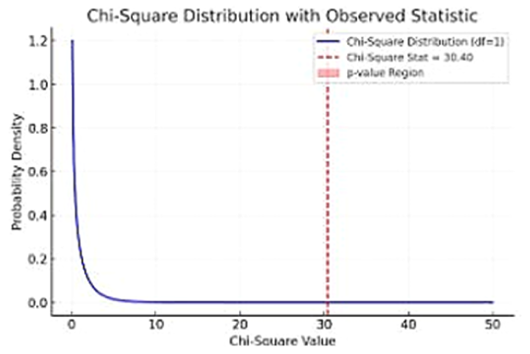
The chi-square distribution curve with df = 1 displays the probability density function (pdf) (Figure 1). The red dashed line indicates the calculated chi-square statistic (χ² = 30.40), and the shaded red area represents the p-value region, showing the probability of observing a chi-square statistic as extreme as the one calculated (Figure 1).. The test statistic’s position in the tail signifies a highly significant result.
Discussion
In this study, Ascaridia galli was detected in 10% of the parrots examined, with higher infestation rates in Grey Parrots (21.4%) and Rump Parrots (21.4%). Similarly, Ascaridia platyceri was found in 30.9% of the parrots, with infection rates of 50% in Grey Parrots and 41.7% in Senegal Parrots. In contrast, Capillaria spp. was less prevalent in parrots (5.45%) compared to chickens, where it was detected in 53.6% of the sampled birds. Capillaria spp. are highly prevalent in chickens (100 percent infection rate), especially in breeds like Heera and Java, indicates that these nematodes prefer unsanitary, high host-density settings, like backyard poultry systems , Capillaria spp. are less prevalent in parrots and could be ascribed to variations in husbandry techniques. The frequency of Ascaridia spp. and Capillaria spp. Related environmental factors, husbandry techniques, and host susceptibility all have an impact on the considerable global variation in infections in avian species, especially Psittaciformes and chickens. This study offers a thorough summary of the distribution and effects of these gastrointestinal nematodes in conjunction with earlier investigations.In Psittaciformes, Ascaridia spp. infections are highly prevalent across multiple regions. In Pakistan, studies by Khan et al. (2010) have reported infection rates of 33.93% in captive parrots from Gujranwala and Jhang. In Lahore Zoo the prevalence of 26.14% A. galli was commonly found in ringneck parrots, cockatiels, Australian budgies, Alexandrine parrots, blue-fronted amazons, eclecticus parrots, grey parrots, and lovebirds that are members of the Psittaciformes order . Similarly, according to a study done in Chattogram, Bangladesh, Ascaridia spp. were found in 9.09 percent of pet birds belonging to the Psittaciformes order, which includes cockatiels, budgerigars, cockatoos, macaws, grey parrots, lovebirds, lories, and rosellas . In the state of Bagmati, Kathmandu Valley, Nepal, Ascaridia spp. in 16 Psittaciformes, was found to be the most common gastrointestinal parasite, with an infection rate of 23% . In Chennai India, prevalence rates of Ascaridia spp. ranged from 11.20% in 5 out of 44 psitaciformes . Of the 122 birds in the Alipore Zoological Institute in India, 48 had positive Ascaridia spp. tests that indicates a 23% to 98% prevalence. In birds kept in captivity, Ascaridia spp. was the most prevalent gastrointestinal parasite, with a frequency of 32.9% for ova . These findings highlight the widespread nature of Ascaridia spp. infections in Psittaciformes across South Asia. Ascaridia spp. infections in Psittaciformes have also been documented in Nigeria, a 20.0% prevalence was reported in 2 out of 18 birds from Senegal Parrots, Grey Parrots, and Rose-ringed Parakeets (Otegbade and Morenikeji, 2013). According to Papini et al. (2012), 6.8% of pet and zoo birds in Italy were infected with Ascaridia spp. In Serbia, the frequency of Ascaridia spp. in zoo birds were between 10.25% and 10.78% . In the Czech Republic, the parasite Ascaridia platyceri was found in 38 parrots, with nine species of these birds being newly discovered as hosts for this particular parasite . The ability of Ascaridia species to harbour a broad variety of Psittaciformes demonstrates their importance on a global scale. Several studies that have described the existence of Capillaria spp. in Psittaciformes support the findings of our analysis. The prevalence of this infection in captive Psittaciformes birds underscores the risk of infection transmission in confined environments, despite the fact that it is ordinarily lower in parrots than in chickens. In a study carried out in Mashhad, Iran, parasitic infections in 751 caged pet birds including parrots were evaluated. Intestinal parasites like Capillaria spp. with a prevalence was 8%. were found, . Though the prevalence was relatively low, it confirms that Capillaria spp. infections occur in captive psittacine populations. Similarly, a parasitological survey in Brazilian zoos found Capillaria spp. among the parasites affecting 47 out of 101 psittacine birds, with an overall avian parasite prevalence of 46.7% . Additionally, a study in Chennai India found a Capillaria spp. prevalence of 20% in 17 captive psittacine birds from 7 different species . Another significant finding was the first record of Baruscapillaria obsignata in the intestines of three psittacine birds Barnardius zonarius, Agapornis roseicollis, and Melopsittacus undulatus kept in captivity in the Czech Republic . This finding expands the known host range of Capillaria spp. and supports our observation of Capillaria spp. infections in psittacine birds. In chickens, infections caused by Ascaridia galli and Capillaria spp. are of significant concern, with an overall prevalence of 52.85% observed in this study, reaching a maximum of 70.58% for Capillaria spp. in chicks. These findings are consistent with previously documented prevalence rates globally, which show considerable regional variation. In Pakistan, Capillaria spp. has been commonly identified in both free-range and domestic chicken populations . In Nigeria, total 438 out of 800 samples were tested positive for Capillaria spp, with the resulting prevalence rate of 5.5% . In the Kırıkkale Region of Turkiye, an examination of 100 samples showed a higher incidence rate of 20% for Capillaria spp. . In Somalia, the examination of 40 samples showd that only 1sample was found to be positive, suggesting a prevalence rate of 2.5% for Capillaria spp. The relatively low prevalence rate in Somalia may be attributed to the fact that the chickens are housed in separate floor systems . In Africa, total 120 samples were examined, out of which 100 were positive for gastrointestinal helminths. Studies have also revealed that 20 samples out of 120 were positive with a 16.7% prevalence for Capillaria spp. . Malaysia exhibits significantly elevated levels rates of Capillaria spp., with 141 out of 240 individuals being infected, resulting in a prevalence rate of 58.8% . In Northern Brazil, Saraiva et al. (2021) led an exploration that shows 277 complete examples was gathered in which Ascaridia galli prevalence was 27.03%. One more research led by Zalizar et al. (2021) shows that 280 chickens’ fecal samples was examined in research, in which 54.4% prevalence was recorded for both Ascaridia galli and Capillaria spp. In Diayala Province, Iraq, a study was conducted where 120 local chickens were examined, the recorded prevalence of Ascaridia spp. was 41.66% . The prevalence of Capillaria species can vary across different regions, and this is likely influenced by environmental factors such as temperature and humidity. These environmental conditions play a vital role in the life cycle and survival of these parasites. Ascaridia galli stands apart as a typical intestinal nematode affecting chickens, especially focusing younger birds and those raised and lived in free-roaming or house backyard. These parasitic infections can have significant impact on economicly, resulting in reduced weight gain and lower egg production. Studies have revealed varying prevalence rates of this nematode, inveigled by various environmental conditions and aspects, birds housing and bredding management techniques and most importantly differences in geographic. A study carried out in Bangladesh found that 45.6% of indigenous chickens in semi-scavenging systems were infected with Ascaridia galli. Specifically, 174 out of the 390 chickens were examined and was tested positive for the parasite. Interestingly, the data displayed that male chickens and younger chickens had a higher rate of infection with respect to other groups . In Southwestern Nigeria, 64 out of 120 specimens tested positive for the parasite Ascaridia galli, yielding a prevalence rate of 53.33% . Similarly, in the Kırıkkale region of Turkiye, an examination of 100 samples revealed a 29% prevalence of Ascaridia galli infestation . In Somalia, 13 out of 40 samples that were tested were found to be positive, resulting in a prevalence rate of 32% for Ascaridia galli . In Borno State, Northeastern Nigeria, 117 out of 800 tested positive for Ascaridia galli with a prevalence of 14.6% . Additionally, research in Ethiopia detected A. galli in 1280 sampled, a total of 1056 birds with a 56% prevalence of indigenous chickens, highlighting the high prevalence in certain regions . The parrots involved in this research were housed in individual breeding cages, which probably minimized their chances of encountering contaminated surroundings. Nevertheless, these birds had previously lived in aviaries, where the likelihood of nematode transmission was likely elevated due to their proximity to other birds and common living spaces. This shift from aviaries to solitary cages may have impacted the prevalence rates observed, as the parrots could have been exposed to nematodes during their time in the aviaries ; . The presences of Ascaridia galli in parrots, a worm typically associated with gallinaceous birds like chickens, raises serious concerns about the potential for cross-species transmission. Previous studies have reported cases where Ascaridia galli has infected non-gallinaceous birds, including parrots that were kept in close to chickens . In this research study, it is also to be noted that the parrots with high prevalence were imported from Australia, Iran, and Malaysia, which may have risked an appearance in the raised prevalence of these nematodes. It is acclaimed that imported birds generally conceal parasites from their inhabitant residences, and this emphasis on conveyance and adaptation can intensify their exposure to contaminations ; . The chickens involved in this examination were nurtured in backyard surroundings, where they had the time to meander openly and rummage. This procedure of farming embellishes their possibility of facing nematode eggs and larvae appearing in the soil, resulting in heightened rates of infection. Research signifies that free-feeding chickens are at a larger endangerment of developing Ascaridia galli and Capillaria spp. as a result of their direct interaction with the infected environment ; . Correspondingly, the parrots were emphasised in individual rearing cages, which likely underrated their uncovering to nematodes. Still, their earlier palace in aviaries and their access from differing neighbourhoods concede the possibility of having expedited the introduction of nematodes into their surroundings, contributing to the infection rates noticed. The decisions of this research accentuate the essentiality of establishing efficient control methods to minimise the occurrence of gastrointestinal nematodes in both parrots and chickens. In the case of parrots, it is imperative to implement routine deworming, comply with exacting sanitation routines, and administer quarantine obligations for shipped birds to reduce the infection peril.
For chickens, improving backyard chicken government methods, along with routine sanitation of livelihood spots, appropriate waste administration, and controlled feeding, can considerably decrease nematode vulnerability. The transmission of the Ascaridia galli parasite between chickens and parrots makes it necessary to be concerned about control in facilities that house a variety of birds. It is recommended to keep birds in independent cages to prevent the spread of the parasite and to administer consistent health checks to immediately recognise and address any infections.
Conclusions
This research supports valuable intuitions into the prevalence of Ascaridia spp. and Capillaria spp. infections in parrots as well as chickens. It highlights the critical impact that husbandry patterns, inconclusive circumstances, and host susceptibility display on the rates of these parasitical infestations. The discovery of Capillaria spp., Ascaridia galli, and Ascaridia platyceri parasites in parrots, linked along the critical vicinity of Capillaria spp. and Ascaridia galli in chickens, accentuates the significance of constant supervision and control endeavours to keep the well-being and health of birds.
Acknowledgments
We would like to express our genuine appreciation to our supervisor, Ishrat Aziz, for their priceless guidance and consistent support during the whole of this research project. Furthermore, we would like to offer our honest gratitude to the owner of RASSA Birds Farm and Aviary, as well the chicken’s owner, for facilitating the coherent collection of samples and making them readily accessible to us.
Novelty Statement
This study provides novel insights into the epidemiology of Ascaridia spp. and Capillaria spp. infections in captive Psittaciformes and backyard chickens in Gujranwala, Punjab, Pakistan, marking the first comprehensive analysis of its kind in the region. The identification of Ascaridia platyceri as the predominant nematode in parrots introduces new perspectives on host-parasite specificity, expanding the current understanding of psittacine parasitology. Moreover, the statistically significant differences in infection prevalence between parrots and chickens highlight species-specific susceptibilities, emphasizing the need for tailored parasite control strategies. By bridging critical knowledge gaps, this research contributes valuable epidemiological data that can inform improved health management, biosecurity measures, and conservation efforts for both domesticated and exotic avian species.
Author’s Contribution
Shahzadi Sarrah Atique and Noor Ul-Huda conducted the study, performed comprehensive data analysis, and drafted the manuscript. Ishrat Aziz, serving as the supervising mentor, conceptualized the research framework and provided invaluable guidance and strategic oversight throughout the entire study.
Conflict of interest
The authors have declared no conflict of interest.
Figures
Visualization of chi-square statistic and p-value region.
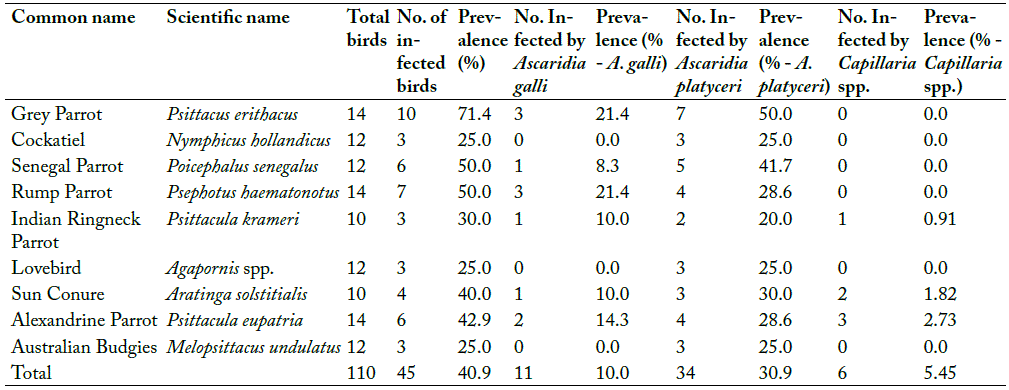
Prevalence of Ascaridia galli, Ascaridia platyceri, and Capillaria spp. infections in different parrot species.
References
- Abbaszadeh, M., Lotfalizadeh, N., Khedri, J., Razmi, G. and Borji, H., 2024. A survey of parasitic infections in Psittaciformes and Passeriformes in Mashhad, Iran. Vet. Med. Sci., 10(2). https://doi.org/10.1002/vms3.1372[CrossRef]
- Bayzid, M., Hasib, F.M.Y., Hasan, T., Hassan, M.M., Masuduzzaman, M., Hossain, M.A. and Alim, M.A., 2022. Prevalence of helminth and protozoan infections in pet birds of Chattogram, Bangladesh. Vet. Med. Sci., 9(1): 548–556. https://doi.org/10.1002/vms3.967[CrossRef]
- Bettridge, J., Lynch, S., Brena, M., Melese, K., Dessie, T., Terfa, Z., Desta, T., Rushton, S., Hanotte, O., Kaiser, P., Wigley, P. and Christley, R., 2014. Infection-interactions in Ethiopian village chickens. Prevent. Vet. Med., 117(2): 358–366. https://doi.org/10.1016/j.prevetmed.2014.07.002[CrossRef]
- Bowman, D.D., 2014. Georgis parasitology for veterinarians. Elsevier.
- Chokhal, K., Bohora, A. and Gupta, R., 2023. Gastrointestinal parasites of exotic avian fauna living in captivity in the state of Bagmati, Kathmandu Valley, Nepal. Research Square. https://doi.org/10.21203/rs.3.rs-2766827/v1[CrossRef]
- Fagerholm, H.P. and Overstreet, R.M., 2009. Ascaridoid nematodes: Contracaecum, Porrocaecum, and Baylisascaris. In: (eds. C.T. Atkinson, N.J. Thomas and D.B. Hunter). Parasitic diseases of wild birds. John Wiley and Sons. pp. 413–433. https://doi.org/10.1002/9780813804620.ch24[CrossRef]
- Gökpinar, S., Babacan, Z.B. and Di̇Nçel, G.Ç., 2023. Investigation of the prevalence of digestive system parasites in chickens in the Kirikkale region. Turk. J. Vet. Res., 7(2): 85–90. https://doi.org/10.47748/tjvr.1280735[CrossRef]
- González-Hein, G., Fredes, F., Kinsella, M., Larenas, J. and González-Acuña, D., 2012. New reports of helminthes in captive exotic psittacine birds in Chile. Arch. Med. Vet., 44(1): 87-91. https://doi.org/10.4067/S0301-732X2012000100013[CrossRef]
- Haziqah, F. and Khadijah, S., 2020. Helminthic parasites in indigenous chickens in Penang Island, Malaysia. Trop. Biomed., 37(4): 896–902. https://doi.org/10.47665/tb.37.4.896[CrossRef]
- Hofstatter, P.G. and Guaraldo, A.M.A., 2015. Parasitological survey on birds at some selected Brazilian zoos. Rev. Brasil. Parasitol. Vet., 24(1): 87–91. https://doi.org/10.1590/S1984-29612015005[CrossRef]
- Ilić, T., Becskei, Z., Gajić, B., Özvegy, J., Stepanović, P., Nenadović, K. and Dimitrijević, S., 2018. Prevalence of endoparasitic infections of birds in zoo gardens in Serbia. Acta Parasitol., 63(1): 134-146. https://doi.org/10.1515/ap-2018-0015[CrossRef]
- Kajerová, V. and Baruš, V., 2005. Psittacine birds (Aves: Psittaciformes) as new hosts of Baruscapillaria obsignata (Nematoda: Capillariidae). Acta Veterinaria Brno, 74(4): 571–574. https://doi.org/10.2754/avb200574040571[CrossRef]
- Kajerová, V., Baruš, V. and Literák, I., 2004. Nematodes from the genus Ascaridia parasitizing psittaciform birds: A review and determination key. Vet. Med., 49(6): 217-223. https://doi.org/10.17221/5698-VETMED[CrossRef]
- Khan, M.A., Khan, M.S. and Shafee, M., 2010. Prevalence and chemotherapy of helminthiasis in parrots at Lahore Zoo, Pakistan. J. Anim. Plant Sci., 20(3): 189–192. http://thejaps.org.pk/docs/Sep-2010/PREVALENCE.pdf
- Lawal, J.R., Jajere, S.M., Ibrahim, U.I., Biu, A.A. and Jonathan, D., 2023. Epidemiology of gastrointestinal helminths among chickens (Gallus domesticus) from Borno State, Northeastern Nigeria: Prevalence, helminth burden, and associated risk factors. Rev. D’él. Méd. Vét. Des Pays Trop., 76: 1–9. https://doi.org/10.19182/remvt.37127[CrossRef]
- Melo, Y.J.O., Ferraz, H.T., Saturnino, K.C., Silva, T.D.P., Braga, I.A., Amaral, A.V.C., Meirelles-Bartoli, R.B., and Ramos, D.G.S. 2021. Gastrointestinal parasites in captive and free-living wild birds in Goiania Zoo. Brazilian Journal of Biology, 82. https://doi.org/10.1590/1519-6984.240386[CrossRef]
- Mondal, S. and Manna, B., 2019. Gastrointestinal parasites of some captive birds in Alipore Zoological Garden, India. Entomol. J., 7(6): 627-631. https://www.entomoljournal.com/archives/2019/vol7issue6/PartK/7-3-292-411.pdf
- Moravec, F., 1982. Proposal of a new systematic arrangement of nematodes of the family Capillariidae. PubMed, 29(2): 119–132. https://pubmed.ncbi.nlm.nih.gov/7106653
- Otegbade, A.C. and Morenikeji, O.A., 2014. Gastrointestinal parasites of birds in zoological gardens in South-West Nigeria. PubMed, 31(1): 54–62. https://pubmed.ncbi.nlm.nih.gov/24862045
- Palanivelu, M., Kumar, M., Singh, S., Latchumikanthan, A., Badami, S., Kolluri, G. and Singh, R., 2016. Baruscapillaria obsignata: A serious cause of enteropathy and high mortality in turkeys (Meleagris gallopavo). Vet. Quart., 36(3): 145-149. https://doi.org/10.1080/01652176.2016.1182232[CrossRef]
- Papini, R., Girivetto, M., Marangi, M., Mancianti, F. and Giangaspero, A., 2012. Endoparasite infections in pet and zoo birds in Italy. Sci. World J., 2012: 1–9. https://doi.org/10.1100/2012/253127[CrossRef]
- Permin, A. and Hansen, J.W., 1998. Epidemiology, diagnosis, and control of poultry parasites. FAO Anim. Health Manual. https://www.fao.org/4/x0583e/x0583e.pdf
- Prathipa, A., Jayathangaraj, M.G., Gomathinayagam, S. and Thangavelu, A., 2013. Prevalence of endoparasites in captive psittacine birds belonging to pet shops and private residences in and around Chennai. Int. J. Vet. Sci., 2(2): 58-60. www.ijvets.com
- Rhaman, Z., and Al-Amery, A., 2022. Morphological and molecular identification of Ascaridia galli isolated from local chicken (Gallus gallus domesticus) in Diayala Province, Iraq. Int. J. Health Sci., 6(4): 5556-5568. https://doi.org/10.53730/ijhs.v6ns4.9389[CrossRef]
- Ritu, S.N., Labony, S.S., Hossain, M.S., Ali, M.H., Hasan, M.M., Nadia, N. and Anisuzzaman, N., 2023. Ascaridia galli, a common nematode in semi-scavenging indigenous chickens in Bangladesh: Epidemiology, genetic diversity, pathobiology, ex vivo culture, and anthelmintic efficacy. Poult. Sci., 103(3): 103405. https://doi.org/10.1016/j.psj.2023.103405[CrossRef]
- Sadaf, T., Javid, A., Hussain, A., Bukhari, S., Hussain, S., Ain, Q. and Ali, W., 2023. Studies on parasitic prevalence in pet birds from Punjab, Pakistan. Braz. J. Biol., 83. https://doi.org/10.1590/1519-6984.246229[CrossRef]
- Sadaf, T., Javid, A., Hussain, A., Bukhari, S. M., Hussain, S. M., Ain, Q., Ashraf, S., Suleman, S., Saleem, M., Azam, S. M., Ahmad, U., & Ali, W. (2021). Studies on parasitic prevalence in pet birds from Punjab, Pakistan. Brazilian Journal of Biology, 83. https://doi.org/10.1590/1519-6984.246229[CrossRef]
- Saraiva, D., Campina, A., Gonçalves, F., Melo-Viegas, D., Santos, A., Nogueira, R. and Costa, A., 2021. Gastrointestinal parasites in free-range chicken raised under extensive system from the northeast of Brazil. Braz. J. Poult. Sci., 23(1). https://doi.org/10.1590/1806-9061-2020-1337[CrossRef]
- Saheed, A., Salawu and E. Promise. 2023. Prevalence of gastrointestinal helminths of local chickens (Gallus gallus domesticus Linnaeus, 1758) in Modakeke, Ile-Ife, Osun State, Southwestern, Nigeria. 18. 021-029. https://www.researchgate.net/publication/373513142
- Shuai, Y., 2023. The complete mitochondrial genome of the chicken roundworm Ascaridia galli (Nematoda: Ascaridiidae). Mitochondrial DNA Part B, 8(10): 1029-1031. https://doi.org/10.1080/23802359.2023.2261638[CrossRef]
- Soojeede, M.I.A., 2020. Prevalence of gastrointestinal parasites in chicken (Gallus gallus domesticus); Case study Somali Poultry Farm in Mogadishu, Somalia. Zenodo.
- Urbanowicz, J., Gaweł, A. and Bobrek, K., 2018. Ascaridia galli isolates with ITS1-5.8rRNA-ITS2 fragment homologous to Ascaridia columbae. Acta Parasitol., 63(3): 640-644. https://doi.org/10.1515/ap-2018-0073[CrossRef]
- Valdebenito, J., Moreno, L., Landaeta-Aqueveque, C., Kinsella, J., Mironov, S., Cicchino, A. and González-Acuña, D., 2015. Gastrointestinal and external parasites of Enicognathus ferrugineus and Enicognathus leptorhynchus (Aves, Psittacidae) in Chile. Rev. Brasil. Parasitol. Vet., 24(4): 422-431. https://doi.org/10.1590/S1984-29612015074[CrossRef]
- Wascher, C., Canestrari, D. and Baglione, V., 2019. Affiliative social relationships and coccidian oocyst excretion in a cooperatively breeding bird species. Anim. Behav., 158: 121-130. https://doi.org/10.1016/j.anbehav.2019.10.009[CrossRef]
- William, J.F., 2001. Veterinary parasitology reference manual (5th ed.). Blackwell Publisher.
- Zalizar, L., Winaya, A., Malik, A., Widodo, W., Suyatno, S. and Anggraini, A., 2021. Species identification and prevalence of gastrointestinal helminths in Indonesian native chickens, and its impact on egg production. Biodiv. J. Biol. Diversit., 22(10). https://doi.org/10.13057/biodiv/d221029[CrossRef]
Services
Article usage statistics
Loading…