
Copper nanoparticles (CuNPs) have gained significant attention due to their wide range of applications, particularly in antibacterial treatments. In this study, we synthesized CuNPs using an eco-friendly mycosynthesis approach with Pleurotus ostreatus (oyster mushroom) extract and employed an autoclave-assisted method to enhance the synthesis process. This green synthesis method presents distinct advantages, such as reduced toxicity, cost-effectiveness, and environmental sustainability. The copper nanoparticles were characterized using UV-Vis spectroscopy, field emission scanning electron microscopy (FESEM), and Fourier-transform infrared spectroscopy (FTIR). UV-Vis spectroscopy confirmed the formation of CuNPs with a peak at 374 nm. FESEM revealed irregular shapes and a wide size distribution, ranging from 41.56 nm to 131.9 nm. FTIR analysis demonstrated the presence of functional groups acting as capping agents, stabilizing the nanoparticles. The root elongation test and inter simple sequence repeat (ISSR)-PCR showed that the CuNPs exhibited no toxic effects on rice root growth. The findings suggest that autoclave-assisted mycosynthesis of CuNPs using P. ostreatus offers a sustainable and efficient route for producing CuNPs with potential applications in antimicrobial treatments and agricultural industry.
Research Article · Volume 41, Issue 5, 16 December 2025 · Open Access
Autoclave-Assisted Mycosynthesis of Copper Nanoparticles from Pleurotus ostreatus Extract: Characterisation and Toxicity Analysis
· · · ·
Affiliations & Notes ⌄
- 1School of Biology, Faculty of Applied Sciences, Universiti Teknologi MARA (UiTM), 40450 Shah Alam, Selangor, Malaysia
- 2Atta-ur-Rahman Institute for Natural Product Discovery (AuRIns), Level 9, FF3 Building, UiTM Puncak Alam Campus, 42300 Puncak Alam, Selangor, Malaysia. *Correspondence | Norfatimah Mohamed Yunus, Faculty of Applied Sciences, Universiti Teknologi MARA (UiTM), 40450 Shah Alam, Selangor, Malaysia
- 3Email: norfatimah9778@uitm.edu.my
Article Info ⌄
- Journal:
- Sarhad Journal of Agriculture
- Published:
- 16 December 2025
Abstract
Figures



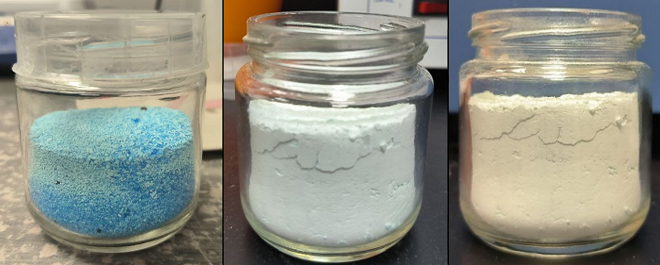
The color changes of copper (II) sulfate from light blue to white when dry in an oven at 80°C for 24 hours (1)
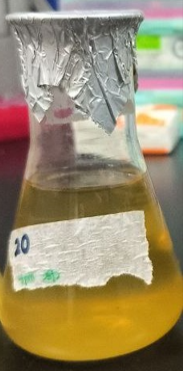
The fungus extract after autoclaving show light brown in colour
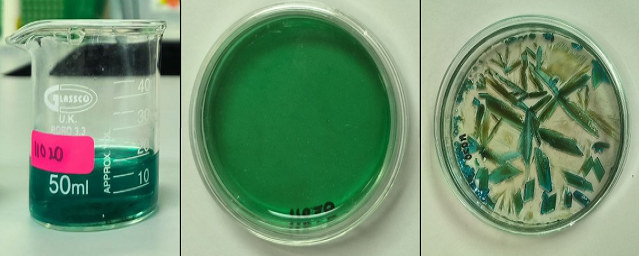
The colour changes of CuNP before autoclave, after autoclave and forming crystal
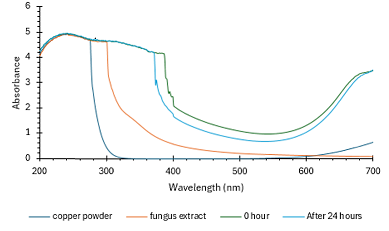
UV–Vis spectra of synthesized CuNPs.
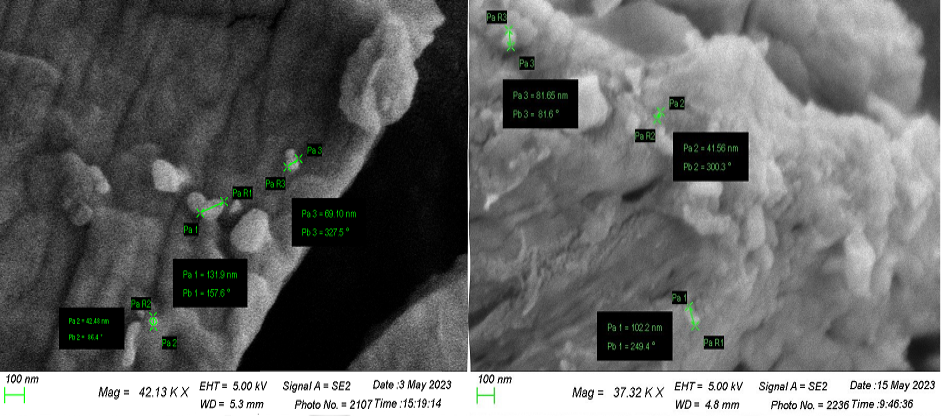
Field emission scanning electron microscopy (FESEM) characterization of the synthesized CuNPs
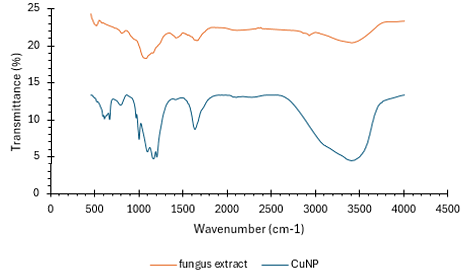
The Fourier-transform infrared spectroscopy (FTIR) spectra of the Pleurotus ostreatus fungus extract and synthesized CuNPs.
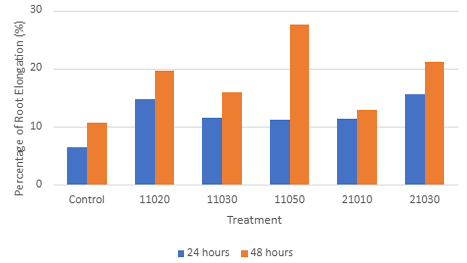
The percentages of root elongation at various concentrations for 24-hour and 48-hour incubation time (1)
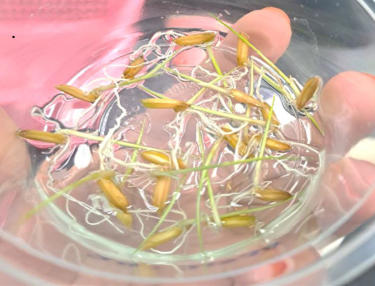
Oryza sativa root after 24 hours of treatment
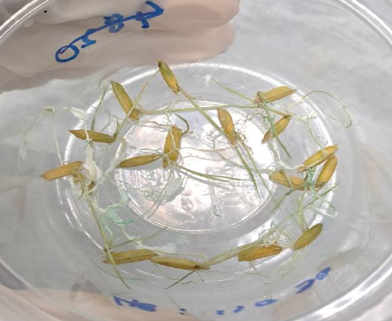
Oryza sativa root after 48 hours of treatment
Services
Article usage statistics
Loading…