
Elevating salinity level has become a worldwide threat to agricultural lands. High level concentration of salts hampers growth of plants and its yield of biomass by impacting major physiological mechanisms i.e., ionic, oxidative and osmotic stress. One possible and climate resilient strategy is to introduce new crops that can bear high level salinity and allow irrigation with saline water. Quinoa has great potential to grow under saline conditions having outstanding nutritious value. Pot based complete block design was conducted in COMSATS University Abbottabad, Pakistan during winter season. Five quinoa lines (L30, L81, L11, L9, and L24) were grown in sandy loam soil containing 15 dS m-1 and 30dS m-1 NaCl salt treatments. The results revealed that better growth was noticed in line L30 and L24 under 15 and 30 dSm-1 NaCl Salt treatments as compared to other three lines. Whereas, minimum plant growth was noticed in genotype L9 and L81 under 15 and 30 dSm-1 NaCl salt treatments. Highest leaf area, chlorophyll contents, and protein contents were noted in all condition in line L30 and L24 as compared other lines. High levels of potassium, calcium and magnesium and lowest sodium were noted in quinoa lines L30 and L24 aided in resisting salt stress and may be the cause of increased growth in both saline and non-saline soil. The present trial recognised the maximum salt-tolerant lines under severe salt stress, it might be applied to improve quinoa’s tolerance to salt in a later breeding phase.
Research Article · Volume 40, Issue 2, 22 March 2024 · Open Access
Assessment of Growth and Physiological Traits of Chenopodium quinoa Lines Under Different Salt Levels
· · · · ·
Affiliations & Notes ⌄
- 1Department of Environmental Sciences, COMSATS University Islamabad, Abbottabad Campus, Pakistan
- 2School of Agricultural, Forest, Food and Environmental Sciences, University of Basilicata, Potenza, 85100, Italy
- 3Faculty of Sciences and Technology, University of Central Punjab, Lahore, Pakistan
- 4Institute of Horticultural Sciences, University of Agriculture Faisalabad, Pakistan
- 5Department of Food and Drug Sciences, University of Parma, Parma, 43124, Italy. *Correspondence | Muhammad Shahzad and Samreen Nazeer, Department of Environmental Sciences, COMSATS University Islamabad, Abbottabad Campus, Pakistan
- 6Department of Food and Drug Sciences, University of Parma, Parma, 43124, Italy
- 7Email: samreen.nazeer@unipr.it, mshahzad@cuiatd.edu.pk
Article Info ⌄
- Journal:
- Sarhad Journal of Agriculture
- Published:
- 22 March 2024
From the article
- Shoot length, shoot fresh and dry weight significantly affected by salinity, however, maximum shoot length under all salinity levels was observed in L30 followed by L24, L81, L11 and L9 under all conditions.
- Growth of quinoa genotype L30 as compared to others L81, L11, L9, and L24 was not significantly affected by the salinity up to the 15 dSm-1 for root length that decreased at rising salt levels.
- The highest protein and leaf area was observed in L30 followed by L24 under 15 dSm-1 and 30 dSm-1 while minimum was noted under both salinity levels in L9 (Figure 2B, C).
- RWC was not significantly declined at lower salinity level 15 dSm-1 in both genotypes L30 and L24, confirming the salt loving nature of both genotypes while decreased 30 dSm-1 while minimum RWC was observed in L11 under both salinity levels that showed this a sensitive genotype (Figure 3A-B).
Selected from the article's own text.
Abstract
Introduction
Chenopodium quinoa (Willd.) is cultivated mainly for its edible grains, is considered as one of the crops that may be able to maintain food security in this century due to its remarkable nutritional qualities, such as a high protein content, fiber, lipids, free of gluten, having considerable amount of fatty-acids, vitamins, minerals, and phytochemicals ; ; ; . Additionally, the amounts of all essential amino acids exceed by WHO/FAO recommended in all age group categories ; . Moreover, its tremendous ability to withstand under abiotic stress conditions , 2023; Rivelli et al., 2023) attracts the world’s attention towards its introduction in new areas.
Globally, in arid and semi-arid areas salinity is the main threat for production of crops . In arid areas, effect of salinization enhances because of low rainfall, high evapotranspiration, high temperature and inappropriate soil and water management practices ; ; . In the world more than 45 million hectares (Mha) of irrigated land is salt affected and each year 1.5 M ha land become unproductive because of high salinity . Soil salinization rate is rapidly escalating and is expected to affect 50% of arable cropland by 2050 . Among arable land of Pakistan, 6.8 M ha soil is salt affected from which 2.7 M ha soil is in Punjab province . There are two reasons for salt deposition and arable land degradation, natural (primary) and anthropogenic (secondary) . Salt-affected land loses its aesthetic and economic value due to spread of salinization in continuous populated and already economically challenged countries which include Bangladesh, Pakistan and India which is causing unsustainability of agriculture.
Numerous approaches could be exploited to mitigate the adverse effects of salt stress, i.e., use of phytohormones, Osmo-protectants, crop water extracts, cultivation of salt-tolerant crops, fertilizer amendments, and different cultural practices ; ; ; . The cultivation naturally salt tolerant plants (halophytes) gaining popularity in the world ; . Halophytes can be grown in different salty environments range from coastal areas to desert . Halophytes can tolerate higher salt concentrations with adaptations such as high uptake of potassium (K+) as compared to sodium (Na+), ions compartmentalization in vacuole, accumulation of organic solutes, and salt secreting bladders and glands ; . They are capable of not only being surviving (100-200 mM NaCl) but gaining benefits from highly saline irrigation, therefore suggested for arid and semiarid agro-ecological areas, therefore in some halophyte species no significant yield reduction was found even at sea water irrigations, i.e., Chenopodium quinoa Willd . Any conventional known crop specie is not capable to tolerate such high salt concentrations.
Quinoa (pseudo-cereal) is a known as facultative halophyte whose germplasm being able to survive salinity even at sea water of 400 mM NaCl level . They also observed that under saline condition the protein, phosphorus, potassium, sodium, iron, and copper contents were improved while decreased grain yield, weight of 1000 seeds, zinc, calcium and carbohydrate as compared to normal conditions. Iqbal et al. (2017) reported that increased the gaseous exchange indicators, proline, phenolics, plant height and main panicle length at salinity level 10 dS m-1 in all lines as compared to control. Saleem et al. (2017) observed that the chlorophyll index, shoot and root Na+ and K+ were improved but shoot fresh and dry weight were not affected at 100 mM salinity level as compared to non-saline conditions.
Quinoa as a future alternate crop has huge diversity in its germplasm for salt tolerance under different climate and salt conditions. Therefore, this trial was conducted to examine the five quinoa lines (L30, L81, L11, L9, and L24) for salt tolerance (0 dSm-1, 15 dSm-1, and 30 dSm-1) having better growth and physiological mechanisms.
Materials and Methods
Pots experiment was conducted at department of environmental sciences, in COMSATS University Islamabad (Abbottabad Campus-Pakistan). Five lines of Quinoa (L30, L81, L11, L9 and L24) were obtained from University of Agriculture Faisalabad and seeds were sown in the nursery for homogeneous germination of Quinoa accessions in September 2019. Seeds were sown in sand and started to germinated after 4 days and then macro and micro nutrient solutions were prepared with specific concentration to obtain desired concentration of the nutrient solution KH2PO4 (200 mM), K2SO4 (500 mM), Ca (NO3)2 (500 mM), CaCl2 (500 mM), MgSO4 (500 mM), Fe-EDTA (200 mM), H3BO3(5 mM), MnSO4 (2 mM), ZnSO4 (0.5 mM), CuSO4 (0.3 mM), (NH4) Mo7O24 (0.01 mM). Until the 4th leaf stages seedlings were irrigated every day with nutrient solution. After that by following the required treatments T1: Control, T2:15 dSm-1 and T3:30 dSm-1 seedlings were transferred into soil. After 1 month of transplanting Quinoa was harvested for further biochemical analysis.
About 3 kg soil were collected from 0-20 cm depth and sieve by using 2 mm pore size for soil characteristics. Soil pH measured by using the pH meter (PHS-25CW Microprocessor pH/mV meter) that was 7.2. Electric conductivity of soil was measured by using the HANNA HI 98129 PH/EC/TDS tester meter, HI98129 that was 2.1. Soil moisture content was measured by following the . Organic matter content of the soil was determined by the wet oxidation method using K2Cr2O7 that was 0.71. Texture of soil measured by method that was sandy loam. Ionic analysis of the soils (Na+, K+, Ca2+ and Mg2+) were determined by following the . The Soil absorption ratio was measured by method that was 9. By following the soil saturation percentages were measured. Three different salinity levels i.e., control, 15 dSm-1 and 30 dSm-1 with three replications (total 45 pots) were produced by following the outlines of U.S.D.A. Salinity Laboratory Handbook 60 method. Every pot irrigated with tap water by maintaining the field capacity level . Every pot received fertilizers (NPK) at the concentration of Urea (CH₄N₂O), 0.1224 g first half dose before sowing and 0.1224 g second half dose after 2 week of germination, DAP (NH4)2HPO4, 0.212 g before of sowing and MOP (KCl), 0.1126 g before of sowing, respectively.
After harvesting, plant growth parameters (leaf area, leaf length, shoot height and root length) were analyzed by following the method. Fresh and dry weight of the leaves and roots were measured by using the analytical balances . Total ion concentration (Na+, K+, Ca2+ and Mg2+) in leaves and roots were measured by following the . Relative Water Contents RWC (%) of leaves and roots were measured by using the following Equation.
RWC (%)= FW-DW/FW × 100
Protein content in the Quiona leaves were measured by the method .
The design was completely randomized design with factorial arrangements. Statistical analysis was done by using the statistic 8.1 and HSD tukey test was done to compare the means value.
Results and Discussion
Shoot length, shoot fresh and dry weight significantly affected by salinity, however, maximum shoot length under all salinity levels was observed in L30 followed by L24, L81, L11 and L9 under all conditions. Similarly, highest shoot fresh and dry weight were noted in L30 and L24 as compared to other genotypes (Figure 1A-C). Growth of quinoa genotype L30 as compared to others L81, L11, L9, and L24 was not significantly affected by the salinity up to the 15 dSm-1 for root length that decreased at rising salt levels. Likewise, highest root fresh and dry weight were noted in L30 and L24 followed by L81, L9 and L11 (Figure 1D-F). The salinity can provoke osmotic stress by increasing extracellular solute concentration, that can lead to a decrease in water potential and loss of cellular turgor potential (Abotbatta, 2020). Thus, the reduction in plant development indices, particularly root and shoot fresh and dry weights, as salinity levels rise is connected to an increase in osmotic potential in water challenged plants this could be owing to elevated extracellular solute concentrations or lower cell volumes during drought. In quinoa plants, thick-walled cells adapted to water loss under osmotic stress do not lose turgor even in extreme water stress . Quinoa plant height is one of the most salinity sensitive features . In the current trial, the alteration in shoot length of five lines in response to salt stress was distinct. However, L30 retained shoot length up to 15 dSm-1 salinity after that there was a decline in shoot length, while in L81, L11, L9, L24, the shoot length dropped at both saline levels. Lines L30 and L24 maintained plant growth parameters up to 15 dSm-1 salinity level and then salt stress affected their growth parameters at further levels, this could be related to quinoa plants’ ability to retain water status even in a salt condition while L11 displayed sensitivity even at 15 dSm-1 salinity level. This reduction in growth could be related to photosynthetic rate and chlorophyll contents, both of which had been exposed to decrease under severe salinity stress .
In current trial chlorophyll contents were also decreased by increasing level of salinity, however, highest chlorophyll content was noted in L30 followed by L24, L81, L9 and L11 (Figure 2A). A considerable decrease in photosynthesis activity and chlorophyll contents were allied with a noteworthy decrease in stomatal conductance and high levels of Na+ buildup in leaf tissues, both of which significantly reduce plant photosynthetic capability. The drop in photosynthetic capability could be attributed to a decrease in the activity of photosynthetic enzymes such as Rubisco, which decreases with salinity level (Hussin et al., 2020). The maximum protein and leaf area was significantly altered by salinity levels. The highest protein and leaf area was observed in L30 followed by L24 under 15 dSm-1 and 30 dSm-1 while minimum was noted under both salinity levels in L9 (Figure 2B, C). Turcios et al. (2021) noted that increase in leaf area of quinoa under salinity levels showed the salt tolerance. The decrease in chlorophyll contents in quinoa plants under salinity stress is a common indication of oxidative stress, and it is frequently associated with a lack of chlorophyll synthesis as well as the activation of its breakdown by the enzyme chlorophyllase that ultimately cause the reduction leaf area .
RWC was not significantly declined at lower salinity level 15 dSm-1 in both genotypes L30 and L24, confirming the salt loving nature of both genotypes while decreased 30 dSm-1 while minimum RWC was observed in L11 under both salinity levels that showed this a sensitive genotype (Figure 3A-B). Similarly, Abbas et al. (2021) noted that under above 10 dSm-1 the RWC in quinoa lines was not affected, however, further increase in salinity level decreased the RWC. However, the continuation balance of water directly links with ionic interactions .
Quinoa lines appear to have regulated water-relations by enhancing inorganic osmotica uptake accumulation potassium and sodium in root and shoot, it is termed as “hypertonic” condition. In quinoa, salinity tolerance is substantially linked with inhibition of shoot potassium deficiency and suitable leaf cytosolic potassium and sodium ratio . In the present trial, lines L30 and L24 had better leaf potassium, calcium, magnesium and sodium at all salt levels, thus representing salt tolerance (Figures 4, 5). This could be due to effective sodium dumping in the leaf vacuole or sodium translocation to older leaves. In the current trial, sodium was evaluated in young leaves, and young leaves typically had a lower degree of accumulation . It appears that lines L30 and L24 responded at the whole plant level by translocating sodium in older leaves, resulting in low Na+ loads in young leaves, or it appears that there are sodium restrictions at the root paranchyma, as root Na+ contents of L30 and L24 were higher when grown in saline solutions, particularly at 30 dSm-1. This approach of minimal sodium buildup could also be linked to preferential K+ uptake at the root parenchyma and translocation to the leaf, as leaf K+ concentration was observed to be higher in L30 and L24. Under salt stress, quinoa plants acquire higher K+ in their leaves , which was validated in this investigation. Another probable explanation is a change in Na+ loading in the xylem. Nutrient intake at the root parenchyma, radial ion transport, and loading to the shoot have all been described as being mainly uncoupled ; . According to a recent halophyte review, thermodynamically, sodium loading in xylem is undoubtedly an active process assisted by SOS1 and Na+/H+ exchangers . It also appears that xylem potassium and sodium loadings are uncoupled in quinoa, and hence tolerant lines may have higher activity of Na+/H+ exchangers positioned at the xylem parenchyma border. This hypothesis’ confirmation could be included in future research initiatives.
Conclusions and Recommendations
The better salt tolerance was displayed by line L30, followed by L24. These lines have better growth attributes, chlorophyll contents, protein contents, relative water contents and ions uptake as compared to L81, L9, and L11. The present trial recognised the maximum salt-tolerant lines under severe salt stress, it might be applied to improve quinoa’s tolerance to salt in a later breeding phase. Considering the increase in Quinoa tolerance to salinity after establishment of vegetative part in the soil, it is recommended to perform irrigation by water with salinity equal or less than 30 dS m−1.Because quinoa has the feasibility of irrigation by high-saline water. Salinity does not have significant decreasing effect on the growth of Quinoa at vegetative growth stage in this study. But, the amount of growth and yield reduction strongly depended on the method you apply salinity. High levels of K+/Na+ ratio of Quinoa varieties V30 and V24 helped to withstand salt stress and might be the cause of high growth under both normal and salt affected soil. So, it is concluded that quinoa keeps effective homeostatic mechanisms related to K+ retention and osmotic adjustment, make it astonishing salt-tolerant plant. Quinoa plant mineral and protein concentration also did not decrease drastically under different salt stress in this study. By considering the results of this study, it is recommended to cultivate Quinoa varieties on saline affected areas of Pakistan.
Acknowledgements
We are grateful to COMSATS University for providing all research facilities.
Novelty Statement
The study showed that Quinoa has the ability to withstand under higher salinity conditions by osmotic adjustment.
Author’s Contribution
Mehwish Zafar: Conductance of experiment and data collection.
Muhammad Shahzad: Supervise the whole experiment as project head
Muhammad Zubair Akram: Initial draft and writing
Quratulain: Statistical analysis
Mehak Shehzad: Reviewed the manuscript
Samreen Nazeer: Review the manuscript and final drafting of manuscript.
This study is part of MS thesis of Mehwish Zafar.
Conflict of interest
The authors have declared no conflict of interest.
Figures
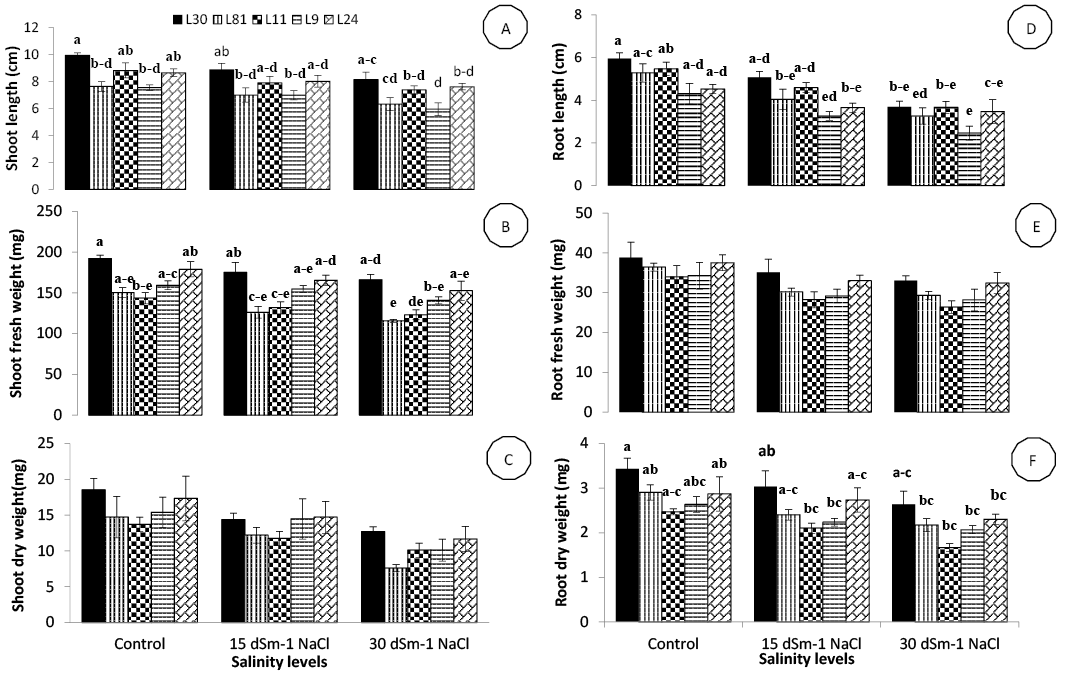
Effect of salinity stress on different lines of quinoa growth related attributes.
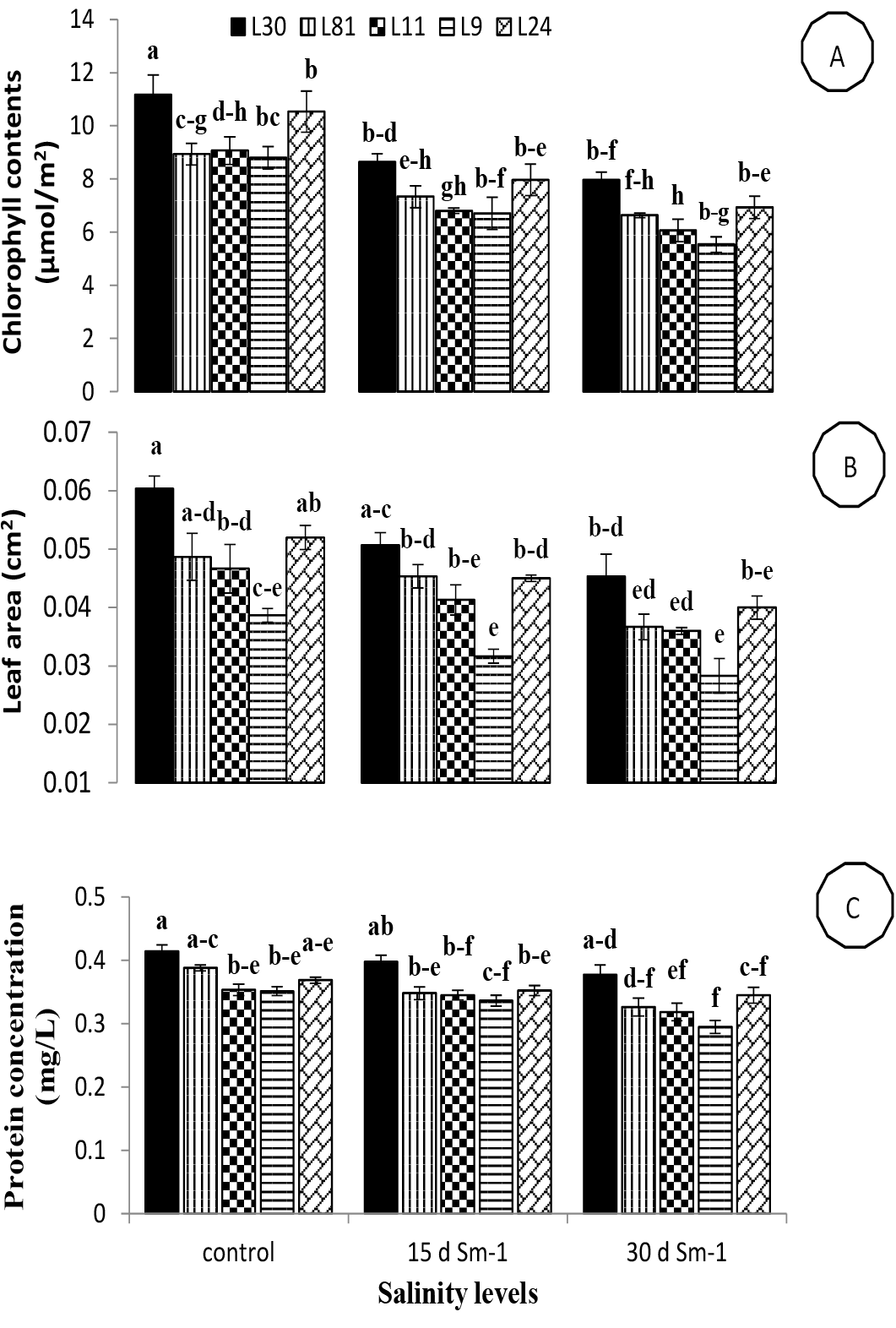
Effect of salinity stress on different lines of quinoa chlorophyll contents, leaf area and protein contents.
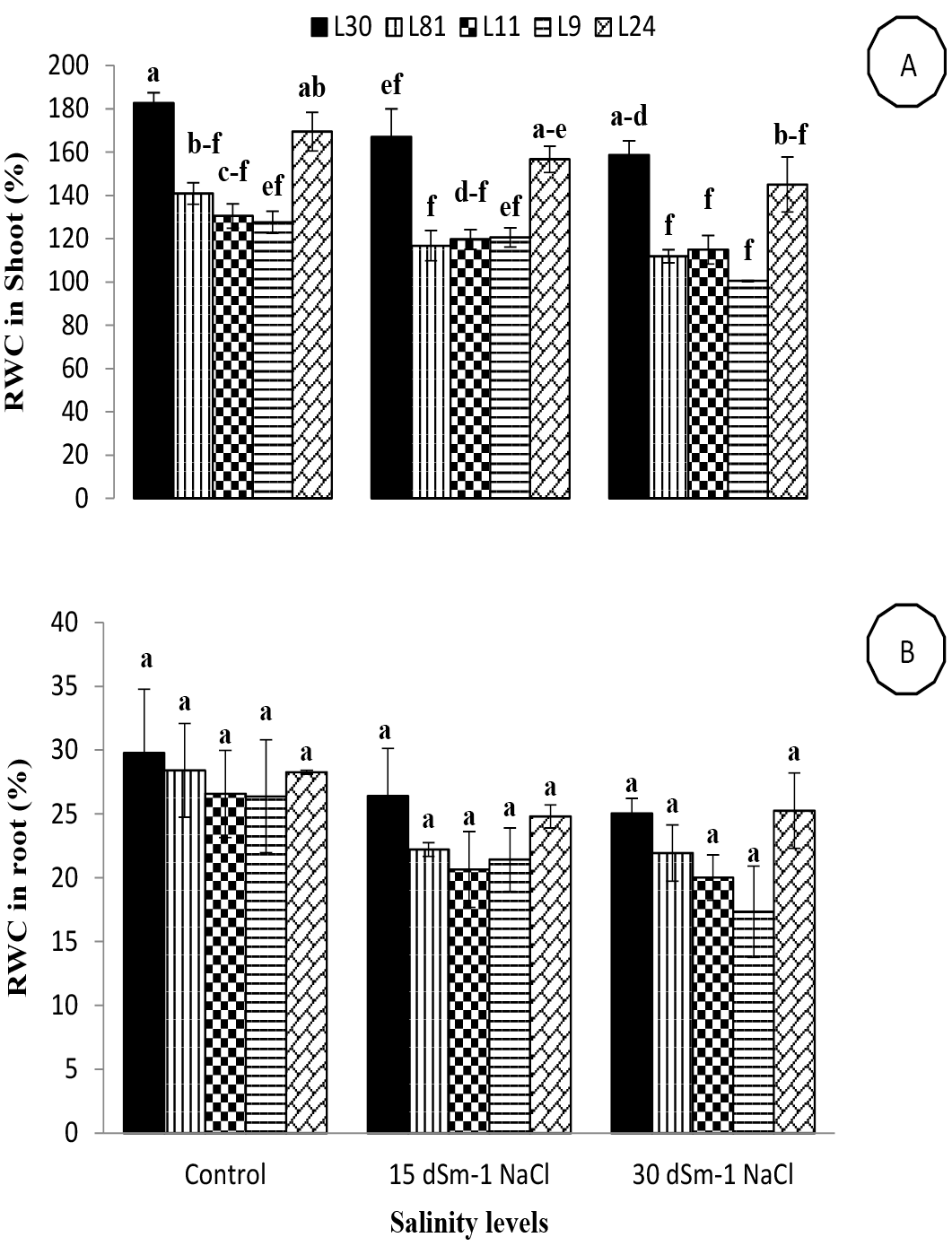
Effect of salinity stress on different lines of quinoa relative water contents in shoot and root.
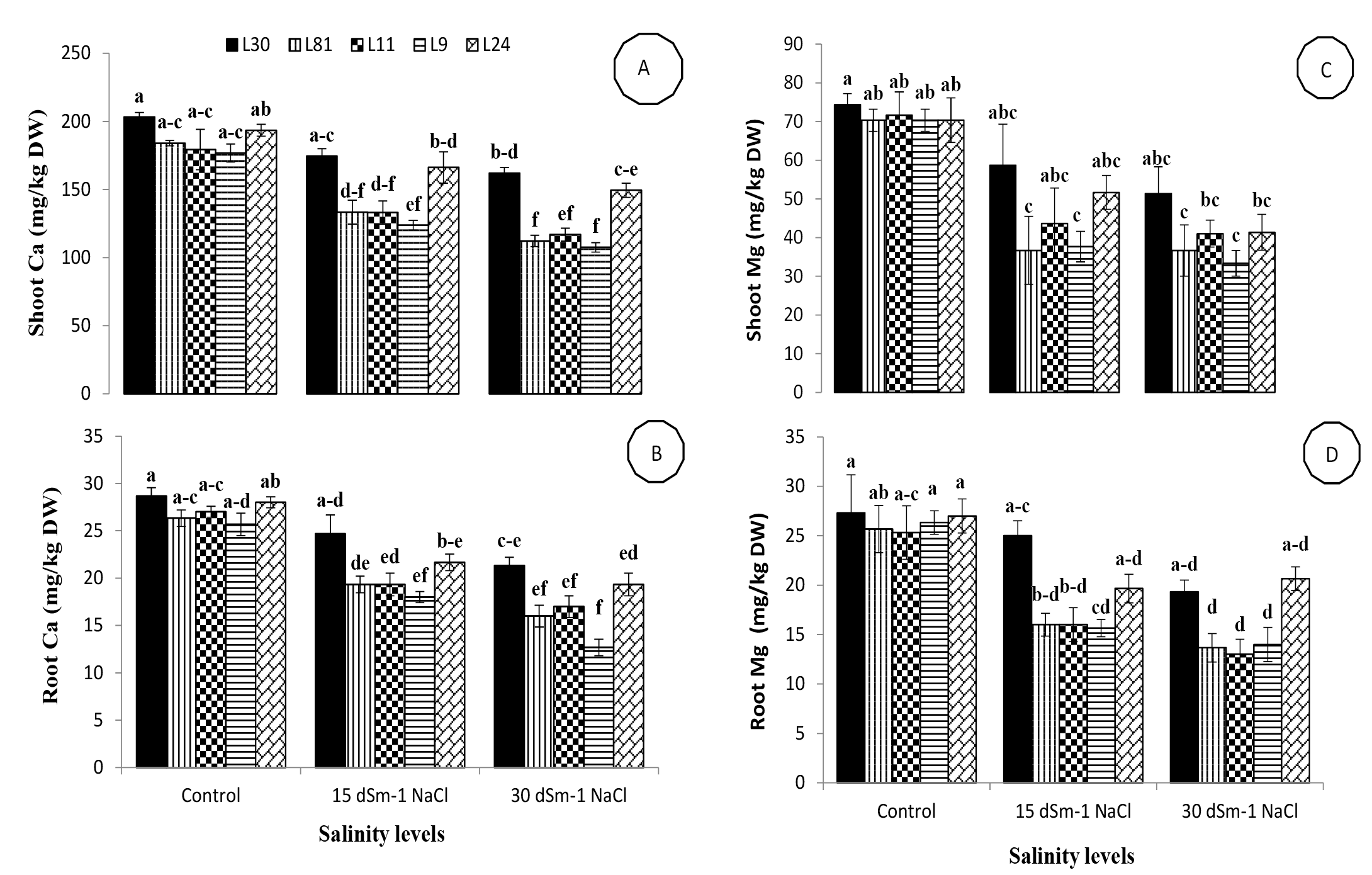
Effect of salinity stress on different lines of quinoa calcium and magnesium in shoot and root.
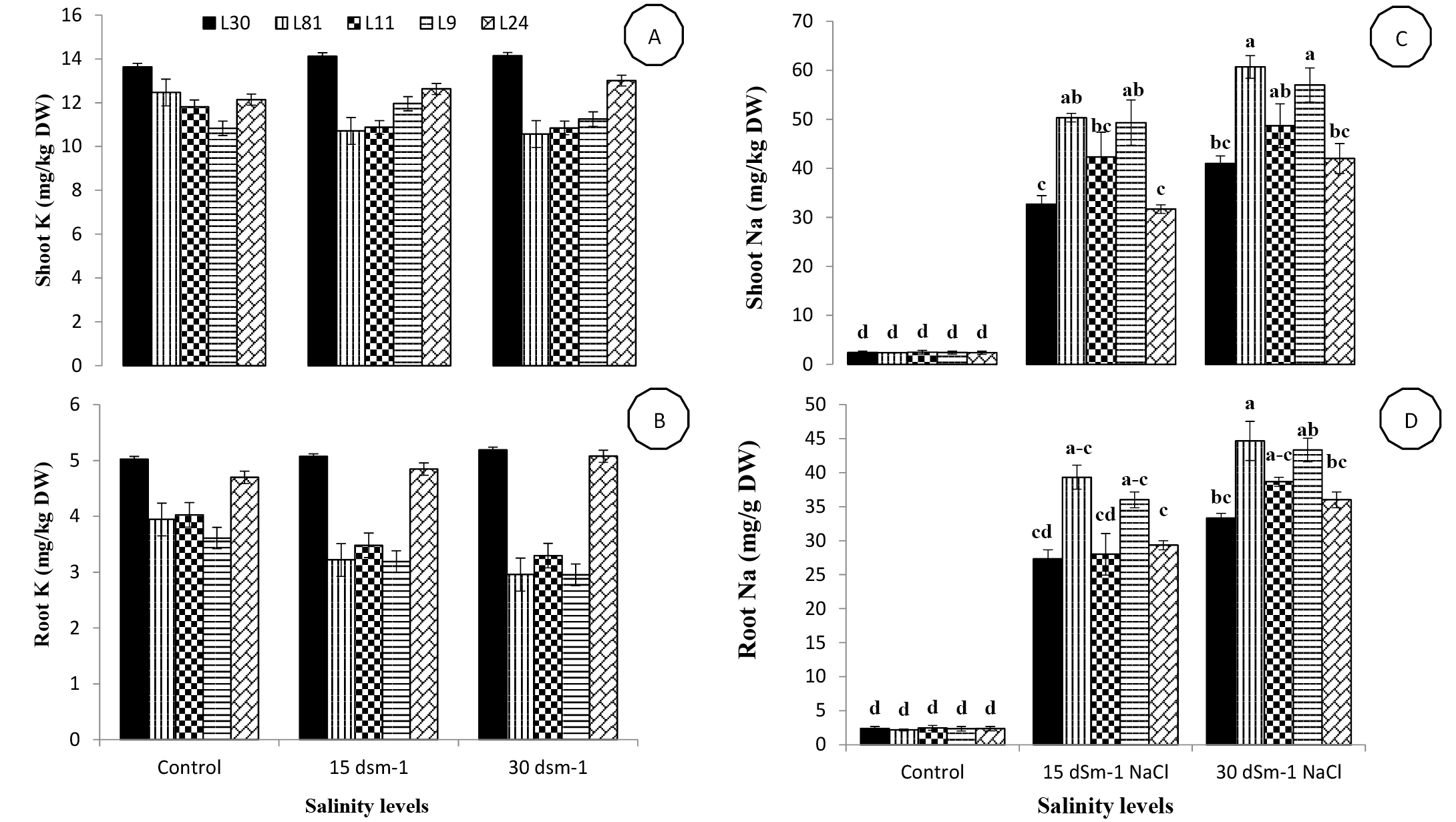
Effect of salinity stress on different lines of quinoa potassium and sodium in shoot and root.
References
- Abbas, G., M. Amjad, M. Saqib, B. Murtaza, M.A. Naeem, A. Shabbir and G. Murtaza. 2021. Soil sodicity is more detrimental than salinity for quinoa (Chenopodium quinoas Willd.): A multivariate comparison of physiological, biochemical and nutritional quality attributes. J. Agron. Crop Sci., 207(1): 59-73. https://doi.org/10.1111/jac.12451[CrossRef]
- Abobatta, W.F., 2020. Plant responses and tolerance to combined salt and drought stress. Salt and drought stress tolerance in plants: Signaling Networks And Adaptive Mechanisms. https://doi.org/10.1007/978-3-030-40277-8_2[CrossRef]
- Adolf, V.I., S.E. Jacobsen and S. Shabala. 2013. Salt tolerance mechanisms in quinoa (Chenopodium quinoa Willd.). Env. Exp. Bot., 92: 43-54. https://doi.org/10.1016/j.envexpbot.2012.07.004[CrossRef]
- Akram, M.Z., A. Libutti and A.R. Rivelli. 2023. Evaluation of vegetative development of quinoa under water stress by applying different organic amendments. Agronomy, 13(5): 1412. https://doi.org/10.3390/agronomy13051412[CrossRef]
- Akram, Z., M.A.S. Basra, M.B. Hafeez, S. Khan, S. Nazeer, S. Iqbal, M.S. Saddiq and N. Zahra. 2021. Adaptability and yield potential of new quinoa lines under agro-ecological conditions of Faisalabad-Pakistan. Asian J. Agric. Boil., 2021(2): 202005301. https://doi.org/10.35495/ajab.2020.05.301[CrossRef]
- Algosaibi, A.M., M.M. El-Garawany, A.E. Badran and A.M. Almadini. 2015. Effect of irrigation water salinity on the growth of quinoa plant seedlings. J. Agric. Sci., 7(8): https://doi.org/10.5539/jas.v7n8p205[CrossRef]
- Betzen, B.M., C.M. Smart, K.L. Maricle and B.R. MariCle. 2019. Effects of increasing salinity on photosynthesis and plant water potential in Kansas salt marsh species. Trans. Kansas Acad. Sci., 122(1-2): 49-58. https://doi.org/10.1660/062.122.0105[CrossRef]
- Bradford, M.M., 1976. A rapid and sensitive method for the quantitation of microgram quantities of protein utilizing the principle of protein-dye binding. Anal. Biochem., 72(1-2): 248-254. https://doi.org/10.1006/abio.1976.9999[CrossRef]
- Bueno, M. and M.P. Cordovilla. 2020. Ecophysiology and uses of halophytes in diverse habitats. Handbook of halophytes: From Molecules to Ecosystems towards Biosaline Agriculture. https://doi.org/10.1007/978-3-030-17854-3_57-1[CrossRef]
- Cai, Z.Q. and Q. Gao. 2020. Comparative physiological and biochemical mechanisms of salt tolerance in five contrasting highland quinoa cultivars. BMC Plant Biol., 20(1): 1-15. https://doi.org/10.1186/s12870-020-2279-8[CrossRef]
- Cuin, T.A., J. Bose, G. Stefano, D. Jha, M. Tester, S. Mancuso and S. Shabala. 2011. Assessing the role of root plasma membrane and tonoplast Na+/H+ exchangers in salinity tolerance in wheat: In planta quantification methods. Plant Cell Environ., 34(6): 947-961. https://doi.org/10.1111/j.1365-3040.2011.02296.x[CrossRef]
- Dewis, J., and F. Freitas. 1970. Physical and chemical methods of soil and water analysis. FAO soils Bulletin.
- Eisa, S.S., M.A. Eid, E.H. Abd El-Samad, S.A. Hussin, A.A. Abdel-Ati, N.E. El-Bordeny, S.H. Ali, H. Al-Sayed, M.E. Lotfy, A.M. Masoud and A.M. El-Naggar. 2017. Chenopodium quinoa Willd. A new cash crop halophyte for saline regions of Egypt. Aust. J. Crop Sci., 11(3): 343. https://doi.org/10.21475/ajcs.17.11.03.pne316[CrossRef]
- El-Mouttaqi, A., T. Sabraoui, M. Belcaid, M. Ibourki, I. Mnaouer, K. Lazaar, F. Sehbaoui, R.A. Elhaj, M. Khaldi, S. Rafik and J. Zim. 2023. Agro-morphological and biochemical responses of quinoa (Chenopodium quinoa Willd. var: ICBA-Q5) to organic amendments under various salinity conditions. Front. Plant Sci., 14: 1143170. https://doi.org/10.3389/fpls.2023.1143170[CrossRef]
- Filho, A.M.M., M.R. Pirozi, J.T.D.S. Borges, H.M. Pinheiro Sant’Ana, J.B.P. Chaves and J.S.D.R. Coimbra. 2017. Quinoa: Nutritional, functional, and antinutritional aspects. Crit. Rev. Food Sci. Nutr., 57(8): 1618-1630. https://doi.org/10.1080/10408398.2014.1001811[CrossRef]
- Goyal, S.S., A.A.R. Hafez and D.W. Rains. 1993. Simultaneous determination of total sodium, potassium, magnesium, and calcium in plant tissues using acid digestion and ion chromatography. Agron. J., 85(6): 1192-1197. https://doi.org/10.2134/agronj1993.00021962008500060019x[CrossRef]
- Hafeez, M.B., A. Raza, N. Zahra, K. Shaukat, M.Z. Akram, S. Iqbal and S.M.A. Basra. 2021. Gene regulation in halophytes in conferring salt tolerance. In: Handbook of bioremediation, Elsevier. pp. 341-370. https://doi.org/10.1016/B978-0-12-819382-2.00022-3[CrossRef]
- Hafeez, M.B., S. Iqbal, Y. Li, M.S. Saddiq, S.M. Basra, H. Zhang, N. Zahra, M.Z. Akram, D. Bertero and R.N. Curti. 2022. Assessment of phenotypic diversity in the USDA collection of quinoa links genotypic adaptation to germplasm origin. Plants, 11(6): 738. https://doi.org/10.3390/plants11060738[CrossRef]
- Hariadi, Y., K. Marandon, Y. Tian, S.E. Jacobsen and S. Shabala. 2011. Ionic and osmotic relations in quinoa (Chenopodium quinoa Willd.) plants grown at various salinity levels. J. Exp. Bot., 62(1): 185-193. https://doi.org/10.1093/jxb/erq257[CrossRef]
- Hinojosa, L., J.A. González, F.H. Barrios-Masias, F. Fuentes and K.M. Murphy. 2018. Quinoa abiotic stress responses: A review. Plants, 7(4): 106. https://doi.org/10.3390/plants7040106[CrossRef]
- Hussain, M.I., A. Muscolo, M. Ahmed, M.A. Asghar and A.J. Al-Dakheel. 2020. Agro-morphological, yield and quality traits and interrelationship with yield stability in quinoa (Chenopodium quinoa Willd.) genotypes under saline marginal environment. Plants, 9(12): 1763. https://doi.org/10.3390/plants9121763[CrossRef]
- Hussin, S.A., S.H. Ali, M.E. Lotfy, E.H.A. El-Samad, M.A. Eid, A.M. Abd-Elkader and S.S. Eisa. 2023. Morpho-physiological mechanisms of two different quinoa ecotypes to resist salt stress. BMC Plant Biol., 23(1): 374. https://doi.org/10.1186/s12870-023-04342-4[CrossRef]
- Iqbal, S., S.M.A. Basra, I. Afzal and A. Wahid. 2017. Exploring potential of well adapted quinoa lines for salt tolerance. Int. J. Agric. Biol., 19(4): 1. https://doi.org/10.17957/IJAB/15.0399[CrossRef]
- Joint, W.H.O., 2007. Protein and amino acid requirements in human nutrition. World health organization technical report series, 935: 1.
- Karahara, I. and T. Horie. 2021. Functions and structure of roots and their contributions to salinity tolerance in plants. Breed Sci., 71(1): 89-108. https://doi.org/10.1270/jsbbs.20123[CrossRef]
- Khalil, A., G. Qadir, J. Abdul-Rehman, M.Q. Nawaz, A. Rehim, K. Jabran and M. Hussain. 2015. Gypsum and farm manure application with chiseling improve soil properties and performance of fodder beet under saline-sodic conditions. Int. J. Agric. Biol., 17(6): 1225-1230. https://doi.org/10.17957/IJAB/14.0036[CrossRef]
- Koyro, H.W., and S.S. Eisa. 2008. Effect of salinity on composition, viability and germination of seeds of Chenopodium quinoa Willd. Plant Soil, 302: 79-90. https://doi.org/10.1007/s11104-007-9457-4[CrossRef]
- Lu, Y. and W. Fricke. 2023. Salt stress regulation of root water uptake in a whole-plant and diurnal context. Int. J. Mol. Sci., 24(9): 8070. https://doi.org/10.3390/ijms24098070[CrossRef]
- Makanjuola, O.M. and O.J. Coker. 2019. Assessment of sensory, functional and pasting properties of different yam cultivar flours subjected to the same processing condition. J. Glob. Sci. Res., 7(10): 672-687.
- Minhas, P.S., T.B. Ramos, A. Ben-Gal and L.S. Pereira. 2020. Coping with salinity in irrigated agriculture: Crop evapotranspiration and water management issues. Agric. Water Manage., 20(227): 105832. https://doi.org/10.1016/j.agwat.2019.105832[CrossRef]
- Mohammadi, H., B. Rahimpour, H. Pirasteh-Anosheh and M. Race. 2022. Salicylic acid manipulates ion accumulation and distribution in favor of salinity tolerance in Chenopodium quinoa. Int. J. Environ. Res. Publ. Health, 19(3): 1576. https://doi.org/10.3390/ijerph19031576[CrossRef]
- Munns, R. and M. Tester. 2008. Mechanisms of salinity tolerance. Annu. Rev. Plant Biol., 59: 651-681. https://doi.org/10.1146/annurev.arplant.59.032607.092911[CrossRef]
- Nazeer, S., M.Z. Akram and M. Ali. 2022. Amaranth as nutrition-rich and climatic resilient crop: A review. Agric. Conspec. Sci., 87(4): 281-293.
- Qadir, A., S.A. Khan, R. Ahmad, S. Masood, M. Irshad, F. Kaleem, S. Kumar and M. Shahzad. 2017. Exogenous Ca2SiO4 enrichment reduces the leaf apoplastic Na+ and increases the growth of okra (Abelmoschus esculentus L.) under salt stress. Sci. Horticult., 214: 1-8.
- Qureshi, A.S. and A.W. Daba. 2020. Evaluating growth and yield parameters of five quinoa (Chenopodium quinoa w.) genotypes under different salt stress conditions. J. Agric. Sci., 12: 128. https://doi.org/10.5539/jas.v12n3p128[CrossRef]
- Richards, L.A., 1954. Diagnosis and improvement of saline and alkali soils (No. 60). US Government Printing Office. https://doi.org/10.1097/00010694-195408000-00012[CrossRef]
- Rivelli, A.R., M.Z. Akram and A. Libutti. 2023. Woody biochar rate and water shortage impact on early growth stages of Chenopodium quinoa Willd. Agron., 14(1): 53. https://doi.org/10.3390/agronomy14010053[CrossRef]
- Sabagh, A.E., A. Hossain, C. Barutçular, M.A. Iqbal, M.S. Islam, S. Fahad, O. Sytar, F. Çiğ, R.S. Meena and M. Erman. 2020. Consequences of salinity stress on the quality of crops and its mitigation strategies for sustainable crop production: An outlook of arid and semi-arid regions. Environ. Clim. Plant Veg. Grow, pp. 503-533. https://doi.org/10.1007/978-3-030-49732-3_20[CrossRef]
- Saddiq, M.S., S. Iqbal, I. Afzal, A.M. Ibrahim, M.A. Bakhtavar, M.B. Hafeez, Jahanzaib and M.M. Maqbool. 2019. Mitigation of salinity stress in wheat (Triticum aestivum L.) seedlings through physiological seed enhancements. J. Plant Nutr., 42: 1192-1204. https://doi.org/10.1080/01904167.2019.1609509[CrossRef]
- Saiz-Fernández, I., M. Lacuesta, U. Pérez-López, M.C. Sampedro, R.J. Barrio and N. De Diego. 2020. Interplay between 1-aminocyclopropane-1-carboxylic acid, γ-aminobutyrate and D-glucose in the regulation of high nitrate-induced root growth inhibition in maize. Plant Sci., 293: 110418. https://doi.org/10.1016/j.plantsci.2020.110418[CrossRef]
- Sakadevan, K. and M.L. Nguyen. 2010. Extent, impact, and response to soil and water salinity in arid and semiarid regions. Adv. Agron., 1(109): 55-74. https://doi.org/10.1016/B978-0-12-385040-9.00002-5[CrossRef]
- Saleem, M.A., S.M.A. Basra, I. Afzal, S. Iqbal, M.S. Saddiq and S. Naz. 2017. Exploring the potential of quinoa accessions for salt tolerance in soilless culture. Int. J. Agric. Biol., 19(2): 1. https://doi.org/10.17957/IJAB/15.0267[CrossRef]
- Schulte, R.P.O., R. Fealy, R.E. Creamer, W. Towers, T. Harty and R.J.A. Jones. 2012. A review of the role of excess soil moisture conditions in constraining farm practices under Atlantic conditions. Soil Use Manage., 28(4): 580-589. https://doi.org/10.1111/j.1475-2743.2012.00437.x[CrossRef]
- Shahzad, M., K. Witzel, C, Zörb and K.H. Mühling. 2012. Growth-related changes in subcellular ion patterns in maize leaves (Zea mays L.) under salt stress. J. Agro. Crop Sci., 198: 46-56.
- Shrivastava, P. and Kumar, R., 2015. Soil salinity: A serious environmental issue and plant growth promoting bacteria as one of the tools for its alleviation. Saudi. J. Biol. Sci., 22(2): 123-131. https://doi.org/10.1016/j.sjbs.2014.12.001[CrossRef]
- Shuyskaya, E., Z. Rakhmankulova, M. Prokofieva, V. Kazantseva and N. Lunkova. 2023. Impact of salinity, elevated temperature, and their interaction with the photosynthetic efficiency of halophyte crop Chenopodium quinoa Willd. Agriculture, 13(6): 1198. https://doi.org/10.3390/agriculture13061198[CrossRef]
- Talukdar, S., S. Bera, M.W. Naikoo, G.V. Ramana, S. Mallik, P.A. Kumar and A. Rahman. 2024. Optimisation and interpretation of machine and deep learning models for improved water quality management in Lake Loktak. J. Environ. Manage., 351: 119866. https://doi.org/10.1016/j.jenvman.2023.119866[CrossRef]
- Turcios, A.E., J. Papenbrock and M. Tränkner. 2021. Potassium, an important element to improve water use efficiency and growth parameters in quinoa (Chenopodium quinoa) under saline conditions. J. Agron. Crop Sci., 207(4): 618-630. https://doi.org/10.1111/jac.12477[CrossRef]
- Victoria, O., U. Idorenyin, M. Asana, L. Jia, L. Shuoshuo, S. Yang, I.M. Okoi, A. Ping and E.A. Egrinya. 2023. Seed treatment with 24-epibrassinolide improves wheat germination under salinity stress. Asian J. Agric. Biol.,
- Vilcacundo, R. and B. Hernández-Ledesma. 2017. Nutritional and biological value of quinoa (Chenopodium quinoa Willd.). Curr. Opin. Food Sci., 1(14): 1-6. https://doi.org/10.1016/j.cofs.2016.11.007[CrossRef]
- Walkley, A., and I.A. Black. 1934. An examination of the Degtjareff method for determining soil organic matter, and a proposed modification of the chromic acid titration method. Soil Sci., 37(1): 29-38. https://doi.org/10.1097/00010694-193401000-00003[CrossRef]
- Waqas, M., M.J. Hawkesford and C.M. Geilfus. 2023a. Feeding the world sustainably: Efficient nitrogen use. Trends Plant Sci., https://doi.org/10.1016/j.tplants.2023.02.010[CrossRef]
- Waqas, M., D. Van Der Straeten and C.M. Geilfus. 2023b. Plants’ cry’for help through acoustic signals. Trends Plant Sci., https://doi.org/10.1016/j.tplants.2023.05.015[CrossRef]
- Waqas, M., C. Yaning, H. Iqbal, M. Shareef, H. Rehman and H.M. Bilal. 2021. Synergistic consequences of salinity and potassium deficiency in quinoa: Linking with stomatal patterning, ionic relations and oxidative metabolism. Plant Physiol. Biochem., 159: 17-27. https://doi.org/10.1016/j.plaphy.2020.11.043[CrossRef]
- Yaseen, S.M. and M.I. Rao. 2002. Skipped irrigation at critical growth stages and its effect on crop yields and soil salinity. J. Drain Water Manage., (Pakistan). 6(1): 37-44.
- Yun, P. and S. Shabala. 2020. Ion transport in salt glands and bladders in halophyte species. Handbook of halophytes: From molecules to ecosystems towards biosaline agriculture, pp. 1-19. https://doi.org/10.1007/978-3-030-17854-3_76-1[CrossRef]
- Zahra, N., A. Wahid, M.B. Hafeez, M.N. Alyemeni, T. Shah and P. Ahmad. 2021. Plant growth promoters mediated quality and yield attributes of milk thistle (Silybum marianum L.) ecotypes under salinity stress. Sci. Rep., 11(1): 23200. https://doi.org/10.1038/s41598-021-02435-4[CrossRef]
- Zahra, N., A. Wahid, M.B. Hafeez, I. Lalarukh, A. Batool, M. Uzair, M.A. El-Sheikh, S. Alansi and P. Kaushik. 2022. Effect of salinity and plant growth promoters on secondary metabolism and growth of milk thistle ecotypes. Life, 12(10): 1530. https://doi.org/10.3390/life12101530[CrossRef]
- Zhang, H., Y. Li and J.K. Zhu. 2018. Developing naturally stress-resistant crops for a sustainable agriculture. Nat. Plants, 4(12): 989-996. https://doi.org/10.1038/s41477-018-0309-4[CrossRef]
Cited by 1 article
In journals published by ResearchersLinks.
Services
Article usage statistics
Loading…