
The cultivation of high-value horticultural crops presents a substantial opportunity to enhance agricultural productivity and profitability in medium- to low-land regions of Bangladesh. This experiment was conducted to assess the economic viability of four promising fruit crops -dragon fruit, jujube, mango, and guava in medium-lowland regions. Primarily, data were collected from 180 farmers throughout key cultivating areas for calculating profitability. The economic indicators, such as the benefit-cost ratio (BCR) and returns to scale, employing Cobb-Douglas production function analysis, were utilized to calculate profitability matrices. Data were analyzed using MS Excel and RStudio version R 4.3.2. All fruits unveiled robust economic possibilities with BCR values >1; dragon fruit headed with a BCR of 2.36, followed by jujube (1.97), mango (1.91), and guava (1.67). Moreover, returns to scale analysis ratified encouraging returns among all horticultural fruits, where dragon fruit (1.68), mango (1.32), jujube (1.29), and guava (1.22) signify the potential of large-scale and optimized production. Significant input coefficients were noted for the input cost, such as land preparation, human labor, planting materials, support materials, fertilization, and insecticides across all fruits (p < 0.001), dragon fruit exhibited the maximum individual input responsiveness with the values of 0.25, 0.27, 0.15, 0.22, 0.29, and 22 respectively. Based on all assessed economic indicators, dragon fruit emerged as the most suitable and high-performing horticultural crop for the medium-lowland regions in Bangladesh. These findings would support the targeted policy makers, together with input subsidies, training, and value chain development, to augment dragon fruit cultivation along with converting medium-lowlands into centers of high-return horticultural farming.
Research Article · Volume 42, Issue 2, 22 April 2026 · Open Access
Assessing Horticultural Crop Production and Profitability: A Comparative Economic Evaluation of Four Promising Fruits Cultivated in Medium-Lowland Areas of Bangladesh
· · · · · ·
Affiliations & Notes ⌄
- 1Department of Economics, University of Chittagong, Chittagong-4331, Bangladesh
- 2Green Care Agro Farm Ltd., Debidwar, Comilla-3530, Bangladesh
- 3Department of Crop Botany and Tea Production Technology, Sylhet Agricultural University, Sylhet-3100, Bangladesh
- 4Department of Genetics and Plant Breeding, Sylhet Agricultural University, Sylhet-3100, Bangladesh
- 5Department of Agronomy, Bangladesh Agricultural University, Mymensingh-2202, Bangladesh
- 6Department of Horticulture, Gazipur Agricultural University, Gazipur -1706, Bangladesh. *Correspondence | Muntarina Hussan Mouri, Department of Crop Botany and Tea Production Technology, Sylhet Agricultural University, Sylhet-3100, Bangladesh
- 7Email: mourimh.cbot.sau@gmail.com
Article Info ⌄
- Journal:
- Sarhad Journal of Agriculture
- Published:
- 22 April 2026
Abstract
Introduction
Agricultural production systems in Bangladesh have conventionally been categorized by a substantial dependency on rice farming, particularly in the medium-lowland areas, which account for a sizable portion of arable land . Over the past two decades, a combination of declining rice profitability due to labor shortages, low crop diversification, and augmented production risks associated with climate variability ; ; that’s why such types of agricultural land have gradually shifted toward high-value horticultural crops ; ; . Crop diversification has emerged as a key strategy for developing rural employment, reducing rural poverty, ensuring food and nutritional security, and promoting sustainable land use, encouraging long-term economic growth, particularly in emerging economies like Bangladesh ; .
In Bangladesh, agricultural land is divided into five types based on elevation and flooding depth during the monsoon season: highland, medium-highland, medium-lowland, lowland, and very lowland . Highlands are usually used for house construction as well as homestead fruit cultivation, while medium highlands are suitable for cultivating rabi crops, especially wheat, maize, potato, and vegetables . Some areas of the medium-lowland are also used for vegetable agriculture, followed by highland irrigated rice, while lowland and very lowlands are utilized for rice-based farming ; ; . To maximize long-term profitability, farmers are shifting their attention away from grain crops to fruit cultivation, which includes both native and exotic varieties . Horticulture fruits, predominantly mango, jujube, malta (oranges), strawberries, and dragon fruit, are achieving popularity in both lowland and medium-high areas, and farmers are substituting horticulture fruit crops instead of cereal crops to increase yields and market demand .
Bangladesh’s horticulture industry is rapidly increasing and has huge potential, driven by increased urban demand, improved production technology, and suitable climatic conditions . Fruit yield has risen by an average of 11.5%, positioning it in the top 10 countries. Therefore, Bangladesh has the potential to become a major player in global fruit exports soon with the right government policies and innovative farmer efforts . Despite ample opportunities in indigenous fruit cultivation, Bangladesh continues to rely largely on imports to fulfill domestic demand . According to current estimates, domestic production accounts for roughly 40% of total fruit consumption in the country, with the remainder imported from South Africa, Brazil, China, Australia, India, Pakistan, and Egypt . To reduce reliance on exports, governments and corporations should invest in advanced technologies to elevate fruit cultivation in medium-lowland areas to an industrial scale . Furthermore, the government and individuals should launch research programs to boost economic returns.
However, performance evaluation of horticulture fruits such as dragon, mango, guava, and jujube is quite limited, particularly in medium-lowland agroecology . Most earlier studies revealed greater horticultural development narratives and single-crop profitability evaluations, often without using detailed econometric methodologies to account for input-output relationships. For example, Hasan et al. (2014) estimated summer vegetable profitability in Bangladesh using benefit-cost ratios, and Hajong et al. (2018) evaluated tomato cultivation through gross margin analysis, both without estimating production elasticities. Although some recent works, such as Kaysar et al. (2019) on papaya and Khatun et al. (2019) on strawberry, used the Cobb-Douglas production function model and marginal productivity analysis; nevertheless, such techniques are still restricted in horticulture research. So, the current study employed a widely accepted analytical framework, the Cobb-Douglas production function model, which is used in agricultural economics to calculate the gross returns, returns to scale, and input elasticity, all of which are crucial for understanding cost-efficiency and profitability ; ; Mondal & Taku, 2025). By integrating both profitability analysis and production function estimation, this study endeavors to provide a comprehensive comparative evaluation of mango, jujube, guava, and dragon fruit cultivation in Bangladesh.
The study aims to assess the cost structures, gross returns, and benefit-cost ratios associated with each fruit crop; estimate the production elasticities of key inputs or returns to scale, and provide policy and practical recommendations for optimizing horticultural production strategies in medium-lowland regions. The findings are intended to benefit farmers, extension agencies, and policymakers in Bangladesh by contributing to the larger goal of agricultural diversification, income enhancement, and sustainable rural development.
Methodology
Study area and crop selection
The study was carried out in the chosen medium-lowland regions of Cumilla and Chadpur districts in Bangladesh for their agro-ecological qualities that are ideal for horticultural fruit production (Figure 1). Four horticultural fruit crops, such as mango (Mangifera indica L.), jujube (Ziziphus mauritiana L.), guava (Psidium guajava L.), and dragon (Hylocereus undatus), were chosen based on their agronomic adaptability, market potential, and documented expansion tendencies in the medium-lowland agricultural system.
Sampling design and data collection
Multistage stratified random sampling was used to collect 180 samples from different agricultural farms in 5 villages under the Cumilla district and 4 villages under the Chandpur district, Bangladesh (Figure 2). Before the study, a pre-test of the questionnaire was conducted to improve the final questionnaire. In the first stage, two districts were purposely selected considering the agricultural ecology in the medium-lowland area. In the second stage, four representative upazilas were randomly picked from the two selected districts. In the third phase, 9 villages were selected from 4 different upazilas using simple random sampling methods. Finally, in phase 4, a stratified random sampling method was used to choose 20 farmers from each village (Figure 2).
Analytical framework
Cobb-Douglas production function specification
The production efficiency and input-output relationship were modeled using the Cobb-Douglas production function, owing to its well-established applicability in agricultural production studies and its capability to estimate input elasticities directly (Mondal & Taku, 2025). This function was chosen based on the best fit. The general form of the Cobb-Douglas production function was formulated by using the formula introduced by Cobb & Douglas (1928).

An extension of our specified model is
Y = X1b1 X2 b2 X3b3 X4b4 X5b5 X6b6 X7b7 X8b8 X9b9 µ
After logarithmic transformation, the linear form estimated becomes:
lnY = lna + b1lnX2 + b2 lnX2 + b3lnX3 + b4X4 + b5lnX5 + b6lnX6 + b7lnX7 +b8lnX8 + b9lnX9
Where, Y = Gross return (Tk. ha-1), X1 = Land preparation cost, X2 = Human labor cost, X3 = Planting materials cost, X4 = Support materials cost, X5 = Manure cost, X6 = Fertilization cost, X7 = Fencing cost, X8 = Irrigation cost, X9 = Insecticides cost. ln = Natural logarithm; a = Constant/Intercept; b1, b2…b9 = Coefficients of the respective variables; and µ = Error term.
The coefficient of determination (R2) is an important statistic in regression analysis that indicates how well a model explains variability in the dependent variable. The coefficient of determination was calculated using the formula given by Pearson (1896).

Where, RSS = sum of squared residuals, TSS = total sum of squares.
The accuracy of the model was assessed by employing the formula of normality test of the residual introduced by Shapiro & Wilk (1965).
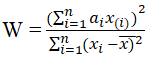
Where, the numerator is the square of a weighted sum of the ordered sample values, the denominator is the usual estimate of variance (sum of squared deviations from the mean). If W is close to 1, the data are likely normal. If it is significantly smaller than 1, suggesting deviation from normality.
For more precise analysis, Anderson-Darling normality was used, which was introduced by Anderson & Darling (1954).

Where, 
Economic viability assessment
The total cost of various fruits was calculated by adding up the costs of land preparation, human labor, planting materials, support materials, manure and fertilizers, fence, irrigation, and pesticides. This allowed for the estimation of overall production costs, gross return, and net return. Gross return was calculated by multiplying the market price by the produced yield per hectare. The gross return formula was formulated by Gittinger (1972).

Where, GR = Gross return from product (Tk. ha-1); Q = Quantity of the product; P = Average price of the product (Tk. ha-1).
Net return was the difference between gross return and total production costs.

Where, GR = Gross return from product (Tk. ha-1); TC = Total cost (Tk. ha-1).
BCR is a relative metric that compares benefit to cost. The BCR was calculated as the ratio of gross profits to gross costs. The formula for calculating BCR (undiscounted), formulated by Baracskay (1998), is given below:

Statistical analysis
All statistical analyses were assessed using RStudio version R 4.3.2 (R Core Team, 2023), with except for the bar graph, which was examined using Microsoft Excel. A log-linear model was estimated using Ordinary Least Squares (OLS), with all variables transformed using the natural logarithm (log ()) function. The model was assessed and fitted using the linear model (lm) function in RStudio. The model’s effectiveness was estimated using key diagnostic metrics, such as the coefficient of determination (R²), F-statistic, and p-values for individual coefficients. Residual diagnostics were conducted to assess homoscedasticity and normality to validate the assumptions of linear regression.
Results and Discussion
Cost and returns of horticultural fruits
The production cost is a key component of a farm’s budget, and it serves as the foundation for assessing the economic viability and sustainability of horticultural fruit crop improvement from the producers’ perspective. Precise cost appraisal enables the identification and assessment of all input categories, including land preparation, human labor, planting materials, support materials, fences, irrigation, fertilizer, manure, and pesticide costs. Efficiently evaluating production costs not only informs cost-effectiveness analysis but also helps farmers make decisions about input optimization, risk management, and resource allocation . These cost-return analyses are crucial for guiding farmers and policymakers toward efficient and successful horticultural fruit production.
Land preparation cost
The substantial input costs associated with preparing the land for fruit orchard construction affect fruit crop production. The collected data on land preparation varied significantly among the samples, which could be attributed to orchard size, geography, and preparation technique, but land preparation costs were nearly identical for all crops, except dragon fruit, which had a slightly higher cost, as shown in the first column of each panel (Figure 3). The main reason for the increased land preparation expenditures in this study was the necessity for land cleaning, soil excavation, plowing, and soil leveling (Table 1). The observed land preparation costs for dragon, mango, guava, and jujube were 54500 Tk. ha-1, 49500 Tk. ha-1, 44500 Tk. ha-1, and 39500 Tk. ha-1, respectively (Figure 4). The typical land preparation cost for horticultural fruit crops in Bangladesh is roughly Tk. 6,239 per hectare , but the current study’s land preparation cost is substantially higher, possibly due to the medium-lowland, which is prone to seasonal waterlogging, especially during the monsoon. Farmers are compelled to raise high mounds or ridges, a process that demands additional excavation cost, levelling cost, and substantially increases the cost of land preparation ; . The coefficients of land preparation for mango, jujube,
guava, and dragon were 0.23, 0.24, 0.20, and 0.25, respectively, at a 1% significance level (Table 2). It means that a one-percent rise in human labor costs, while other parameters remain constant, would boost gross returns 0.23, 0.24, 0.20 and 0.25 %, respectively. Thus, land preparation has a substantial impact on returns to scale and the Cobb-Douglas production function.
Human labor cost
Human labor contributes significantly to the total production expenses of several fruit crops. The data collected on human labor cost varied significantly among the samples and crops (Figure 3). Human labor costs for various farm operations, such as soil preparation, fertilizer application, harvesting, and post-harvesting handling (carrying and marketing), accounted for a significant portion of the overall production cost for dragon, mango, guava, and jujube (Table 1).
The cost of human labor for mango, jujube, guava and dragon production was Tk. ha-1 84000, Tk. ha-1 88000, Tk. ha-1 112000, and Tk. ha-1 154000, respectively (Figure 4). The labor cost for producing fruits in horticulture differs based on the crop, land type, labor availability, pruning, harvesting, carrying, and marketing. Previous research indicated that the horticultural fruit papaya spends Tk. 57,120 Tk. ha-1 for human labor costs . The current study found that greater labor cost values could be attributed to the agronomic systems of fruit crops. Dragon fruit has the greatest labor cost as it requires more labor than mango or jujube cultivation due to the necessity for pruning, manual pollination, and cement pillar placement . The coefficients of human labor cost for mango, jujube, guava, and dragon fruit were 0.20, 0.19, 0.16, and 0.27, respectively, implying that land preparation has a significant impact on returns to scale and the Cobb-Douglas production function, whereas dragon fruit gave the highest returns for investing in the labor cost.
Planting materials cost
The cost of planting materials (seedlings or cuttings) accounts for a substantial portion of the initial capital expenditure in fruit orchard creation. This cost varies greatly amongst fruit varieties depending on propagation method, planting density, cultivar selection, transportation, and scale of purchase , . A significant difference was observed among the 45 samples collected for all fruits (Figure 3). Conversely, almost similar planting material costs were found among fruits except for jujube. The planting material costs for mango, jujube, guava, and dragon production were Tk. 24000 ha-1, Tk. 60000 ha-1, Tk. 62500 ha-1, and Tk. 64000 ha-1, respectively (Figure 4). Dragon fruit needed the highest per-hectare cost of planting materials because it is primarily propagated via stem cuttings, and each plant requires a robust, disease-free, mature cutting for good establishment. Commercial cultivation necessitates planting an average of 1600 cuttings per hectare and a cutting price (Table 1). Similarly, jujube and guava need high per-hectare plant material costs because of their medium density and high cost. Among the studied fruit crops, mango production requires the least quantity of planting materials because of its low plant population density, which is generally on average 150 trees ha-1. The coefficient of planting material cost was statistically significant at the 1% level. The coefficients of planting materials cost for mango, jujube, guava, and dragon were 0.17, 0.16, 0.12, and 0.15, respectively. According to the coefficient values, all of the fruits demonstrated a significant impact on the production function, where dragon fruit contributed the highest gross return for planting materials which is corroborated by the findings of Ahmed et al. (2025).
Manure cost
The cost of manure (ha-1) differs across crops since various fruit cultivars were varied for agronomical characteristics, soil management practices, and nutritional requirements (Figure 3). To maintain fruit crop output and enhance soil fertility, a lot of manure, mostly cow dung, was sprayed throughout the experimental site. Among the studied crops, dragon fruit cultivation had the highest cost due to the cow dung treatment, with an average of Tk. 70000 ha-1 in Dragon Fruit, followed by mango Tk. 38400 ha-1, guava Tk.54750 ha-1, and jujube Tk. 59000 ha-1 (Figure 4). In the Cobb-Douglas production function, the coefficient for manure cost was found to be negative, showing the opposite relationship between manure expenditure and gross return of chosen fruit crops. Production may be reduced due to overapplication of manure, causing nutritional imbalances, especially in water-retentive medium-lowland soils . Additionally, applying low quality manure may have produced diseased and poor nutrient-absorbing plants . Furthermore, improper manure application timing, such as spreading manure too soon or too near to planting time, results in nitrogen loss during the rainy season due to volatilization or leaching .
Fertilization cost
Dragon fruit offered the highest fertilization cost (Tk. 36,710 ha-1), followed by guava (Tk. 11,140 ha-1), jujube (Tk. 8,850 ha-1), and mango (Tk. 2,789 ha-1) (Figure 4). The production cost coefficients for fertilizer are 0.17, 0.18, 0.21, and 0.29 for mango, jujube, guava, and dragon fruit, respectively, at 1% statistical significance level. This denotes that a one-unit increase in fertilizer cost, with other elements assumed constant, leads to an increase in gross return of 0.17, 0.18, 0.21, and 0.29 %, respectively (Table 2). These coefficient values revealed that the Cobb-Douglas production function is significantly impacted by the fertilizer cost, which has a major effect on the production process (Billah, 2022, Sinha, 2023). Using the proper quantity of fertilizer and minimizing inputs may produce the highest yield and quality, which might help to explain why the fertilizer impact is so important.
Fencing cost
Fencing costs differed considerably among the studied fruit crops; the most expensive was dragon fruit at 46,000 Tk. ha-1, followed by mango and guava at 30,000 Tk. ha-1 each, and finally jujube at 25,000 Tk. ha-1 (Figure 4). According to the calculated fencing
cost coefficients in the Cobb-Douglas production function, the guava and mango were statistically non-significant, indicating that the fence had no impact on gross returns or returns to scale. At the 5% level, the jujube and dragon fruit coefficients were both statistically significant, with respective values of 0.13 and 0.16, indicating that a one-unit increase in fencing cost increased gross return by 0.13 and 0.16 percent, respectively, assuming all other parameters remain the same (Table 2). Despite being significant for specific crops, the small quantity of these components indicates that fencing cost has little impact on scale efficiency and the overall production function. Previous empirical research evaluating capital inputs in perennial fruit cultivation under tropical agro-climatic settings has reached similar conclusions. Probably the diminishing benefits of smallholder settings’ limited scalability are the reason for the negligible impact of fencing costs .
Irrigation cost
The empirical analysis of 45 data samples demonstrated no variance across the surveyed fruit farms, indicating a high level of consistency in the production settings under the study (Figure 3). The slight difference in irrigation costs among horticultural fruits, underscores water management strategies are consistent across farms, highlighting that irrigation input may not be a significant differentiator in determining productivity or profitability among the selected fruit crops. Similarly, irrigation expenditures did not differ between fruit harvests. The maximum irrigation costs were recorded at Tk. 9,000 ha-1 for dragon fruit, followed by Tk. 8,000 ha-1 for mango and guava, and Tk. 7,000 ha-1 for jujube (Figure 4). The irrigation cost coefficients for dragon, mango, guava, and jujube were 0.013, 0.006, 0.011, and 0.009, respectively, and were statistically insignificant, indicating that they did not affect the Cobb-Douglas production function or returns to scale (Table 2). The principal cause of non-significance might be attributed to the medium-lowland, where the soil’s natural moisture retention capacity and frequent rainfall reduced the need for additional irrigation . These areas frequently hold water for extended periods, maintaining enough soil moisture for agricultural growth, especially during the rainy and post-monsoon seasons, and lowering the importance of irrigation as a yield-determining factor , .
Insecticides cost
Among the studied fruit crops, insecticide application prices were varied significantly. Mango cultivation cost was the highest Tk. 30,600 ha-1, followed by guava (Tk. 26,000 ha-1), dragon fruit (Tk. 22,000 ha-1), and jujube (Tk. 20,000 ha-1) (Figure 4). Mango, jujube, guava, and dragon were estimated elasticity values of 0.21, 0.23, 0.18, and 0.22, respectively, which were all statistically significant at the 1% level and obtained from the Cobb-Douglas production function. These findings indicate that mangoes show the strongest responsiveness, with a 1% increase in pesticide cost leading to a 0.18-0.23% rise in gross returns when all other factors were held constant. This highlights the importance of plant protection measures in maximizing output and financial performance, particularly in pest-prone cropping systems. The fruit fly known as highly invasive and economically harmful pest, poses a danger to mango production since they can result in output losses of up to 80% in extreme circumstances.
These losses can be lessened to a higher degree by using pesticides, suggesting that insects and pests have a major influence on mango farming , . Similarly, dragon fruit is vulnerable to insects that feed on sap, including mealybugs, aphids, and scale insects, which damage the fruit’s ability to photosynthesize . Several introduced pathogens, such as bacterial, fungal, and algae species, as well as at least eleven known insect pests, pose a threat to guava production in Bangladesh due to commercial multiplication and trade . According to Choi et al. (2023), pests and insects, viz. gall midges, fruit flies, mites, and weevils, can significantly reduce jujube yield and quality. The productivity and profitability of tropical and subtropical agricultural systems depend heavily on the timely and proper large-scale use of pesticides .
Goodness of fit test
The F-statistic and the coefficient of determination (R2) were employed to assess how well the model explained the variables under investigation. Both tests adequately evaluated the Cobb-Douglas production functions in terms of their capacity to explain the data. This analysis revealed the R2 values of 0.87 for dragon fruit, 0.80 for mango, 0.83 for guava, and 0.78 for jujube, which means that the models are able to explain 87, 80, 83, and 78 % of the variation in gross
return, respectively. The high R2 value, indicates there is a considerable correlation between the costs of inputs and the output. So, the selected explanatory variables can be used as powerful inputs for increasing the gross return of horticultural crops , . The goodness of the model is further supported by the F-values. The significant F-value were observed for dragon fruit (21.56), mango (18.70), guava (13.65), and jujube (15.87) at 1% (p < 0.01) significance level. In general, the models fit the data and explain the variables, suggesting that input variables change the gross return , . Furthermore, this suggests that the models may effectively forecast future productivity and profitability of the studied fruit crops. By utilizing the Cobb-Douglas functional form, the models can be useful for analyzing the economic performance of different fruit crops.
Accuracy test
The Shapiro-Wilk and Anderson-Darling tests were employed to assess the normality of four data sets. The Shapiro-Wilk test resulted in values of W = 0.93-0.97 and p = 0.17-0.49, whilst the Anderson-Darling test generated A = 0.26-0.41 and p = 0.33-0.62. All p-values surpassed the 0.05 threshold (Table 2), indicating adherence to the normality assumption . Further, model robustness was validated using residual diagnostics (Figure 5), such as Q-Q plots, residuals vs fitted values, scale-location plots, Cook’s distance, and histograms. These graphs verified normality, homoscedasticity, linearity, and the absence of important outliers, satisfying Gauss-Markov assumptions . Model validity was supported by random dispersion, symmetrical distribution, and no high-leverage sites in the residuals. This Production function considers land preparation, human labor, planting materials, support materials, fertilizer and insecticides as key inputs and profitability factors , . These findings collectively affirm the preference of the model as the most statistically robust specification and highlight the significance of diagnostic assessment in econometric model selection for evidence-based policy and agricultural decision-making .
Functional analysis
The estimated Cobb-Douglas production function for mango was:
lnY = 4.64 + 0.23 lnX2 + 0.20 lnX2 + 0.17 lnX3 + 0.18 X4 - 0.007 lnX5 + 0.17 lnX6 + 0.09 lnX7 + 0.08 lnX8 + 0.21 lnX9
The estimated Cobb-Douglas production function for jujube was:
lnY = 4.96 + 0.24 lnX2 + 0.19 lnX2 + 0.16 lnX3 + 0.17 X4 - 0.009 lnX5 + 0.18 lnX6 + 0.07 lnX7 + 0.06 lnX8 + 0.23 lnX9
The estimated Cobb-Douglas production function for guava was:
lnY = 4.11 + 0.20 lnX2 + 0.16 lnX2 + 0.12 lnX3 + 0.14 X4 - 0.009 lnX5 + 0.21 lnX6 + 0.13 lnX7 + 0.09 lnX8 + 0.18 lnX9
The estimated Cobb-Douglas production function for dragon was:
lnY = 5.29 + 0.25 lnX2 + 0.27 lnX2 + 0.15 lnX3 + 0.22 X4 - 0.007 lnX5 + 0.29 lnX6 + 0.16 lnX7 + 0.13 lnX8 + 0.22 lnX9
Returns to scale
Returns to scale were calculated by adding the predicted coefficients for all input variables in the Cobb-Douglas production function. The results revealed that for guava and jujube, the returns to scale were 0.975 and 0.948, respectively, indicating decreasing returns to scale, which means a proportionate increase in all inputs would result in a less-than-proportional rise in output, possibly due to diminishing marginal returns, resource inefficiencies, or coordination difficulties at higher levels of input consumption . The findings exposed that dragon and mango had increasing returns to scale of 1.25 and 1.03, respectively, implying that a proportionate increase in all inputs resulted in a more-than-proportional increase in output. This suggests that production is becoming more efficient on a larger scale .
Gross return
Gross return, a crucial metric for evaluating the efficiency of crop production systems from an economic standpoint, is calculated using the total monetary value of agricultural output ; . Gross returns for the current study were computed by multiplying the total per-hectare output (converted to kg) by the current market price (Table 1). The analysis revealed that dragon fruit cultivation yielded a gross return of Tk. 1,404,000 ha-1, significantly surpassing that of mango (Tk. 540,000 ha-1), guava (Tk. 625,000 ha-1), and jujube (Tk. 665,000 ha-1), thereby underscoring its superior economic performance. The primary factor contributing to the elevated gross return of dragon fruit is its substantial market value, consistent year-round demand, and the increasing consumer interest in nutrient-rich exotic fruits . The economic benefits of dragon fruit are enhancing the potential for high-value horticultural crops within varied farming systems to elevate rural incomes and foster sustainable agricultural intensification , notably in the medium-lowland regions of Bangladesh.
Total cost
The overall production cost of input expenditures, including land preparation, planting materials, labor, fertilizers, irrigation, pest management, and post-harvest activities, dictates the economic feasibility of fruit farming systems . The findings revealed that the overall cost ha-1 was calculated by aggregating the costs associated with each variable that elucidated the phenomena (Table 1). The research indicated that the production of dragon fruit incurred the highest total cost, amounting to Tk. 594,210 ha-1. Guava incurred the second-highest total cost at Tk. 373,890 ha-1, followed by jujube at Tk. 347,350 ha-1, and mango at Tk. 273,369 ha-1 (Table 2). The substantial initial expenditures on vertical trellising systems, planting materials, specialized irrigation infrastructure, and post-harvest handling and cold storage requirements result in the production cost of dragon fruit being considerably higher than that of other horticultural fruits. This reflects the capital-intensive characteristics of the industry . Despite the high initial expenses, dragon fruit is still an economically feasible choice for Agri-entrepreneurs for significant yield potential and robust market prices . These findings would help to improve the horticultural sector, as understanding the cost structure of fruit production systems is crucial for strategic resource allocation, investment planning, and the expansion of sustainable fruit agribusiness models in tropical and subtropical nations .
Net return
A key indicator of profitability and overall economic efficiency in agricultural operations is net return, which is the difference between gross return and total production cost . For each fruit crop in our study, net returns per hectare were determined by subtracting total expenditures from gross returns (Table 1). The findings indicated that dragon fruit yielded the highest net return at Tk. 809,790 ha-1, succeeded by jujube (Tk. 317,650 ha -1), mango (Tk. 266,631 ha-1), and guava (Tk. 251,110 ha-1) (Table 2). The exceptional net return from dragon fruit highlights its potential as a lucrative horticultural commodity, notwithstanding its comparatively elevated production cost. This corresponds with previous research highlighting the economic appeal of high-value exotic fruits in advantageous agro-climatic and market conditions . Incorporating high-return crops into diversified farming systems presents a viable strategy to increase rural incomes, foster agribusiness growth, and attain sustainable intensification, especially in areas experiencing reduced profitability from conventional crops .
Benefit-cost ratio
The benefit-cost ratio (BCR) is a prevalent metric in agriculture used to evaluate the profitability and economic efficiency of organizations. This metric is derived by dividing gross return by total production cost , providing a clear indication of the revenue generated from agricultural investments dollar-1 spent. All four fruit crops demonstrated economic viability (BCR > 1), with dragon fruit exhibiting the highest economic efficiency unit-1 cost, producing a benefit-cost ratio of 2.36, followed by mango (1.97), jujube (1.91), and guava (1.67). The exceptional BCR of dragon fruit indicates significant consumer appeal, a consistent price-per-unit, and price stability over multiple harvesting seasons, hence increasing profitability . The results underscore the potential for integrating high-value crops, such as dragon fruit, into various agricultural systems to substantially enhance farm profitability, resource-use efficiency, and long-term economic viability in tropical and subtropical agricultural settings .
Policy implications
The captivating economic performance of dragon fruit farming exposed in this research-presented a crucial starting point for restructuring horticultural improvement strategies in underutilized medium-lowland regions. Policymakers should highlight dragon fruit in national agricultural investment programs by integrating it into targeted input distribution systems, subsidy schemes, and extension facilities. Accelerating entrance to high-quality planting materials, training in meticulous input use, and post-harvest market infrastructure will be important to revealing large-scale effectiveness and lowering burgeoning obstacles for smallholders. Moreover, aligning these endeavors with climate-resilient farm sector modernization goals, dragon fruit is a strategic crop capable of developing food system diversification, improving rural livelihoods, and strengthening export potential. Regional partnership and international expansion programs may strengthen these benefits by encouraging research, cross-border market integration, and information exchange tailored to tropical fruit systems. Finally, increasing dragon fruit production is a scalable, statistically supported policy strategy to transform economically marginal landscapes into high-value horticultural zone.
Besides profitability analysis, supportive socioeconomic as well as institutional factors are also important for sustaining horticultural crop production in the medium-low land areas. Input support, including farmer’s training, financial rewards, marketing facilities with feasible policy, and risk-sharing mechanisms like cooperative marketing or crop insurance, plays a vital role for sustaining farmers’ net profit ; . Integrating these aspects regarding broader discussion surely helps for clearly understanding the economic feasibility of the horticultural fruit cultivation in Bangladesh, where market price and input costs fluctuate continuously . Regarding these, development of supply chain infrastructure and monitoring market information in time can boost economic profitability, which can help to reduce the risk of market volatility . Therefore, an extensive integration of technical efficiency, economic resilience, and appropriate policy support with a stable marketing system can enhance horticultural crop production in the medium-low land areas in Bangladesh.
Conclusions and Recommendations
The present investigation offers an extensive comparative economic assessment of four important horticultural fruit crops like dragon fruit, jujube, mango, and guava cultivated in medium-lowland areas of Bangladesh. The findings of the present study revealed noteworthy differences in total production costs, gross return and net returns and benefit-cost ratio, emphasizing the economic potential of each crop under particular agroecological conditions. Among the four assessed fruits, dragon fruit attained the maximum benefit-cost ratio (2.36) and unveiled the highest returns to scale (1.68), alongside statistically significant responsiveness to important production inputs (p < 0.001). These results highlight its superior distributive and input-output efficiency, recommending robust potential for resource leveraged intensification. The positive elasticity coefficients for crucial inputs such as land preparation cost, human labor cost, planting materials cost, support materials cost, fertilization cost, and insecticides cost underscore mechanisms for aimed production gains. Collectively, the findings illustrate a strategic opportunity for policy intervention: by encouraging investment in dragon fruit via input support, value chain expansion, and agronomic training. National endeavors can transform medium-lowlands into cost-effective horticultural growth hubs. For future studies, sensitivity analyses need to be conducted to evaluate profitability under varying market and input price conditions, as well as incorporating financial incentives, marketing strategies, and risk-sharing mechanisms to provide a more comprehensive understanding of economic feasibility and to inform policy development. This empirically supported prioritization presents a scalable model for enhancing smallholder profitability, agricultural sustainability, and rural economic transformation.
Acknowledgments
The authors are thankful to the National Science and Technology (NST) fellowship, Ministry of Science and Technology, Government of Bangladesh, for the financial support.
Novelty of statement
This study provides the first comparative economic evaluation of dragon fruit, jujube, mango, and guava in the medium-lowland regions of Bangladesh. By integrating the benefit-cost ratio and Cobb-Douglas production function analysis, it offers novel insights into the profitability and scalability of high-value horticultural crops, highlighting dragon fruit as the most economically viable option.
Author’s Contributions
Mahadi Hasan Monshi: Conceptualization, Investigation, Methodology, Project administration, Software, Data curation, Formal analysis, Resources, Visualization, Writing- original draft.
Muntarina Hussan Mouri: Conceptualization, Data curation, Formal analysis, Investigation, Methodology, Resources, Writing- original draft.
Fakhrul Islam Monshi: Supervision, Formal analysis, Methodology, Conceptualization, Data curation, Visualization, Writing- original draft, review & editing.
Ahmed Khairul Hasan: Resources, Validation, Writing- review & editing.
Md. Shakhawat Hossain: Resources, Validation, Writing- review & editing.
Jahidul Hassan: Conceptualization, Data curation, Formal analysis, Investigation, Methodology, Software, Writing- original draft.
Rehenuma Tabassum: Fund acquisition, Conceptualization, Supervision, Investigation, Methodology, Project administration, Resources, Validation, Writing- original draft, Writing- review, editing, and finalizing the manuscript.
Generative AI or AI assisted technology statement
No generative AI or AI assisted technology were used in the preparation of this manuscript.
Conflict of interest
The authors declared that they have no conflict of interest.
Figures
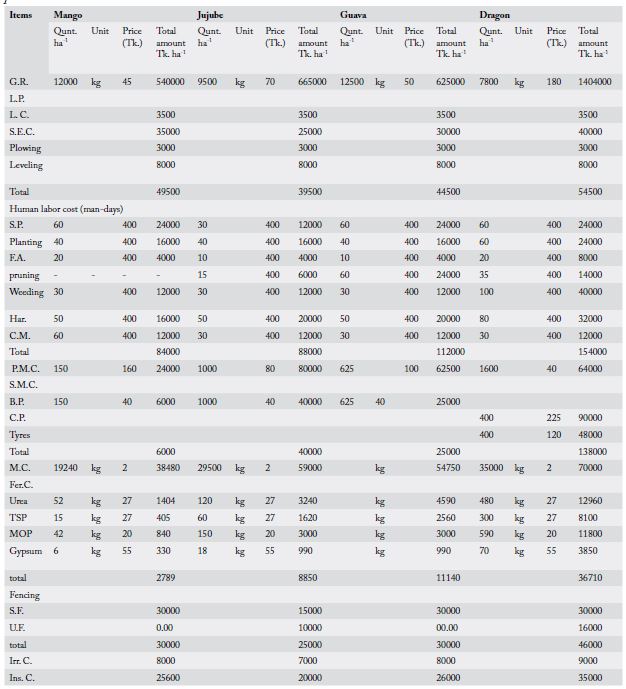
Comparative economic assessment of input use and returns for mango, jujube, guava, and dragon fruit production.
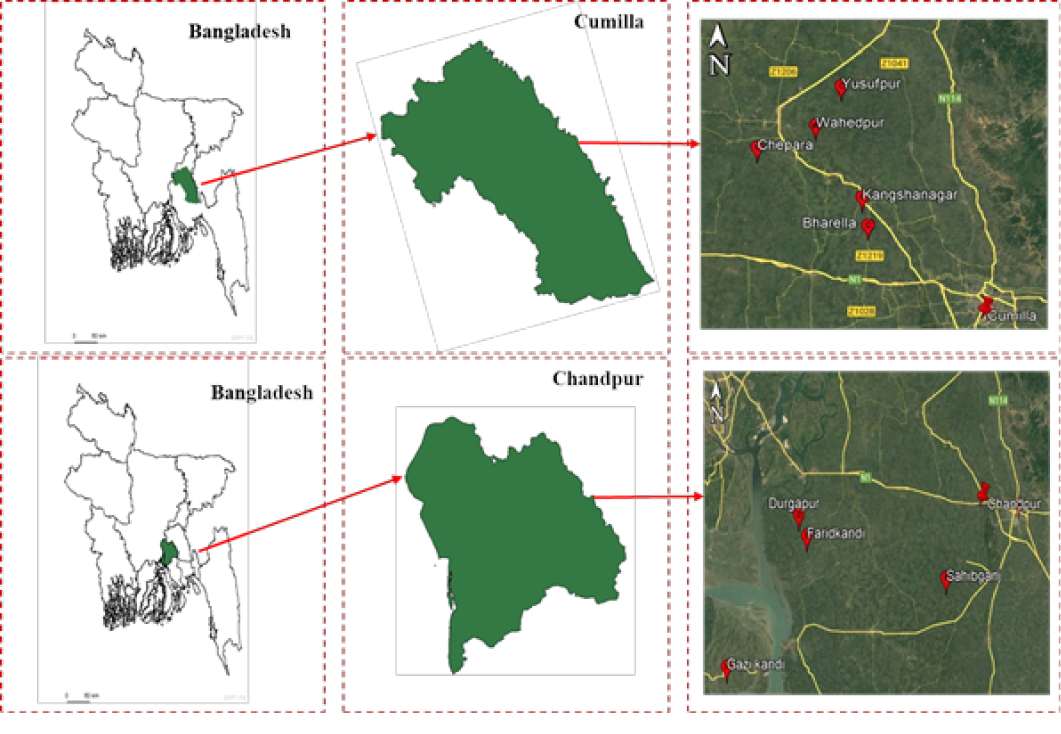
Geospatial overview of the study regions in Cumilla (top panel) and Chandpur (bottom panel) districts of Bangladesh. The illustration progresses from national-level mapping to district boundaries and high-resolution satellite imagery, pinpointing the specific locations surveyed. This spatial delineation underpins the empirical framework for the agro-economic and production analysis conducted in the study.
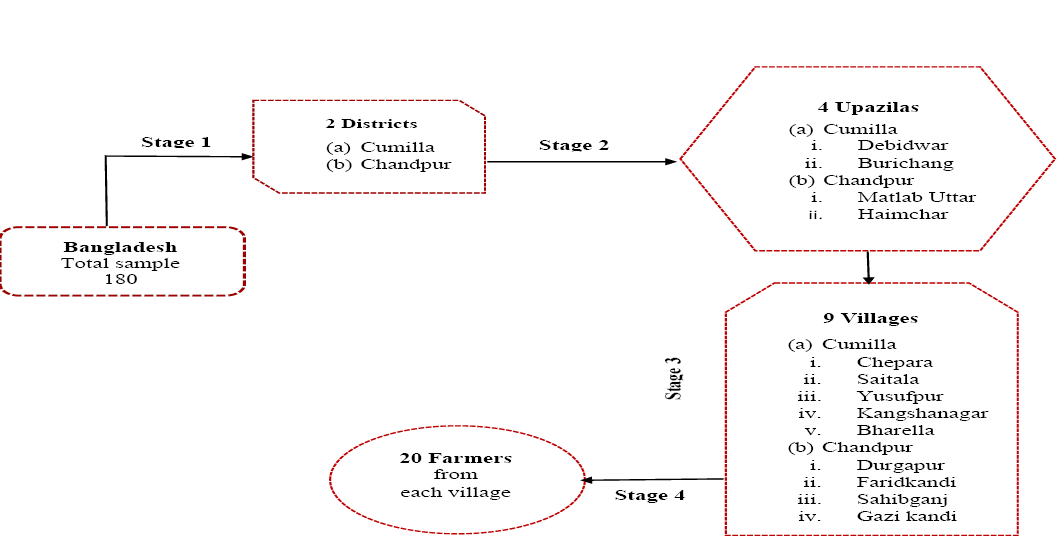
Multi-stage stratified sampling framework was employed in the study. The sampling process was conducted in four stages: (1) selection of two districts of Bangladesh, Cumilla and Chandpur; (2) selection of four upazilas under the two districts; (3) identification of nine representative villages; and (4) random selection of 20 farmers from each village, resulting in a total sample size of 180 respondents. This structured approach ensured regional diversity and enhanced the robustness of the agro-economic analysis.
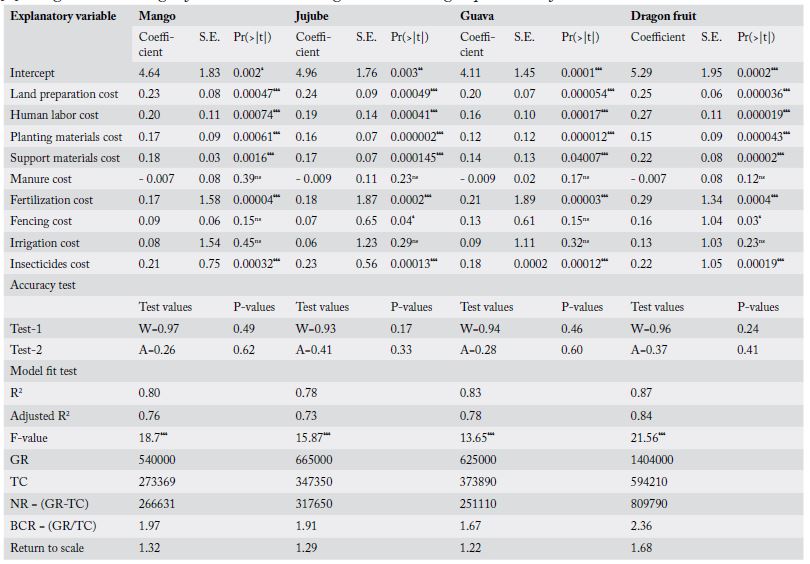
Estimated input elasticities, model performance metrics, and comparative economic indicators of mango, jujube, guava, and dragon fruit cultivation using the Cobb-Douglas production framework.
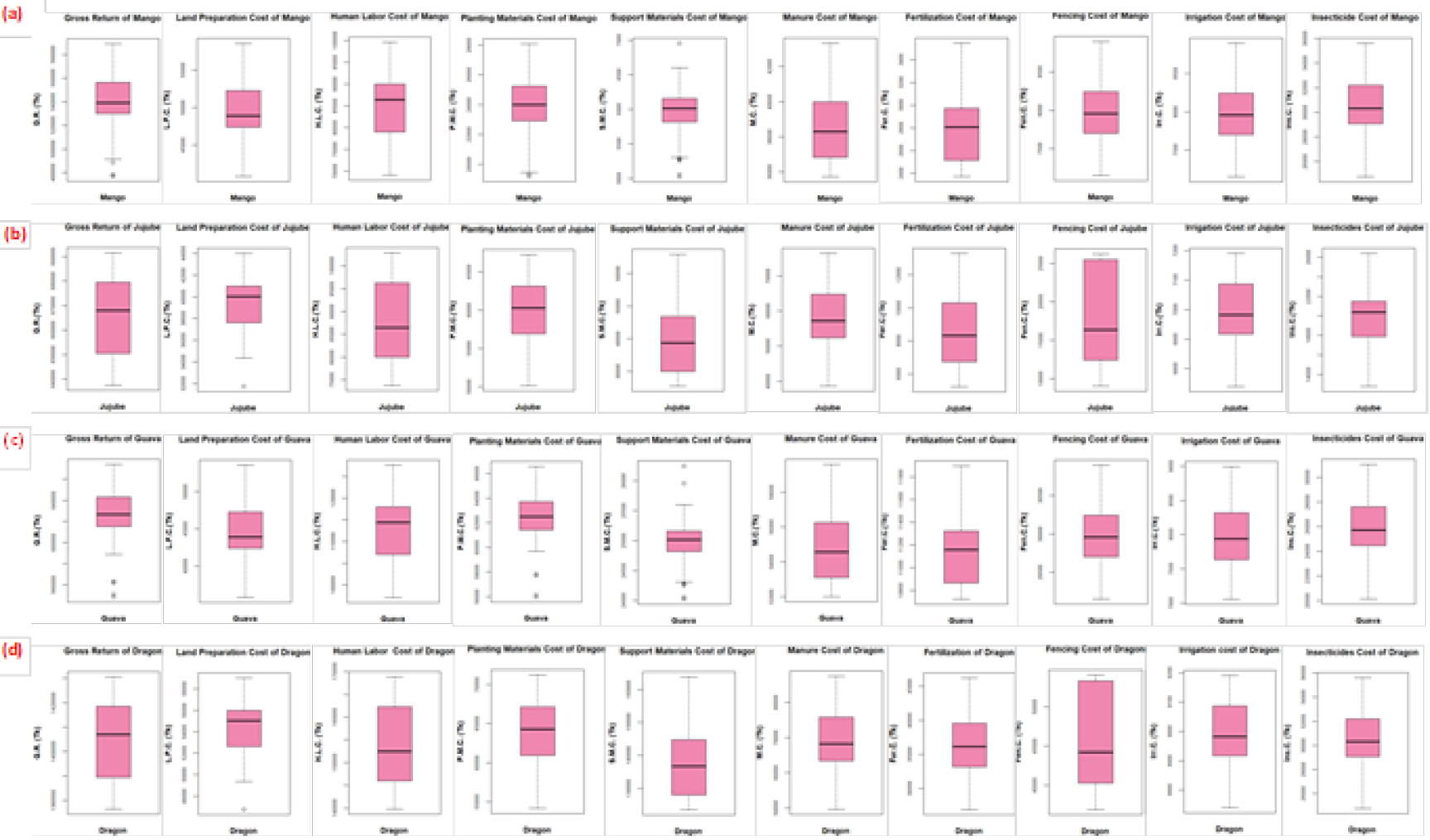
Boxplots proving the distributional characteristics of gross returns and eight key cost components-land preparation, human labor, planting materials, support materials, manure, fertilizer, fencing, irrigation, and insecticides for the cultivation of (a) mango, (b) jujube, (c) guava, and (d) dragon fruit in Bangladesh. Each subfigure represents 45 empirical data points collected from fruit-producing farms across multiple locations. The interquartile range (IQR) is used to describe variability, with median values highlighting central tendencies in cost and return structures. The visualization was used to understand resource allocation patterns, cost-efficiency relationships, and comparative profitability across diverse horticultural systems.
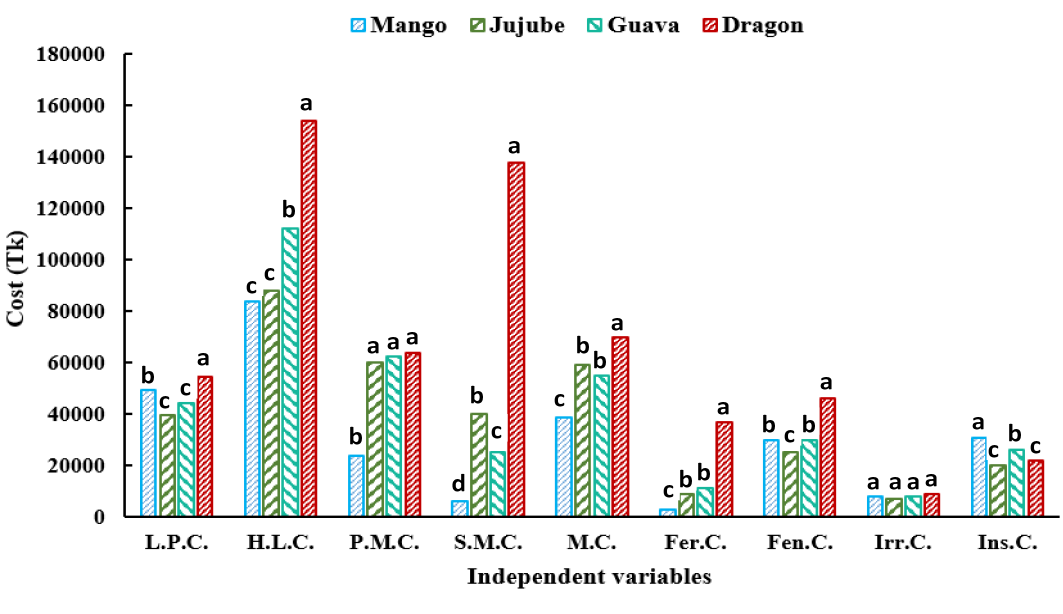
Relative contribution of key input costs in the production of major horticultural fruits. Here, L.P.C. = Land preparation cost, H.L.C. = Human labor cost, P.M.C. = Planting materials cost, S.M.C. = Support materials cost, M.C.= Manure cost, Fer.C. = Fertilization cost, Fen.C. = Fencing cost, Irr.C = Irrigation cost, Ins.C. = Insecticides cost.
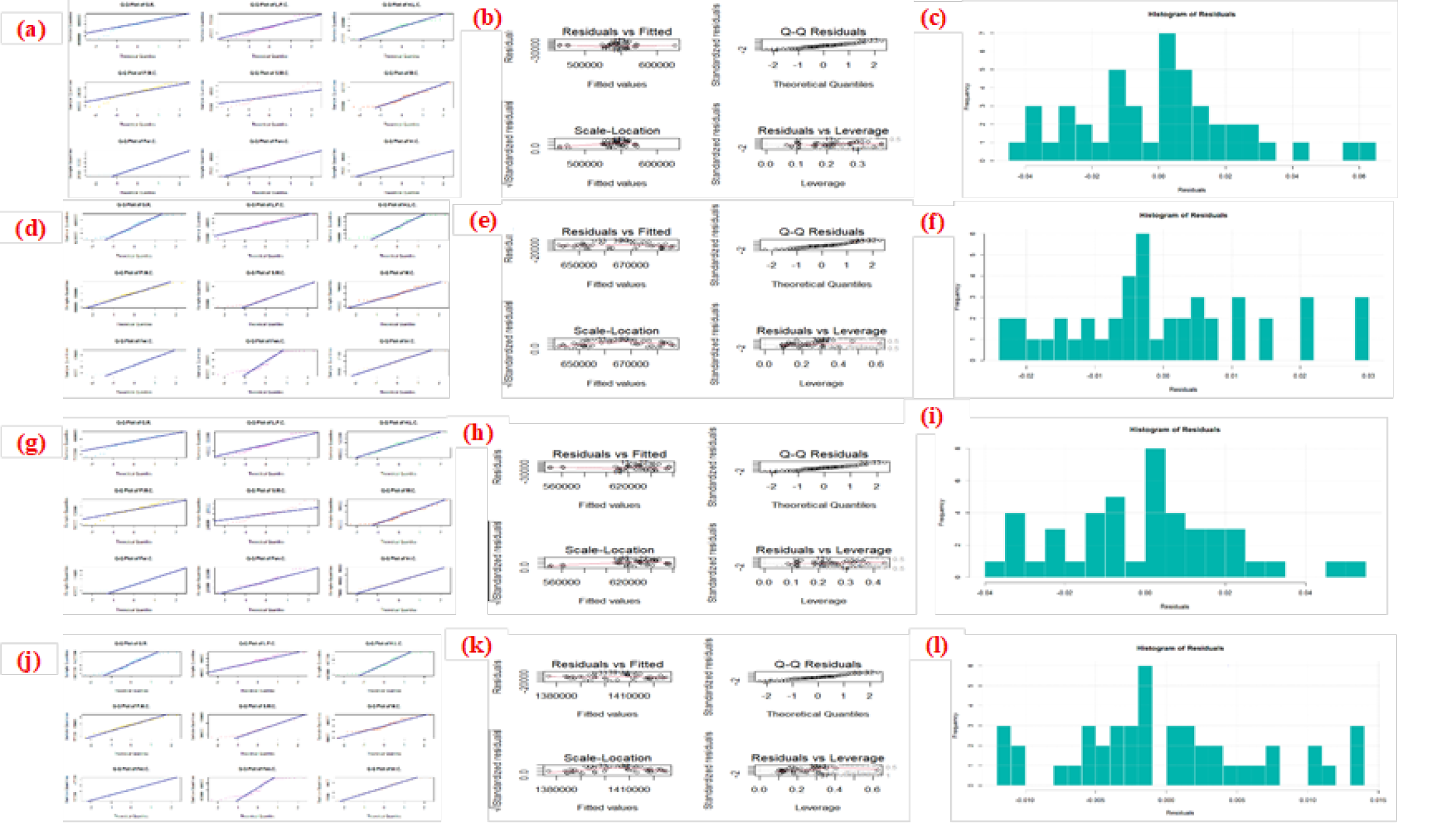
Comprehensive residual diagnostic analysis to assess the validity of crucial assumptions underlying the classical linear regression framework across different model specifications. Panels (a), (d), (g), and (j) display Quantile-Quantile (Q-Q) plots of standardized residuals to evaluate normality. Panels (b), (e), (h), and (k) provide standard diagnostic plots including residuals versus fitted values, scale-location plots, Q-Q plots, and residuals versus leverage to inspect linearity, homoscedasticity, and the presence of influential observations. Panels (c), (f), (i), and (l) show histograms of residuals to further assess distributional symmetry and potential departures from normality. Together, these diagnostics suggest critical insight into model adequacy and the reliability of subsequent econometric inference.
References
- Abbas, A., C. Zhao, M. Waseem, K.A. Khan and R. Ahmad. 2022. Analysis of energy input-output of farms and assessment of greenhouse gas emissions: A case study of cotton growers. Front. Environ. Sci., 9: 826838. https://doi.org/10.3389/fenvs.2021.826838[CrossRef]
- Adhikari, L., A.M. Komarek, P. de Voil and D. Rodriguez. 2023. A framework for the assessment of farm diversification options in broadacre agriculture. Agric. Syst., 208: 103724. https://doi.org/10.1016/j.agsy.2023.103724[CrossRef]
- Adnan, K.M.M., S.A. Sarker, R.A.Z. Tama, T.B. Shan, T. Datta, M.H. Monshi, M.S. Hossain and K. Akhi. 2023. Catastrophic risk perceptions and the analysis of risk attitudes of maize farming in Bangladesh. J. Agric. Food Res., 11(4): 100471. https://doi.org/10.1016/j.jafr.2022.100471[CrossRef]
- Ahmed, S., M.H. Kabir and R. Pervin. 2025. Opportunities of dragon fruit cultivation in Bangladesh: An analysis of profitability and employment potential. Int. J. Soc. Sci. Human Res., 8(4): 2092-2100. https://doi.org/10.47191/ijsshr/v8-i4-15[CrossRef]
- Ahmed, Z. and S. Ambinakudige. 2023. Does land use change, waterlogging, and salinity impact sustainability of agriculture and food security? Evidence from the southwestern coastal region of Bangladesh. Environ. Monit. Assess., 195: 74. https://doi.org/10.1007/s10661-022-10673-w[CrossRef]
- Amin, M.R., S. Khisa, H. Rahman, R. Jannat and M. Badruzzaman. 2019. Seasonal abundance of major sucking and chewing insects of guava. Bangladesh J. Zool., 47(1): 97-105. https://doi.org/10.3329/bjz.v47i1.42025[CrossRef]
- Anderson, T.W. and D.A. Darling. 1954. A test of goodness-of-fit. J. Am. Stat. Assoc., 49(268): 765-769. https://doi.org/10.1080/01621459.1954.10501232[CrossRef]
- Balendres, M.A. and J.C. Bengoa. 2019. Diseases of dragon fruit (Hylocereus species): Etiology and current management options. Crop Prot., 126: 104920. https://doi.org/10.1016/j.cropro.2019.104920[CrossRef]
- Baracskay, D. 1998. Cost-benefit analysis: Concep. pract., pp. 417-423.
- Bhuiyan, M.M.R., F.I. Monshi, M. Begum, R. Tabassum, M. Hoque, S.S. Islam and A.K. Hasan. 2021. Maize-chickpea intercropping under diverse tillage systems enhances productivity and economic returns. World J. Agric. Sci., 17(6): 509-520. https://doi.org/10.5829/idosi.wjas.2021.509.520[CrossRef]
- Bhuyan, M.I., I. Supit, S. Mia, M. Mulder and F. Ludwig. 2023. Effect of soil and water salinity on dry season boro rice production in the south-central coastal area of Bangladesh. Heliyon., 9(7): e19180. https://doi.org/10.1016/j.heliyon.2023.e19180[CrossRef]
- Billah, M.A. 2022. Measurement of technical efficiency of paddy farms at Jhenaidah District in Bangladesh: A case study by using Cobb-Douglas production function. J. Pharm. Neg. Result., 13(4): 652-658. https://doi.org/10.47750/pnr.2022.13.04.087[CrossRef]
- Brummerloh, A. and K. Kuka. 2023. The effects of manure application and herbivore excreta on plant and soil properties of temperate grasslands - A review. Agron., 13(12): 3010. https://doi.org/10.3390/agronomy13123010[CrossRef]
- Cachia, F., P. Lys, A. Mechri and F. Bolliger. 2018. Guidelines for the measurement of productivity and efficiency in agriculture. FAO, Rome. 81 pp.
- Chen, N.J. and R.E. Paull. 2019. Overall dragon fruit production and global marketing. FFTC Agric. Policy Platform., 9(2): 229-239. Retrieved from: https://ap.fftc.org.tw/article/1596
- Choi, S.I., H.B. Ajuna, S.J. Won, V. Choub, C.W. Kim, J.H. Moon and Y.S. Ahn. 2023. The insecticidal potential of Bacillus velezensis CE 100 against Dasineura jujubifolia Jiao & Bu (Diptera: Cecidomyiidae) larvae infestation and its role in the enhancement of yield and fruit quality of jujube (Zizyphus jujuba Miller var. inermis Rehder). Crop Prot., 163: 106098. https://doi.org/10.1016/j.cropro.2022.106098[CrossRef]
- Cobb, C.W. and P.H. Douglas. 1928. A theory of production. Am. Econ. Rev., 18(1): 139-165.
- Das, A.K., M.A. Rahman, M.M. Rahman, S.R. Saha, S.S. Keya, S.S. Suvoni, M.G. Miah, D. Current and J. Rizvi. 2022. Scaling up of jujube-based agroforestry practice and management innovations for improving efficiency and profitability of land uses in Bangladesh. Agrofor. Syst., 96(2): 249-263. https://doi.org/10.1007/s10457-021-00656-0[CrossRef]
- Dasgupta, S., M. Huq, Z.H. Khan, M.M.Z. Ahmed, N. Mukherjee and F.M. Khan. 2010. Vulnerability of Bangladesh to cyclones in a changing climate: Potential damages and adaptation cost. Policy Res. Working Paper 5280, World Bank, Washington DC.
- Demo, A.H. and G. Asefa Bogale. 2024. Enhancing crop yield and conserving soil moisture through mulching practices in dryland agriculture. Front. Agron., 6: 1361697. https://doi.org/10.3389/fagro.2024.1361697[CrossRef]
- Emran, S.A., T.J. Krupnik, S. Aravindakshan, F. Rossi, Z. Shumeta and A.J. McDonald. 2022. Impact of cropping system diversification on productivity and resource use efficiencies of smallholder farmers in south-central Bangladesh: A multi-criteria analysis. Agron. Sustain. Dev., 42(78): 1-17. https://doi.org/10.1007/s13593-022-00795-3[CrossRef]
- Fukai, S. and J. Mitchell. 2024. Genotypic adaptation to soil water deficit in rice: A comparison of desirable traits for aerobic production and lowland drought resistance. Crop Past. Sci., 4(1): 23-37. https://doi.org/10.1016/j.crope.2024.12.003[CrossRef]
- Gittinger, J.P. 1972. Economic analysis of agricultural projects. 221 pp.
- Hasan, M. R., D.H. Bai and M.A. Islam. 2014. Profitability of important summer vegetables in Keranigoni upazilla of Bangladesh. J. Bangladesh Agril. Univ., 12(1): 111-118. https://doi.org/10.3329/jbau.v12i1.21400[CrossRef]
- Hajong, P., B. Sikder, S. Mondal and M.A. Islam. 2018. Adoption and profitability of summer tomato cultivation in Jashore district of Bangladesh. Bangladesh J. Agricult. Res., 43(4): 575-585. https://doi.org/10.3329/bjar.v43i4.39154[CrossRef]
- Hayes, A. 2022. Law of diminishing marginal returns: Definition, example, use in economics. Investopedia. Retrieved from: https://www.investopedia.com/terms/l/lawofdiminishingmarginalreturn.asp
- Hewett, E.W. 2012. High-value horticulture in developing countries: Barriers and opportunities. CABI Review., 7: 054. https://doi.org/10.1079/PAVSNNR20127054[CrossRef]
- Hossain, M.S., F.I. Monshi and R. Tabassum. 2017. Assessment of genetic variability of some exotic hybrid varieties of rice (Oryza sativa) in Bangladesh. J. Plant Sci., 12(1): 22-29. https://doi.org/10.3923/jps.2017.22.29[CrossRef]
- Huq, S.M.I. and J.U.M. Shoaib. 2013. The soils of Bangladesh. World Soils Book Series, Vol. 1. Springer Science & Business Media, Dordrecht, p.178. https://doi.org/10.1007/978-94-007-1128-0[CrossRef]
- Islam, M., S. Sultana, T. Ahmed, A. A. Mamun and M. Rahman. 2020. Climate change impact on wheat production in Bangladesh: A review. Asian J. Crop Sci., 12(1): 20-28.
- Jamal, M.R., P. Kristiansen, M.J. Kabir, and L. Lobry de Bruyn. 2023. Challenges and adaptations for resilient rice production under changing environments in Bangladesh. Land., 12(6): 1217. https://doi.org/10.3390/land12061217[CrossRef]
- Kalogiannidis, S., S. Karafolas, and F. Chatzitheodoridis. 2024. The key role of cooperatives in sustainable agriculture and agrifood security: evidence from Greece. Sustain., 16: 7202. https://doi.org/10.3390/su16167202[CrossRef]
- Kapari, M., S. Hlophe-Ginindza, L. Nhamo and S. Mpandeli. 2023. Contribution of smallholder farmers to food security and opportunities for resilient farming systems. Front. Sustain. Food Syst., 7: 1149854. https://doi.org/10.3389/fsufs.2023.1149854[CrossRef]
- Kaysar, M.I., M.S. Hoq, M.W. Islam, M.S. Islam and M.T. Islam. 2019. Profitability analysis of papaya cultivation in some selected areas of Bangladesh. Bangladesh J. Agril. Res., 44(1): 115-126. https://doi.org/10.3329/bjar.v44i1.40936[CrossRef]
- Khatun, M., M.A. Rashid, S. Khandoker, N.D. Kundu and M.A. Matin 2019. Resource use efficiency analysis in strawberry production in selected areas of Bangladesh. SAARC J. Agric., 17(1): 189-200. https://doi.org/10.3329/sja.v17i1.42771[CrossRef]
- Khanal, G., R.K. Dev, T. Maraseni, N. Devkota and U.R. Paudel. 2024. Unlocking potential: Evaluating Nepal’s cooperative-backed vegetable value chain. Heliyon., 10(22): e40120. https://doi.org/10.1016/j.heliyon.2024.e40120[CrossRef]
- Li, C. 2023. Climate change impacts on rice production in Japan: A Cobb-Douglas and panel data analysis. Ecol. Indic., 147(4): 110008. https://doi.org/10.1016/j.ecolind.2023.110008[CrossRef]
- Malek, M.A., M.R. Ismail, F.I. Monshi, M.M.A. Mondal and M.N. Alam. 2012. Selection of promising rapeseed mutants through multi-location trials. Bangladesh J. Bot., 41(1): 111-114. https://doi.org/10.3329/bjb.v41i1.11089[CrossRef]
- Mandal, R.K. and C. Taku. 2025. The Cobb-Douglas production function: applicability and limitation. Agric. Arch.: An Int. J., 4(1): 43-47. https://doi.org/10.51470/AGRI.2025.4.1.43[CrossRef]
- Monshi, F.I., M.S.U. Bhuiyan, and R. Tabassum. 2015. Adaptability of litchi germplasm in hilly areas of Sylhet Agricultural University and screening their genetic variation by using RAPD markers. Int. J. Plant Breed. Genet., 9(4): 218-227. https://doi.org/10.3923/ijpbg.2015.218.227[CrossRef]
- Nandi, R., T.J. Krupnik, and W. Kabir. 2024. Crop diversification in Bangladesh: Public policy provisions, practices, and insights for future initiatives. J. Agric. Food Res., 18: 101486. https://doi.org/10.1016/j.jafr.2024.101486[CrossRef]
- Nasim, M., S.M. Shahidullah, A. Saha, M.A. Muttaleb, T.L. Aditya, M.A. Ali, and M.S. Kabir. 2017. Distribution of crops and cropping patterns in Bangladesh. Bangladesh Rice J., 21(2): 1-55. https://doi.org/10.3329/brj.v21i2.38195[CrossRef]
- Otieno, J.S. 2023. Impact of adoption of improved integrated pest management practices in the suppression of mango fruit fly infestation in Embu-county Kenya. Int. J. Pest Manage., 1-10. https://doi.org/10.1080/09670874.2025.2516474[CrossRef]
- Pavan, P.R., G. Mallikarjun, D. Kerutagi, D. Prakasha, and M.B.N. Naika. 2025. Financial feasibility and profitability analysis of dragon fruit cultivation. Int. J. Res. Agron., 8(3): 208-211. https://doi.org/10.33545/2618060X.2025.v8.i3c.2632[CrossRef]
- Pearson, K. 1896. VII. Mathematical contributions to the theory of evolution. III. Regression, heredity, and panmixia. Philos. Trans. R. Soc. Lond. A., 187: 253-318. https://doi.org/10.1098/rsta.1896.0007[CrossRef]
- Quddus, A. and J.D. Kropp. 2020. Constraints to agricultural production and marketing in the lagging regions of Bangladesh. Sustain., 12: 3956. https://doi.org/10.3390/su12103956[CrossRef]
- R Core Team. 2023. R: A Language and Environment for Statistical Computing. R Foundation for Statistical Computing, Vienna. https://www.R-project.org/
- Rahman, M.M., A. Islam, and S. Ferdousee. 2024. Crop diversification, sustainable production, and consumption (SDG-12) in rural Bangladesh: Insights from the northern region of the country. Circular Agric. Syst., 4(1): e006. https://doi.org/10.48130/cas-0024-0005[CrossRef]
- Ramana, M.V., C.P. Kumari, R. Karthik, M. Alibaba, G.K. Reddy, K. Chiranjeevi, M.S. Kumar, M.S. Chandra, N. Ravisankar, R. Bhatt, A. Gaber, and A. Hossain. 2025. Integrated farming systems improve the income of small farm holdings—An overview of earlier findings in the Indian context. Food Energy Secur., 14: e70064. https://doi.org/10.1002/fes3.70064[CrossRef]
- Rashid, M.H., S.M. Bokhtiar, M.J. Uddin, and M.S. Ali. 2023. Research priorities in Bangladesh agriculture. Project Implementation Unit-BARC, National Agricultural Technology Program-Phase II Project, Bangladesh Agricultural Research Council (BARC), Dhaka, Bangladesh.
- Razali, N.M. and Y.B. Wah. 2011. Power comparisons of Shapiro-Wilk, Kolmogorov-Smirnov, Lilliefors and Anderson-Darling tests. J. Stat. Model. Anal., 2(1): 21-33. Retrieved from https://www.scirp.org/reference/referencespapers?referenceid=2050949
- Ruma, K.F., M. Kamruzzaman, K.F. Jui, K.T. Rahman, and J. Hasan. 2023. A comparative financial analysis of four crops-based cropping patterns with existing cropping patterns in different locations of Bangladesh. Asian J. Res. Agric. For., 9(4): 110-123. https://doi.org/10.9734/ajraf/2023/v9i4238[CrossRef]
- Sahithi, D.G. 2022. Changing scenario of fruit fly incidence in mango fruit tree ecosystem. Pharma Innov. J., 11(9): 851-858.
- Sajid, M.B., K.K. Sarker, F.I. Monshi, S. Sultana, M.A. Monika, and M.S.U. Bhuiyan. 2022. Assessing the genetic diversity of squash (Cucurbita pepo L.) genotypes based on agro-morphological traits and genetic analysis. J. Hortic. Sci., 17(1): 51-62. https://doi.org/10.24154/jhs.v17i1.1245[CrossRef]
- Sarkar, S., F.I. Monshi, M.R. Uddin, R. Tabassum, M.J. Sarkar, and A.K. Hasan. 2021. Source-sink manipulation influences the grain-filling characteristics associated with the grain weight of rice. J. Innov. Agric., 8(4): 20-29. https://doi.org/10.37446/jinagri/rsa/8.4.2021.20-29[CrossRef]
- Sarker, U.K., M.S. Kaysar, M.R. Uddin, M.A. Hossain, S. Hassan, and M.M. Hassan.2022. Exploring farmers’ insight on cropping pattern for sustainable crop production in Char rea of Bangladesh. Sustain., 14: 1745. https://doi.org/10.3390/su14031745[CrossRef]
- Shapiro, S.S. and M.B. Wilk. 1965. An analysis of variance test for normality (complete samples). Biomet., 52(3/4): 591-611. https://doi.org/10.2307/2333709[CrossRef]
- Sharma, S.C., R.A. Mittal, A. Sharma, and V. Verma. 2021. Dragon fruit: A promising crop with a growing food market that can provide profitable returns to farmers. Int. J. Agric. Sci. Res., 11(2): 1-14.
- Siddique, M.N.E.A., L. de L. Bruyn, C.N. Guppy, and Y. Osanai. 2021. Temporal variations of soil organic carbon and pH at landscape scale and the implications for cropping intensity in rice-based cropping systems. Agron., 11(1): 59. https://doi.org/10.3390/agronomy11010059[CrossRef]
- Sinha, J.K. 2023. Economies of the factors affecting crop production in India: Analysis based on Cobb-Douglas production function. Sumerianz J. Econ. Finan., 6(1): 10-18. https://doi.org/10.47752/sjef.61.10.18[CrossRef]
- Tabassum, R., F.I. Monshi, M.S. Hossain, R. Roy, M.H. Monshi, and A.K. Hasan. 2023. Comparative assessment of selected exotic hybrid rice (Oryza sativa L.) based on quantitative traits analysis. Agric. For., 69(3): 45-59. https://doi.org/10.17707/AgricultForest.69.3.04[CrossRef]
- Uddin, M.J., P.S. Hooda, A.S.M. Mohiuddin, M. Smith, and M. Waller. 2019. Land inundation and cropping intensity influences on organic carbon in the agricultural soils of Bangladesh. Catena, 178: 11-19. https://doi.org/10.1016/j.catena.2019.03.002[CrossRef]
- Viana, C.M., D. Freire, P. Abrantes, J. Rocha, and P. Pereira. 2022. Agricultural land systems importance for supporting food security and sustainable development goals: A systematic review. Sci. Total Environ., 806: 150718. https://doi.org/10.1016/j.scitotenv.2021.150718[CrossRef]
- Wooldridge, J.M. 2016. Introductory Econometrics: A Modern Approach. South-Western Cengage Learning, Adrian, MI. https://archive.org/details/introductoryecon0000wool_d1i4
- Yesmin, M.A., M. Salim, F.I. Monshi, A.K. Hasan, A. Hannan, S.S. Islam, and R. Tabassum. 2022. Morpho-physiological and genetic characterization of transplanted Aman rice varieties under Old Brahmaputra Flood Plain (AEZ-9) in Bangladesh. Trop. Agric. Res. Ext., 25(1): 71-84. https://doi.org/10.4038/tare.v25i1.5573[CrossRef]
Services
Article usage statistics
Loading…