1School of Agricultural and Environmental Sciences, Department of Agricultural Economics and Animal Production, University of Limpopo Private Bag X1106, Sovenga 0727, South Africa. *Correspondence | Tyasi Teedzai Chitura, School of Agricultural and Environmental Sciences, Department of Agricultural Economics and Animal Production, University of Limpopo Private Bag X1106, Sovenga 0727, South Africa
Of the respondents that indicated the use of ethno-veterinary based methods to control internal parasites, the majority of them (83.0 %) mentioned the use of the plant species Aloe ferox.
Thirty-six percent of the respondents indicated that they used commercial anthelmintic drugs for controlling internal parasites.
Majority of the respondents lacked basic knowledge about gastrointestinal parasites.
It can be concluded that small ruminants smallholder farmers in the study area are at a higher risk of economic loss resulting from gastrointestinal parasite infections.
Small ruminants contribute to improved livelihoods of the rural based populations worldwide through alleviation of poverty and enhanced economic opportunities. Approximately more than 150 million poor people in sub-Saharan Africa survive on livestock based products . Small ruminants are relatively easy to produce because they can easily adapt and are geographically widespread animals hence, they can flourish .
They can withstand periods of drought better than any other livestock species which makes them versatile domesticates that can integrated into diverse environments and production systems . Small ruminants rearing requires low feed input and labour requirements making them a desirable choice for millions of smallholder farmers globally . According to FAOSTAT (2016), Asia has the highest percentage of the global sheep population (46.9%), followed by Africa (24.5%), Europe (11.5%), Oceania (9.4%) and America (7.6%). The majority of the small ruminants production takes place under subsistence farming. In South Africa, livestock contributes approximately forty-seven percent of South Africa’s agricultural gross domestic product . However, small ruminants are highly susceptible to gastrointestinal parasites ; ; ; . Furthermore, smallholder farmers’ knowledge on these gastrointestinal parasites is limited making them to be among the major causes of production loss in small ruminants. Parasites affect small ruminants of any sex, age, however, lambs, and females in the peripartum period are mostly affected . Tropical and subtropical regions experience high mortalities of livestock due to the effects of gastrointestinal nematodes. The gastrointestinal tracts of ruminants are hosts to a wide variety of parasites including helminthes and coccidia, which can cause clinical or subclinical parasitism . Gastrointestinal parasites affect the health and productivity of small ruminants ; . Some parasite species have developed resistance against common measures of control and the efficacy of some anthelmintic drugs has reduced over the years . In order to understand the severity of gastrointestinal parasites, several studies investigated the intensity of infection in relationship to species, age, sex, season and the state of animal ; ; ; .
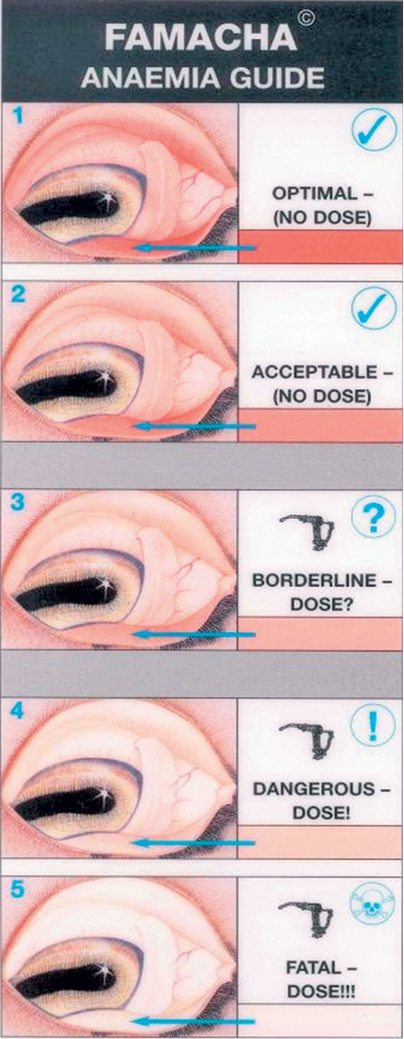
The most economically important parasitic infections of livestock in tropical climates include haemonchosis and fasciolosis . Haemonchosis can lead to protein deficiency, anaemia, bottle jaw and mortalities in case of heavy infestations . The warm, humid and temperate climate of most parts of South Africa are favourable for Haemonchus contortus to prevail. Moreover, most of the small ruminants in smallholder farms depend on grazing which makes them more susceptible to infection . As such, Haemonchus contortus cannot be completely eradicated, however, the economic losses resulting from clinical infections can be controlled. Anthelmintic drugs are the most commonly used method of controlling gastrointestinal parasites because the drugs are simple to administer and cost effective. However, the challenge of anthelmintic resistance is increasing on the commonly used drugs. As a result, studies investigating the potential for alternative methods of controlling Haemonchus contortus using natural anthelmintics have increased over years . However, fewer studies have reported remedies for the control of internal parasites in small ruminants among smallholder farmers in the rural communal livestock farming systems of South Africa as well as the levels of occurrence of haemonchosis in such production set-ups. Hence, the objectives of the current study were: (1) to evaluate the level of clinical haemonchosis in smallholder small ruminant farms using the FAMACHA scoring system and (2) to identify the methods utilized by the respondents from the study area to control gastrointestinal parasites. This information will serve, as a guidance to the small ruminant farmers and the agricultural extension workers in the study area regarding the allocation of resources for livestock health care since livestock farming is central to the sustainability of rural communities around the world .
Materials and Methods
The study was conducted in the Molemole municipality, Capricorn district, Limpopo Province in South Africa. Molemole municipality lies at an altitude of -23°27’45’’, longitude of 29°48’58’’. Molemole municipality has a semi-arid climate. Average temperatures reach around 21-22°C in January and fall to 11°C in July. The area has a dry climate with a summer rainy season and a pronounced dry spell during winter. Small ruminants are raised extensively. The indigenous breeds such as the Pedi, Venda and Shangaan are commonly reared in the study area since they are adapted to the local harsh conditions. Food insecurity is a serious challenge in the study area with the majority of the inhabitants falling under the poor social ranks. Therefore, livestock farming particularly small ruminants play an important socio-economic role in the study area. Ethical clearances for the study were obtained from the University of Limpopo’s Animal Research Ethics Committee (AREC) (AREC/13/2020: PG) and the Turfloop Research Ethics Committee (TREC) (TREC/146/2020: PG).
Smallholder small ruminant farmers from the study area were selected using snowball-sampling method. The study had no predetermined sample size. The flock sizes as determined during the study period ranges from a minimum of two animals to a maximum of ten animals per farmer. The sampling process yielded forty-seven respondents with an inclusion ownership of 189 animals comprising of 26 sheep and 163 goats. A semi-structured questionnaire that was developed by the research team was distributed to the respondents during the summer months (August-November) of the year 2020 (Supplementary Figure 1). The researchers obtained consent from the farmers to conduct the interviews as well as to handle the animals after issues regarding the privacy of the farmers as well as the welfare of the animals were addressed. Face to face, interviews were conducted with the forty-seven respondents (25 females and 22 males). The interviews were conducted in the local vernacular language (Sepedi). The questionnaire was designed to capture information on the demographic profile of the respondents as well as control measures of gastrointestinal parasites particularly Haemonchus contortus in small ruminants. Particular attention was also paid to the respondents’ knowledge of internal parasite transmission as well as knowledge and adoption of ethno-veterinary practices for internal parasite control. For the respondents that mentioned the use of commercial anthelmintic drugs, particular attention was paid to their knowledge on the correct use of these remedies.
Collected data was analysed using Statistical Package for Social Sciences version 26. Analysis of variance (ANOVA) tests were carried out to find differences in occurrence of haemonchosis across the species, age, sexes and physiological status. Mean comparison was done using Fisher’s LSD. Means with p values ≤0.05 were considered different.
*Means in the same row without common letter are different at p<0.05
Majority of the respondents in the study area did not use any method of controlling internal parasites. A smaller proportion of the respondents who controlled internal parasites used ethno-veterinary based methods as compared to those that used commercial based methods. The findings of the present study are in agreement with those from a study by Mudzengi (2014) who reported a low adoption rate of ethno-veterinary medicine based practices to control gastrointestinal parasites in small ruminant communal farming systems. The authors cited lack of documentation of ethno-veterinary medicine based practices as well as lack of knowledge among communal farmers as some of the possible reasons for the low adoption rate. The present study also reported low knowledge levels among the respondents on ethno-veterinary medicine based practices for internal parasite control in Small ruminants. Knowledgeable on ethno-veterinary medicine based practices was mostly transmitted among family members. Van Niekerk et al. (2015) and Ramos (2018) also reported the same observations. Treagear and Cooper et al. (2016) showed how social interactions could be a useful tool between farmers for learning and knowledge transmission purposes.
Table 4: Occurrence of haemonchosis across different age groups, female physiological statuses and sexes in goats owned by the respondents.
*Means in the same row without common letter are different at p<0.05
The present study revealed the use of Aloe ferox to treat gastrointestinal parasites. The Aloe family has been reported in many studies to have medicinal properties against livestock diseases that are commonly reported in South Africa ; and in India as well . Aloe ferox is mostly used in the Eastern Cape Province of South Africa as an anthelmintic . Similarly, it was reported to be used against gastrointestinal parasites in a study by Masika and Afolayan (2003a). Adoption of these medicinal plants requires that the efficacy and dosage recommendations should be well documented in literature. Several studies reported that Aloe ferox has pharmaceutical active properties that work against gastrointestinal parasites particularly Haemonchosis . Aloe ferox has been reported to have glycosides as its active ingredients whose activities are beneficial to the intestines ; ; . Toxicity is often a challenge in situations where ethno-veterinary medicine is commonly practiced. In this study, the respondents dosed the ethno-veterinary medicines ad libitum. Masika et al. (2003) reported that Aloe ferox in excessive amounts can have laxative effects. Sorghum bicolor was reported in the present study to be used against gastrointestinal parasites. Similarly, Okoye et al. (2014) and Pontieri and Del (2016) reported the use Sorghum bicolor against internal parasites of livestock and attributed its anthelmintic properties to its possession of tannins. This shows that the usage of medicinal plants seems to be one of the widely reported remedies against parasitism as such should be adopted by smallholder farmers.
The frequently mentioned commercial anthelmintic drugs were; albendazole, ivermectin and closantel based formulations. The farmers reported a good efficacy of the remedies which they assessed by observing the clinical signs indicative of internal parasite infestation. However, considering the high occurrence of anthelmintic resistance as reported worldwide, there is a need to conduct efficacy tests in the study area. Delannoy-Normand et al. (2010) and Tsotetsi et al. (2013) conducted a study were ivermectin and albendazole based formulations were predominantly used and revealed that anthelmintic resistance was detected in all the screened farms particularly to Haemonchus spp. The use of a combination of different active agents was reported in the present study. A combination of closantel and albendazole is recommended for arresting anthelmintic resistance of gastrointestinal nematodes. Sixty-six percent of the farmers did not quantify the remedy when administering. This facilitates the development of anthelmintic resistance. Shalaby (2013) reported that when quantification routes are not strictly followed through either under dosing or over dosing, anthelmintic resistance develops. From the study, it is evident that only a small fraction of the respondents had basic knowledge about gastrointestinal parasites and their control measures. The cause of this might be the predominantly low levels of education in the area with very few farmers having post matric education. This concurs with Odoi et al. (2007) who mentioned that farmer education was a significant predictor of the level of parasite infestation in the farm. The high number of farmers who did not know the methods of controlling gastrointestinal parasites reported in the present study could be a result of low levels of education amongst the respondents. These findings are in agreement with Piennar and Traub (2015) where the authors explained that there is a positive correlation with low levels of education and poor livestock management. Ugochukwu and Chinyelu (2020) reported that the lack of knowledge amongst poorly resourced smallholder farmers is due to lack of accessibility and high cost of veterinary services. Although in this study, only 19% of the respondents who were controlling internal parasites mentioned high drug costs as a challenge.
The authors would like to thank the Department of Agricultural Economics and Animal Production, University of Limpopo for the financial assistance.
Novelty Statement
The study explored the applicability of FAMACHA as a
disease diagnostic tool in a communal livestock set up.
Author’s Contribution
MIS, TLT and TC conceptualization, visualization, funding acquisition, methodology, writing-review, and editing. MIS and TC data collection and writing-original draft preparation. MIS, TLT and TC methodology investigation, formal analysis, visualization, writing-review, and editing. MIS, TLT and TC writing-review, and editing, formal analysis, validation, resource.
Data availability statement
The data that supports the findings of this study is available upon request.
Conflict of interest
The authors have declared no conflict of interest.
Adua MM, Hassan DI (2016). Prevalence of nematode infestation in goats reared in Nasarawa state. Niger. J. Agric. Food Environ., 12(3): 79-84.
Ayaz MM, Raza MA, Murtaza S, Akhtar S (2013). Epidemiological survey of helminths of goats in Southern Punjab. Asian Pac. J. Trop. Biomed., 30(1): 62-71.
Barger IA, Siale K, Banks DJD, Le Jambre LF (1994). Rotational grazing for control of gastrointestinal nematodes of goats in a wet tropical environment. Vet Parasitol., 53 (1–2):109-116.
Barger LA (2013). Influence of sex and reproductive statuses on susceptibilty of ruminants to nematode parasitism. Int. J. Parasitol., 23 (4): 463-469. https://doi.org/10.1016/0020-7519(93)90034-V[CrossRef]
Berihulay H, Abied A, He X, Jiang L, Ma Y (2019). Adaptation mechanisms of small ruminants to environmental heat stress. Animals, 9(3): 75. https://doi.org/10.3390/ani9030075[CrossRef]
Bhangale G, Khillare BS, Narladkar BW (2018). Prevalence of gastrointestinal parasites in Small ruminants in Udgi area of Marathwada. J. Entomol. Zool. Stud., 6(4): 672-676.
Bowie EA (2014). Alternative treatments for haemonchus contortus in sheep: Testing of a natural dewormer and literature review of management methods. Dickson College Honors theses. pp. 163.
Brito LF, Jafarikia M, Grossi DA (2015). Characterization of linkage disequilibrium, consistency of gametic phase and admixture in Australian and Canadian goats. BMC Genet., 16: 67. https://doi.org/10.1186/s12863-015-0220-1[CrossRef]
Clark AM, Stephen, FB, Cawley GD (1996). Resistance of the sheep scab mites against Psoroptes ovis to propetamphas. Vet. Record., 139(18): 151.
Delannoy-Normand A, Cortet J, Cabaret J, Neveu C (2010). A suite of genes expressed during transition to parasitic lifestyle in the trichostrongylid nematode Haemonchus contortus encode potentially secreted proteins conserved in Teladorsagia circumcincta. Vet. Parasitol., 174: 106–114. https://doi.org/10.1016/j.vetpar.2010.07.017[CrossRef]
Dzoyem JP, Kuete V, Eloff JN (2014). Biochemical parameters in toxicological studies in africa: Significance, principle of methods, data interpretation, and use in plant screenings-toxological survey of African medicinal plants. Edition 1 Chapter 3, Elsevier). 659: 715. https://doi.org/10.1016/B978-0-12-800018-2.00023-6[CrossRef]
Enna SJ, David B, Bylund A (2008). Aloes. The comprehensive pharmacology reference. pp. 1-3. https://doi.org/10.1016/B978-008055232-3.09004-9[CrossRef]
FAOSTAT (2016). Online statistical service (Live animal datasets).
Faraz A, Waheed A (2018). Small ruminants production. J. Farmer Reformer., 3(3): 2-6.
Fox NJ, Davidson RS, Hutchings M R, Marion G, White PCL (2012). Livestock helminths in a changing climate’Approaches and restrictions to meaningful predictions. Animals, 2(1): 93-107. https://doi.org/10.3390/ani2010093[CrossRef]
Garriga JA (2019). Evolution of methods and state-of-the-art in dental age estimation. Age Estimation: Chapter 2.
Gouveia K, Waters J, Hurst JL (2013). Animal handling guidelines. University of Liverpool.
Hossain M, Bhuiyann MJ, Alam S (2015). Cross sectional epidemiological investigation on prevalence of gastrointestinal parasites of Small ruminants in Sullah Upazilla of Sunamgonj district, Bangladesh. J. Adv. Parasitol., 2(4): 100-104. https://doi.org/10.14737/journal.jap/2015/2.4.100.104[Full text][CrossRef]
Islam MS, Hossain MS, Dey AR, Alim MA, Akter S, Alam MZ (2017). Epidemiology of gastrointestinal parasites of Small ruminants in Mymensingh, Bangladesh. J. Adv. Vet. Anim. Res., 4(4): 356-362. https://doi.org/10.5455/javar.2017.d234[CrossRef]
Jabalpur A, Thakur I, Kumar D, Yadav P, Patil A, Thakur D, Govill K, Malapure CD (2017). Aloe Vera as potential emerging herbal feed additive: A boon for livestock rearing. Int. J. Chem. Sci. Res., 5(4): 494-502.
Jackson F, Coop RL (2000). The development of anthelmintic resistance in sheep nematodes. J. Parasitol., 120: 95-107. https://doi.org/10.1017/S0031182099005740[CrossRef]
Katoch R, Chauhan PPS, Johri DK (2000). Seasonal incidence of gastrointestinal nematodes in goats of Mathura region. Indian Vet. J., 77: 259-260.
Kim ES, Elbeltagy AR, Aboul-Naga AR, Rischkowsky B, Sayre B, Mwacharo JM, Rothschild MF (2016). Multiple genomic signatures of selection in goats and sheep indigenous to a hot arid environment. Heredity, 116: 255–264. https://doi.org/10.1038/hdy.2015.94[CrossRef]
Kumar RR, Yadav CL, Garg R, Banerjee PS, Vatsya S (2008). Prevalence of gastro-intestinal nematodes in small ruminants in some parts of north-west India. Indian J. Anim. Sci., 78(11): 1244-1246.
Lone BA, Chishti M, Ahmad F, Tak HA (2012). A survey of gastrointestinal helminth parasites of slaughtered small ruminants in Gandornal, Kashmir. Liver, 30 (29): 35-60.
Maphosa V, Masika PJ (2010). Ethnoveterinary uses of medicinal plants: A survey of [30] plants used in the ethnoveterinary control of gastro-intestinal parasites of goats in the Eastern Cape Province, South Africa. Pharm. Biol., 48(6): 697-702. https://doi.org/10.3109/13880200903260879[CrossRef]
Masika PJ, Afolayan AJ (2003). An ethnobotanical study of plants used for the treatment of livestock diseases in the Eastern Cape Province, South Africa. Pharm. Biol., 41: 16-21. https://doi.org/10.1076/phbi.41.1.16.14694[CrossRef]
Mavrot F, Hertzberg H, Torgerson P (2015). Effect of gastro-intestinal nematode infection on sheep performance: a systematic review and meta-analysis. Parasites Vectors, 8: 557. https://doi.org/10.1186/s13071-015-1164-z[CrossRef]
Meissner H, Scholtz MM, Palmer AR (2013). Sustainability of the South African livestock sector towards 2050 Part 1: Worth and impact of the sector. S. Afr. J. Anim. Sci., 43: 282–297. https://doi.org/10.4314/sajas.v43i3.5[CrossRef]
Mengist Z, Abebe N, Gugsa G, Kumar N (2014). Assessment of Small ruminants Haemonchosis and its associated risk factors in and around Finoteselam, Ethiopia. Int. J. Agric. Vet. Sci., 7(12): 36-41. https://doi.org/10.9790/2380-071223641[CrossRef]
Morgan ER, Biggeri A, Catalan D, Charlier J, Hendrickx G, Samson-Himmelstjerna G (2013). Global change and helminth infections in grazing ruminants in Europe. J. Sustain., 3: 484-502. https://doi.org/10.3390/agriculture3030484[CrossRef]
Moshi MJ, Mhame PP (2013). Legislation on medicinal plants in Africa. Med. Plants Afr., pp. 843-858. https://doi.org/10.1016/B978-0-12-405927-6.00023-0[CrossRef]
Mpofu J, Tsotetsi AM, Njiro S, Katsande TC, Moyo G (2013). Prevalence of Gastrointestinal helminthis and AR on small-scale farms in Gauteng Province, South Africa. Trop. Anim. Health Prod., 45: 751-761. https://doi.org/10.1007/s11250-012-0285-z[CrossRef]
Mudzengi C (2014). Promoting the use of ethnoveterinary practices in livestock health management in Masvingo Province, Zimbabwe. Ethnobot. Res. Appl., 12: 397-405. https://doi.org/10.17348/era.12.0.397-405[CrossRef]
Mushonga B, Habumugisha D, Kandiwa E, Madzingira O (2018). Prevalence of Haemonchus contortus infections in Small ruminants in Nyagatare district, Rwanda. J. Vet. Med., 2018: 1–9. https://doi.org/10.1155/2018/3602081[CrossRef]
Odoi J, Gathuma M, Gachuiri CK, Omore A (2007). Risk factors of gastrointestinal nematode parasite infections in Small ruminants kept in smallholder mixed farms in Kenya, Agricola-BMC. Vet Res., 3: 6. https://doi.org/10.1186/1746-6148-3-6[CrossRef]
Okoye F, Obonga W, Onyegbule F, Ndu O (2014). Chemical composition and anti-inflammatory activity of essential oils from the leaves of Ocimum basilicum L. and Ocimum gratissimum L. (Lamiaceae). Int. J. Pharm. Sci. Res., 5(6): 2174-2180.
Piennar L, Traub LN (2015). Understanding the smallholder farmer in South Africa: Towards a sustainable livelihoods classification. International Conference of Agricultural Economists. Universita Delgi Studi Milano, August 8-14.
Poddar PR, Begum N, Alim MA, Dey AR, Hossain MS, Labony SS (2017). Prevalence of gastrointestinal helminthes of sheep in Sherpur, Bangladesh. J. Adv. Vet. Anim. Res., 4(3): 274-280. https://doi.org/10.5455/javar.2017.d224[CrossRef]
Pontieri P, Del Giudice L (2016). Sorghum: A novel and healthy food. Encycloped. Food Health, 10(2): 33-42. https://doi.org/10.1016/B978-0-12-384947-2.00637-1[CrossRef]
Qayyum M, Chaudary RF, Khan (2007). Prevalence of Haemonchus conotorus in naturally infected Small ruminants grazing in the Potohar area of Pakistan. Pak. Vet. J., 27(2): 73-79.
Rahman M, Labony S, Dey A, Alam MZ (2017). An epidemiological investigation of gastrointestinal parasites of Small ruminants in Tangail, Bangladesh. J. Bangladesh Agric. Univ., 15(2): 255–259. https://doi.org/10.3329/jbau.v15i2.35071[CrossRef]
Ramos G (2018). The continuity of family agriculture and the succession system: The Basque case. J. Comp. Fam. Stud., 36: 367-377. https://doi.org/10.3138/jcfs.36.3.367[CrossRef]
Rinaldi L, Biggeri A, Catalan D, Cringoli G, Ducheyne E, Hendrickx GL (2015). Mapping and modelling helminth infections in ruminants in Europe. Geospat. Health, 9(2): 257-259. https://doi.org/10.4081/gh.2015.347[CrossRef]
Rivera B, Parra D, Garcia O, Aycardi E (1983). Gastrointestinal parasites in calves in Columbia. Trop. Anim. Health Prod., 15: 107-114. https://doi.org/10.1007/BF02239806[CrossRef]
Ruano ZN, Carolino N, Mateus TL (2017). Gastrointestinal parasites as a threat to grazing sheep. Large Anim. Rev., 23: 231-238.
Ruma J, Kumar D, Bhandari A, Pandit S (2017). Seasonal alteration in prevalence and intensity of naturally occurring gastrointestinal helminth infection in goats of New Alluvial zone of West Bengal. Biol. Rhythm Res., 48(6): 867-876. https://doi.org/10.1080/09291016.2017.1317906[CrossRef]
Saddiqi HA, Jabbar A, Shahzad A (2011). Small ruminants resistance against gastrointestinal nematodes: A case of Haemonchus contortus. Parasitol. Res., 109: 1483-1500. https://doi.org/10.1007/s00436-011-2576-0[CrossRef]
Shalaby HA (2013). Anthelmintics resistance; How to overcome it? Iran. J. Parasitol., 8(1): 18–32.
Singh A, Das G, Roy B, Nath S, Naresh R, Kumar S (2015). Prevalence of gastrointestinal parasitic infection in goat of Madhya Pradesh. J. Parasit. Dis., 39(4): 716-719. https://doi.org/10.1007/s12639-014-0420-z[CrossRef]
Smith GF, Klopper RR, Figueredo E, Van wyk AE, Crouch NR (2008). Aloes in the Eastern Cape of South Africa: the value of natural history observations in biological sciences. S. Afr. J. Sci., 104: 11-12. https://doi.org/10.1590/S0038-23532008000100004[CrossRef]
Sohail M, Nauman-ul-Islam M, Shah SSA, Shah IA, Raziq A, Khan I (2017). Incidence of gastrointestinal parasites in beetal goats at District Peshawar. Asian J. Anim. Vet. Adv., 5(5): 205-207.
SPSS Inc (2019). Statistical package for social sciences. SPSS for windows, version 25.0. Chicago, USA.
Squire SA, Robertson ID, Yang R, Ayi I, Ryan U (2019). Prevalence and risk factors associated with gastrointestinal parasites in ruminant livestock in the Coastal Savannah zone of Ghana. Acta Trop., 199: 105126. https://doi.org/10.1016/j.actatropica.2019.105126[CrossRef]
Tariq K, Chishti M, Ahmad F (2010). Gastro-intestinal nematode infections in goats relative to season, host sex and age from the Kashmir valley. Indian J. Helminthol., 84(1): 93–97. https://doi.org/10.1017/S0022149X09990113[CrossRef]
Thomas RJ, Ali DA (1983). The effect of Haemonchus contortus infection on the pregnant and lactating ewe. Int. J. Parasitol., 13(4): 393-398. https://doi.org/10.1016/S0020-7519(83)80047-2[CrossRef]
Tregear A, Cooper S (2016). Embeddedness, social capital and learning in rural areas: the case of producer cooperatives. J. Rural. Stud. 44., 101–110.
Tsotetsi AM, Njiro S, Katsande TC, Moyo G, Mpofu J (2013). Prevalence of Gastrointestinal helminthis and AR on small-scale farms in Gauteng Province, South Africa. Trop. Anim. Health Prod., 45: 751-761. https://doi.org/10.1007/s11250-012-0285-z[CrossRef]
Ugochukwu NC, Chinyelu NI (2020). Smallholder farmers’ and the treatment of livestock diseases using Ethno-Veterinary Medicine (Evm): A Commentary-Preprints. 1(151).
Vath PWG, Wamer and Falvey DE (2002). Photochemistry and photoxicity of aloe-emodin. Photochem. Photobiol. 75., 346–352.
Van Niekerk JA, Mahlobogoane M, Tirivanhu P (2015). The transfer of intergenerational family knowledge for sustainable commercial farming in Mpumalanga province of South Africa: Lessons for extension. S. Afr. J. Agric. Ext.. 43(1): 66-77.
Williams AR (2010). Immune-mediated pathology of nematode infection in sheep is immunity beneficial to the animal? Parasitology, 138(5): 547-556. https://doi.org/10.1017/S0031182010001654[CrossRef]
Win SY, Win M, Thwin EP, Htun LL, Hmoon MM, Chel HM, Nandi Y (2020). Occurrence of gastrointestinal parasites in Small ruminants in the central part of Myanmar. J. Parasitol. Res., 4(4): 1-8. https://doi.org/10.1155/2020/8826327[CrossRef]
World Bank World Development Indicator World Bank, Washington, DC, USA (2013).
Zvinorova PI, Halimani TE, Muchadeyi FE, Matika O, Riggio V, Dzama K (2016). Prevalence and risk factors of gastrointestinal parasitic infections in goats in low-input low-output farming systems in Zimbabwe. Small Rumin. Res., 143: 75–83. https://doi.org/10.1016/j.smallrumres.2016.09.005[CrossRef]