
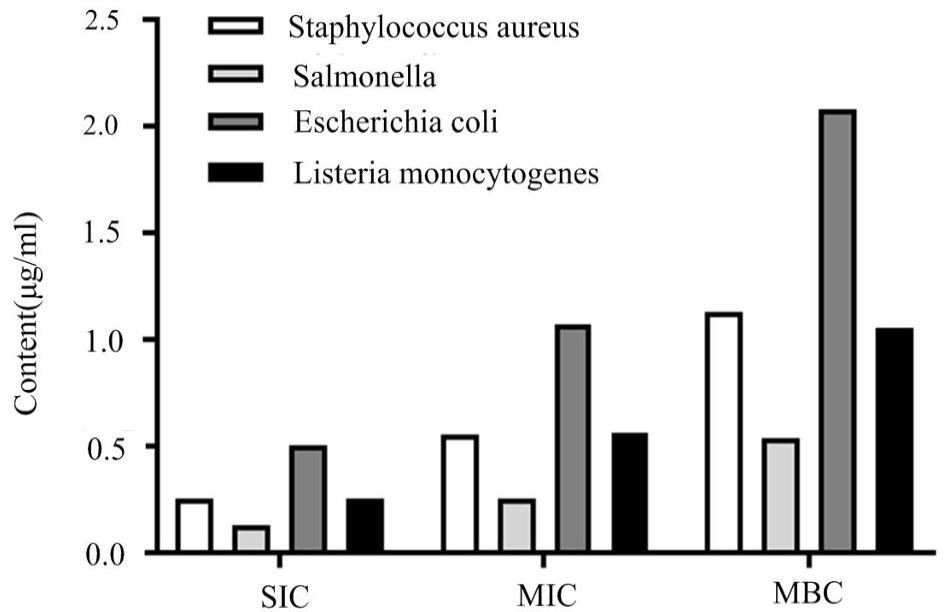
This study was aimed to investigate antibacterial activity of chemical constituents of Taraxacum officinale against foodborne pathogens. A total of 133 retail meat products were randomly purchased from different supermarkets. All samples were isolated and identified by conventional methods as Staphylococcus aureus, Salmonella, Escherichia coli and Listeria monocytogenes. Different bacteria were respectively inoculated into LB medium, the OD600 was adjusted to 0.5, and the initial bacterial concentration was adjusted to about 5×10⁸ CFU/mL. T. officinale were dried in a hot air oven, and chemical substances in the dried powder were separated using Soxhlet extraction method with light petroleum as organic solvent. The antibacterial properties of T. officinale extracts against foodborne pathogens were evaluated by agar diffusion method. Sub-inhibitory concentration (SIC) value, minimum inhibitory concentration (MIC) value and minimum bactericidal concentration (MBC) value were measured. The virulence gene expression of the four foodborne pathogens was analyzed by quantitative real-time PCR (qRT-PCR). A microplate reader was used to monitor cell growth at 600 nm with 1 h interval. Environmental scanning electron microscope (ESEM) was used to analyze morphological changes of E. coli and Staph. aureus cells. ATP analysis kit and EnSpire microplate reader were used to detect the intracellular ATP concentration of 4 foodborne pathogens. According to our results of all the tested samples, 38 (28.57%) were found to have Staph. aureus, 27 (20.30%) had Salmonella, 46 (34.59%) had E. coli, and 22 (16.54%) had L. monocytogenes. Staph. aureus had MIC of 0.55±0.18μg/ml and MBC of 1.13±0.11μg/ml; Salmonella had MIC of 0.25±0.13μg/ml and MBC of 0.54±0.06μg/ml; E. coli had MIC of 1.07±0.15μg/ ml and MBC of 2.08±0.19μg/ml; L. monocytogenes had MIC of 0.56±0.11μg/ml and MBC of 1.05±0.13μg/ml. After treatment, reduced expression was shown in Staph. aureus isolates’ seb, hlg and icaA virulence genes, Salmonella isolates’ mogA, ssel, mgtC, siiE and sopB virulence genes, E. coli isolates’ astA, estlb, pic, escV and aggR virulence genes and L. monocytogenes isolates’ LLO, plcA, plcB, actA and inlA virulence genes (P<0.05). The growth rate of E. coli and Staph. aureus strains decreased at 1/2 MIC. When the chemical constituent concentration in T. officinale increased to MIC, the bacteria growth was completely inhibited. Untreated E. coli and Staph. aureus displayed typical bacilli-like and spherical morphology with uniform cell size, and the cell surface looked intact and shiny. On the contrary, when the cells were treated with increased concentration of chemical constituents of T. officinale, the cells exhibited irregular morphology, aggregated and showed extensive surface collapse, thereby increasing the rate and extent of cell damage. After treatment, in the presence of chemical constituents of T. officinale, the intracellular ATP concentration was significantly reduced in the treated Staph. aureus, Salmonella, E. coli and L. monocytogenes (P<0.05). When the chemical constituent concentration of T. officinale plant increased from 1/2 MIC to MIC, the intracellular ATP content further decreased (P<0.05). We concluded that the chemical constituents of T. officinale have antibacterial activity against the two Gram-positive and two Gram-negative bacteria. The chemical constituents of T. officinale can inhibit the growth of foodborne pathogens by inhibiting the expression of virulence genes and reducing permeability of cell membranes, thereby changing the cell morphology and reducing intracellular ATP concentration.
Research Article · Volume 54, Issue 5, 22 May 2022 · Open Access
Antibacterial Activity of Taraxacum officinale against Foodborne Pathogens
Affiliations & Notes ⌄
- 1Department of Basic Medicine, Puyang Medical College, Puyang, 457000, China * Corresponding author: wuj2020@126.com
Article Info ⌄
- Journal:
- Pakistan Journal of Zoology
- Published:
- 22 May 2022

From the article
- Another study showed that nettle leaf extract reduced the viability and biofilm activity of E. coli, while other extracts reduced the survival rate and pathogenicity of bacteria.
- T. officinale extracts used to treat foodborne pathogenic infections not only depend on antibacterial or bactericidal effects, but also on the ability to prevent the release of bacterial virulence factors.
- These T. officinale extracts can also reduce the expression of virulence genes related to Salmonella, E. coli and L. monocytogenes.
- These findings indicate that the chemical constituents of T. officinale plant have antibacterial effects on foodborne pathogens.
Selected from the article's own text.
Abstract
Introduction
Foodborne diseases are symptoms incurred by intake of contaminated food (mainly meat products or beverages) . Despite recent advances in food production technology and processing technology, foodborne diseases are still the main cause of morbidity and mortality, which is both an important public health problem and a major economic problem on a global scale . Staphylococcus aureus, Salmonella, Escherichia coli and Listeria monocytogenes are the most common foodborne pathogens that cause foodborne diseases . For moderate to severe food poisoning or foodborne cases, antibiotics and chemical agents can be prescribed . However, long-term use of antibiotics may lead to bacterial adaptation, contributing to the development of multi-drug resistance in bacteria and human diseases related to these pathogens, which greatly limits the use of antibiotics and requires alternative strategies to combat microbial infections .
Plants can provide new beneficial compounds to humans . Many methods are aimed at discovering natural biological principles in plants. An example of these resources is public medicine, because its systematic screening may lead to discovery of new effective antibacterial ingredients to replace or reduce the dependence on synthetic food preservatives . In the past 20 years, hundreds of studies have proved the antibacterial activity of natural compounds against pathogens or spoilage organisms . However, these methods are rarely used in actual food applications. Taraxacum officinale plant is a perennial herb of the Compositae family, which spreads all over the northern hemisphere . With anti-diabetic, anti-rheumatic, anti-inflammatory, anti-tumor, anti-cardiogenic and hypoglycemic properties, it has been used as botanical drug to treat various diseases such as liver disease, gallbladder disease, digestive system disease, arthritis and rheumatic disease . Studies have confirmed that the components present in T. officinale extract have different pharmacological activities. For example, some peptides are reported to have antibacterial activity, while polysaccharides have antibacterial, antioxidant, and immune function regulating activities. This paper aims to investigate antibacterial activities of chemical constituents of T. officinale against foodborne pathogens.
Materials and methods
Experimental materials
A total of 133 retail meat products were randomly purchased from different supermarkets. All samples were isolated and identified by conventional methods as Staph. aureus, Salmonella, E. coli and L. monocytogenes. Different bacteria were inoculated into 100 mL Luria-Bertani (LB) medium (0.5% yeast extract, 1% casein trypsin, 1% sodium chloride, pH 7.2), and incubated under shaking (120 rpm). A 300 mL flask was dried at 37°C for 12 h. For further study, the optical density at 600 nm was adjusted to 0.5 with fresh LB medium, so that the initial bacterial concentration in each overnight culture could be adjusted to about 5×10⁸ CFU/mL.
Extraction of chemical constituents from T. officinale
The T. officinale purchased from a pharmacy in Shanghai, China was dried in a hot air oven (JK-OOI-240A, China), placed at 60°C for 2 h, then screened through a 60-mesh sieve for crushing and sieving. The powder was then stored in a dark bag and kept in a desiccator for use. The lipids in the dry powder were separated using Soxhlet extraction method with light petroleum as the organic solvent. The sample was immersed in water to produce suspension with a concentration of 1% (w/v). Different volumes of H2O2 were added to a reactor containing 100 mL T. officinale suspension, and the reactor was incubated in a constant temperature water bath at different temperatures for a specified period of time. Subsequently, aliquots of the reaction mixture were periodically taken out and cooled to below 10°C to terminate the reaction. The hydrolysate was filtered with Whatman GF/A filter paper and concentrated to about 15% (w/v). The protein in the hydrolysate was removed by Sevag method, and then the hydrolysate was precipitated with 6 volumes of absolute ethanol, filtered again with Whatman GF/A filter paper and freeze-dried.
Agar diffusion assay
Agar diffusion method was used to initially evaluate the antibacterial properties of T. officinale extracts against foodborne pathogens. The tested isolates were inoculated into 10 mL sterile nutrient broth and incubated at 37ºC 8 h. The culture was spread on the surface of the sterile nutrient agar plate with a sterile cotton swab. The agar hole was made in a sterile cork with a diameter of 10 mm. Using a micropipettor, 100 μl of each extract and T. officinale extract of different concentrations was added into the wells of the plate. The plate was incubated in an upright position at 37ºC for 24 h. The inhibition section diameter was measured in mm. Inhibition sections less than 12 mm in diameter were considered to have no antibacterial activity.
SIC, MIC and MBC determination
The extract was diluted twice in broth and inoculated with 1×10⁶ CFU bacteria (0.2 ml in final volume) in a 96-well plate. The incubation time was 24 h at 37°C. Minimum inhibitory concentration (MIC) and minimum bactericidal concentration (MBC) tests were carried out in accordance with the recommendations of the Association of Clinical and Laboratory Standards. MIC value is the lowest antimicrobial concentration that inhibits the growth of microorganisms, while sub-inhibitory concentration (SIC) value is the antimicrobial concentration that can inhibit the detectable growth and replication of microorganisms.
Quantitative analysis of virulence gene expression
DNA extraction of the samples was done using QIAamp DNA Mini Kit (Qiagen, Germany, GmbH). Then, the isolates were screened for the presence of major virulence factors, and the PCR products were separated by electrophoresis on a 1% agarose gel (Applichem, Germany, GmbH). Gel recording system (Alpha Innotech, Biometra) was used to photograph the gel, and the data was analyzed by computer software.
The virulence gene expression was analyzed by qRT-PCR, and the 16S rRNA housekeeping gene was used as an internal control to normalize the expression level of samples. The primers were used in 25 µl reaction, which contained 12.5 µl 2x QuantiTect SYBR Green PCR Master Mix (Qiagen, Germany, GmbH), 0.25 µl RevertAid reverse transcriptase (200 U / µL) (Thermo Fisher), with 20 pmol primer, 8.25 µl water and 3 µl RNA template per 0.5 µl concentration. The reaction was performed in Stratagene MX3005P real-time PCR. The amplification curve and Ct value were determined by Stratagene MX3005P software. To estimate the changes in RNA gene expression of different samples, Ct of each sample was compared with Ct of the positive control group according to the “ΔΔCt” method.
Growth curve
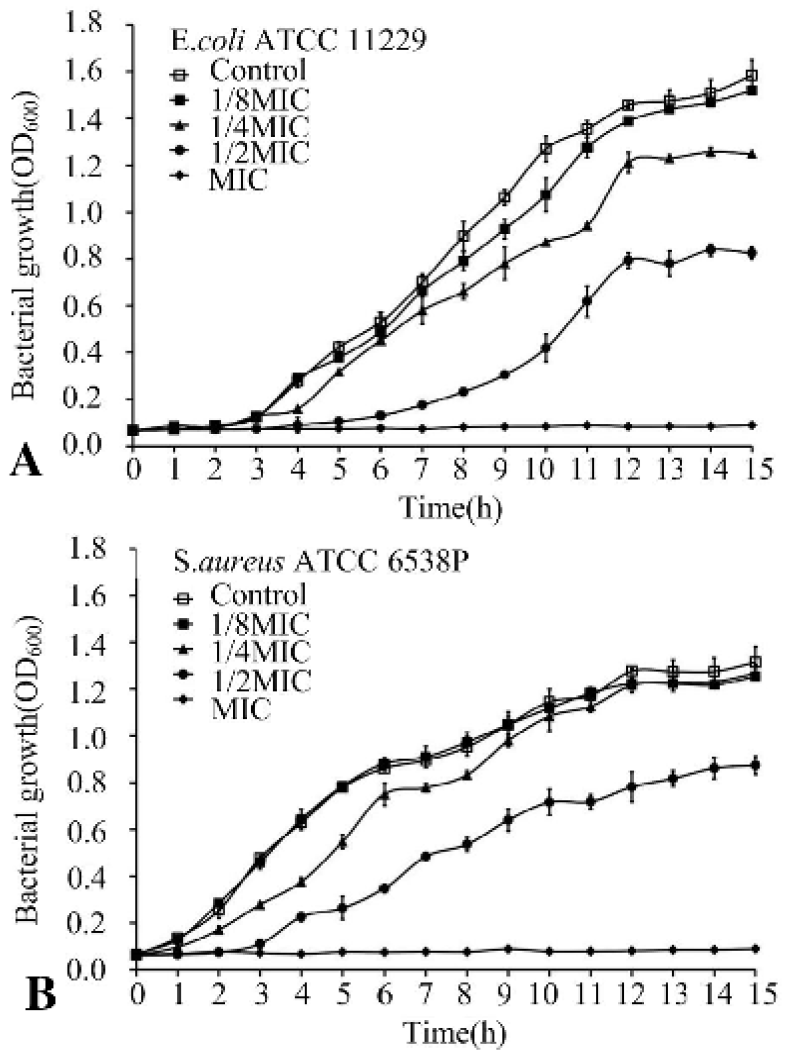
E. coli and Staph. aureus were cultured overnight and diluted in LB medium until OD600 value was 0.5 (5×10⁸ CFU/mL). Then, 200 μL of this culture was inoculated into 20 mL LB medium with different concentrations of T. officinale extract. Each well contained 200μL suspension. The microplate was sealed with parafilm (Millipore Sigma) and incubated at 378°C with shaking. The cell growth was monitored with a microplate reader (Multiskan GO, Thermo Fisher Scientific) at 600 nm with 1h interval. For each treatment, the average OD 600 value was calculated from the three wells.
ESEM analysis
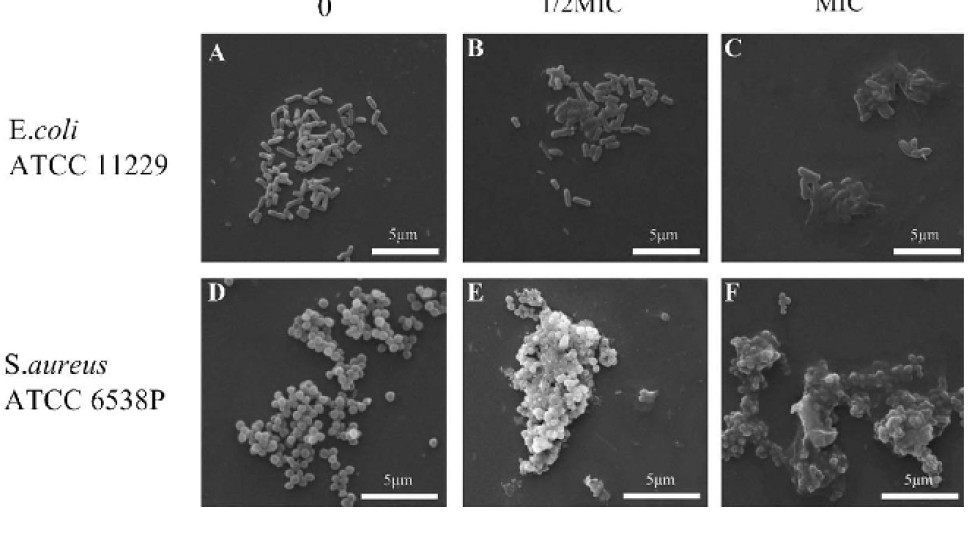
To further investigate the mechanism of chemical constituents of T. officinale against E. coli and Staph. aureus cells, ESEM (environmental scanning electron microscope) analysis was performed. The overnight cultures of E. coli and Staph. aureus were centrifuged at 2,500xg for 5 min. The cells were resuspended in phosphate buffered saline (PBS; 0.1 mol/L, pH 7.0) containing different concentrations of chemical constituents of T. officinale (0, 1/2 MIC and MIC), and suspended at 37°C for 2 h. After treatment, the cells were collected by centrifugation at 2500×g for 10 min, washed twice with PBS, resuspended in water containing 2.5% (w/w) glutaraldehyde, and fixed at 48°C for 12 h. Bacterial cells were dehydrated in various alcohol solutions (30%, 50%, 70%, 80%, 90% and 100%) for 10 min. After the gradient dehydration, the cells were suspended in absolute ethanol, fixed on a microslide, sputtered with gold under vacuum, and then examined under a scanning electron microscope (FEI Quanta 200, Thermo Fisher Scientific).
Bioluminescence measurement of intracellular ATP
Intracellular ATP level is an important parameter for evaluating the energy available in microorganisms. Overnight cultures of 4 foodborne pathogens were centrifuged at 2,500×g for 5 min. Then, the cells were washed 3 times with PBS and resuspended in PBS so that OD600 was 0.5 (approximately 5×10⁸ CFU/mL). Next, 5 mL of the resulting cell suspension was placed in a 10 mL centrifuge tube and centrifuged (2,500×g, 5 min) to get cell pellets which were resuspended in PBS with chemical constituents of T. officinale in different concentrations. The final concentration of chemical constituents of T. officinale was 0 (control), 1/2 MIC and MIC. The samples were incubated at 37°C for 2 h. In order to extract intracellular ATP from the cell suspension, the sample was placed on ice and lysed by ultrasonic treatment (20 KHz) for 3 min. The sample was then centrifuged at 2500×g for 5 min, and the supernatant was transferred to an Eppendorf tube and stored on ice until the measurement to prevent loss of ATP. ATP analysis kit (Beyotime, Shanghai, China) and EnSpire microplate reader (PerkinElmer, Waltham, MA) were used to determine the intracellular ATP concentration of each sample.
Statistical analysis
All data were expressed in mean standard deviation (SD). Analysis of variance (ANOVA) was used to compare the groups. P value<0.05 indicates statistical significance.
Results
Foodborne pathogens
Of all the tested samples, 38 (28.57%) were found to have Staph. aureus, 27 (20.30%) had Salmonella, 46 (34.59%) had E. coli, and 22 (16.54%) had L. monocytogenes.
Table I.- Antibacterial activity of chemical constituents of T. officinale.
| Foodborne pathogen | SIC (μg/ml) | MIC (μg/ml) | MBC (μg/ml) |
| Staph. aureus | 0.25±0.12 | 0.55±0.18 | 1.13±0.11 |
| Salmonella | 0.13±0.06 | 0.25±0.13 | 0.54±0.06 |
| E. coli | 0.50±0.15 | 1.07±0.15 | 2.08±0.19 |
| L. monocytogenes | 0.25±0.14 | 0.56±0.11 | 1.05±0.13 |
| t value | 3.826 | 6.718 | 7.517 |
| P value | 0.014 | 0.013 | 0.012 |
Antibacterial activity
The chemical constituents of T. officinale can effectively inhibit different types of foodborne pathogens. MIC and MBC of different bacterial groups show that Staph. aureus has MIC of 0.55±0.18μg/ml and MBC of 1.13±0.11μg/ml; Salmonella has MIC of 0.25±0.13μg/ml and MBC of 0.54±0.06μg/ml; E. coli has MIC of 1.07±0.15μg/ml and MBC of 2.08±0.19μg/ml; L. monocytogenes has MIC of 0.56±0.11μg/ml and MBC of 1.05±0.13μg/ml (Fig .1, Table I).
Table II shows the effect of T. officinale on expression of virulence gene in Staph. aureus, Salmonella, E. coli and L. monocytogenes. By RT-PCR, the virulence gene expression of Staph. aureus was compared before and after treatment with inhibitory concentration of chemical constituents of T. officinale. The test results show that, seb, hlg and icaA virulence genes carried by Staph. aureus isolates have decreased expression after treatment (P<0.05), indicating that the chemical constituents of T. officinale plant can effectively reduce expression of disease-causing genes in Staph. aureus (Table II).
RT-PCR analysis shows that mogA, ssel, mgtC, siiE and sopB virulence genes carried by Salmonella isolates have decreased expression after treatment (P<0.05), indicating that the chemical constituents of T. officinale can effectively reduce expression of disease-causing genes in Salmonella (Table II). The virulence genes astA, estlb, pic, escV andaggR of E. coli have decreased expression after treatment (P<0.05), indicating that the chemical constituents of T. officinale can effectively reduce expression of disease-causing genes in E. coli (Table II).
The virulence genes LLO, plcA, plcB, actA and inlA of L. monocytogenes showed decreased expression after treatment (P<0.05), indicating that the chemical constituents of T. officinale can effectively reduce expression of disease-causing genes in L. monocytogenes (Table II).
Growth of bacterial isolates
Growth curve can provide a measure of inhibition over a period of time. The growth curves of E. coli and Staph. aureus in LB medium treated with different concentrations of chemical constituents of T. officinale within 15 h show that the growth rate of these two bacterial strains decrease at 1/2 MIC. When the chemical constituent concentration of T. officinale increases to MIC, the growth of the bacteria is completely inhibited (Fig. 2).
Table II.- Expression level of virulence genes in Staph. aureus, Salmonella, E. coli and L. monocytogenes isolates before and after treatment with organic solvent of T. officinale.
| Virulence genes | Before treatment | After treatment | t value | P value |
| Staph. aureus | ||||
| seb | 4.57±0.16 | 1.03±0.22 | 3.578 | 0.012 |
| hlg | 5.48±0.37 | 0.82±0.15 | 6.254 | 0.006 |
| icaA | 6.42±0.13 | 0.79±0.14 | 7.125 | 0.014 |
| Salmonella | ||||
| mogA | 3.45±0.21 | 0.87±0.12 | 6.254 | 0.013 |
| ssel | 6.88±0.25 | 1.12±0.14 | 5.658 | 0.015 |
| mgtC | 7.45±0.34 | 1.09±0.15 | 7.549 | 0.004 |
| siiE | 5.87±0.24 | 1.25±0.16 | 8.566 | 0.003 |
| sopB | 4.55±0.26 | 0.86±0.14 | 7.264 | <0.001 |
| E. coli | ||||
| astA | 3.86±0.32 | 0.85±0.11 | 3.564 | 0.016 |
| estlb | 4.22±0.35 | 0.96±0.21 | 4.856 | 0.024 |
| pic | 4.16±0.24 | 1.13±0.15 | 8.547 | 0.002 |
| escV | 3.98±0.33 | 1.22±0.46 | 9.256 | 0.013 |
| aggR | 5.26±0.28 | 1.17±0.27 | 7.153 | 0.005 |
| L. monocytogenes | ||||
| LLO | 3.35±0.33 | 1.08±0.14 | 3.687 | 0.015 |
| plcA | 4.87±0.26 | 1.27±0.33 | 6.597 | 0.021 |
| plcB | 5.43±0.24 | 1.48±0.25 | 5.482 | 0.033 |
| actA | 6.72±0.38 | 1.62±0.36 | 4.237 | 0.017 |
| inlA | 6.47±0.33 | 1.29±0.57 | 6.327 | 0.024 |
Cell morphology
ESEM analyzes the morphological changes of E. coli and Staph. aureus cells. As shown in Figure 3A and D, untreated E. coli and Staph. aureus exhibit typical bacilli-like and spherical morphology with uniform cell size, and the cell surface looks intact and shiny. On the contrary, when the cells are treated with increased concentrations of chemical constituents of T. officinale (Fig. 3B, C, E, F), the cells exhibit irregular morphology, aggregate and show extensive surface collapse, thereby increasing the rate and extent of cell damage. These results indicate that the chemical constituents of T. officinale have an effect on integrity of the cell envelope (Fig. 3).
Intracellular ATP concentration
ATP contributes to many cellular functions, including the transmembrane transport of materials. In addition, cell membrane provides the main site for ATP synthesis during the aerobic respiration of bacteria. These may be potential parameters for understanding the mode of action of antibacterial agents. Therefore, the intracellular ATP concentration of different types of foodborne pathogenic bacteria was determined after treatment with chemical constituents of T. officinale. After treatment, in the presence of chemical constituents of T. officinale, intracellular ATP concentration is significantly reduced in the treated Staph. aureus, Salmonella, E. coli and L. monocytogenes (P<0.05). When the chemical constituent concentration of T. officinale increases from 1/2 MIC to MIC, the intracellular ATP content further decreases (P<0.05). The decrease in intracellular ATP may be due to decreased ATP synthesis rate and increased ATP hydrolysis rate in an unfavorable environment, or due to the decreased inorganic phosphate through the damaged membrane as a result of antimicrobial agents (Table III).
Table III.- ATP concentration (relative luminescence unit).
| Foodborne pathogen | 0 (×103) | 1/2MIC (×103) | MIC (×103) |
| Staph. aureus | 3.27±0.26 | 1.13±0.15 | 0.38±0.54 |
| Salmonella | 2.89±0.14 | 0.87±0.13 | 0.15±0.07 |
| E. coli | 3.58±0.22 | 1.26±0.13 | 0.47±0.11 |
| L. monocytogenes | 3.02±0.26 | 0.98±0.15 | 0.26±0.08 |
| t value | 12.354 | 8.654 | 15.327 |
| P value | 0.015 | 0.012 | 0.007 |
Discussion
Food safety receiving more and more attention has become a key public health issue. Foodborne pathogens are one of the biggest threats to food safety as they can cause food contamination. Also, exotoxins of some foodborne pathogens also pose a major threat to public health . Representative foodborne pathogens, such as Staph. aureus, may cause food poisoning in dairy products, meat due to heat-stable enterotoxins in food . There are also reports that the toxin produced by Salmonella may further cause vomiting or diarrhea syndrome as well as various local and systemic infections . Therefore, extensive researches focuse on development of antibacterial agents to prevent the growth of foodborne pathogens and control pollution. Salt, sugar, vinegar and alcohol are used as traditional preservatives, but certain bacteria and molds can withstand high concentrations of such natural substances . On the contrary, synthetic chemical preservatives, such as benzoic acid, sorbic acid, sulfate and nitrate, can effectively inhibit bacteria growth, but long-term intake of these chemical preservatives may cause accumulated toxicity, which may also cause allergies, headaches, and even cancer (Lorenzo et al., 2019). Therefore, it is very important to develop new alternatives to overcome these obstacles. Recently, many studies have reported that substances from various fruits, plants and fermented products, such as organic acids, phenolic resins, quinones, saponins, flavonoids, coumarins, terpenoids and alkaloids, can display antibacterial activity against foodborne pathogens . Since these natural-derived compounds may also be beneficial to human health, there is increasing trend of using these natural antibacterial agents to control food contamination . Moreover, plant extracts have multi-component nature, so it is more difficult for bacteria to develop resistance compared with many commonly used antibiotics with a single target site. In this study, foodborne pathogens mainly include Staph. aureus, Salmonella, E. coli and L. monocytogenes. Our findings are consistent with those previously reported by other researchers.
The pathogenicity of foodborne pathogens depends to a large extent on the secretion of various extracellular and intracellular virulence factors . Many studies have shown that certain herbal extracts have inhibitory effects on the virulence expression of Gram-positive and Gram-negative bacteria. For example, a study found that trans-cinnamaldehyde and eugenol reduced the vitality and invasion ability of Salmonella enteritidis, and down-regulated the expression of vitality genes (flhC and motA) and invasion genes (hilA, hilD and invF). Another study showed that nettle leaf extract reduced the viability and biofilm activity of E. coli, while other extracts reduced the survival rate and pathogenicity of bacteria. These factors are involved in the tissue colonization and biofilm formation of pathogenic E. coli in the urethra (Azizi et al., 2019). In addition, a study pointed out that Staph. aureus extract down-regulates pelF gene expression in Pseudomonas aeruginosa by more than 4 times . Our RT-PCR analysis results show that all the derived Staph. aureus isolates (100%) carry genes like seb, hlg and icaA. According to reports, the dose of antibiotics required to kill biofilm bacteria is 1000 times higher than that required to kill planktonic bacteria. Therefore, we recommend T. officinale extract as a cost-effective antibacterial agent for the treatment of biofilm infections. Regarding Salmonella, mogA, ssel, mgtC, siiE and sopB genes were shown in 90% isolates. The mgtC magnesium transporter is a putative P-type ATPase, which encodes a membrane protein that is essential for the survival of Salmonella in macrophages. SopB gene has relation to T3SS transporter of SPI-5, while SPI-5 is transported to the host cytoplasm and mediates inflammation and fluid secretion in the intestinal mucosa. T. officinale extracts used to treat foodborne pathogenic infections not only depend on antibacterial or bactericidal effects, but also on the ability to prevent the release of bacterial virulence factors. Real-time RT-PCR evaluates the effect of T. officinale extracts on the expression levels of the examined virulence genes. According to our findings, these extracts can down-regulate seb, hlg and icaA genes under sub-inhibitory concentration, thereby reducing the biofilm formation and hemolysin generation in Staph. aureus. These T. officinale extracts can also reduce the expression of virulence genes related to Salmonella, E. coli and L. monocytogenes.
In the food industry, bacterial membranes are the main target of inactivation treatment used to control the growth of microorganisms during processing. The bacterial cell membrane protects cells from influence of the surrounding environment and is responsible for transportation of nutrients necessary for cell growth and metabolism. When the cell membrane is damaged, the bacteria growth and metabolism will be destroyed. This study shows that the chemical constituents of T. officinale plant destroy the membrane integrity of E. coli and Staph. aureus cells and change the cell morphology. These results also indicate that increased membrane permeability may lead to decreased intracellular ATP concentration.
Conclusion
The results of this study show that chemical constituents of T. officinale plant have antibacterial activity against the two Gram-positive and the two Gram-negative bacteria. The chemical constituents of T. officinale plant can inhibit the growth of foodborne pathogens by inhibiting the expression of virulence genes and reducing permeability of cell membranes, thereby changing the cell morphology and reducing intracellular ATP concentration. These findings indicate that the chemical constituents of T. officinale plant have antibacterial effects on foodborne pathogens. These results may help produce natural antibacterial agents used for the food industry, thus carrying practical significance.
Statement of conflict of interest
The authors have declared no conflict of interests.
Figures
Antibacterial activity of chemical constituents of T. officinale.
Growth curve of E. coli and Staph. aureus.
ESEM images of E. coli and Staph. aureus.
References
- Adnan, M., Patel, M., Deshpande, S., Alreshidi, M., Siddiqui, A.J., Reddy, M.N., Emira, N. and De Feo, V., 2020. Effect of Adiantum philippense extract on biofilm formation, adhesion with its antibacterial activities against foodborne pathogens, and characterization of bioactive metabolites: An in vitro-in silico approach. Front. Microbiol., 11: 823. https://doi.org/10.3389/fmicb.2020.00823[CrossRef]
- Agrimonti, C., White, J.C., Tonetti, S. and Marmiroli, N., 2019. Antimicrobial activity of cellulosic pads amended with emulsions of essential oils of oregano, thyme and cinnamon against microorganisms in minced beef meat. Int. J. Fd. Microbiol., 305: 108246. https://doi.org/10.1016/j.ijfoodmicro.2019.108246[CrossRef]
- Azizi-Lalabadi, M., Alizadeh-Sani, M., Khezerlou, A., Mirzanajafi-Zanjani, M., Zolfaghari, H., Bagheri, V., Divband, B. and Ehsani, A., 2019. Nanoparticles and zeolites: Antibacterial Effects and their mechanism against pathogens. Curr. Pharm. Biotechnol., 20: 1074-1086. https://doi.org/10.2174/1573397115666190708120040[CrossRef]
- Badawy, M.E., Marei, G.I., Rabea, E.I. and Taktak, N.E., 2019. Antimicrobial and antioxidant activities of hydrocarbon and oxygenated monoterpenes against some foodborne pathogens through in vitro and in silico studies. Pest. Biochem. Physiol., 158: 185-200. https://doi.org/10.1016/j.pestbp.2019.05.008[CrossRef]
- Du, J., Hu, Z., Yu, Z., Li, H., Pan, J., Zhao, D. and Bai, Y., 2019. Antibacterial activity of a novel Forsythia suspensa fruit mediated green silver nanoparticles against food-borne pathogens and mechanisms investigation. Mater. Sci. Eng. C Mater. Biol. Appl., 102: 247-253. https://doi.org/10.1016/j.msec.2019.04.031[CrossRef]
- Ju, J., Xie, Y., Guo, Y., Cheng, Y., Qian, H. and Yao, W., 2019. The inhibitory effect of plant essential oils on foodborne pathogenic bacteria in food. Crit. Rev. Fd. Sci. Nutr., 59: 3281-3292. https://doi.org/10.1080/10408398.2018.1488159[CrossRef]
- Kalule, J.B., Smith, A.M., Vulindhlu, M., Tau, N.P., Nicol, M.P., Keddy, K.H. and Robberts, L., 2019. Prevalence and antibiotic susceptibility patterns of enteric bacterial pathogens in human and non-human sources in an urban informal settlement in Cape Town, South Africa. BMC Microbiol., 19: 244. https://doi.org/10.1186/s12866-019-1620-6[CrossRef]
- Kumariya, R., Garsa, A.K., Rajput, Y.S., Sood, S.K., Akhtar, N. and Patel, S., 2019, Bacteriocins: Classification, synthesis, mechanism of action and resistance development in food spoilage causing bacteria. Microb. Pathog., 128: 171-177. https://doi.org/10.1016/j.micpath.2019.01.002[CrossRef]
- Liu, Y., Zhang, Y., Zhou, Y., Wang, T., Deng, X., Chu, X. and Zhou, T., 2019. Cinnamaldehyde inhibits type three secretion system in Salmonella enterica serovar Typhimurium by affecting the expression of key effector proteins. Vet. Microbiol., 239: 108463. https://doi.org/10.1016/j.vetmic.2019.108463[CrossRef]
- Lorenzo-Leal, A.C., Palou, E. and López-Malo, A., 2019. Evaluation of the efficiency of allspice, thyme and rosemary essential oils on two foodborne pathogens in in-vitro and on alfalfa seeds, and their effect on sensory characteristics of the sprouts. Int. J. Fd. Microbiol., 295: 19-24. https://doi.org/10.1016/j.ijfoodmicro.2019.02.008[CrossRef]
- Mir, R.A. and Kudva, I.T., 2019. Antibiotic-resistant Shiga toxin-producing Escherichia coli: An overview of prevalence and intervention strategies. Zoonoses Publ. Hlth., 66: 1-13. https://doi.org/10.1111/zph.12533[CrossRef]
- Ogunniyi, A.D., Dandie, C.E., Ferro, S., Hall, B., Drigo, B., Brunetti, G., Venter, H., Myers, B., Deo, P., Donner, E. and Lombi, E., 2019. Comparative antibacterial activities of neutral electrolyzed oxidizing water and other chlorine-based sanitizers. Scient. Rep., 9: 19955. https://doi.org/10.1038/s41598-019-56248-7[CrossRef]
- Ritter, A.C., Tondo, E.C., Siqueira, F.M., Soggiu, A., Varela, A.P., Mayer, F.Q. and Brandelli, A., 2019. Genome analysis reveals insights into high-resistance and virulence of Salmonella enteritidis involved in foodborne outbreaks. Int. J. Fd. Microbiol., 306: 108269. https://doi.org/10.1016/j.ijfoodmicro.2019.108269[CrossRef]
- Roedel, A., Dieckmann, R., Brendebach, H., Hammerl, J.A., Kleta, S., Noll, M., Al Dahouk, S. and Vincze, S., 2019. Biocide-tolerant L. monocytogenes isolates from German food production plants do not show cross-resistance to clinically relevant antibiotics. Appl. environ. Microbiol., 85: e01253-19. https://doi.org/10.1128/AEM.01253-19[CrossRef]
- Su, M., Liu, F., Luo, Z., Wu, H., Zhang, X., Wang, D., Zhu, Y., Sun, Z., Xu, W. and Miao, Y., 2019. The antibacterial activity and mechanism of chlorogenic acid against foodborne pathogen pseudomonas aeruginosa. Foodb. Pathog. Dis., 16: 823-830. https://doi.org/10.1089/fpd.2019.2678[CrossRef]
- Vadakedath, N. and Halami, P.M., 2019. Characterization and mode of action of a potent bio-preservative from food-grade Bacillus licheniformis MCC 2016. Prep. Biochem. Biotechnol., 49: 334-343. https://doi.org/10.1080/10826068.2019.1566141[CrossRef]
- Yazgan, H., Ozogul, Y. and Kuley, E., 2019. Antimicrobial influence of nanoemulsified lemon essential oil and pure lemon essential oil on food-borne pathogens and fish spoilage bacteria. Int. J. Fd. Microbiol., 306: 108266. https://doi.org/10.1016/j.ijfoodmicro.2019.108266[CrossRef]
- Zhang, N., Liu, E., Tang, A., Ye, M.C., Wang, K., Jia, Q. and Huang, Z., 2019. Data-driven analysis of antimicrobial resistance in foodborne pathogens from six states within the US. Int. J. environ. Res. Publ. Hlth., 16: 1811. https://doi.org/10.3390/ijerph16101811[CrossRef]
- Zhou, Q.I., Zhao, Y.U., Dang, H., Tang, Y. and Zhang, B., 2019. Antibacterial effects of phytic acid against foodborne pathogens and investigation of its mode of action. J. Fd. Protect., 82: 826-833. https://doi.org/10.4315/0362-028X.JFP-18-418[CrossRef]
- Zhou, T.T., Wei, C.H., Lan, W.Q., Zhao, Y., Pan, Y.J., Sun, X.H. and Wu, V.C., 2020. The effect of Chinese wild blueberry fractions on the growth and membrane integrity of various foodborne pathogens. J. Fd. Sci., 85: 1513-1522. https://doi.org/10.1111/1750-3841.15077[CrossRef]
Services
Article usage statistics
Loading…