
Zinc (Zn) deficiency is well reported problem around the globe causing severe reduction in crop yield and quality. The intake of inadequate foods low in Zn is the major cause of Zn deficiency in humans, especially in developing countries. The deficiency of Zn causes many irregularties in both plants and humans. The Zn deficiency considerably reduced the plant growth, tillers production, chlorophyll synthesis, and crop yield. Moreover, in the case of humans’ Zn deficiency causes blindness, lower intelligence quotient (IQ) levels, weaker immune system, and impaired physical and mental development. Wheat crop play a chief role in daily food requirement and calories need in developing countries, however, inherently wheat has lower Zn contents. Moreover, soil Zn deficiency further increasing the problem of low Zn contents in wheat grain. Thus, the finest way to combat the Zn deficiency is to produce the grains of wheat having desirable Zn contents at farmer’s field. The breeding and agronomic (fertilizer application) bio-fortification approaches are important ones to increase Zn concentration in wheat grains up to desirable levels. The genetic techniques are costly, and sustainable, however, they are long term and requires large breeding activities and resources. Conversely, agronomic techniques appear to be short term, quick and economic solution to increase the Zn contents to meet human needs. The application of Zn as foliar sprays, seed priming, soil application and soil+foliar application effectively enhanced Zn uptake and grain Zn contents. Zn fertilization also maintains desirable Zn availability in soil solution and maintains the Zn pools in plant tissues during later stages thus resulting in an increase in Zn accumulation in wheat grains. Therefore, in this review, we discussed roles of Zn in plants and humans and possible strategies to combat Zn deficiency in humans. Additionally, challenges for agronomic and breeding strategies and possible benefits of both these strategies also discussed in this review.
Review · Volume 34, Issue 1, 6 March 2021 · Open Access
Agronomic Bio-Fortification of Wheat to Combat Zinc Deficiency in Developing Countries
· · · · · · · · · · ·
Affiliations & Notes ⌄
- 1Research Center on Ecological Sciences, Jiangxi Agricultural University, Nanchang, 330045 China
- 2Department of Agricultural Engineering, Khwaja Fareed University of Engineering and Information Technology, Rahim Yar Khan 64200, Pakistan
- 3Department of Agronomy, University of Agriculture, Faisalabad, 38040, Pakistan
- 4Department of Botany, University of Agriculture, Faisalabad, 38040, Pakistan
- 5Rice Research Station, Bahawalnagar, 62031, Pakistan. *Correspondence | Huang Guoqin, Research Center on Ecological Sciences, Jiangxi Agricultural University, Nanchang, 330045 China
- 6Email: hgqjxes@sina.com
Article Info ⌄
- Journal:
- Pakistan Journal of Agricultural Research
- Published:
- 6 March 2021
From the article
- Moreover, soil Zn deficiency further increasing the problem of low Zn contents in wheat grain.
- The higher P concentration in soil owing to inherent P or heavy P application reduced the Zn translocation and availability to plants.
- The application of Zn fertilizers as seed priming, soil and foliar application and as well as soil+foliar application effectively enhanced the grain production and grain Zn contents.
- Effect of seed zinc content on grain yield and zinc concentration of wheat grown in zinc-deficient calcareous soils.
Selected from the article's own text.
Abstract
Introduction
Cereal crops including the wheat (Triticum aestivum) and rice (Oryza sativa) are a major source of food and nutrition for the developing nations . Among cereals, wheat crop is the major source of food it has chief role in the provision of nutrients, energy and proteins around the globe especially in the developing nations ; , 2018). The wheat crop provides more than 70% daily calories to people living in the rural area, additionally, it is also a major source of micronutrients including zinc (Zn) for the developing world . The consumption of wheat resulting in Zn deficiency owing to fact wheat crop is hereditarily lower in Zn and higher in phytic acid (PA) which further reduces the Zn bio-availability to humans . Additionally, wheat processing in order to make flour further diminishes Zn contents in flour owing to the loss of Zn during processing . Zn is a crucial nutrient needed for the humans and plant growth . Zn affects diverse aspect of the human’s immune system , additionally, it is also needs for the proper and optimum functioning of cells mediating innate immunity, and natural killer cells . Zn is also an imperative nutrient for plants and it plays a chief role in the plant metabolism by influencing the activity of different enzymes including carbon anhydrase (CA), and hydrogenase . Moreover, Zn also regulates the genes expressions and therefore, improve plant growth in stress conditions ; .
Among the micro-nutrients, Zn deficiency is a widespread problem both in humans and plants . It has been documented that every year more than 0.5 million children under the age of 5 years died owing to Zn deficiency . Zn deficiency together with Fe and vitamin A deficiencies are considered as top priority challenges and they should be urgently tackled for humanity and global stability (WHO, 2002). Globally, more than 1.1 billion people are at the risk of Zn deficiency and this problem is more widespread in the developing countries. Moreover, percentage of the population in different areas of the world suffering from Zn deficiency is given in Figure 1. In different countries including Turkey, Pakistan, and Iran most of the soils are Zn deficient which further enhanced the Zn deficiency in crops and consequently in humans . Zn deficiency is widespread problem in developing countries and particularly in those regions where people consume unbalanced foods and most of the Zn is lost during the making of flour owing to the fact most Zn is stored in the husk . Moreover, percentage of Zn uptake from animal and cereals in different regions is given in Figure 2 which is clearly describing the difference among the developing and developed nations for the Zn uptake from animal and cereals based food sources.
Bio-fortification is a novel and imperative strategy to solve the problems related to micro-nutrient deficiencies . This strategy involves the utilization of breeding and agronomic approaches to solve the nutrient deficiency problems. The breeding approach used to develop the genotypes with higher nutrient contents are time taking and costly . Conversely, agronomic strategy is a quick solution to combat the problem of Zn deficiency. This technique involves the application of micro-nutrients through different methods including seed treatments, soil, and foliar application . The bio-fortified crops have higher concentration of nutrients and mostly wheat, rice, maize (Zea mays) potatoes (Solanum tuberosum) and beans are subjected to bio-fortification owing to the fact they are important food sources globally . Improved human health and better crop production can be acheived by increasing the Zn contents in edible crops. Thus, it is the dire need of time to improve the grain Zn and Zn bio-availability in wheat grains in the developing world, where wheat is a staple food . Therefore, in this review, we discussed the roles of Zn for humans and plants and causes of Zn deficiency in wheat and possible approaches to reduce the Zn deficiency in humans. Additionally, role of breeding and agronomic approaches to increase wheat grain Zn contents in order to reduce the Zn deficiency in crops and humans also discussed in this review.
Roles of Zn in plants
Zinc plays an imperative role in plant growth and development and it is considered as an important nutrient to be involved in the synthesis of proteins and amino acids ; . Zn also required for hormones synthesis (auxin) and its deficiency leads to a reduction in endogenous auxin and tryptophan levels, which therefore, reduced the plant growth . Zn also affect activities of different enzymes including CA, hydrogenase, and fructose 1,6-bisphosphate involve in carbohydrate metabolisms. The activities of these enzymes substantially declined in Zn deficiency and leads to accretion of carbohydrates in leaves .
Zn also improves nitrogen metabolism, synthesis of chlorophyll, proteins synthesis, photosynthesis and provides resistance against the stress conditions ; ; . Moreover, Zn also helps in maintaining the membrane integrity, structural arrangements of different macro-molecules and also helps in the transportion of ions ; . The Zn deficient conditions resulting in stunted growths, and leads to reduction in tiller production and chlorophyll synthesis . Zn also improves the quality of the crops, however, Zn deficiency reduces the quality and increased the plant’s susceptibility to diseases and temperature injuries .
Roles of Zn in humans
Zn has a key role in human health, as Zn influences the different features of human immune system (HIS) . Zn is essential for the cells that mediated inborn immunity . The Zn supplementation in Table 1 being reduces the anemia and intestinal disturbance and decrease diarrhea sternness in children’s (Haque and Binder, 2006). The Zn supplementation in humans also improves the water and electrolyte absorption (Haque and Binder, 2006) and reduce the chances of disease (sickle cell) in humans and it also affect HIS by influencing the non-specific as well as attained immunity .
The shortage of Zn in human also cause different problems including the poor functioning of the immune system, skin problems, lower IQ levels, joints pain, memory loss, night blindness and problems related to sexual maturation (Maret and Sandstead, 2008; . However, Zn paucity in human beings can be decreased by using the bio-fortified crops enriched with micro-nutrients including Zn .
Reasons of Zn deficiency in humans
The deficiency of Zn in humans occurs owing to the utilization of foods having low Zn contents/Zn bio-availability and diseases that impaired the intestinal absorption and resulting in an increase in intestinal Zn losses (Maria et al., 2002). Moreover, foods with high PA contents and dietary fibers further inhibit Zn availability and retention in humans .
Factors associated with Zn deficiency in field crops
The deficiency of Zn has been reported around the globe from temperate to arid regions . Globally, all types of soils are suffering from Zn deficiency and the important factors responsible for the Zn deficiency in crops are discussed below.
Parent material: This is one of the most imperative factors which affects the Zn availability and determines the amount of Zn in soils. The concentration of Zn in soils depends upon the waethering of rocks from which soil is derived ; . Likewise, soil produced from granite and quart rock has low Zn owing to the fact these soils are sandy in nature and have poor Zn holding capacity (Pendies and Pendies, 1992). Conversely, soils produced from the sedimentary rock are clay in nature and have higher Zn content owing to better cation exchange capacity (CEC) ; Pendies and Pendies, 1992).
Soil pH: Soil pH greatly affects the Zn availability from the soil solution and soils with higher pH has lower Zn availability compared to soil with lower pH . Globally, most soils have pH above 7 and solubility of Zn from the soil-solution decreases with increasing the soil pH. The upsurge in pH of soil ranging from 5-8 substantially decreases the Zn concentration from 10-4-10-10 M in soil solution. The higher pH also decreased the Zn availability owing to the rapid fixation of Zn with soil particles, aluminum and iron oxide .
Restricted root zone: The modernized agriculture substantially improved crop production; however, modern practices have many disadvantages. Likewise, the soil compaction owing to the utilization of weighty machines is also a main reason for the lower Zn accessibility for roots to plant. The soil compactions also reduced the penetration of roots and thus reduced the Zn uptake which in turn negatively affect the crop production and quality .
Soil organic matter: The organic matter (OM) considerably affect Zn availability and soils with low OM have Zn deficiency, whereas the soil with higher OM has the better Zn availability and solubility . Most stable constituents in soil OM are the humic substance, and these substances have a great attraction for the metal’s ions including Zn (Kiekins, 1995). Nonetheless, soils with too much OM like peat soils also face Zn deficiency owing fixation of Zn on humic substance .
Soil texture: The soil texture also has a remarkable impact on the Zn availability from soil to plant roots. The soils with calcareous nature have lower Zn availability owing rapid Zn fixation with soil-particles which therefore, reduced the Zn accessibility. Similarly, soils with course textures like sandy soils also has reduced Zn availability due to lower CEC and reactive sites . Conversely, fine textural soils like clay soils have higher CEC and reaction sites and therefore, they have higher Zn retaining capability . Thus, Zn scarcity is frequently arise in course textural soils as compared to fine texture soils .
Soil flooding: Soil flooding is also a major reason for Zn deficiency. Generally, Zn deficiency in flooded soils occurs owing to reactions of Zn with free sulphides . Moreover, in flooded soil, Zn is also changed into sesquioxide precipitates, and theses sesquioxid binds the major part of applied Zn and therefore, reduce Zn availability . The soil flooding also changed soil pH which also affects the Zn availability. The soil pH usually increased in flooded conditions which in turn reduced the Zn solubility . The flooded conditions also reduced the Zn uptake due to participation of Zn with Fe and Al in soil solution ; .
Soil temperature: The lower soil temperature (ST) also leads toward Zn scarcity in plants . The microbial activities considerably reduced at low temperature which in turn reduced the release of Zn from OM. Moreover, lower temperature also reduced the rate of mineralization which also favors the Zn deficiency .
Zn interaction with other nutrients: The other soil nutrients also affect the rate of absorption, availability and utilization of Zn in plants. The interaction of Zn with P and nitrogen (N) are the most-wide spread problem which reduced the Zn availability. The interaction of Zn with P is the main cause of Zn paucity in crops. The phosphorus (P) fertilization affects the Zn availability from soils and P induces the Zn deficiency in plants . The higher P contents in soils either inherently or from the heavy doses of P application causes Zn deficiency . The overdose of P also reduced the uptake of Zn owing to physiological imbalances caused in plants ; ; . The P induces the Zn deficiency occurs due to interaction of Zn with P, reduction in rate of Zn translocation from root to shoot, and imbalance between the P and Zn that causes metabolic disorder in plants . The higher P concentration in soil owing to inherent P or heavy P application reduced the Zn translocation and availability to plants. Moreover, in soils Zn and P also co-precipitate as the ZnO3(PO4)2 that decreases the soil Zn contents thus affect the Zn availability to plants . The increase in P application reduces the grain, Zn contents owing to the reduction in Zn uptake .
The N addition to the soil can increase/decrease Zn deficiency. The Zn and N have synergetic interactions, as the application of N improved the crop growth. However, N application in the soils deficient in Zn further enhanced the Zn deficiency owing to the absorption of Zn due to changes in pH of the soil . The interactions of macro-nutrients, like, Ca, Mg and K with Zn also inhibit the Zn absorption . Copper also affects the Zn availability, as Zn greatly inhibit the Cu absorption, whereas Cu affects the Zn re-distribution in plants . Increase in the Zn application reduces the Fe uptake and accumulation in plant parts, whereas increase in Fe concentration has a depressive impact on the Zn contents in plant parts .
The possible strategies for combating Zn deficiency in humans
Supplementation: In this method, nutrients are given to the human being as a clinical treatment . The Zn and Fe supplementations can be a quick solution during the times of higher Zn susceptibility . Moreover, this practice is usually suggested in the time periods of acute Zn deficiency especially in pregnancy and in early childhoods ; . However, Zn supplementation is very costly and only suggested when we require a rapid response .
Fortification: The fortification involves the addition of minerals during the processing of foods to increase the nutrient contents to fulfil human needs. This strategy is recommended when Zn deficiency becomes endemic to target the particular areas (Maria et al., 2002). However, fortification is un-economical and typically restricted to only urban areas ; .
Food diversification/modification: This strategy is related to the changes in the selection of foods and making food plans more differentiated . Moreover, this technique is applicable to those areas where the people have a good diversity of foods, however, this technique is not useable in developing countries where most of people live in rural areas .
Bio-fortification: Bio-fortification is a promising Figure 3 to overcome the problem of micro-nutrition deficiency . This technique involves the utilization of agronomic as well as breeding techniques to increase the quantity of desired nutrients in food crops . It is an economical approach and can effortlessly target rural areas (FAO/WHO, 1998; . Additionally, it also substantially improved crop production in Zn deficit conditions , and this approach is considered to be an permanent solution to solve the deficiency of Zn.
Genetic bio-fortification
This technique focused on development of genotypes with higher Zn and lower PA contents by using the breeding techniques. In breeding approach, architecture of plants changed to ensure the maximum accretion of micro-nutrients including the Fe and Zn in cereals . Moreover, breeding techniques help the plants to absorb and accumulate desirable nutrients . This is the best way to cope with Zn deficiency problem by exploring the natural variations amid the genotypes and by bringing the changes in genetic makeup of plants to enhance the quantity and bio-availability of desirable micro-nutrients in crops .
In past, most important objective of breeding programs was to increase the wheat production by improving biomass, harvest indexes, and shorting the plant height ; . Similarly, grain protein contents and composition of micro-nutrients were equally imperative, however, often ignored. Internation maize and wheat improvement center (CIMMYT) started research on wheat crop and discovered the largest variations among the genotypes for the Zn contents, disease resistance and distribute varieties with higher Zn and Fe contents . Previously, it was documented that Zn and Fe are an inherited traits ; . The modern, as well as wild germplasms showed that Zn and Fe have the a positive association, which indicates that physiological as well as the genetic factors are involved in the Zn and Fe decomposition in seeds ; . CIMMYT focused the breeding programs on the transformation of genes involved in increasing the grain Zn contents from Triticum aestivum ssp. spelta and T. turgidum ssp. Dicoccon.
The transgenic approach can be the best solution to improve the grain Zn contents . It has been documented that ZIP family proteins and Fe transport proteins improve the concentraion of micro-nutrients in grains ; . Moreover, these proteins, appreciably increased the uptake as well as the translocation of nutrients in the plant cells. Previously different authors reported that ferritin proteins effectively improved the uptake and Zn accretion in grains. Similarly, transformation of ferritin genes for soybean (Glycine max) to rice increased the Fe contents ; . Moreover, increase in the expression of ferritin proteins increased Fe and Zn contents in transgenic plants . The multiplexing genes in rice significantly improved Zn and Fe uptake by modifying the different pathways of uptake. The NAM-B1 transcription factors that are present in rice and wheat and different other members of the poaceae family gives point of entrance to improve the protein, Fe and Zn contents. The greater understanding of targets of NAM-B1 and transportation steps are the vital points that can help to engineer the pattern of expression down-streaming targets in order to improve the grain Zn contents . Modern technologies have helped us to develop the lines with NAM-B1 which helps to regulate the Zn and Fe uptakes . Recently it was documented that Gpc-B1 locus from Triticum diccocoides encodes NAC transcriptions factor (NAM-B1) that appreciably improves the grain Zn by remobilizing Zn from plant leaves to grains . However, the decrease in NAM genes expression declined the Fe and Zn accumulation in grains .
The use of molecular markers is also a promising approach for the identifications of plants with higher Zn and Fe concentrations. Some authors identified that quantitative trait loci (QTL) associated with Zn in cereal crops and revealed that wild emmer wheat has the higher allelic diversities for the Fe and Zn . Peleg et al. (2009) did the mapping of 82 QTLs for the ten diverse nutrients and they noticed that most of positive alleles are donated by wild emmer wheat. Moreover, TtNAM-B1 genes, originated from T. dicoccoides have been cloned and they substantially affected the Zn and Fe contents . In diploid wheat, one QTL for Zn on chromosome A7 and two QTLs for Fe on chromosome on A2 have been identified . Similarly, a QTL in wheat (T. monococum) on chromosome 5B linked with Zn, Fe, Mn abd Cu has been also identified and four QTLs for the grain Zn have been also identified in double haploid wheat for the grain Zn .
Constrains to genetic bio-fortification: There is no doubt that breeding practices are a sustainable and long-term approach to adress the problems of Zn deficiency. Nonetheless, this technique is time taking and substantially needs large resources as well as breeding activities . Moreover, success of any newly produced genotype largely depends upon the availability of Zn pools in the soil. Additionally, high pool of Zn should be maintained in soils for having the desirable grain Zn . The Zn deficiency is well-known problem around the globe and it has been documented more than 50% of soils used for the growing of cereals are Zn deficient and have low Zn availability . The Zn availability in soils depends upon soil pH and increase in pH (5.5-7.0) resulting in a reduction of more than 30-45 folds in Zn availability .
Similarly, soil OM also affects the stability of newly produced genotypes. The OM play a considerable role in Zn Figure 4 and solubility from soil to the roots of plant . The low OM in soil resulting in Zn deficiency, whereas the higher OM substantially improved the Zn availability . Most of soil used around the globe have lower OM which induced Zn deficiency in cereals ; and resulting in production of grains with poor Zn content. Therefore, genetic capabilities of newly evolved genotypes to absorb the required quantity of Zn from the soil to accumulate it in grains cannot be fully expressed in soils with lower Zn availability .
The transportation of Zn from the soil to roots occurs due to diffusion, therefore, soil moisture plays a crucial role in Zn diffusion from soil solution to roots . The drought stres adversely affects Zn nutrition in plants especially in those areas where the top soil is mostly dried in later parts of the growing period . Thus, in the aforementioned circumstances; agronomic bio-fortification can offer a rapid solution to cope with the problem of Zn deficiency .
Agronomic bio-fortification
The fertilizers application susbtantially increased the grain Zn contents and it can be quick solution to combat the problem of Zn deficiency. Additionally, this approch also improves the Zn availability, crop growth, and grain yield and grain Zn concentration .
Forms of Zn fertilizers: Zinc can be applied to crops in organic and as well as in inorganic form . The variable Zn fertilizers are using around the globe to alleviate Zn deficiency and to increase the grain Zn . ZnSO4 is mostly using Zn fertilizer owing to its higher solubility and lower cost . Moreover, Zn can also be used in the forms of ZnO, ZnEDTA and Zn-oxysulfate. The agronomic efficiencies of Zn fertilizer with Zn-EDTA are quite higher, however, their higher cost mostly restricts their use for cereals production .
Methods of Zn application: The variable methods of Zn application are used globally, however, sucess of any application method largely depend upon the soil and socio-economic factors . Most of the farmers do not use the Zn for cereals production owing to economic problems in developing countries . Moreover, poor information, financial constraints and un-availability of Zn products are the major causes for slower adaptation towards the Zn application . The methods of Zn application have a significant impact on the production and grain Zn contents. Therefore, method of application must be farmer friendly and economical .
Seed priming: Seed priming (SP) refers to soaking of seeds in water prior to sowing until processes related to germinations start, but radical does not emerge . The SP with Zn fertilizers significantly increased the wheat production and Zn uptake by the seeds . Moreover, SP with ZnSO4 (0.4%) effectively met the Zn needs of wheat and substantially increased the grain yield by more than 21% compared to no SP . Additionally, SP with Zn also improved seed Zn by more than 12% in wheat 29% in chickpea . Likewise, in another study, on rice, it was reported Zn priming was more economical and it led to a considerable increase in production and grain Zn . Moreover, Yilmaz et al. (1997) noticed that SP with Zn effectively increased the wheat yield in Zn deficient soil, however, it had no impact on grain Zn. The SP with Zn is cost-effective, environment friendly and it resulting in a significant increase in the yield, and in rare cases, SP proved to a non-beneficial method .
Soil application of Zn: The deficiency of Zn causes a considerable reduction in crop production and grain Zn contents nonetheless, Zn deficiency can be alleviated by Zn application. The soil application of nutrients is considered as the best method for the continuous nutrients supply when nutrients are needed in larger quantities. The high Zn application is mostly recommended for those crops which are quite sensitive against the Zn deficient conditions (Martens and wester, 1991). The banding placement of Zn requires 3 times less Zn requirements compared to broadcasting . Moreover, in soil application it is quite difficult to uniformly distribute the Zn on the soil which resulting in loss of nutrients and increases the cost of production .
In an investigation, Cakmak et al. (2010) noticed that soil applied Zn was beneficial to increase the yield, however, soil application was less effective to improve the grain Zn compared to foliar application owing to low fertilizer use efficiency (FUE). Soil applied Zn also effectively improved the grain Zn contents, however, owing to lower FUE this method requires higher application of fertilizers . Zou et al. (2012) performed investigations in different countries and noticed that soil applied appreciable increased the grain yield, however, foliar feeding was superior for increasing the grain Zn compared to soil application. In another study, Chattha et al. (2017b) also claimed soil+foliar application was more effective to increase the grain production and Zn contents, compared to alone soil and foliar application.
Foliar application of Zn: The foliar feeding of micro-nutrients effectively improves the grain Zn owing to the fact in this application method the loss of nutrients is very low and nutrients are directly absorbed by plants . The foliar-applied Zn is very effective in increasing the grain Zn and Zn bio-availability ; . Zinc is immobile in plants and Zn application in higher concentrations is also toxic for plants therefore, Zn should be used as repeated sprays to overcome Zn deficiency. The foliar applied Zn at the later growth stages significantly increased the grain Zn contents . The Zn application in the form of SP and foliar feeding appreciable increased the grain Zn contents and the increase in grain Zn reduced the PA contents which in turn increases the Zn bio-availability .
The foliage feeding is most important and curative method for combating the Zn deficiency in cereals. Moreover, in arid as well as the semi-arid areas the foliar application is considered as a special application method due to increase in direct Zn absorption (Chapagan and Wiesman, 2004). The foliar feeding is considered as an economical method, however, sometimes it becomes un-economical owing to the repetition of spray during the crops growing period. The foliar feeding of Zn alone or in combination with other micronutrients improved yield traits, grain production and grain quality .
The foliar feeding is more effective in increasing the Zn contents in grain and flour than the soil application, even though a small quantity of Zn is used in foliar feeding equated to soil applied Zn . Moreover, soil application is less effective due lower mobility of Zn and its quick fixation with soil particularly in alkaline and calcareous soils . The soil application has another problem; the roots of wheat and applied Zn have diverse distributions in soil profile which declines the Zn uptake by roots of the plant . Additionally, in field top soil layer is dry during later growth stages (reproductive stages) and root activity also declined during these stages owing to less allocation of photosynthates. Thus, Zn uptake from soil substantially decreased during this stage which in turn reduced the Zn accumulation in grains . The foliar feeding of Zn during the later growth stages maintain the higher pool of Zn and contributes appreciably towards the bio-fortification of wheat crop ; .
Benefits of agronomic bio-fortification: The fertilization strategy is a quick and economical solution for combating the Zn deficiency . The exogenously applied Zn not only increases the grain production and grain Zn but also resulting in Figure 5. The Zn application effectively reduced P uptake as well as the accretion in seeds . The PA is an important component that limit the Zn bio-availability ; and it has been documented that 60-85% P present in the form PA in seeds which limits the Zn bio-availability . Thus, Zn application reduced the accretion of PA in seeds which in turns increases Zn bio-availability in humans .
The exogenous applied Zn increased the stand establishment and no Zn application resulting in poor stand establishment, vigor and poor final grain production . Additionally, sowing of seeds with higher Zn concentration, improves the seed viability, seed vigor, and grain production and reduces seed rates for sowing of crops ; . Moreover, high Zn contents, also protect the plants from pathogens and abiotic stresses owing to fact Zn protect the cell membrane and increase the activities of the anti-oxidant system ; .
Table 1: Zn requirements for human beings.
| Age | Daily Zn requirement (mg/kg) |
| Infants of three months to 3 years children | 3 |
| 4-7 years children | 5 |
| 9-13 years children | 8 |
| Adult humans | 15 |
| Pregnant females | 13 |
| Females in lactation period | 14 |
FAO/WHO, 2002; Hotz and Brown, 2004.
The success stories of agronomic bio-fortification in different countries during the recent years
The concentrating of Zn in wheat ranged from 5 to 12 mg/kg in Zn deficient soils . Moreover, on the basis of different studies, it was reported that average Zn contents in wheat grain vary from 20 to 35 mg/kg ; ; ; ; . These Zn concentrations are not sufficient to meet daily needs of people particularly for those people who consume a large quantity of cereals-based products. Thus, for having desirable effects on human health, agronomic bio-fortification should increase the grain Zn contents by more the 40-50 mg/kg ; . The agronomic bio-fortification is widely using in different regions of the world and this strategy significantly increasing the grain Zn contents. The findings of different authors are described in the Table 2, which is indicating the success of this strategy. Moreover, in all discussed studies agronomic bio-fortification considerably increased the grain Zn contents to meet the needs of humans.
Concluding remarks and future prospects
The deficiency of Zn in humans causes many health problems, including stunted growth, lower IQ level, birth problem, poor sexual maturation and reduction in efficiency of the immune system. The use of cereal-based products lower in the Zn are main cause of Zn deficiency, particularly in developing countries. The bio-fortification strategies including breeding and fertilizer application can be a viable solution to combat the Zn deficiency in humans. Breeding techniques are long term process, not economical and require larger resources. Conversely, agronomic bio-fortification of wheat is a promising approach which appreciably enhanced the grain production and grain Zn up to the desired level to meet the human needs. The application of Zn fertilizers as seed priming, soil and foliar application and as well as soil+foliar application effectively enhanced the grain production and grain Zn contents. Various abiotic stresses negatively affect the growth and productivity of wheat crop, and these stresses also change the nutritional profiles of wheat grains. The seeds enriched with Zn contents can with stand the adverse conditions and show improved adaption and production under stress conditions. Moreover, in future more studies are direly needed to discover the efficient methods of Zn application for increasing the uptake and accumulation of Zn in wheat grains to meet human needs. Additionally, more studies should be focused on to increase the Zn concentration and bio-availability which can be accomplished by increasing the grain Zn contents and reducing the grain phytic acid contents.
Table 2: The success stories of agronomic bio-fortification.
| Country | Year | Methods of Zn application | Reference | ||||
| Control | Seed priming | Soil application | Foliar application | Soil+Foliar application | |||
| China | 2012 | 37.1 | NDA | 38.9 | 46.01 | NDA | |
| China | 2019 | 31.4 | NDA | NDA | 60.35 | NDA | |
| India | 2010 | 24.9 | NDA | 52.0 | 64.8 | 65.3 | |
| India | 2013 | 24.23 | NDA | 21.93 | NDA | 36.75 | |
| Kazakhstan | 2010 | 20.0 | NDA | 26.0 | 73.0 | 91.0 | |
| Pakistan | 2017 | 33.7 | 39.45 | 46 | 60.15 | 62.7 |
|
| Pakistan | 2019 | 35.3 | 40.92 | 49.7 | 60.92 | NDA | |
| Turkey | 2010 | 30.1 | NDA | 30.6 | 43.0 | 44.8 | |
| Turkey | 2010 | 12 | NDA | 18 | NDA | 35 | |
| Zambia | 2010 | 23.0 | NDA | 24.0 | NDA | 43.0 | |
NDA: No data available.
Acknowledgements
This work was supported by the National Key R and D Program of China (2016YFD0300208); National Natural Science Foundation of China (41661070); Key disciplines (construction) of ecology in the 13th Five-Year Plan of Jiangxi Agricultural University.
Novelty Statement
Zinc deficiency is wide spread problem in humans and plants. Therefore, in this review we discussed role of breeding and agronomic approaches to increase wheat grain Zn contents in order to reduce the Zn deficiency in crops and humans. Additionally, we also recommended future suggestions to improve the grain Zn contents of wheat for combating Zn deficiency.
Author’s Contribution
Muhammad Umair Hassan: Conceived the idea and write original draft.
Muhammad Aamer, Muhammad Nawaz, Abdul Rehman, Talha Aslam and Ubaid Afzal: Writing, review and editing.
Bilal Ahmad Shahzad, Muhammad Ahsin Ayub and Faryal Ahmed: Review and editing.
Ma Qiaoying and Su Qitao: Writing, review and editing and literature collection.
Huang Guoqin: Conceived the idea and funding acquisition.
Conflict of interest
The authors have declared no conflict of interest.
Figures
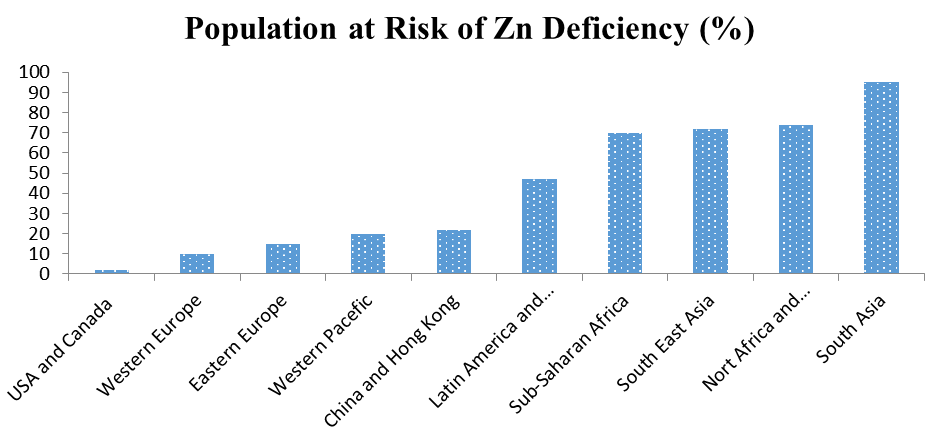
The percentage of populations suffering from the Zn deficiency in variable regions (Shahid et al., 2010).
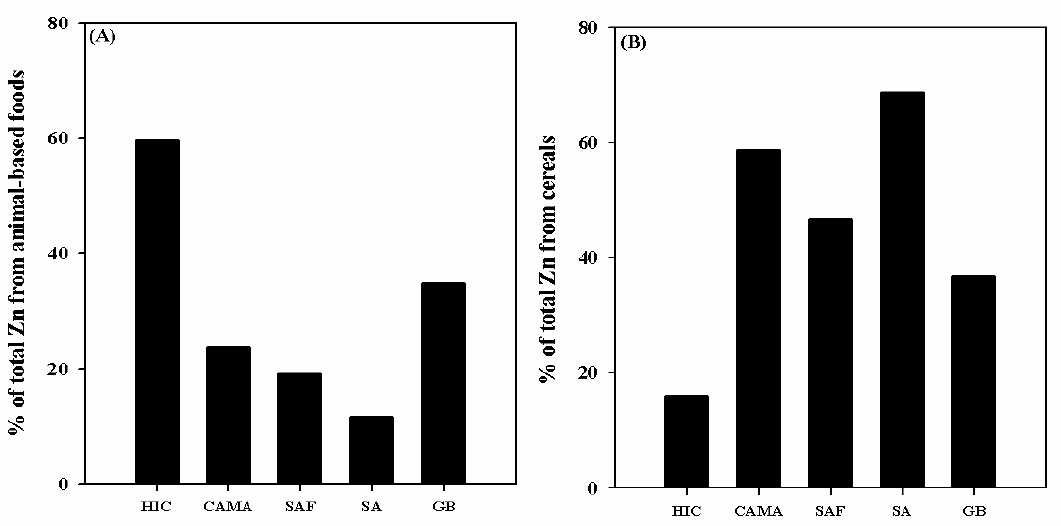
The % contribution in daily Zn intake from and animal (A) and cereals (B) foods in different regions. HIC: High income countries, CAMA: Central Asia and Middle east, SAF: Sub-Saharan Africa, SA: South Asia, GB: Global. Redrawn and modified from (Wessells and Brown, 2012; Cakmak and Kutman, 2018).
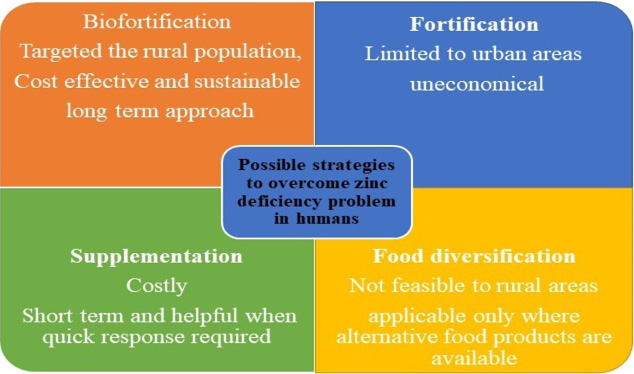
The possible strategies for combating Zn deficiency in humans.
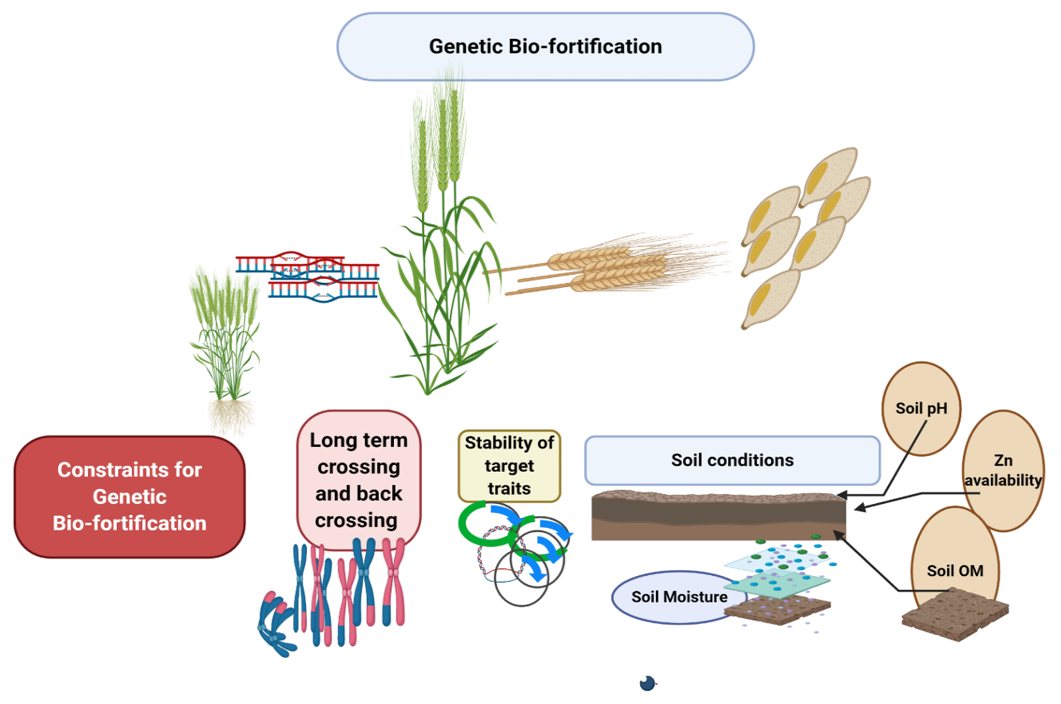
The constrains of breeding techniques of Zn bio-fortification.
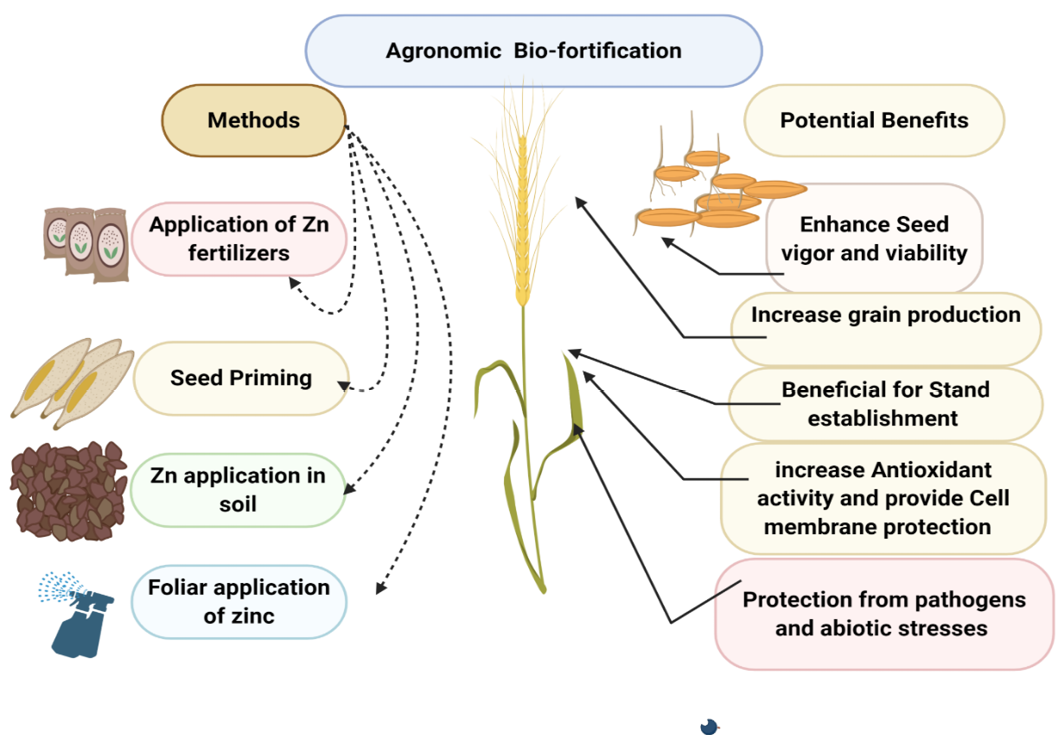
Potential benefits of agronomic bio-fortification of wheat.
References
- Ahmad, W., M.J. Watts, M. Imtiaz, I. Ahmed and M.H. Zia. 2012. Zinc deficiency in soils, crops and humans: A review. Agrochm. pp. 65–97. https://doi.org/10.5772/36702[CrossRef]
- Alloway, B.J., 2004. Zinc in soils and crop nutrition. International Zinc Association Communications. IZA Publications, Brussel.
- Alloway, B.J., 2008. Micronutrients and crop production. In micronutrient deficiencies in global crop production. 1-39© Springer Science Business Media BV. https://doi.org/10.1007/978-1-4020-6860-7_1[CrossRef]
- Allen, L.H., 1998. Zinc and micronutrient supplements for children. Am. J. Clin. Nutr., 68: 495. https://doi.org/10.1093/ajcn/68.2.495S[CrossRef]
- Bao, B., A.S. Prasad, F.W. Beck, D. Snell, A. Suneja, F.H. Sarkar, N. Doshi, J.T. Fitzgeral and P. Swerdlow. 2008. Zinc supplementation decreases oxidative stress, incidence of infection, and generation of inflammatory cytokines in sickle cell disease patients. Trans. Res., 152: 67–80. https://doi.org/10.1016/j.trsl.2008.06.001[CrossRef]
- Bharti, K., N. Pandey, D. Shankhdhar, P.C. Srivastava and S.C. Shankhdhar. 2013. Improving nutritional quality of wheat through soil and foliar zinc application. Plant Soil Environ., 59(8): 348–352. https://doi.org/10.17221/158/2013-PSE[CrossRef]
- Bouis, H.E., C. Hotz, B. McClafferty, J.V. Meenkashi and W.H. Pfeiffer. 2011. Biofortification: A new tool to reduce micronutrient malnutrition. Food Nutr. Bull., 32: S31–S40. https://doi.org/10.1177/15648265110321S105[CrossRef]
- Bouis, H.E. and R.M. Welch. 2010. Biofortification: A sustainable agricultural strategy for reducing micronutrient malnutrition in the global south. Crop Sci., 50: S20–S32. https://doi.org/10.2135/cropsci2009.09.0531[CrossRef]
- Bell, R.W. and B. Dell. 2008. Micronutrients for sustainable food, feed, fibre and bioenergy production. International Fertilizer Industry Association, Paris, France. pp. 36-57.
- Black, R.E., H.A. Lindsay, Z.A. Bhutta, L.E. Caulfield, D.M. Onnis, M. Ezzati, C. Mathers and J. Rivera. 2008. Maternal and child undernutrition: Global and regional exposures and health consequences. Lancet, 371: 243–260. https://doi.org/10.1016/S0140-6736(07)61690-0[CrossRef]
- Bouis, H.E., 2003. Micronutrient fortification of plants through plant breeding: Can it improve nutrition in man at low cost. P. Nutr. Soc., 62: 403–411. https://doi.org/10.1079/PNS2003262[CrossRef]
- Brown, A.L. and B.A. Krantz. 1970. Edding JL. Zinc-phosphorus interaction as measured by plant response and soil analysis. Soil Sci., 110: 415–420. https://doi.org/10.1097/00010694-197012000-00009[CrossRef]
- Cantu, D., S.P. Pearce, A. Distelfeld, M. Christiansen, W. Uauy and C. Akhunov. 2011. Effect of the down-regulation of the high Grain Protein Content (GPC) genes on the wheat transcriptome during monocarpic senescence. BMC Genom., 12: 492. https://doi.org/10.1186/1471-2164-12-492[CrossRef]
- Cakmak, I., M. Kalayci, Y. Kaya, A.A. Torun, N. Aydin, Y. Wang, Z. Arisoy, H. Erdem, A. Yazici, O. Gokmen, L. Ozturk and W.J. Horst. 2010. Biofortification and localization of zinc in wheat grain. J. Agric. Food Chem., 58: 9092–9102. https://doi.org/10.1021/jf101197h[CrossRef]
- Cakmak, I., 2009. Enrichment of fertilizers with zinc: An excellent investment for humanity and crop production in India. J. Trace Elem. Med. Biol., 23: 281–289. https://doi.org/10.1016/j.jtemb.2009.05.002[CrossRef]
- Cakmak, I., 2008. Enrichment of cereal grains with zinc: Agronomic or genetic biofortification. Plant Soil, 302: 1–17. https://doi.org/10.1007/s11104-007-9466-3[CrossRef]
- Cakmak, I., 2002. Plant nutrition research priorities to meet human needs for food in sustainable ways. Plant Sci., 247: 3–24. https://doi.org/10.1007/978-94-017-2789-1_1[CrossRef]
- Cakmak, I., 2000. Role of zinc in protecting plant cells from reactive oxygen species. New Phytol., 146: 185–205. https://doi.org/10.1046/j.1469-8137.2000.00630.x[CrossRef]
- Cakmak, I., A. Torun, E. Millet, M. Feldman, M. Fahima, T. Korol, A. Nevo, E. Braun and H.J. Ozkan. 2004. Triticum dicoccoides: An important genetic resource for increasing zinc and iron concentration in modern cultivated wheat. J. Plant Nutr. Soil Sci., 50: 1047–1054. https://doi.org/10.1080/00380768.2004.10408573[CrossRef]
- Cakmak, I. and U.B. Kutma. 2018. Agronomic biofortification of cereals with zinc: A review. Eur. J. Soil Sci., 69(1): 172–180. https://doi.org/10.1111/ejss.12437[CrossRef]
- Chattha, M.U., M.U. Hassan, I. Khan, M.B. Chattha, A. Mahmood, M.U. Chattha, M. Nawaz, M.N. Subhani, M. Kharal and S. Khan. 2017b. Biofortification of wheat cultivars to combat zinc deficiency. Front. Plant Sci. 8: 281. https://doi.org/10.3389/fpls.2017.00281[CrossRef]
- Chattha, M.U., M.B. Chattha, I. Khan, U. Anwar, M.U. Hassan, M. Nawaz, S.S. Anjum, A. Mahmood and S. Mirza. 2017. Effect of seeding rate and seed soaking duration on productivity of relay-intercropped wheat in cotton. Pak. J. Sci., 69(2): 190-194.
- Chattha, M.U., H. Ali, M.U. Chattha, M.U. Hassan, M.B. Chattha, M. Nawaz and S. Hussain. 2018. Combined application of distillery spent wash, bio-compost and inorganic fertilizers improves growth, yield and quality of wheat. J. Anim. Plant Sci. 28: 1112-1120.
- Chapagain, B.P. and Z. Wiesman. 2004. Effect of Nutri-Vant-Peak foliar spray on plants development, yield, and fruit quality in green house tomatoes. Sci. Hortic., 102: 177–188. https://doi.org/10.1016/j.scienta.2003.12.010[CrossRef]
- Cabot, C., S. Martos, M. Llugany, B. Gallego, R. Tolrà and C. Poschenrieder. 2019. A role for Zinc in plant defense against pathogens and herbivores. Front. Plant Sci., 10: 1171. https://doi.org/10.3389/fpls.2019.01171[CrossRef]
- Dennis, D.M. and R.M. Welch. 2013. Food system strategies for preventing micronutrient malnutrition. ESA Working Paper No. 13-06. FAO August, 2013.
- Dennis, M.D. and M.W. Ross. 2013. Food system strategies for preventing micro-nutrient malnutrition. Food Policy, 42: 115-128.
- Distelfeld, A., S. Pearce, R. Avni, B. Scherer and U.C. Piston. 2012. Divergent functions of orthologous NAC transcription factors in wheat and rice. Plant Mol. Biol., 78: 515–524. https://doi.org/10.1007/s11103-012-9881-6[CrossRef]
- Dang, H.R., Y. Li, X. Sun and L.Y. Zhang. 2010. Absorption, accumulation and distribution of zinc in highly-yielding winter wheat. Agric. Sci. China, 9(7): 965–973. https://doi.org/10.1016/S1671-2927(09)60178-4[CrossRef]
- Distelfeld, A., I. Cakmak, Z. Peleg, L. Ozturk, A.M. Yazici and H. Budak. 2007. Multiple QTL-effects of wheat Gpc-B1 locus on grain protein and micronutrient concentrations. Physiol. Plantarum., 129: 635–643. https://doi.org/10.1111/j.1399-3054.2006.00841.x[CrossRef]
- Drakakaki, G., S. Marcel, R.P. Glahn, L. Lund, S. Periagh, R. Fischer, P. Christou and E. Stoger. 2005. Endosperm specific co-expression of recombinant soybean ferritin and Aspergillus phytase in maize results in significant increases in the levels of bioavailable iron. Plant Mol. Biol., 59: 869–880. https://doi.org/10.1007/s11103-005-1537-3[CrossRef]
- Eide, D.J., 2006. Zinc transporters and the cellular trafficking of zinc. Biochim. Biophy. Acta, 1763: 711–722. https://doi.org/10.1016/j.bbamcr.2006.03.005[CrossRef]
- Erdal, I., A. Yilmaz, S. Taban, S. Eker and I. Cakmak. 2002. Phytic acid and phosphorus concentrations in seeds of wheat cultivars grown with and without zinc fertilization. J. Plant Nutr., 25: 113–127. https://doi.org/10.1081/PLN-100108784[CrossRef]
- Fardet, A., E. Roc and C. Remesy. 2008. Is the in vitro antioxidant potential of whole–grain cereals and cereal products well reflected in vivo? J. Cereal Sci., 48: 258–276. https://doi.org/10.1016/j.jcs.2008.01.002[CrossRef]
- Farooq, M., S.M.A. Basra, A. Wahid, A. Khaliq and N. Kobayashi. 2009. Rice seed invigoration. In: E. Lichtfouse (Ed.). Sustainable Agriculture Reviews, Springer, the Netherlands. https://doi.org/10.1007/978-1-4020-9654-9_9[CrossRef]
- Farooq, M., A. Wahid and K.H.M. Siddique. 2012. Micronutrients application through seed treatments. A review. J. Soil Sci. Plant Nutr., 12: 125–142.
- FAO/WHO, 1998. Vitamin and Mineral Requirements in Human Nutrition, 2nd edition. Joint FAO/WHO expert consultations, Bangkok, Thailand.
- Foster, M., M. Karra, T. Picone, A. Chu, D.P. Hancock, P. Petocz and S. Samman. 2012. Dietary fiber intake increases the risk of zinc deficiency in healthy and diabetic women. Biol. Trace Elem. Res., 149(2): 135–142. https://doi.org/10.1007/s12011-012-9408-7[CrossRef]
- Gauci, V.J., A.G. Beckhouse, V. Lyons, E.J. Beh, P.J. Rogers, I.W. Dawes and V.J. Higgins. 2009. Zinc starvation induces a stress response in Saccharomyces cerevisiae that is mediated by the Msn2p and Msn4p transcriptional activators. FEMS Yeast Res., 9(8): 1187–1195. https://doi.org/10.1111/j.1567-1364.2009.00557.x[CrossRef]
- Gomez-Becerra, H.F., H. Erdem, A. Yazici, Y. Tutus, B. Torun, O. Ozturk and I. Cakmak. 2010. Grain concentrations of protein and mineral nutrients in a large collection of spelt wheat grown under different environments. J. Cereal Sci., 52: 342–349. https://doi.org/10.1016/j.jcs.2010.05.003[CrossRef]
- Genc, Y., A.P. Verbyla, A.A. Torun, I. Cakmak, K. Willsmore, H. Wallwork and G.K. McDonald. 2009. Quantitative trait loci analysis of zinc efficiency and grain zinc concentration in wheat using whole genome average interval mapping. Plant Soil, 314: 49–66. https://doi.org/10.1007/s11104-008-9704-3[CrossRef]
- Gibson, R.S., 2007. The role of diet- and host-related factors in nutrient bioavailability and thus in nutrient-based dietary requirement estimates. Food Nutr. Bull., 28: 77–100. https://doi.org/10.1177/15648265070281S108[CrossRef]
- Gibson, R.S. 2006. Zinc: The missing link in combating micronutrient malnutrition in developing countries. Proc. Nutr. Soc., 65: 51–60. https://doi.org/10.1079/PNS2005474[CrossRef]
- Graham, R.D., R.M. Welch and H.E. Bouis. 2001. Addressing micronutrient malnutrition through enhancing the nutritional quality of staple food, principles, perspectives and knowledge gaps. Adv. Agron., 70: 77–142. https://doi.org/10.1016/S0065-2113(01)70004-1[CrossRef]
- Graham, R.D., R.M. Welch, D.A. Saunders, L. Ortiz-Monasterio, H.E. Bouis and M. Bonierbale. 2007. Nutritious subsistence food systems. Adv. Agron., 92: 1–74. https://doi.org/10.1016/S0065-2113(04)92001-9[CrossRef]
- Goto, F., T. Yoshihara, N. Shigemoto, S. Toki and F. Takaiwa. 1999. Iron fortification of rice seed by the soybean ferritin gene. Nat. Biotechnol., 17: 282–286. https://doi.org/10.1038/7029[CrossRef]
- Gibson, R.S., F. Yeudall, F. Drost, B. Mtitimuni and T. Cullinan. 1998. Dietary interventions to prevent zinc deficiency. Am. J. Clin. Nutr., 68: 484–493. https://doi.org/10.1093/ajcn/68.2.484S[CrossRef]
- Hafeez, B., M. Khanif and M. Saleem. 2013. Role of zinc in plant nutrition: A review. Am. J. Exp. Agric., 3(2): 374–391. https://doi.org/10.9734/AJEA/2013/2746[CrossRef]
- Hassan, M.U., M. Aamer, M.U. Chattha, T. Haiying, B. Shahzad, L. Barbanti, M. Nawaz, A. Rasheed, A. Afzal, Y. Liu and H. Guoqin. 2020. The critical role of zinc in plants facing the drought stress. Agriculture, 10(9): 396. https://doi.org/10.3390/agriculture10090396[CrossRef]
- Hassan, M.U., M.U. Chattha, A. Ullah, I. Khan, A. Qadeer, M. Aamer, A.U. Khan, F. Nadeem and T.A. Khan. 2019. Agronomic biofortification to improve productivity and grain Zn concentration of bread wheat. Int. J. Agric. Biol., 21: 615‒620.
- Hussain, S., A.M. Muhammad and Rahmatullah. 2012. Increasing grain zinc and yield of wheat for developing world. A review. Emir. J. Food Agric., 22: 326–339. https://doi.org/10.9755/ejfa.v22i5.4821[CrossRef]
- Holloway, R.E., R.D. Graham, T.M. McBeath and D.M. Brace. 2010. The use of a zinc efficient wheat cultivar as an adaptation to calcareous subsoil: a glasshouse study. Plant Soil, 336: 15–24. https://doi.org/10.1007/s11104-010-0435-x[CrossRef]
- Harris, D., A. Rashid, G. Miraj, M. Arif and M. Youna. 2007. On farm seed priming with zinc in chickpea and wheat. Plant Soil, 306: 3–10. https://doi.org/10.1007/s11104-007-9465-4[CrossRef]
- Hotz, C. and R.S. Gibson. 2007. Traditional food-processing and preparation practices to enhance the bioavailability of micronutrients in plant-based diets. J. Nutr., 137: 1097–1100. https://doi.org/10.1093/jn/137.4.1097[CrossRef]
- Hotz, C. and K.H. Brown. 2004. Assessment of the risk of zinc deficiency in populations and options for its control. Food Nutr. Bull., 25: S91–S204.
- Hoque, K.M. and H.J. Binder. 2006. Zinc in the treatment of acute diarrhea: Current status and assessment. Gastroent, 130(7): 2201–2205. https://doi.org/10.1053/j.gastro.2006.02.062[CrossRef]
- Imtiaz, M., 1999. Zn deficiency in cereals. PhD Thesis Reading University, U.K.
- Johnson, S.E., J.G. Lauren, R.M. Welch and J.M. Duxbury. 2005. A comparison of the effects of micronutrient seed priming and soil fertilization on the mineral nutrition of chickpea (Cicer arietinum), lentil (Lens culinaris), rice (Oryza sativa) and wheat (Triticum aestivum) in Nepal. Exp. Agric., 41: 427–448. https://doi.org/10.1017/S0014479705002851[CrossRef]
- Kalayci, M., B. Torun, S. Eker, M. Aydin, L. Ozturk and I. Cakmak. 1999. Grain yield, zinc efficiency and zinc concentration of wheat cultivars grown in a zinc-deficient calcareous soil in field and greenhouse. Field Crop Res., 63: 87–98. https://doi.org/10.1016/S0378-4290(99)00028-3[CrossRef]
- Kiekens, L., 1995. Zinc in Heavy Metals. In: B.J. Alloway (Ed.). Soils. London: Blackie Academic and Professional. https://doi.org/10.1007/978-94-011-1344-1_13[CrossRef]
- Katyal, J.C. and N.S. Randhawa. 1983. Micronutrients FAO fertilizer and plant nutrition bullet in 7. Rome: Food and Agriculture Organization of the United Nations.
- Kang, B.T. and E.G. Okoro. 1976. Response of flooded rice grown on a vertisol from northern Nigeria to zinc sources and methods of application. Plant Soil, 44: 15–25. https://doi.org/10.1007/BF00016951[CrossRef]
- Kumssa, D.B., E.J. Joy, E.L. Ander, M.J. Watts, S.D. Young, S. Walker and M.R. Broadley. 2015. Dietary calcium and zinc deficiency risks are decreasing but remain prevalent. Sci. Rep., 5: 1–11. https://doi.org/10.1038/srep10974[CrossRef]
- Loneragan, J.F. and M.J. Webb. 1993. Interactions between zinc and other nutrients affecting the growth of plants. In: Robson, A.D. (Ed.), Zinc in Soils and Plants. Kluwer Academic Publishers. Dordrecht, The Netherlands. https://doi.org/10.1007/978-94-011-0878-2_9[CrossRef]
- Maret, W. and H.H. Sandstead. 2006. Zinc requirements and the risks and benefits of zinc supplementation. J. Trace Elem. Med. Biol., 20: 3–18. https://doi.org/10.1016/j.jtemb.2006.01.006[CrossRef]
- Mousavi, S.R., 2011. Zinc in crop production and interaction with phosphorus. Aust. J. Basic Appl. Sci., 5: 1503–1509.
- Maralian, H., 2009. Effect of foliar application of zinc and iron on wheat yield and quality. Afr. J. Biotechnol., 8: 6795–6798.
- Ma, G., Y. Jin, Y. Li, F. Zhai, F.J. Kok, E. Jacobsen and X. Yang. 2008. Iron and zinc deficiencies in China: what is a feasible and cost-effective strategy. Publ. Health Nutr., 11: 632–638. https://doi.org/10.1017/S1368980007001085[CrossRef]
- Marıa, J.B., S. Salgueiro, B. Marcela, E. Zubillaga, B.S. Alexis, A. Lysionek, R. Ricard, S. Weill and J.S. Boccio. 2002. The role of zinc in the growth and development of children. Nutrion, 18: 510–519. https://doi.org/10.1016/S0899-9007(01)00812-7[CrossRef]
- Maret, W., 2013. Zinc biochemistry: From a single zinc enzyme to a key element of life. Adv. Nutr., 4(1): 82–91. https://doi.org/10.3945/an.112.003038[CrossRef]
- Marschner, H., 1995. Boron. In: Mineral nutrition of higher plants. 2nd Edition. San Diego Acadmic Press.
- Martens, D.C. and D.T. Westermann. 1991. Fertilizer application for correcting micronutrient defciences. In: Micronutrients in Agriculture. 2nd Edition.
- Mordtvedt, J., J. Cox, L.M. Shuman and R.M. Welch. 1991. Soil Sci. Soc. Am. Book Ser. No. 4 549–592.
- Moraghan, J.T. and H.J. Mascagni. 1991. Environmental and soil factors affecting micronutrient deficiencies and toxicities. In: Mordvedt, J.J., Cox, F.R., Shumann, L.M., Welch, R.M. (Eds.), Micronutrients in Agriculture. Soil Science Society of America.
- Mikkelsen, D.S. and K. Shiou. 1977. Zinc fertilization and behaviour in flooded soils. Spec. Publ. No. 5 Comm. Agric. Bur., Farnham Royal. Mineral Stresses, In A.R. Yeo and T.J. Flowers (ed). Approaches to Crop Improvement. pp. 59.
- Ning, P., S. Wang, P. Fei, X. Zhang, J. Dong, J. Shi and X. Tian. 2019. Enhancing zinc accumulation and bioavailability in wheat grains by integrated zinc and pesticide application. Agron., 9(9): 530. https://doi.org/10.3390/agronomy9090530[CrossRef]
- Norvell, W.A. and R.M. Welch. 1993. Growth and nutrient uptake by barley: Studies using an N (2- Hydroxyethyle) ethylenedinitrilotriacetic acid buffered nutrient solution technique. Zinc ion requirements. Plant Physiol., 101: 619–625. https://doi.org/10.1104/pp.101.2.619[CrossRef]
- Obrador, A., J. Novillo and J.M. Alvarez. 2003. Mobility and availability to plants of two zinc sources applied to a calcareous soil. Soil Sci. Soc. Am., 67: 564–572. https://doi.org/10.2136/sssaj2003.5640[CrossRef]
- Oghbaei, M. and J. Prakash. 2016. Effect of primary processing of cereals and legumes on its nutritional quality: A comprehensive review. Cogent Food Agric., 2(1): 1136015. https://doi.org/10.1080/23311932.2015.1136015[CrossRef]
- Olsen, S.R., 1972. Micronutrient Interactions. In: J.M. Mortved, J.J. Goirdano and W.L. Lindsaym (eds). Micronutrients in Agriculture. Soil Sci. Soc. Am. Madison, WI.
- Ortiz, R., R.M. Trethowan, G. Ortiz, M. Ferrara, J.H. Iwanag, J.H. Dodds, J. Crouch, Crossa and H.J. Braun. 2007. High yield potential, shuttle breeding and a new international wheat improvement strategy. Euphytica, 157: 365–384. https://doi.org/10.1007/s10681-007-9375-9[CrossRef]
- Ozkan, H., A. Brandolini, A. Torun, S. Altintas, S. Eker and B. Kilian. 2006. Natural variation and identification of microelements content in seeds of Einkorn Wheat (Triticum monococcum). In: Proceedings of the 7th International Wheat Conference, 27 November 2 December 2005, Mar del Plata, Argentina.
- Parlak, M. and A.O. Parlak. 2011. Effect of soil compaction on root growth and nutrient uptake of forage crops. J. Food Agric. Environ., 9: 275–278.
- Peleg, Z., I. Cakmak, L. Ozturk, A. Yazici, Y. Jun, H. Budak, A.B. Korol, T. Fahima and Y. Saranga. 2009. Quantitative trait loci conferring grain mineral nutrient concentrations in durum wheat × wild emmer wheat RIL population. Theor. Appl. Gen., 119: 353–369. https://doi.org/10.1007/s00122-009-1044-z[CrossRef]
- Prasad, A.S., 2008. Clinical, anti-inflammatory and antioxidant role of zinc. Exp. Gero., 43: 370–377. https://doi.org/10.1016/j.exger.2007.10.013[CrossRef]
- Pfeiffer, W.H. and B. McClafferty. 2007. Harvest Plus: Breeding crops for better nutrition. Crop Sci., 47: 88–105. https://doi.org/10.2135/cropsci2007.09.0020IPBS[CrossRef]
- Pandey, N., G.C. Pathak and C.P. Sharma. 2006. Zinc is critically required for pollen function and fertilisation in lentil. J. Trace Elem. Med. Biol., 20: 89–96. https://doi.org/10.1016/j.jtemb.2005.09.006[CrossRef]
- Pedler, J.F., D.R. Parker and D.E. Crowley. 2000. Zinc Deficiency-induced phytosiderophore release by the Triticaceae is not consistently expressed in solution culture. Planta, 211: 120–126. https://doi.org/10.1007/s004250000270[CrossRef]
- Pendias, A.K. and H. Pendias. 1992. Trace elements in soil and plants (2nd edition). CRC Press, Boca Raton, Florida.
- Qu, L.Q., T. Yoshihara, A. Ooyama, F. Goto and F. Takaiwa. 2005. Iron accumulation does not parallel the high expression level of ferritin in transgenic rice seeds. Planta, 222: 225–233. https://doi.org/10.1007/s00425-005-1530-8[CrossRef]
- Rashid, A. and J. Ryan. 2008. Micronutrients constrains to crop production in soils with Mediterranean-type characteristics. J. Plant Nutr., 27: 959–975. https://doi.org/10.1081/PLN-120037530[CrossRef]
- Rehman, H.U., T. Aziz, M. Farooq, A. Wakeel and Z. Rengel. 2012. Zinc nutrition in rice production systems: A review. Plant Soil, 361(1-2): 203–226. https://doi.org/10.1007/s11104-012-1346-9[CrossRef]
- Rengel, Z., G.D. Batten and D.E. Crowley. 1999. Agronomic approaches for improving the micronutrient density in edible portions of field crops. Field Crops Res., 60: 27–40. https://doi.org/10.1016/S0378-4290(98)00131-2[CrossRef]
- Rengel, Z. and R.B. Graham. 1995. Importance of seed zinc content for wheat growth on zinc- deficient soil. I. Vegetative growth. Plant Soil, 173: 259–266. https://doi.org/10.1007/BF00011463[CrossRef]
- Renkou, X., A. Zhao, Q. Li, X. Kong and G. Ji. 2003. Acidity regime of the Red Soils in a subtropical region of southern China under field conditions. Geoderma, 115: 75–84. https://doi.org/10.1016/S0016-7061(03)00077-6[CrossRef]
- Sadeghzadeh, B., 2013. A review of zinc nutrition and plant breeding. J. Soil Sci. Plant Nutr., 13(4): 905–927. https://doi.org/10.4067/S0718-95162013005000072[CrossRef]
- Sarwar, S., E. Rafique, S.M. Gill and M.Z. Khan. 2017. Improved productivity and zinc content for maize grain by different zinc fertilization techniques in calcareous soils. J. Plant Nutr., 40(3): 417–426. https://doi.org/10.1080/01904167.2016.1245322[CrossRef]
- Shahid, H., M.A. Maqsood and Rahmatullah. 2010. Increasing grain zinc and yield of wheat for the developing world: A review. Emir. J. Food Agric., 22 (5): 326–339. https://doi.org/10.9755/ejfa.v22i5.4821[CrossRef]
- Shewry, P.R., 2009. Wheat. J. Exp. Bot., 60: 1537–1553. https://doi.org/10.1093/jxb/erp058[CrossRef]
- Singh, M.V., 2007. Efficiency of seed treatment for ameliorating zinc deficiency in crops. In: Zinc Crops 2007, improving crop production and human health, 24-26 May, 2007, Istanbul, Turkey.
- Skrovanek, S., K. DiGuilio, R. Bailey, W. Huntington, R. Urbas, B. Mayilvaganan, G. Mercogliano and J.M. Mullin. 2014. Zinc and gastrointestinal disease. World J. Gastrointest. Pathophysiol., 5(4): 496. https://doi.org/10.4291/wjgp.v5.i4.496[CrossRef]
- Soltangheisi, A., Z.A. Rahman, C.F. Ishak, H.M. Musa and H. Zakikhani. 2014. Interaction effects of phosphorus and Zinc on their uptake and 32P absorption and translocation in sweet corn (Zea mays) grown in a tropical soil. Asian J. Plant Sci., 13(3): 129–135. https://doi.org/10.3923/ajps.2014.129.135[CrossRef]
- Stein, A.J., P. Nestel, J.V. Meenakshi, M. Qaim, H.P.S. Sachdev and Z.A. Bhutta. 2007. Plant breeding to control zinc deficiency in India: How cost-effective is biofortification? Pub. Health Nutr., 10: 492–501. https://doi.org/10.1017/S1368980007223857[CrossRef]
- Singh, B., S.K.A. Natesan, B.K. Singh and K. Usha. 2005. Improving zinc efficiency of cereals under zinc deficiency. J. Curr. Sci., 88: 36–44.
- Slaton, N.A., E.E. Gbur, C.E. Wilson and R.J. Norman. 2005. Rice response to granular zinc sources varying in water-soluble zinc. Soil Sci. Soc. Am. J., 69: 443–453. https://doi.org/10.2136/sssaj2005.0443[CrossRef]
- Savithri, P., R. Pernmal and R. Nagarajan. 1999. Soil and crop management technologies for enhancing rice production under micronutrient constrains. Nutr. Cycling Agroecosyst., 53: 43–83. https://doi.org/10.1007/978-94-011-5078-1_8[CrossRef]
- Schachtman, D.P. and S.J. Barker. 1999. Molecular approaches for increasing the micronutrient density in edible portions of food crops. Field Crop Res., 60: 81–92. https://doi.org/10.1016/S0378-4290(98)00134-8[CrossRef]
- Shankar, A.H. and A.S. Prasad. 1998. Zinc and immune infection: The biology of altered resistance to infection. Am. J. Clin. Nutr., 68: 447–463. https://doi.org/10.1093/ajcn/68.2.447S[CrossRef]
- Schwartz, S.M., R.M. Welch, D.L. Grunes, E.E. Cary, W.A. Norvell, M.D. Gilbert, M.P. Meridith and C.A. Sauchirico. 1987. Effect of zinc, phosphorus and root-zone temperature on nutrient uptake by barley. Soil Sci. Soc. Am. J., 51: 371–375. https://doi.org/10.2136/sssaj1987.03615995005100020021x[CrossRef]
- Singh, J.P., R.E. Karamonas and J.W.B. Stewart. 1986. Phosphorus-induced zinc deficiency in wheat on residual phosphorus plots. Agron. J., 78: 668–675. https://doi.org/10.2134/agronj1986.00021962007800040023x[CrossRef]
- Singh, M.V. and I.P. Abrol. 1986. Transformation and movement of zinc in an alkali soil and their influence on the yield and uptake of zinc by rice and wheat crops. Plant Soil, 94: 445–449. https://doi.org/10.1007/BF02374338[CrossRef]
- Taheri, N., H. Heidari, K. Yousefi and S.R. Mousavi. 2011. Effect of organic manure with phosphorus and zinc on yield of seed potato. Austr. J. Basic Appl. Sci., 5(8): 775–780.
- Tiwari, V.K., N. Rawat, P. Chhuneja, K. Neelam, R. Aggarwal, G.S. Randhawa, H.S. Dhaliwal, B. Keller and K. Singh. 2009. Mapping of quantitative trait loci for grain iron and zinc concentration in diploid A genome wheat. J. Hered., 100: 771–776. https://doi.org/10.1093/jhered/esp030[CrossRef]
- Trethowan, R.M., 2007. Breeding wheat for high iron and zinc at CIMMYT: State of the art, challenges and future prospects. In: Proceeding of the 7th International Wheat Conference. Mar del Plata, Argentina.
- Trethowan, R.M., M.P. Reynolds, K.D. Sayre and I. Ortiz-Monasterio. 2005. Adapting wheat cultivars to resource conserving farming practices and human nutritional needs. Ann. Appl. Biol., 146: 404–413. https://doi.org/10.1111/j.1744-7348.2005.040137.x[CrossRef]
- Tisdale, S.L., W.L. Nelson and J.D. Beaten. 1984. Zinc in soil fertility and fertilizers. 4th edition Micmillion Publishing Company, New York.
- Uauy, C., A. Distelfeld, T. Fahima, A. Blechl and J. Dubcovsky. 2006. A NAC gene regulating senescence improves grain protein, zinc, and iron content in wheat. Science, 314: 1298–1301. https://doi.org/10.1126/science.1133649[CrossRef]
- Viets, F.G., L.C. Boawn and C.L. Crawford. 1957. The effect of nitrogen and types of nitrogen carrier on plant uptake indigenous and applied zinc. J. Soil Sci. Soc. Am., 21: 197–206. https://doi.org/10.2136/sssaj1957.03615995002100020016x[CrossRef]
- Wang, L.C. and S. Busbey. 2005. Images in clinical medicine. Acquired acrodermatitis enteropathica. N. Eng. J. Med., 352: 1121. https://doi.org/10.1056/NEJMicm030844[CrossRef]
- White, P.J. and M.R. Broadley. 2005. Biofortifying crops with essential mineral elements. Trends Plant Sci., 10: 586–593. https://doi.org/10.1016/j.tplants.2005.10.001[CrossRef]
- Welch, R.M. and R.D. Graham. 2004. Breeding for micronutrients in staple food crops from a human nutrition perspective. J. Exp. Bot., 55(396): 353–364. https://doi.org/10.1093/jxb/erh064[CrossRef]
- Wessells, K.R. and K.H. Brown. 2012. Estimating the global prevalence of zinc deficiency: results based on zinc availability in national food supplies and the prevalence of stunting. PLoS One, 7: e50568. https://doi.org/10.1371/journal.pone.0050568[CrossRef]
- WHO, 2002. World health report. 2002. Reducing Risks, Promoting Healthy Life. World Health Organization, Geneva, Switzerland.
- White, J.G. and R.J. Zasoski. 1999. Mapping soil micronutrients. Field Crop Res., 60: 11–26. https://doi.org/10.1016/S0378-4290(98)00130-0[CrossRef]
- Xie, W. and E. Nevo. 2008. Wild emmer: Genetic resources, gene mapping and potential for wheat improvement. Euphytica, 164: 603–614. https://doi.org/10.1007/s10681-008-9703-8[CrossRef]
- Xie, X. and M. Tang. 2019. Interactions between phosphorus, zinc and iron homeostasis in non-mycorrhizal and mycorrhizal plants. Front. Plant Sci., 10: 1172. https://doi.org/10.3389/fpls.2019.01172[CrossRef]
- Yue-Qiang, Z., Y. Sun, Y. Ye, M. Karim, Y. Xue, P. Yan, Q. Meng, Z. Cui, I. Cakmak, F. Zhang and C. Zou. 2012. Zinc biofortification of wheat through fertilizer applications in different locations of China. Field Crops Res., 125: 1–7. https://doi.org/10.1016/j.fcr.2011.08.003[CrossRef]
- Yang, X.W., X. Tain, X. Lin, Y. Co and Z. Chen. 2011. Impacts of phosphorus and zinc levels on phosphorus and zinc nutrition and phytic acid concentration in wheat. J. Sci. Food Agric., 91(13): 2322–2328. https://doi.org/10.1002/jsfa.4459[CrossRef]
- Yadav, R.S., A.M. Patel, N. Dodia, A.V. Aglodiya, G.A. Patel and N. Augustin. 2011. Agronomic bio-fortification of wheat (Triticum aestivum L.) through iron and zinc enriched organics. J. Wheat Res., 3(1): 46–51.
- Yilmaz, A.H., I. Ekiz, B. Gültekin, H. Torun, S. Barut, K. Karanlik and I. Cakmak. 1998. Effect of seed zinc content on grain yield and zinc concentration of wheat grown in zinc-deficient calcareous soils. J. Plant Nutr., 21: 2257–2264. https://doi.org/10.1080/01904169809365559[CrossRef]
- Yilmaz, A., H. Ekiz, B. Torun, I. Gultekin, S. Karanlik, S.A. Bagci and I. Cakmak. 1997. Effect of different zinc application methods on grain yield and zinc concentration in wheat grown on zinc-deficient calcareous soils in Central Anatolia. J. Plant Nutr., 20: 461–471. https://doi.org/10.1080/01904169709365267[CrossRef]
- Zhang, Y.Q., Y.X. Sun, L.Y. You, R. Karim, Y.F. Xue, P. Yan, Q.F. Meng, Z.L. Cui, I. Chamak, F.S. Zhang and C.Q. Zou. 2012. Zinc biofortification of wheat through fertilizer applications in different locations of China. Field Crop Res., 125: 1–7. https://doi.org/10.1016/j.fcr.2011.08.003[CrossRef]
- Zou, C.Q., Y.Q. Zhang, A. Rashid, E. Savasli, R.Z. Arisoy, I. Ortiz-Monasterio, S. Simunji, Z.H. Wang, V. Sohu, M. Hassan, Y. Kaya, O. Onder, O. Lungu, M.Y. Majid, A.K. Joshi, Y. Zelenskiy, F.S. Zhan and I. Cakmak. 2012. Biofortification of wheat with zinc through zinc fertilization in seven different countries. Plant Soil, pp. 104–116. https://doi.org/10.1007/s11104-012-1369-2[CrossRef]
- Zhao, F.J., Y.H. Su, S.J. Dunham, M. Rakszegi, Z. Bedo and S.P. McGrath. 2009. Variation in mineral micronutrient concentrations in grain of wheat lines of diverse origin. J. Cereal Sci., 49: 290–295. https://doi.org/10.1016/j.jcs.2008.11.007[CrossRef]
- Zhang, Y., R. Shi, K.M. Rezaul, F. Zhang and C. Zou. 2010. Iron and zinc concentrations in grain and flour of winter wheat as affected by foliar application. J. Agric. Food Chem., 58: 12268–12274. https://doi.org/10.1021/jf103039k[CrossRef]
- Zhao, F.J. and S.P. McGrath. 2009. Bio fortification and phytoremediation. Curr. Opin. Plant Biol., 12: 373–380. https://doi.org/10.1016/j.pbi.2009.04.005[CrossRef]
Cited by 3 articles
In journals published by ResearchersLinks.
- Effect of Different Seed Sizes and Seed Rates on the Growth and Productivity of Wheat Grown Under Semi-Arid ConditionsPakistan Journal of Agricultural Research · 2022
- Response of Wheat Genotypes Having Different Stature to Early Period Drought StressJournal of Innovative Sciences · 2021
- Assessment for Agronomic and Grain Qualitative Attributes of Wheat Cultivars under Agro-ecological Conditions of FaisalabadJournal of Innovative Sciences · 2021
Services
Article usage statistics
Loading…