
The olive mill wastewater produced by a three-phase extraction system (OMW 3P) is a high load of pollutants, which poses a significant environmental problem in regions where olives are produced. The primary goal of this study was to determine if a mixed microbial consortium could effectively decolourise and decontaminate raw and diluted OMW 3P under simple aerobic conditions, without chemical pre-treatment, adjustment of pH or external nutrient supplementation, for 15 days in raw OMW 3P, at room temperature, using a consortium of 14 strains (bacteria, yeasts, and moulds) isolated from Moroccan olive mill environments. In raw OMW 3P, the use of the consortium raised the pH (4.27 to 5.36), and removed 63.12% of COD, 71.21% of BOD, and 68.20% of polyphenols, while in diluted OMW (1/5), the COD, BOD, and polyphenol removal rates exceeded 98.23%, 97.31%, and 98.92%, respectively, and led to a significant reduction in the effluent colour. These results were correlated with a decrease in the biodegradability index, suggesting an improvement in effluent quality that will allow for further biological processing and potential use as an agricultural biofertiliser. Overall, the aerobic biological approach is a sustainable, inexpensive way to improve the circular management of residues from the extraction of olive oil by converting a wastewater that is difficult to process into a resource that can be used.
Research Article · Volume 42, Issue 4, 13 August 2026 · Open Access
Aerobic Treatment of Olive Mill Wastewater by a Microbial Consortium: Enhanced Decolorization and Depollution
· · · · ·
Affiliations & Notes ⌄
- 1Department of Biology, Faculty of Sciences, University Ibn Tofail, B.P 242. Kenitra, Morocco. *Correspondence | Hassan Bouigua, Department of Biology, Faculty of Sciences, University Ibn Tofail, B.P 242. Kenitra, Morocco
- 2Email: hassan.bouigua@uit.ac.ma
Article Info ⌄
- Journal:
- Sarhad Journal of Agriculture
- Published:
- 13 August 2026
From the article
- The biodegradability index (Ib = BOD5/COD) was 2.10, indicating that it is biodegradable but was determined to be significantly recalcitrant due to the high concentration of polyphenols in the effluent.
- This dispersal diluted the OMW-3P to a less acidic state, increasing its biodegradability (as indicated from the reduced Ib index), increasing the metabolic activity of the microorganisms involved in each type of treatment.
- This study demonstrates that a 14-strain microbial consortium can significantly decolorize and depollute raw and diluted OMW-3P under aerobic conditions, without chemical pretreatment, pH adjustment, or external nutrient addition.
- In raw OMW-3P, the consortium improved pH and reduced COD, BOD and polyphenols, while in OMW-3P diluted to 1/5 it achieved very high removal rates and a marked decrease in the biodegradability index, indicating better suitability for further biological treatment and possible recycling as a biofertilizer.
Selected from the article's own text.
Abstract
Introduction
For millennia, between the latitudes of 26° N and 45° N, olives have been cultivated on a global scale with an area of nearly 10 million hectares, mostly in the Mediterranean basin ; representing the main production area. In Morocco, olive farming represents about 70% of the total tree crop area and covers approximately 1.07 million hectares, highlighting both its agronomic and socio-economic importance for rural livelihoods and agro-industrial development .
The growing demand for olive oil, driven in part by its recognized health benefits, has led to a rapid expansion of modern, continuous milling systems in many producing countries ; . Among these technologies, three-phase olive oil extraction systems have considerably improved processing efficiency but have also increased the volume of liquid effluents known as olive mill wastewater (OMW-3P). , creating an OMW-derived effluent that poses significant environmental problems due to its toxicity and composition.
This effluent is typically characterized by an acidic pH (3–6) ; , very high chemical oxygen demand (COD), elevated biochemical oxygen demand (BOD) ; , and high concentrations of phenolic compounds and other recalcitrant organics that contribute to its dark color and phytotoxicity. Such characteristics are responsible for the negative impacts of OMW-3P on soil, surface water, and groundwater ; ; when it is discharged or spread without adequate treatment, and they significantly constrain the use of conventional biological processes due to toxicity toward many microorganisms.
The quantities of OMW generated are particularly concerning in regions where olive oil production is concentrated and seasonal. Each ton of olives processed can generate around 1.5 tons of olive mill waste , and in Morocco alone, it is estimated that approximately 250,000 tons of OMW are produced annually , mainly from three-phase extraction systems. This concentration of a highly loaded effluent within a relatively short time frame creates strong pressure on local ecosystems and calls for efficient, low-cost, and context-adapted treatment strategies capable of mitigating its environmental footprint.
A broad range of physical, chemical, biological, and hybrid ; processes has been proposed for OMW treatment, including sedimentation and filtration, coagulation–flocculation, advanced oxidation, anaerobic and aerobic bioreactors, and integrated processes. However, many of these options suffer from limitations such as high operating costs, complex infrastructure requirements, or the need for prior dilution and/or chemical pretreatment to reduce toxicity and improve biodegradability ; ; . In parallel, the valorization of OMW within a circular bioeconomy framework, through energy recovery or the extraction of high-value biocompounds (e.g., polyphenols, exopolysaccharides) and soil-amending materials , , has become an active field of research, aiming to transform this effluent from a waste into a resource.
Currently, there has been growing interest in microbial treatment using selected strains or consortia to degrade recalcitrant compounds, decrease pollutant loads, and improve quality of effluent, typically at relatively mild conditions. In particular, mixed microbial communities; ; , are capable of providing complementary metabolic activity and enhanced stability to the inhibitory effects upon phenolics and low pH (two primary constituents of OMW), thereby enabling them to provide a better alternative to common biological treatment methods that do not utilize pretreatment, such as those that rely on nutritional supplementation or optimized operating conditions, for example in the swimming pool industry, where most of the time there is an additional demand of (in some cases over) 100% for pre-treating effluent. However, although many recent studies report promising results using bacterial, fungal, or mixed consortia, the majority of these have been conducted with the use of experimental designs that have limited practical applicability at either commercial or agricultural scales.
The present study focuses on the aerobic biological treatment of three-phase olive mill wastewater from Moroccan olive mills using a novel microbial consortium composed of 14 strains (bacteria, yeasts, and molds) isolated from OMW-related ecological niches. The consortium was applied to raw and diluted OMW-3P under ambient conditions, without chemical pretreatment, pH adjustment, or external nutrient addition. The main objectives were to evaluate the capacity of this mixed consortium to reduce COD, BOD, and total polyphenols and to decolorize OMW-3P, and to assess the resulting changes in pH and biodegradability index as indicators of improved effluent quality and potential suitability for agricultural reuse as a biofertilizer. By exploring a simple, low-input biological process, this work aims to contribute to more sustainable and circular management of olive oil production residues in Mediterranean contexts such as Morocco.
Materials and Methods
Sampling and physicochemical/microbiological analyses of OMW
Olive Mill Wastewater (OMW) samples were collected from continuous three-phase extraction systems (OMW-3P) in four Moroccan regions: Fez, Ouazzane, Settat, and Taza, with three units per region (12 sites in total). Physicochemical samples were stored in 5 L food-grade plastic containers, while samples for microbiological analysis were placed in sterile 2 L bags and bottles, protected from light and kept at 4°C. All analyses began immediately upon arrival at the laboratory.
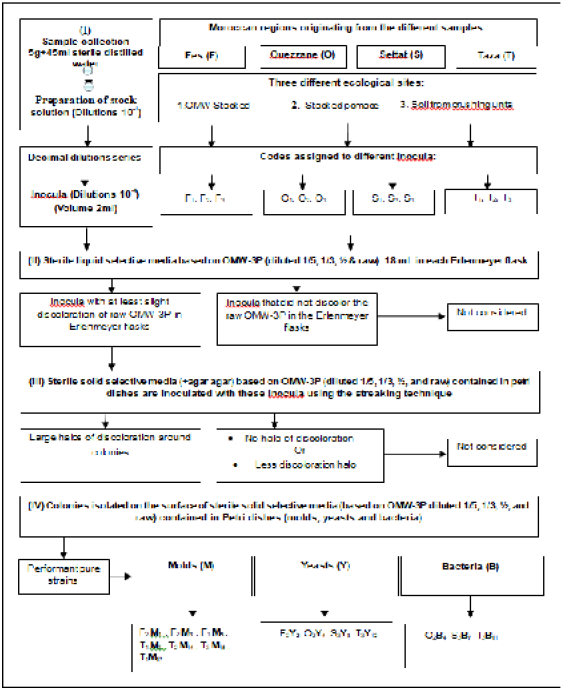
Detailed protocols for physicochemical and microbiological analyses follow those previously described . Preparation and coding of inocula for strain isolation are shown in Figure 1, in which codes for the 14 effective strains (3 bacteria, 4 yeasts, 7 molds) complete those in our earlier work focused on molds .
The selection process for inocula based on their ability to decolorize OMW-3P in selective liquid media is reported in Table 3 . This methodology enabled identification of strains most effective for OMW-3P decolorization.
Experiments monitored four key parameters before and after aerobic biological treatment: pH, chemical oxygen demand (COD), biochemical oxygen demand (BOD₅), and total polyphenols, correlating their reduction with visible OMW-3P decolorization.
Methodology for isolation and purification of microbial strains
Step I: Sampling and inoculum preparation
Samples from three ecological niches stored OMW, pomace, and adjacent soil were obtained from the four regions. Stock solutions were prepared, diluted to 10-⁴, and assigned codes (F1-3, O1-3, S1-3, T1-3).
Step II: Selection on liquid selective media
Two milliliters of each inoculum were transferred to 18 mL of sterile OMW-3P selective liquid media (raw and diluted 1/2, 1/3, 1/5). After one week at 30°C, inocula showing at least a slight decolorization of the raw OMW-3P were selected.
Steps III–IV: Isolation and purification
Selected inocula were streaked onto sterile selective solid OMW-3P-based media (raw and diluted). Colonies with the largest decolorization halos were purified and maintained as effective strains.
The methodological workflow is summarized in Figure 1 below.
Physicochemical analyses
Physicochemical parameters (pH, COD, BOD, total polyphenols) were measured at the beginning of the experiment (day 0) and after 15 days of treatment.
Table 1: Evaluation of decolorization halos induced by molds isolated on sterile OMW-Based selective solid media
|
Inocula source region |
Code assigned to each mold (M) |
OMW-based solid selective media |
||||
|
diluted 1:5 |
diluted 1:3 |
diluted 1:2 |
raw OMW-3P |
|||
|
Fes (F) |
F2 |
F2M1 |
++ |
+ |
+ |
+ |
|
F2M2 |
+ |
+ |
- |
- |
||
|
F2M3 |
+++ |
++ |
+ |
+ |
||
|
F3 |
F3M4 |
++ |
+ |
- |
- |
|
|
F3M5 |
+++ |
++ |
+ |
+ |
||
|
Ouezzane (O) |
O2 |
O2M6 |
++ |
+ |
- |
- |
|
O2M7 |
+ |
- |
- |
- |
||
|
O2M8 |
- |
- |
- |
- |
||
|
O3 |
O3M9 |
- |
- |
- |
- |
|
|
O3M10 |
- |
- |
- |
- |
||
|
Settat (S) |
S3 |
S3M11 |
+ |
- |
- |
- |
|
Taza (T) |
T1 |
T1M12 |
++ |
+ |
- |
- |
|
T1M13 |
++ |
+ |
+ |
+ |
||
|
T2 |
T2M14 |
++ |
++ |
+ |
+ |
|
|
T3 |
T3M15 |
+++ |
++ |
++ |
+ |
|
|
T3M16 |
+ |
- |
- |
- |
||
|
T3M17 |
+++ |
++ |
+ |
+ |
||
OMW-3P decolorization: +++ (strong); ++ (moderate); + (weak); – (absent)
pH Measurement
Performed using a pH meter (model pH-2005) calibrated with standard buffers. A stable reading was recorded for each sample.
COD and BOD₅
COD was determined by digestion with a strong oxidizing agent and spectrophotometric absorbance, converted using the method of Hur et al. (2010). BOD₅ was measured by incubating OMW-3P samples with bacterial culture at 20°C in the dark, and calculated from oxygen concentration differences .
Table 2: Evaluation of decolorization halos induced by yeasts isolated on sterile OMW-Based selective solid media
|
Inocula source region |
Code assigned to each yeasts (Y) |
OMW-based solid selective media |
||||
|
diluted 1:5 |
diluted 1:3 |
diluted 1:2 |
raw OMW-3P |
|||
|
Fes (F) |
F2 |
F2Y1 |
++ |
+ |
- |
- |
|
F2Y2 |
+++ |
+ |
+ |
+ |
||
|
F3 |
F3Y3 |
+ |
+ |
- |
- |
|
|
Ouezzane (O) |
O2 |
O2Y4 |
++ |
+ |
+ |
+ |
|
O2Y5 |
+ |
- |
- |
- |
||
|
O3 |
O3Y6 |
+ |
+ |
- |
- |
|
|
O3Y7 |
++ |
+ |
- |
- |
||
|
Settat (S) |
S3 |
S3Y8 |
++ |
+ |
+ |
+ |
|
S3Y9 |
+ |
- |
- |
- |
||
|
Taza (T) |
T1 |
T1Y10 |
++ |
+ |
- |
- |
|
T2 |
T2Y11 |
+ |
+ |
- |
- |
|
|
T3 |
T3Y12 |
+++ |
++ |
+ |
+ |
|
|
T3Y13 |
+ |
- |
- |
- |
||
|
T3Y14 |
+ |
+ |
- |
- |
||
OMW-3P decolorization: +++ (strong); ++ (moderate); + (weak); – (absent)
Total polyphenols
Quantified by the Folin-Ciocalteu spectrophotometric method , measuring the reduction of Folin-Ciocalteu reagent by phenolic compounds.
Biological treatment protocols
Preparation of Pre-Cultures
Colonies with decolorization activity were inoculated in 5 mL sterile OMW-3P and incubated at 25°C for 5–7 days until reaching a comparable optical density, and the same inoculum volume was used for all treatments in order to standardize initial cell density across experiments.
Table 3: Evaluation of decolorization halos induced by bacteria isolated on sterile OMW-Based selective solid media
|
Inocula source region |
Code assigned to each bacteria (B) |
OMW-based solid selective media |
||||
|
diluted 1:5 |
diluted 1:3 |
diluted 1:2 |
raw OMW-3P |
|||
|
Fes (F) |
F2 |
F2B1 |
+ |
+ |
- |
- |
|
F2B2 |
++ |
+ |
- |
- |
||
|
F3 |
F3B3 |
+ |
- |
- |
- |
|
|
Ouezzane (O) |
O2 |
O2B4 |
++ |
++ |
+ |
+ |
|
O2B5 |
+ |
- |
- |
- |
||
|
O3 |
O3B6 |
+ |
+ |
- |
- |
|
|
Settat (S) |
S3 |
S3B7 |
++ |
+ |
+ |
+ |
|
S3B8 |
+ |
- |
- |
- |
||
|
Taza (T) |
T1 |
T1B9 |
+ |
- |
- |
- |
|
T2 |
T2B10 |
+ |
+ |
- |
- |
|
|
T3 |
T3B11 |
+++ |
++ |
+ |
+ |
|
|
T3B12 |
++ |
+ |
- |
- |
||
OMW-3P decolorization: +++ (strong); ++ (moderate); + (weak); – (absent)
Mixed Cultures: Pure strains (7 molds, 4 yeasts, 3 bacteria) were used to create mixed cultures. Five milliliters of each pre-culture were inoculated into 45 mL of sterile liquid OMW-3P (undiluted and diluted). After homogenization, flasks (250 mL) containing 50 mL working volume were incubated at room temperature under natural aeration, and each condition was tested in triplicate (n = 3) to ensure statistical representativeness.
Microbial consortium treatment
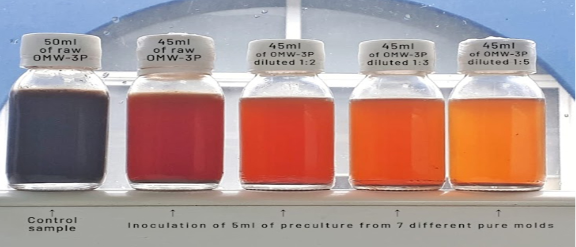
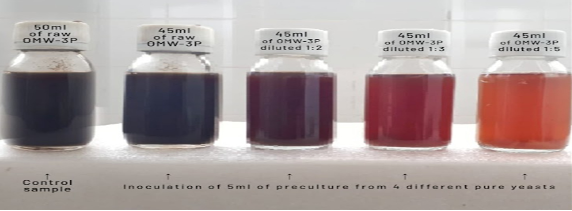
A microbial consortium consisted of 3 bacterial strains (Bacillus sp., Acinetobacter sp., and Pseudomonas sp.), 4 yeast strains (Candida sp., Yarrowia sp., Wickerhamomyces sp., and Rhodotorula sp.), and 7 molds strains (Aspergillus sp., Pleurotus sp., Penicillium sp., Phanerochaete sp., Trametes sp., Bjerkandera sp., and Mucor sp.) previously isolated and characterized in Bouigua et al. (2024), was prepared and used to inoculate diluted and undiluted OMW-3P. After 15 days, decolorization was assessed visually (Figures 2–5), and physicochemical parameters (pH, COD, BOD₅, biodegradability index, and polyphenols) were measured using established methods ; ; .
Statistical analysis
All experiments were performed in triplicate
(n=3). Individual replicate values are presented in Supplementary Tables S1-S4. Data were expressed as mean ± standard deviation. Statistical comparisons between treatments were performed using one-way ANOVA followed by Tukey’s HSD post-hoc test for multiple comparisons. Paired t-tests were used to compare pre- and post-treatment values within each group. Statistical significance was set at p < 0.05. Analyses were conducted using SPSS v25.0.
Results
Initial characteristics of OMW-3P
The raw OMW-3P used in the present study has typical characteristics of three-phase olive-mill effluent. The effluent has an acidic pH of 4.73, a large organic load as indicated by COD (111.93 g O2/L) and BOD (BOD5 53.16 g O2/L), and an elevated phenolic content (10.41 g GAE/L). The biodegradability index (Ib = BOD5/COD) was 2.10, indicating that it is biodegradable but was determined to be significantly recalcitrant due to the high concentration of polyphenols in the effluent.
Microbial strain selection and consortium assembly
The process of isolating and purifying microorganisms is illustrated in the summary figure (Figure 1) of the microbial strain isolation and purification work flow. A total of 14 microbial isolates showing decolorizing ability were obtained from 12 sampling locations located in 4 different areas of Morocco (Fez, Ouazzane, Settat, and Taza) using OMW-3P-based selective media. These 14 isolates consisted of 7 mold species, and 4 yeast species and 3 bacterial species as shown in Table 1 Table 2 and Table 3. All of these 14 isolates demonstrated the ability to degrade phenolic compounds as demonstrated by the formation of decolorizing halos observed when tested using raw (unprocessed) OMW-3P solid media.
Decolorization of OMW-3P
After 15 days of aerobic treatment, visual evaluation showed that across all the treatments of OMW-3P, decolorization was apparent (Figure 2 Figure 3 Figure 4 and Figure 5). Decolorization was most pronounced in the full consortium treatment, which removed nearly all of the characteristic dark brown color, particularly when diluted (1:5). The level of intensity of decolorization was as follows: weak decolorization by the mixed bacterial culture (MBC), moderate decolorization by the mixed yeast culture (MYC), pronounced decolorization by the mixed mold culture (MMC), and strongest decolorization by the full consortium.
Treatment performance on raw OMW-3P
Significant improvements in effluent quality were achieved with all microbial treatments (Table 4 and Table 5; Figure 6, Figure 7, Figure 8 and Figure 9). Prior to treatment, the raw OMW-3P exhibited the following characteristics: pH 4.73; COD (111.93 ± 0.01 g O₂/L); BOD₅ (53.16 ± 0.05 g O₂/L); polyphenols (10.41 ± 0.1 g/L); and biodegradability index Ib (2.10). Following treatment, full consortium of 14 strains displayed ultimate efficiencies when tested on raw OMW-3P, yielding the following results : pH increased to 5.36; Ib decreased to 1.39; and reductions were observed in COD (21.27 ± 0.01 g O₂/L), BOD₅ (15.30 ± 0.05 g O₂/L), and polyphenols (3.31 ± 0.1 g/L). Corresponding removal efficiencies were 63.12% for COD, 71.21% for BOD₅, and 68.20% for polyphenols.
The individual microbial groups showed lower efficiency (Table 4 and Table 5; Figure 6 Figure 7 Figure 8 and Figure 9): Molds: COD (47.88 ± 0.83 g O₂/L ), BOD₅ (33.09 ± 0.10 g O₂/L ), and polyphenols (4.73 ± 0.24 g/L), representing removal rates of 57.14%, 37.77%, and 59.26%, respectively. Yeasts: COD (58.36 ± 0.10 g O₂/L), BOD₅ (36.60 ± 0.10 g O₂/L), and polyphenols (5.31 ± 0.01 g/L), with removal rates of 47.86%, 30.96%, and 48.99%, respectively. Bacteria: COD (60.65 ± 0.05 g O₂/L), BOD₅ (35.05 ± 0.05 g O₂/L), and polyphenols (6.06 ± 0.06 g/L), corresponding to removal efficiencies of 45.81%, 34.06%, and 41.87%, respectively.
Effect of dilution on treatment efficacy
When OMW-3P was diluted, the ability of complet 14-strains microbial consortium to remove pollutants increased significantly. The highest concentration of pollutants removed was achieved with the full consortium in a 1:5 dilution, which resulted in almost total removal of pollutants: 98.23% COD removed, 97.31% BOD₅ removed, and 98.92% Polyphenols removed, with a final solution pH of 5.36. As a result, the biodegradability index (Ib) dropped from 2.10 (original) to 1.20 (treated using 1:5 dilution) (Table 4 and Table 5; Figure 6 Figure 7 Figure 8 and Figure 9) .
Table 4: Summarizes the descriptive statistics (Mean ± SD) for the main parameters in raw and 1:5 diluted conditions
|
Treatment |
Condition |
Moment |
PH |
COD (g O₂/L) |
BOD₅ (g O₂/L) |
Polyphenols (g/L) |
Ib Index |
|
Consortium |
Raw |
After |
5.36 ±0.06 |
21.27 ± 0.01 |
15.30 ± 0.05 |
3.31 ± 0.01 |
1.39 ±0.01 |
|
1 :2 |
After |
5.42 ±0.02 |
16.49 ± 0.01 |
12.59 ± 0.01 |
1.66 ± 0.01 |
1.31 ±0.01 |
|
|
1 :3 |
After |
5.51 ±0.01 |
7.52 ± 0.02 |
5.92 ± 0.02 |
1.00 ± 0.01 |
1.27 ±0.04 |
|
|
1 :5 |
After |
5.77 ±0.03 |
0.60 ± 0.01 |
0.50 ± 0.01 |
0.05 ± 0.01 |
1.20 ±0.01 |
|
|
Molds |
Raw |
After |
4.76 ±0.03 |
47.88 ± 0.83 |
33.09 ± 0.10 |
4.37 ± 0.24 |
1.41 ±0.28 |
|
1 :5 |
After |
5.42 ±0.13 |
9.73 ± 0.20 |
7.26 ± 0.04 |
0.72 ± 0.26 |
1.38 ±0.14 |
|
|
Yeasts |
Raw |
After |
4.74 ±0.04 |
58.36 ± 0.10 |
36.60 ± 0.10 |
5.31 ± 0.01 |
1.59 ±0.01 |
|
1 :5 |
After |
5,29 ±0,01 |
12,45 ± 0,02 |
7,98 ± 0,05 |
1,44 ± 0,02 |
1,56 ±0,01 |
|
|
Bacteria |
Raw |
After |
4.74 ±0.01 |
60.65 ± 0.05 |
35.05 ± 0.05 |
6.06 ± 0.06 |
1.73 ±0.03 |
|
1 :5 |
After |
5.22 ±0.02 |
16.47 ± 0.03 |
10.35 ± 0.05 |
2.23 ± 0.03 |
1.59 ±0.01 |
COD: Chemical oxygen demand; BOD₅: Biochemical oxygen demand; Reduction percentage; Ib: Biodegradability index
Biodegradability improvement
The Ib index was significantly reduced with every treatment, thereby improving the biodegradation of the effluent by making it more amenable to further biological action as evidenced by the OMW-3P treated with the consortium showed the most substantial reduction in Ib values of 1.39 (raw), 1.31 (1:2), 1.27, and 1.20 (1:5) which coincided with the removal of resistant polyphenols and a rise in the pH level, creating a more environmentally friendly environment for the subsequent stages of biological processing.
Table 5: Average reduction percentages for the main pollutants
|
Treatment |
Condition |
COD reduction (%) |
BOD₅ reduction (%) |
Polyphenols reduction (%) |
|
Consortium |
Raw |
63,12% |
71,21% |
68,20% |
|
1:2 |
71,41% |
70,32% |
74,92% |
|
|
1:3 |
84,36% |
83,75% |
81,23% |
|
|
1:5 |
98,23% |
97,31% |
98,92% |
|
|
Molds |
Raw |
57,14% |
33,77% |
59,26% |
|
1:5 |
71,44% |
61,00% |
84,36% |
|
|
Yeasts |
Raw |
47,86% |
30,96% |
48,99% |
|
1:5 |
63,47% |
57,14% |
69,16% |
|
|
Bacteria |
Raw |
45,81% |
34,06% |
41,78% |
|
1:5 |
51,67% |
44,41% |
52,24% |
COD: Chemical oxygen demand; BOD₅: Biochemical oxygen demand; Reduction percentage; Ib: Biodegradability index
Synergistic effect of the mixed consortium
The collaborative performance of the consortium surpassed that of the arithmetic total of each member’s performance, showing the synergism that developed among yeast, mold and bacteria cultures. This synergistic effect was particularly pronounced with OMW-3P in which the consortium achieved a 63.12% removal of COD, while the highest performing group of molds alone showed 57.14%.
Comparative summary of performance across treatment methods and dilution levels
Across OMW-3P treatments and dilution ratios shown in Table 6, treatment efficiency levels varied widely. The 14-strain microbial consortium achieved the highest treatment efficiencies as seen by the greatest devaluation of biodegradability index (Ib) and the largest percentage reductions in COD, BOD₅, and polyphenols. In general, treatment efficiencies for all other treatments were lower than those achieved with the 14-strain microbial consortium, particularly when examining treatment efficiencies of individual groups (molds, yeasts, and bacteria).
The addition of diluted OMW-3P enhanced treatment efficiencies for all treatments with the most significant increase observed when using the complete 14-strain microbial consortium at a dilution ratio of 1:5.
Discussion
Prior to treatment, the pH of OMW-3P, which was
Table 6: Consolidated treatment performance metrics after treatment for raw and diluted OMW-3P
|
Moment / Traitement |
Mc-raw |
Mc-1:2 |
Mc-1:3 |
Mc-1:5 |
M-raw |
M-1:5 |
Y-raw |
Y-1:5 |
B-raw |
B-1:5 |
|
%COD |
63,12 |
71,41 |
84,36 |
98,23 |
57,14 |
71,44 |
47,86 |
63,47 |
45,81 |
51,67 |
|
%BOD₅ |
71,21 |
70,32 |
83,75 |
97,31 |
37,77 |
61,00 |
30,96 |
57,14 |
34,06 |
44,41 |
|
%Polyphenols |
68,20 |
74,92 |
81,23 |
98,92 |
59,26 |
84,36 |
48,99 |
69,16 |
41,78 |
52,24 |
|
Ib |
1,39 |
1,31 |
1,27 |
1,20 |
1,45 |
1,34 |
1,59 |
1,56 |
1,73 |
1,59 |
Mc: Microbial consortium of 14 strains; M: Molds; Y: Yeasts; B: Bacteria; (1:2, 1:3, 1:5): dilution; COD: Chemical Oxygen Demand; BOD₅: Biochemical Oxygen Demand; %: Reduction percentage; Ib: Biodegradability Index
used in this study, was 4.73, which is an acidic pH and this is in line with the acidic pH typical of this type of effluent (pH of 3-6) .This acidity is unfavored for microbial activity , leading to limited application of conventional biological treatment. The COD and the BOD₅ values were 111.93 g O₂/L and 53.16 g O₂/L, respectively; both within the range reported for untreated olive mill effluent (COD: 40–200 g O₂/L and BOD₅: 23–100 g O₂/L) . Their biodegradability index (Ib=2.10) is less than 3, indicating good biodegradability despite the high contaminant load when the OMW was first added.
After the treatment of raw OMW-3P, there was a gradual increase in pH, from the mixed 3 bacteria culture (pH = 4.74) to the mixed 4 yeasts culture (pH = 4.76), and the mixed 7 molds culture (pH = 4.77) reaching a peak with the mixed consortium (pH = 5.36). This decrease in acidity alleviates the inhibitory effect on the most sensitive strains, especially the bacteria, since their higher sensitivity to pH and polyphenols was offset by yeasts and molds in the mixed consortium. The cooperative action of all these strains likely resulted in the remarkable reductions in COD (63.12%), BOD₅ (71.21%) and phenolic compounds (68.20%) which contributed to the amount of decolorization of the raw OMW-3P. The analytical values confirm the astonishing effectiveness of the mixed consortium on the degradation of recalcitrant compounds.
Long-chain fatty acids, lipids, and especially phenolic compounds (such as hydroxytyrosol and tyrosol) are some of the most difficult compounds to degrade, due to their resistance to biological degradation and antimicrobial activity, according to Medina et al. (2011) and Pinho et al. (2017). Consequently, the degradation of toxic compounds, including recalcitrant compounds in particular, increases the biodegradability of OMW-3P. This is evidenced by the reducing values recorded over time for biodegradability index (Ib), with Ib beginning at 1.73 for raw OMW-3P treated with the bacterial mixed culture, 1.59 for OMW-3P treated with the yeast mixed culture, 1.45 for OMW-3P treated with the mold mixed culture, and finally 1.39 for OMW-3P treated with the complete mixed consortium.
Interestingly, diluting OMW-3P at ratios of 1/2, 1/3, and 1/5 not only raised pH slightly yet substantially, but also improved the removal rates significantly for the three factors measured (COD, BOD₅, and polyphenols). These dilutions also decreased the biodegradability index (Ib) for all four treatment styles. Results were notably evident in the mixed consortium treatment of OMW-3P diluted to 1/2, with values of 5.42 (pH), 71.41 % (COD), 70.32 % (BOD₅), 74.92 % (polyphenols), and 1.31 (Ib), diluted to 1/3 at values of 5.51 (pH), 84.36 % (COD), 83.75 % (BOD₅), 81.23 % (polyphenols), and 1.27 (Ib), and diluted to 1/5at values of 5.77 (pH), 98.23 % (COD), 97.31 % (BOD₅), 98.92 % (polyphenols), and 1.20 (Ib).
The reductions observed can likely be attributed to the dispersal of toxic pollutants found in raw OMW-3P, resulting in reduced acidic interaction with enzymes (i.e., extracellular, intracellular, or free) active sites within the four different micro-ecosystems created. This dispersal diluted the OMW-3P to a less acidic state, increasing its biodegradability (as indicated from the reduced Ib index), increasing the metabolic activity of the microorganisms involved in each type of treatment. The improvments in condition lead to more distinct reductions in COD, BOD₅, and polyphenols especially in treatments with mixed yeasts and molds. Additionally, the reductions noted correlated with a more significant decolorization of these OMW-3P after treatment.
On the contrary, the more reduced results associated with mixed bacterial culture (i.e., decolorization and reduced COD, BOD₅, and polyphenols) can be explained by the partial inhibition of activity of these particular strains. Bacteria are especially sensitive to the antimicrobial property of polyphenols and acidic pH, as shown in several studies ; .
An unexpected result warrants discussion: the total mixed consortium successfully decolorized raw OMW-3P without any preliminary dilution. Moreover, this color change is also associated with analytically verified reductions in COD, BOD₅, and polyphenols, which are contrary to the findings of El Hajjouji et al. (2007), indicating that raw OMW-3P had a high organic loading that would necessitate dilution due to its toxicity prior to biological treatment. The same is true for the findings of Lee et al. (2019) who reported aerobic biological treatment had no effect at all on OMW-3P.
Further, the findings we reported did not require any pretreatment such as pH adjustment nor coagulation/flocculation, and therefore, also contradict the statements made by Vuppala et al. (2019) and El Moudden et al. (2020). Lastly, unlike Diaz et al. (2021) our aerobic biological treatment was shown to be effective even with OMW-3P in acidic condition, high levels of recalcitrant compounds (i.e. polyphenols) and no prior extraction or addition of cobalt or any other nutrient.
Before comparing our results with those reported in the literature, it is crucial to emphasize that our approach relies exclusively on biological treatment, without pretreatment, enrichment, or combination with other methods. Experiments were conducted without pH adjustment, under ambient conditions (temperature, natural aeration), and with a retention time of 15 days. This operational simplicity is a major advantage for industrial applications, where cost and process complexity are decisive factors.
Comparison with monoculture treatments
Using a mixed consortium of 14 strains resulted in COD and polyphenol removal rates of 98.23% and 98.92%, respectively, for OMW-3P diluted to 1/5, which exceeded monoculture results. For instance, when treating raw OMW without agitation, Boutafda et al. (2023) demonstrated only 4% (COD) and 2% (polyphenols) removal using Penicillium chrysogenum. Using optimized agitation (150 rpm), the authors found the highest COD and polyphenols removal performance of 76% and 73%, respectively, <u>again</u> inferior to those of the current study. The only maximum removal of 98% (COD) occurred at 3 g·L-¹ urea addition to the growth medium. Notably, those results fall between the performance of monocultures and the mixed consortium, which achieved maximum COD and polyphenol removal using no additional nutritional support. This is likely due to the metabolic diversity of the mixed consortium providing simultaneous degradation of recalcitrant compounds, which one strain may not possess.
Comparison with mixed culture treatments
For raw and diluted (1/5) OMW-3P, our removal rates (63.12% and 98.23% for COD; 68.20% and 98.92% for polyphenols) exceed those reported in the literature for less diverse mixed cultures. For instance, Zaroual et al. (2020) reported a 50% COD removal using a mixed culture of nine bacteria, without specifying the dilution ratio. Our consortium, composed of bacteria, yeasts, and molds, demonstrates enhanced robustness, particularly against the toxicity of raw OMW-3P. This synergy among microorganisms optimizes biodegradation, as evidenced by our results surpassing those of Caffaz et al. (2007) (86% COD; 70% polyphenols).
Comparison with microbial consortium treatments
Several studies have investigated the use of mixed microbial consortia to improve the biodegradation of OMW, with varying compositions and operating conditions. Ayed et al. (2019), for example, evaluated a consortium consisting of six bacterial strains (Aeromonas salmonicida, Aeromonas hydrophila, Bacillus sp., Sphingomonas paucimobilis, Staphylococcus xylosus, Lactobacillus sp.), two yeasts (Cryptococcus humicolus, Candida boidinii), and one mold (Penicillium sp.) under aerobic conditions optimized by response surface methodology. Their approach targeted OMW-3P and achieved around 90% decolorization and 86% COD removal after only four days of treatment, demonstrating the effectiveness of statistically optimized culture conditions for accelerating pollutant removal.
The consortium used in this study was diverse (14 different strains including bacterial, yeast, and mold), and was applied to the OMW 3P in non-optimized, low input conditions without the adjustment of pH, pretreatment, or the addition of nutrients. In the case of OMW 3P that has been diluted at a 1:5 ratio, when treated with the mixed consortium, the COD and polyphenol removal rates reached 98.23% and 98.92%, respectively, and the effluent showed a high degree of decolorization after 15 days. The results for uncultivated OMW 3P showed a reduction of COD, BOD, and phenolic compounds, but due to its higher overall toxicity, will probably not yield as effective results as indicated by . Although the time to effect complete reduction in laboratory conditions is longer than that reported by the current process is being run only on natural aeration (or simple mixing if applicable) and under ambient conditions, and may therefore be implemented more successfully in small to medium size olive mills where more sophisticated methods of process control are not available.
Overall, these findings suggest that microbial consortia can result in high treatment efficiencies across a range of OMW matrices. The efficacy of the individual consortia depends on their overall composition, operating conditions, and how well the treatment has been optimized. The 14-strain consortium studied has shown to be particularly effective for treating raw OMW 3P under conditions of low nutrient content and high acidity — both of which are common in raw OMW 3P — thus being consistent with previous studies on more fully optimized systems. This supports the value of further optimizing treatment while keeping the system easy to operate in the field, such as modifying aeration, inoculum density or reactor configuration, in order to continue improving treatment efficiencies.
Preliminary agronomic trials have already been conducted with treated OMW 3P as a biofertilizer and have demonstrated statistically significant increases in plant growth (above ground and root system) and in some soil properties resulting from the use of treated OMW 3P. Other agronomic experiments with various crops and soil types are also underway and will be reported in other papers when they become available, in order to provide further support for the safe and effective use of treated OMW 3P in agriculture.
Conclusions and Recommendations
The olive oil industry generates large volumes of three-phase olive mill wastewater (OMW-3P), which is difficult to manage due to its high organic and phenolic loads. This study demonstrates that a 14-strain microbial consortium can significantly decolorize and depollute raw and diluted OMW-3P under aerobic conditions, without chemical pretreatment, pH adjustment, or external nutrient addition. In raw OMW-3P, the consortium improved pH and reduced COD, BOD and polyphenols, while in OMW-3P diluted to 1/5 it achieved very high removal rates and a marked decrease in the biodegradability index, indicating better suitability for further biological treatment and possible recycling as a biofertilizer. Overall, this synergistic consortium offers a simple and potentially cost-effective biological option that fits within circular bioeconomy strategies for olive mill waste management.
Acknowledgements
I would like to offer my special gratitude to co-author Aicha ROSSAFI for her tremendous help and contribution to this report. Aicha has been especially supportive of this report during the times my author had to overcome several medical problems, which included severe visual impairment due to glaucoma and surgical intervention.
Novelty Statement
To our knowledge, this study is among the first to demonstrate that a 14-strain microbial consortium (bacteria, yeasts, molds) can efficiently treat raw three-phase olive mill wastewater under aerobic conditions without pretreatment, pH adjustment, or additives. The process achieves up to 98% pollutant removal in 15 days in diluted OMW-3P and substantially improves the quality of raw OMW-3P, enabling its potential valorization as a biofertilizer within a simple and scalable framework for sustainable olive waste management.
Author’s Contribution
Hassan Bouigua: Conducted research, data collection and write-up, designing
Soumaya Choukri: interpretation of data
Karima El Kabous: Statistical analysis
Aicha Rossafi: Analysis of data, conceptualization
Mohamed El Yachioui: Arrangement of tabulated data, supervision
Mohammed Ouhssine: Helped in format setting and citations, validation of the manuscript
Generative AI and AI-assisted technology statement
The authors declare that no generative AI and AI assisted technology was used in the creation of this manuscript.
Conflict of interest
The authors have declared no conflict of interest.
Figures
Updated methodology for the isolation and purification of 14 different strains (3 bacteria, 4 yeasts, and 7 molds) from three Moroccan ecological niches (Bouigua et al., 2024)
Decolorization of OMW-3P after 15 days of treatment with a mixed culture of 7 purified mold strains.
Decolorization of OMW-3P after 15 days of treatment with a mixed culture of 4 purified yeast strains
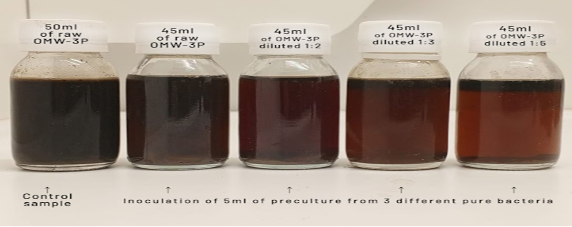
Decolorization of OMW-3P after 15 days of treatment with a mixed culture of 3 purified bacterial strains
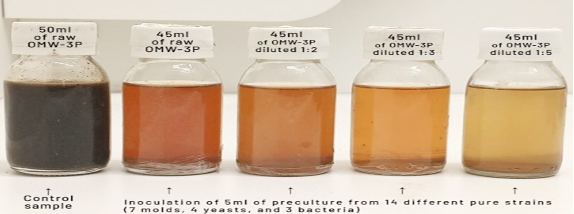
Decolorization of OMW-3P after 15 days of treatment with a consortium of 14 purified strains (7 molds, 4 yeasts, and 3 bacteria)
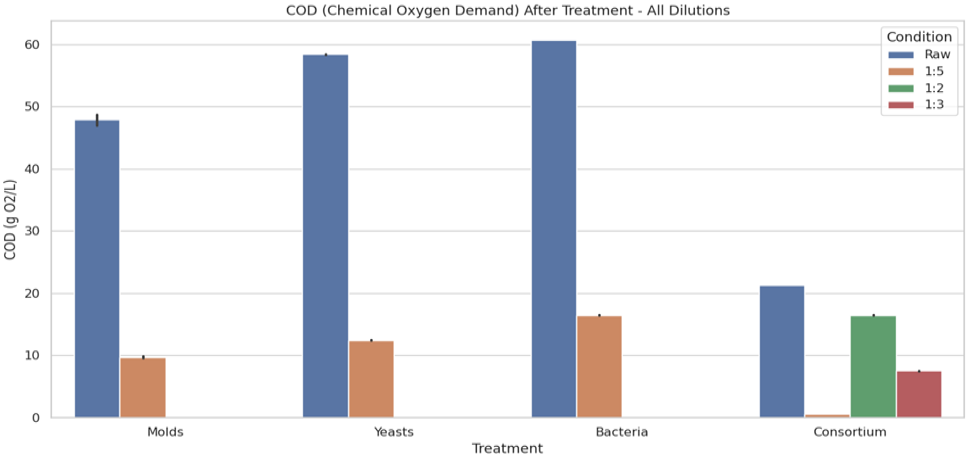
Reduction in COD after treatment
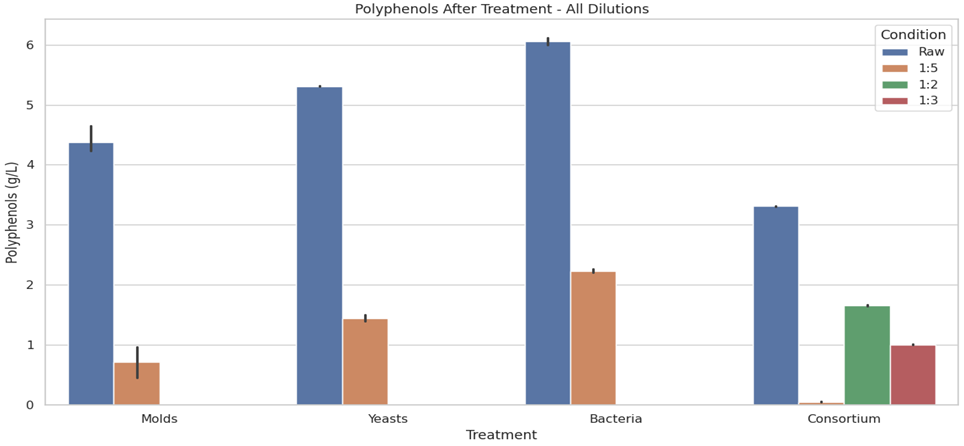
Reduction in polyphenols after treatment
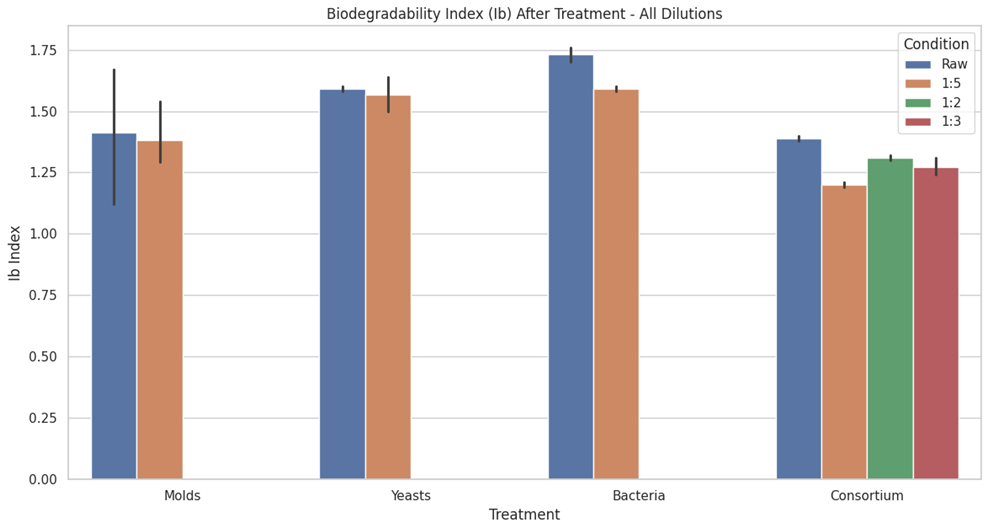
Biodegradability index (Ib) after treatment
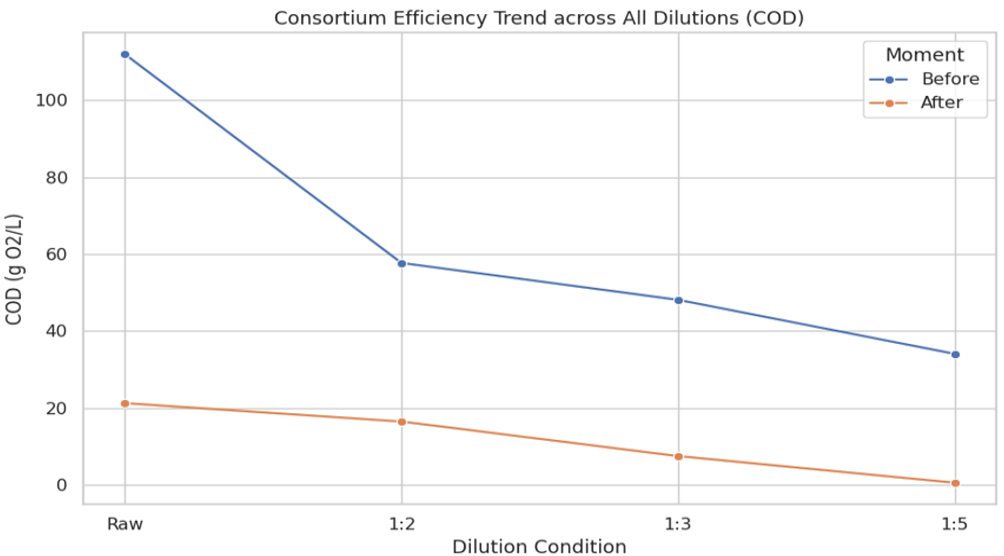
Consortium efficiency according to dilution (COD)
References
- Achak, M., N. Ouazzani and L. Mandi. 2009. Traitement des margines d’une huilerie moderne par infiltration-percolation sur un filtre à sable. Revue des Sci. de l’Eau., 22(3): 421-433. https://doi.org/10.7202/037780ar[CrossRef]
- Alaoui, S.B., M. Achak, Y. Chhiti, F.E.M. Alaoui and E. Lamy. 2022. Coupling the infiltration-percolation and solar distillation technologies for the treatment of olive mill wastewater. Chem. Eng. Trans., 96: 103-108.
- Asfi, M., G. Ouzounidou and M. Moustakas. 2012. Evaluation of olive oil mill wastewater toxicity on spinach. Environ. Sci. Pollut. Res., 19: 2363-2371. https://doi.org/10.1007/s11356-012-0746-y[CrossRef]
- Ayed, L., A. Bouguerra, A. Charef, A. Bakhrouf and R. EL Mzoughi. 2019. Biodegradation of Olive Mill Wastewater by a newly isolated novel bacterial consortium under RSM optimized culture conditions. J. Water Process Eng., 32: 100986. https://doi.org/10.1016/j.jwpe.2019.100986[CrossRef]
- Azzam, M.O.J. and S.A. Hazaimeh. 2021. Olive mill wastewater treatment and valorization by extraction/concentration of hydroxytyrosol and other natural phenols. Process Saf. Environ. Prot., 148: 495-523. https://doi.org/10.1016/j.psep.2020.10.030[CrossRef]
- Barros, M.V., R. Salvador, A.C. de Francisco and C.M. Piekarski. 2020. Mapping of research lines on circular economy practices in agriculture: From waste to energy. Renew. Sustain. Energy Rev., 131: 109958. https://doi.org/10.1016/j.rser.2020.109958[CrossRef]
- Belaid, C., M. Khadraoui, S. Mseddi, M. Kallel, B. Elleuch and J.F. Fauvarque. 2013. Electrochemical treatment of olive mill wastewater: Treatment extent and effluent phenolic compounds monitoring using some uncommon analytical tools. J. Environ. Sci., 25(1): 220-230. https://doi.org/10.1016/S1001-0742(12)60037-0[CrossRef]
- Benhayoun, G. and Y. Lazzeri. 2007. L’olivier en Méditerranée : Du symbole à l’économie. Éditions L’Harmattan, Paris, France.
- Bouigua, H., R. Bakali, H. Jaber, K. El Kabous, S. Choukri, M. Elyachioui and M. Ouhssine. 2024. A remarkable step in the aerobic biological treatment of Olive Mill Wastewater (OMW): A combination of selected microbial strains that enhance their decolorization and depollution. E3S Web Conf., 527: 02007. https://doi.org/10.1051/e3sconf/202452702007[CrossRef]
- Boutafda, A., M. Hafidi, Y. Ouhdouch, E. Pinelli, M. Jemo and L. El Fels. 2023. Fungal Strain as Biological Tool to Remove Genotoxicity Effect of Phenolic Compounds from Olive Mill Wastewater. Sustain., 15: 6510. https://doi.org/10.3390/su15086510[CrossRef]
- Caffaz, S., C. Caretti, M. Morelli, C. Lubello and E. Azzari. 2007. Olive mill wastewater biological treatment by fungi biomass. Water Sci. Technol., 55(10): 89-97. https://doi.org/10.2166/wst.2007.311[CrossRef]
- Capasso, R., A. De Martino and M. Arienzo. 2002. Recovery and characterization of the metal polymeric organic fraction (polymerin) from olive oil mill wastewaters. J. Agric. Food Chem., 50:2846-2855. https://doi.org/10.1021/jf011442c[CrossRef]
- Chowdhury, A.K.M.M.B., C.S. Akratos, D.V. Vayenas and S. Pavlou. 2013. Olive mill waste composting: A review. Int. Biodeterior. Biodegrad., 85: 108-119. https://doi.org/10.1016/j.ibiod.2013.06.019[CrossRef]
- Díaz, A.I., M. Ibañez, A. Laca and M. Díaz. 2021. Biodegradation of Olive Mill Effluent by White-Rot Fungi. Appl. Sci., 11: 9930. https://doi.org/10.3390/app11219930[CrossRef]
- Domingues, E., E. Fernandes, J. Gomes, S. Castro-Silva and R.C. Martins. 2021. Olive oil extraction industry wastewater treatment by coagulation and Fenton’s process. J. Water Process Eng., 39: 101818. https://doi.org/10.1016/j.jwpe.2020.101818[CrossRef]
- El Hajjouji, H., N. Fakharedine, G. Ait Baddi, P. Winterton, J.R. Bailly, J.C. Revel and M. Hafidi. 2007. Treatment of olive mill waste-water by aerobic biodegradation. An analytical study using gel permeation chromatography, ultraviolet–visible and Fourier transform infrared spectroscopy. Bioresour. Technol., 98: 3513-3520. https://doi.org/10.1016/j.biortech.2006.11.033[CrossRef]
- El Kabous, K., K. Atfaoui, A. Oubihi, S. Hamoutou and M. Ouhssine. 2023. The study of the heterogeneity of the qualities of argan oils and pomaces from different cooperatives in the Essaouira region (Morocco). J. Oleo Sci., 72(3): 283-293. https://doi.org/10.5650/jos.ess22222[CrossRef]
- El Kafz, G., E. Cherkaoui, F. Benradi, M. Khamar and A. Nounah. 2023. Characterization of two olive mill wastewater and its effect on fenugreek (Trigonella foenum-graecum) germination and seedling growth. J. Ecol. Eng., 24(1): 207-217 https://doi.org/10.12911/22998993/171545.[CrossRef]
- El Moudden, H., Y. El Idrissi, W. Belmaghraoui, O. Belhoussaine, C. El Guezzane, T. Bouayoun, H. Harhar and M. Tabyaoui. 2020. Olive Mill Wastewater polyphenol-based extract as a vegetable oil shelf life extending additive. Food Proc. Preserv., 44: e14990. https://doi.org/10.1111/jfpp.14990[CrossRef]
- El Moudden, H., Y. El Idrissi, C. El Guezzane, Z.L. El Idrissi, H. Harhar, H. Assaggaf, K.W. Goh, L.C. Ming, A. Bouyahya and M. Tabyaoui. 2022. Spatial variation of phytochemical and antioxidant activities of olive mill wastewater: A chemometric approach. Sustain., 14(21): 14488. https://doi.org/10.3390/su142114488[CrossRef]
- El Mouhtadi, I., M. Agouzzal and F. Guy. 2014. The olive tree in Morocco. OCL - Oilseed Fat Crop Lipids., 21(1): D102. https://doi.org/10.1051/ocl/2013053[CrossRef]
- Enaime, G., A. Baçaoui, A. Yaacoubi, M. Belaqziz, M. Wichern and M. Lübken. 2020. Phytotoxicity assessment of olive mill wastewater treated by different technologies: Effect on seed germination of maize and tomato. Environ. Sci. Pollut. Res., 27(8): 8034-8045. https://doi.org/10.1007/s11356-019-06672-z[CrossRef]
- Guerra, D., A. Lamontanara, P. Bagnaresi, L. Orrù, F. Rizza, S. Zelasco, D. Beghè, T. Ganino, D. Pagani, L. Cattivelli and E. Mazzucotelli. 2015. Transcriptome changes associated with cold acclimation in leaves of olive tree (Olea europaea L.). Tree Genet. Genomes., 11: 113. https://doi.org/10.1007/s11295-015-0939-x[CrossRef]
- Hur, J., B.M. Lee, T.H. Lee and D.H. Park. 2010. Estimation of biological oxygen demand and chemical oxygen demand for combined sewer systems using synchronous fluorescence. Sens., 10(4): 2460-2471. https://doi.org/10.3390/s100402460[CrossRef]
- Khatib, A., F. Aqra and N. Yaghi. 2009. Reducing the environmental impact of olive mill wastewater. Am. J. Environ. Sci., 5(1): 1-6. https://doi.org/10.3844/ajes.2009.1.6[CrossRef]
- Khoufi, S., F. Aloui and S. Sayadi. 2000. Anaerobic digestion of olive mill wastewater after Ca (OH)2 pretreatment and reuse adapted. Proc. Int. Conf. Wastewater Treat. Reuse Adapted Mediterr. Area (WATRAMA). 85-89.
- Lee, Z.S., S.Y. Chin, J.W. Lim, T. Witoon and C.K. Cheng. 2019. Treatment technologies of palm oil mill effluent (POME) and olive mill wastewater (OMW): A brief review. Environ. Technol. Innov., 15: 100377. https://doi.org/10.1016/j.eti.2019.100377[CrossRef]
- Li, X. and S.C. Wang. 2018. Shelf life of extra virgin olive oil and its prediction models. J. Food Qual., 2018: 1639260. https://doi.org/10.1155/2018/1639260[CrossRef]
- Medina, E., C. Romero, B. de los Santos, A. de Castro, A. García, F. Romero and M. Brenes. 2011. Antimicrobial activity of olive solutions from stored alpeorujo against plant pathogenic microorganisms. J. Agric. Food Chem., 59: 6927-6932. https://doi.org/10.1021/jf2010386[CrossRef]
- Pinho, I.A., D.V. Lopes, R.C. Martins and M.J. Quina. 2017. Phytotoxicity assessment of olive mill solid wastes and the influence of phenolic compounds. Chemosp., 185: 258-267. https://doi.org/10.1016/j.chemosphere.2017.07.002[CrossRef]
- Sahraoui, A., R. Bakali, A. Sahraoui and M. Ouhssine. 2024. Quality assessment of the anaerobic composting of dehydrated sludge from wastewater treatment plant for agriculture application. Ecol. Eng. Environ. Technol., 25: 1-10. https://doi.org/10.12912/27197050/184264[CrossRef]
- Salhi, M., E. Berrich, M. Romdhane and F. Alaoui. 2023. Experimental investigation of additives effect on olive pomaces pyrolysis: Oyster shells and olive mill waste water. Biomass Bioener., 175: 106815. https://doi.org/10.1016/j.biombioe.2023.106815[CrossRef]
- Shabir, S., N. Ilyas, M. Saeed, F. Bibi, R.Z. Sayyed and W.H. Almalki. 2023. Treatment technologies for olive mill wastewater with impacts on plants. Environ. Res., 216: 114399 https://doi.org/10.1016/j.envres.2022.114399.[CrossRef]
- Slama, H.B., A. Chenari Bouket, F.N. Alenezi, A. Khardani, L. Luptakova, A. Vallat, T. Oszako, M.E. Rateb and L. Belbahri. 2021. Olive mill and olive pomace evaporation pond’s by-products: Toxic level determination and role of indigenous microbiota in toxicity alleviation. Appl. Sci., 11(11): 5131. https://doi.org/10.3390/app11115131[CrossRef]
- Tsigkou, K., N. Sivolapenko and M. Kornaros. 2022. Thermophilic dark fermentation of olive mill wastewater in batch reactors: Effect of pH and organic loading. Appl. Sci., 12: 2881. https://doi.org/10.3390/app12062881[CrossRef]
- Tundis, R., C. Conidi, M.R. Loizzo, V. Sicari and A. Cassano. 2020. Olive mill wastewater polyphenol-enriched fractions by integrated membrane process: A promising source of antioxidant, hypolipidemic and hypoglycaemic compounds. Antiox., 9(7): 602. https://doi.org/10.3390/antiox9070602[CrossRef]
- Vaz, T., M.M.J. Quina, R.C. Martins and J. Gomes. 2024. Olive mill wastewater treatment strategies to obtain quality water for irrigation: A review. Sci. Total Environ., 931: 172676. https://doi.org/10.1016/j.scitotenv.2024.172676[CrossRef]
- Vuppala, S., I. Bavasso, M. Stoller, L. Di Palma and G. Vilardi. 2019. Olive mill wastewater integrated purification through pre-treatments using coagulants and biological methods: experimental, modelling and scale-up. J. Cleaner Prod., 236: 117622. https://doi.org/10.1016/j.jclepro.2019.117622[CrossRef]
- Zaier, H., W. Chmingui, H. Rajhi, D. Bouzidi, S. Rousses and A. Rhouma. 2017. Physico-chemical and microbiological characterization of olive mill wastewater (OMW) of different regions of Tunisia (North, Sahel, South). J. New Sci. Agric. Biotechnol., 48(2): 2888-2897.
- Zaroual, H., E.M. El Hadrami and R. Karoui. 2020. Preliminary study on the potential application of Fourier-transform mid-infrared for the evaluation of overall quality and authenticity of Moroccan virgin olive oil. J. Sci. Food Agric., 101: 2901-2911. https://doi.org/10.1002/jsfa.10922[CrossRef]
- Zema, D.A., M.E. Lucas-Borja, S. Andiloro, V. Tamburino and S.M. Zimbone. 2019. Short-term effects of olive mill wastewater application on the hydrological and physicochemical properties of a loamy soil. Agric. Water Manag., 221: 312-321. https://doi.org/10.1016/j.agwat.2019.04.011[CrossRef]
Services
Article usage statistics
Loading…