

Ivan Fiodorovich Gorlov1,2*, Aleksandr Sergeevich Filatov1, Aleksei Nikolaevich Sivko1, Baatr Kanurovich Bolaev3, Aleksandr Petrovich Kokhanov4, Dmitrii Aleksandrovich Randelin4, Klavdiia Vladimirovna Ezergail4, Yuri Dmitrievich Danilov1, Elena Yurievna Zlobina1,5
1Volga Region Research Institute of Manufacture and Processing of Meat-And-Milk Production, 400131, Rokossovskogo street, 6, Volgograd, Russian Federation; 2Volgograd State Technical University, 400005, Lenin avenue, 28, Volgograd, Russian Federation; 3Kalmyk State University, 358000, Pushkina street, 11, Elista, The Republic of Kalmykia, Russian Federation; 4Volgograd State Agrarian University,400002, University avenue, 26, Volgograd, Russian Federation; 5Volgograd State University, 400062, University Avenue, 100, Volgograd, Russian Federation.Abstract | The article presents the studyof the acclimatization ability of the Angus steers of Australian selection in the conditions of sharply continental climate of the Lower Volga Region of Russia.The steers of Reproduction II have been established to have a more optimal hematologic composition in comparison with their analogsof Reproduction I. Their red blood count was more by 3.5%, hemoglobin by 1.42 and total protein by 1.70%. The album in protein fraction was higher by 7.22%. Bactericidal leukocyte activity of steers of Reproduction II was more than that of steers of Reproduction II by 2.89%, lysozyme activity by 5.39 and phagocytic activity by 2.86%.The steers of Reproduction II were taller in comparison with their analogs, but inferior to them in terms of the measurements that characterize the body width.The growth intensity of the Angus youngsters of Reproduction II was insignificantly higher than that of their peers. With respect to the overall live weight gain, they exceeded the steers of Reproduction I by 4.2 kg and to the average daily gain by 17.5 g.In terms of the hot carcass weight, the control slaughter showed the young cattle of
Reproduction II to exceed their analogs of Reproduction I by 6.39 kg or 2.46%, carcass yield by 0.45% and weight of flesh in carcasses by 5.22 kg or 2.46%. The average carcass flesh sample of the Reproduction II steers contained more dry matter by 0.13, protein by 0.07 and fat by 0.05%.The profitability of meat production in the group of cattle of Reproduction II was higher by 2.1%. Thus, the animals successfully passed acclimatization. The results of the research showed that the bulls of the second reproduction have productive qualities that are comparable to those of the I reproduction and even surpass it in linear growth and slaughter.
Keywords | Beef cattle, Acclimatization, Productivity, Meat quality, Profitability
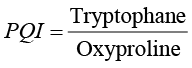




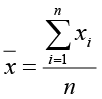 , where
 is a mean value;
 is the sum of all xi withi ranging from 1 to n, n is a number of measurements. The residual variation is expressed as a root mean square error (r.m.s.e.):
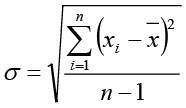
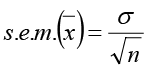 .
 ,
 )
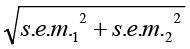 is a sample difference error; s.e.m.1, s.e.m.2 is a non-sampling error of the sample statistics compared; tst is a standard criterion according to the t-Table for the probability threshold preset depending on degrees of freedom; n1, n2 is a number of measurements in the samples compared; d.f. is a degrees of freedom for difference of two mean measurements.